A Backyard Bird Lover’s Guide to Ant-Free Hummingbird Feeders
Simple, safe strategies to protect hummingbird nectar from invading ants.
When ants discover your hummingbird feeder, they quickly turn a peaceful bird-watching spot into a messy trail of insects and contaminated nectar. Fortunately, a combination of smart feeder placement, good design, and regular maintenance can keep ants away while keeping hummingbirds safe and well fed.
Why Ants Target Hummingbird Feeders
Hummingbird nectar is essentially sugar water, which makes it irresistible to ants searching for high-energy food sources. Once a few ants locate the feeder, they leave a scent trail that leads an entire colony straight to the sugary buffet.
Beyond being a nuisance, ant invasions can spoil the nectar and discourage hummingbirds from visiting. Ants may drown in the liquid, causing contamination, and birds may abandon a feeder that is consistently crowded with insects.
Core Principles for Ant Control
Every effective strategy for keeping ants off a hummingbird feeder relies on one or more of three basic principles: blocking access, removing attractants, or diverting the ants elsewhere. Understanding these ideas makes it easier to choose solutions that suit your yard and climate.
- Block access: Create barriers that ants cannot cross, such as water moats, smooth lines, or special hooks.
- Reduce attraction: Prevent leaks and spills that intensify the sweet smell and make the feeder easier to find.
- Deter or redirect: Use safe repellents and alternative food sources to keep ants away from the nectar.
Choosing a Feeder That Discourages Ants
The design of your hummingbird feeder plays a major role in how appealing and accessible it is to ants. While almost any feeder can be protected with the right setup, starting with a smart design reduces problems from the outset.
Key features to look for
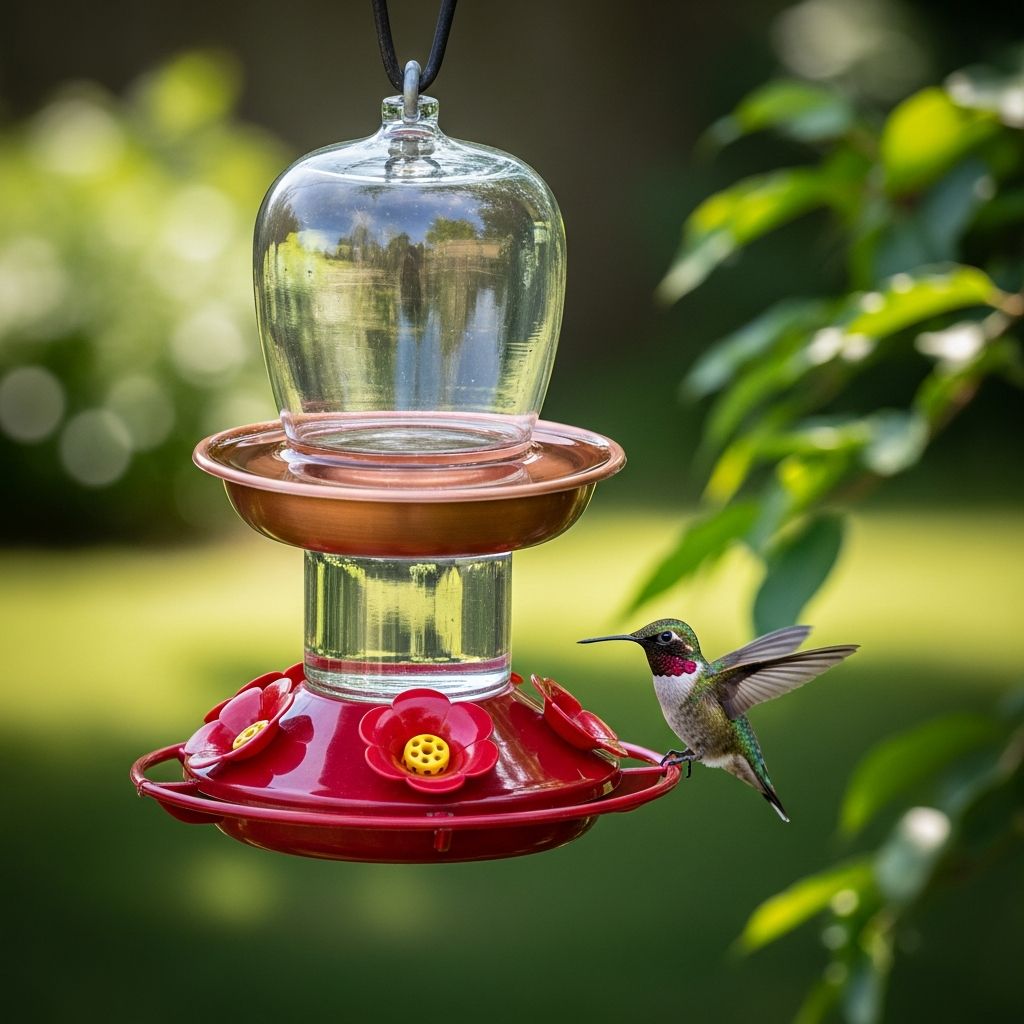
- Built-in ant moat: A small cup or basin above the feeder that can be filled with water forms a physical barrier ants cannot easily cross.
- Non-drip construction: Tight seals and sturdy materials help prevent leaks that attract ants and other insects.
- Few exterior seams: Simpler shapes with fewer joints give ants fewer footholds and reduce the chances of tiny cracks forming over time.
- Easy-clean design: Wide openings and removable parts make it easier to scrub away any sugary residue that might lure ants.
Hanging vs. post-mounted feeders
| Mount Style | Ant Risk | Typical Solutions |
|---|---|---|
| Hanging from tree or hook | Moderate to high if branches or hooks are easy to crawl | Use fishing line, ant moats, or ant-proof hooks between support and feeder |
| Mounted on a pole | High, since ants can climb directly up the pole | Install pole-mounted barriers, sticky bands, or textured zones that ants avoid |
| Mounted on a deck or railing | Very high if ants colonize nearby structures | Use surface barriers, seal gaps, and minimize spills around the mount |
Strategic Placement to Limit Ant Access
Where you position your hummingbird feeder often determines how quickly ants find it. A little planning at the start can save many hours of cleaning and troubleshooting later in the season.
- Keep distance from ant highways: Avoid placing feeders near tree trunks, foundations, or garden beds where ant trails are already visible.
- Use open air: Suspending a feeder from a hook in open space makes it harder for ants to reach than a feeder touching walls or branches.
- Adjust height: Hanging the feeder sufficiently high reduces the number of possible access points from nearby plants and structures.
- Rotate locations: Moving the feeder periodically disrupts established ant trails and can slow rediscovery of the food source.
Creating Physical Barriers: Ant Moats and More
Physical barriers are among the most reliable ways to keep ants out of hummingbird feeders, because they rely on simple mechanics rather than chemicals. When properly maintained, these barriers stop ants before they can ever reach the nectar.
Using water moats effectively
An ant moat is a small container of water that sits between the feeder and its hanging point, forcing ants to cross water to continue their journey. Since most ants will not swim across, the water forms an effective blockade.
- Fill the moat with clean water and check it frequently during hot weather to prevent evaporation.
- Ensure the moat is level so that water does not spill onto the feeder or the ground, which could attract more insects.
- Clean the moat regularly to remove debris, drowned insects, and algae buildup.
Fishing line and smooth hangers
Another way to block access is to make the path too difficult for ants to climb. A length of smooth, thin fishing line between the support and the feeder can serve as a kind of tightrope that ants struggle to cross.
- Choose a line strong enough to support the combined weight of the feeder and visiting birds.
- Keep the line as vertical and unobstructed as possible to prevent ants from using nearby surfaces to bridge the gap.
- Inspect the line periodically for fraying, tangles, or knots that might give ants extra grip.
Pole and post barriers
If your feeder is mounted on a pole, consider installing a physical barrier partway up the support. The goal is to create a zone that ants cannot easily cross without relying on anything that might endanger birds.
- Use inverted cones, collars, or baffles sized so ants cannot simply walk around or over them.
- Position barriers far enough below the feeder so birds cannot accidentally brush against them while feeding.
- Avoid using household chemicals or heavy greases directly on the mounting hardware where birds might come into contact.
Preventing Leaks and Spills That Attract Ants
Even the best barrier will struggle if nectar is constantly dripping onto the ground or feeder surfaces. Sticky spills act as both a beacon and a reward for ants, making the area impossible to resist.
Common causes of feeder leaks
- Temperature changes: Heat expansion can force nectar out of ports or seams, leading to slow, steady drips.
- Overfilling: Filling the reservoir to the very top often increases pressure on seals and ports.
- Loose parts: Worn gaskets, cracked plastic, or misaligned bases create small gaps where nectar can escape.
Simple fixes for a cleaner setup
- Fill feeders only as high as needed and keep them upright while carrying and hanging.
- Periodically tighten all connections and check for hairline cracks.
- Replace damaged gaskets, rubber rings, or warped components rather than trying to work around chronic leaks.
- Wipe the exterior of the feeder after refilling to remove any stray drops of nectar.
Natural Ways to Discourage Ants
Many household and garden materials have strong scents or textures that ants dislike. When used carefully and kept away from feeding ports, these natural deterrents can complement physical barriers without putting hummingbirds at risk.
Herbs and aromatic plants
Some strongly scented plants are less attractive to ants and can be incorporated into your overall garden design around hummingbird areas.
- Plant aromatic herbs in containers placed near, but not touching, the feeder support to subtly discourage ant traffic.
- Rotate or refresh herb clippings if you use them on nearby railings or posts, as scent fades over time outdoors.
- Avoid rubbing plant material directly on the feeder itself to keep oils and residues away from the nectar ports.
Textured or uncomfortable surfaces
Ants prefer smooth, predictable routes, and may avoid surfaces that feel sharp, gritty, or unstable underfoot.
- On horizontal surfaces far below the feeder, you can experiment with narrow bands of rough texture such as grit or coarse mulch to disrupt ant paths.
- Keep any such materials well separated from the feeder’s openings so that nothing can blow or fall into the nectar.
- Observe how ants respond and adjust placement if they simply find a new path around the barrier.
Cleaning and Maintenance Routines That Keep Ants Away
Even the most cleverly designed setup will fail without consistent upkeep. Routine cleaning not only protects hummingbirds from mold and fermentation, it also removes sticky residue that draws ants and other insects.
How often to clean
- In warm weather, aim to clean the feeder and replace nectar every two to three days.
- During cooler periods, weekly cleaning may be adequate, provided the nectar remains clear and fresh.
- Increase the frequency any time you see cloudiness, mold specks, or a sudden surge of insect activity.
Safe cleaning methods
- Rinse all parts with warm water and use a small bottle brush to reach narrow ports and corners.
- For stubborn buildup, soak components in a mild solution of water and a small amount of unscented dish soap, then rinse thoroughly.
- Allow every component to dry completely before refilling, especially if you have disassembled seals or gaskets.
- Clean the hanging hardware, hooks, and nearby surfaces to remove any dried nectar or insect residue that might attract ants.
Balancing Ant Control with Hummingbird Safety
Any strategy you use around a hummingbird feeder must prioritize the health and safety of the birds. Solutions that might work in another context—strong insecticides or sticky coatings applied everywhere—can be dangerous near delicate wings and feathers.
- Avoid using pesticides directly on or immediately above the feeder, even if labels mention being bird-safe.
- Do not coat the feeder body or ports with oils, petroleum jelly, or similar substances, as these can foul feathers or contaminate nectar.
- Limit any sticky or greasy barriers to locations birds cannot touch, such as lower portions of poles well below the feeder.
- Observe bird behavior; if hummingbirds seem hesitant or distressed, reevaluate any recent changes you have made around the feeder.
Putting It All Together: A Simple Ant-Free Setup
Combining several moderate measures is usually more effective than relying on a single extreme tactic. You can assemble a low-maintenance, ant-resistant feeding station with a few key components and habits.
- Start with a sturdy, non-leaking feeder that is easy to clean and, ideally, includes a built-in ant moat.
- Hang the feeder in open space from a hook using smooth fishing line or another difficult-to-climb connector.
- Fill the ant moat with water and check it every time you replace the nectar.
- Clean and refill the feeder regularly on a schedule appropriate for the temperature and activity level.
- Monitor for ant trails on nearby surfaces and adjust placement or add barriers if new access routes appear.
- Fine-tune with gentle deterrents such as strategic plantings or textural barriers, always keeping bird safety in mind.
FAQs About Ants and Hummingbird Feeders
Do a few ants in the feeder really matter?
Yes. Even a small number of ants can contaminate the nectar as they drown and decompose, and the presence of insects may cause hummingbirds to visit less often or avoid the feeder altogether. Addressing the issue early helps maintain both water quality and bird confidence.
Can I use strong insect sprays around the feeder?
It is best to avoid spraying insecticides near any hummingbird feeder. Residues can drift onto the feeder, contaminate nectar, or coat perches and ports where birds rest and feed. Focus on physical barriers, clean conditions, and gentle deterrents that do not introduce risky chemicals.
Is petroleum jelly or cooking oil safe to keep ants away?
Using sticky or greasy materials directly on feeder parts is not recommended, because these substances can transfer to hummingbird feathers and interfere with their ability to fly and stay warm. If you choose to use any such barrier, keep it far below the feeder on poles or supports that birds never touch, and apply it sparingly.
Why do ants keep coming back even after I move the feeder?
Ants leave chemical trails that guide other members of the colony back to a food source. If some nectar or residue remains in the original area, or if the new location is within easy reach of existing trails, ants can quickly locate the feeder again. Moving the feeder farther, cleaning the old spot thoroughly, and adding barriers at the new site help break the cycle.
How often should I replace the nectar?
In hot weather, changing the nectar every two to three days is a good practice, and in cooler conditions weekly changes are often sufficient. Fresh nectar not only keeps hummingbirds healthy but also reduces fermentation and stickiness that can draw more ants and other insects.
Similar Articles







Read full bio of Sneha Tete