Kitchen Cabinet Fillers: Complete Installation Guide
Master cabinet filler installation with expert techniques and professional methods for seamless cabinetry.
Understanding Cabinet Fillers and Their Purpose
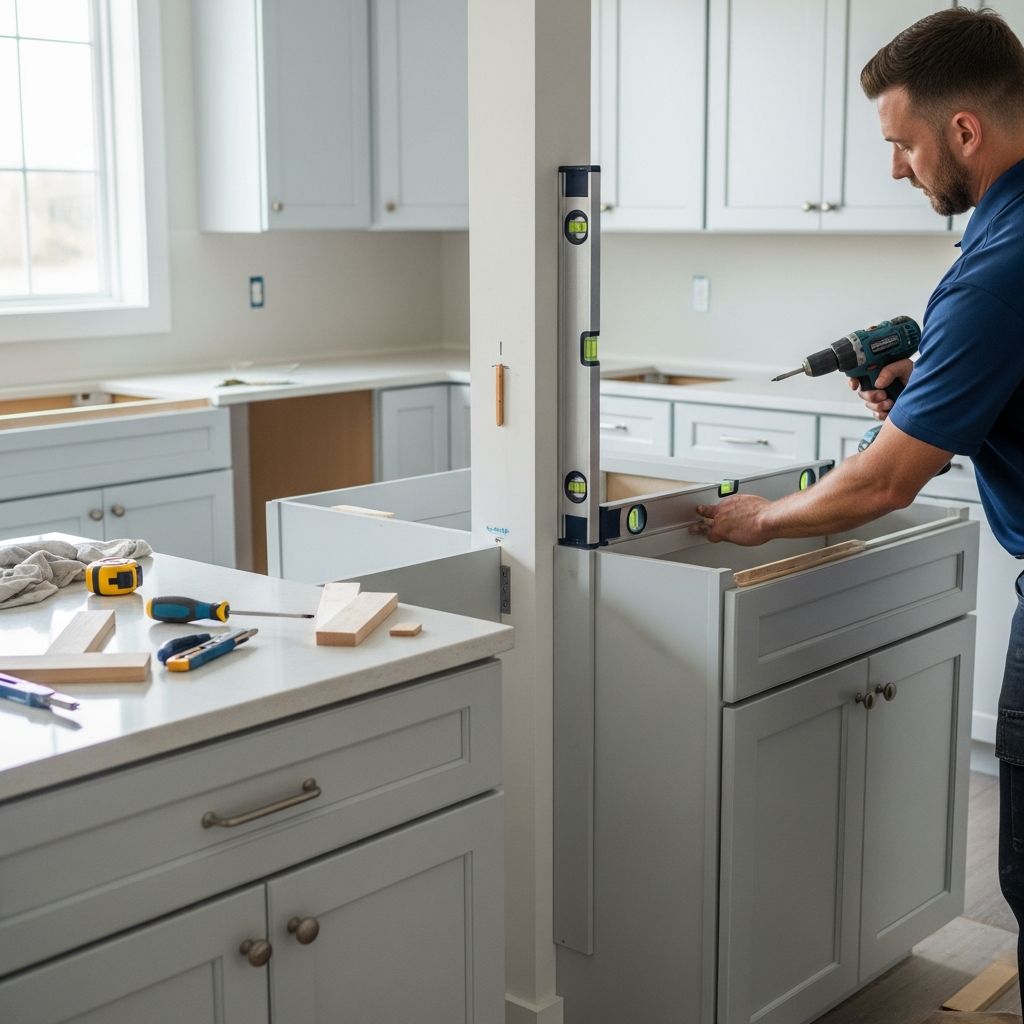
Cabinet fillers are essential components in kitchen and bathroom cabinetry installations that bridge gaps between cabinets and walls or other structural elements. These strips serve both functional and aesthetic purposes, creating a polished appearance while maintaining the clean lines of your cabinetry. When walls are uneven, irregular, or when cabinet configurations don’t align perfectly with the available space, fillers provide a professional solution to close these gaps seamlessly.
A typical cabinet filler consists of two main components: the backing piece and the front filler strip. The backing piece is essentially raw material that anchors behind the cabinet, while the front portion features finished edges that match your cabinet design and color. Understanding the composition and purpose of these elements is fundamental to executing a proper installation.
Assessing Your Space and Measuring Accurately
Before beginning any installation work, thorough assessment of your space is critical. Examine the wall where the filler will be installed and determine if it’s plumb and straight. Most residential walls contain slight imperfections, and identifying these variations allows you to plan your approach accordingly. Use a level to check vertical alignment and a straightedge to identify any bowing or irregularities in the wall surface.
Accurate measurement forms the foundation of successful filler installation. Measure the gap between your cabinet and the wall at multiple points—top, middle, and bottom—since walls are rarely perfectly straight. Document the largest measurement, as this determines the minimum filler width you’ll need. Standard fillers typically come in increments of one-half inch or one inch, and they usually include an additional half-inch of trim material to accommodate wall irregularities and provide adjustment flexibility.
Mark your measurements clearly using a mechanical pencil, which provides precision that standard pencils cannot achieve. These marks serve as your reference points throughout the installation process and help ensure proper alignment when securing the filler components.
Essential Tools and Materials for Installation
Preparing the right tools before starting your project streamlines the installation process and helps achieve professional results. The following items are fundamental to completing a cabinet filler installation:
- Mechanical pencil for precise marking and layout
- Power drill with pre-drill bit and screwdriver tip attachments
- Two-inch trim screws with minimal head profiles to avoid visibility
- Wood block for clamping and securing positioning during installation
- C-clamps to hold components steady while working
- Tape measure and level for accurate measurements and alignment verification
- Hammer or mallet for setting dowels or tapping components into position
- Dowels (typically wooden) for alignment and structural support
- Construction adhesive, double-sided foam tape, or panel adhesive for securing components
Having all materials organized and within reach before beginning reduces interruptions and maintains workflow momentum. Quality tools produce superior results and make the installation process noticeably more efficient.
Preparing the Backing Filler Component
The backing piece serves as the structural foundation that anchors your filler to the cabinet frame. Begin by positioning the backing component against the cabinet side, ensuring it aligns flush with the top edge of the cabinet. Use your wood block and clamp to hold the backing securely in position, preventing any movement during the drilling and fastening process.
Pre-drilling is a critical step that prevents wood splitting and allows for precise screw placement. Using a bit slightly smaller in diameter than your trim screws, create pilot holes at strategic locations—typically near the top, middle, and bottom of the backing piece. These pre-drilled holes guide your screws and ensure they seat properly without forcing or stripping the material.
Once your pilot holes are established, carefully insert your trim screws through the backing and into the cabinet frame. The small head profile of trim screws prevents protrusion and maintains clean lines. Ensure screws are tight but not over-torqued, which can cause material compression or damage. The backing piece should now be permanently secured and properly aligned.
Installing the Front Filler Strip Using the Dowel Method
The dowel method represents a modern approach to filler installation that provides excellent alignment and structural integrity. This technique involves using wooden dowels to connect the backing piece to the front filler strip, creating a unified assembly.
Begin by examining your backing piece to locate the dowel holes—these are pre-drilled holes with precise spacing designed to align perfectly with corresponding holes in the front filler strip. Before final installation, pre-tap your wooden dowels into the backing piece holes. This preparatory step is best completed before the backing is installed on the cabinet, but it can also be done after backing installation with careful technique to prevent damage.
Position each dowel so that it extends approximately one-eighth inch from the backing surface. This precise gap is intentional and serves a specific purpose: since cabinet doors have hinges and drawer guides that kick the door outward slightly, maintaining this eighth-inch gap keeps the filler flush with the door plane, creating a cohesive, professional appearance. Without this gap, the filler would sit behind the doors, creating an unsightly recessed appearance.
Align the front filler strip with the extended dowels and carefully slide it onto the backing. The dowels guide the front strip into perfect position without requiring adhesive or fasteners visible on the face. Once fully seated, tap the front filler gently with a hammer using a sacrificial wood block to avoid surface damage, ensuring it sits completely flush with the door faces.
Alternative Installation Method: Adhesive and Tape Approach
For situations where the dowel method isn’t appropriate or preferred, an alternative technique using construction adhesive and double-sided foam tape provides reliable results. This method is particularly useful for complex installations or when dowel holes aren’t available.
Begin by ensuring your backing piece is securely fastened to the cabinet frame using the methods described previously. Next, prepare your foam tape by removing the backing from one side and applying it strategically around the rear surface of the front filler strip. The foam tape should be at least one-eighth inch thick to provide adequate support and spacing.
Apply your selected adhesive—construction adhesive, panel adhesive, or silicone caulk all work effectively—to the backing piece surface where the front filler will contact. Use an even, generous application that covers the entire contact area. Remove the backing from the foam tape and carefully position the front filler strip onto the backing, pressing firmly to activate both the foam tape and adhesive.
The foam tape holds the front strip in position while the adhesive cures, preventing any shifting or slipping during the drying process. Most construction adhesives require several hours to reach full strength, so avoid disturbing the installation during this period. Once fully cured, the adhesive provides a permanent bond while the foam tape continues to support the structural integrity of the joint.
Scribing and Trimming for Wall Irregularities
Perfect walls are rare in residential construction, and cabinet fillers must adapt to existing wall conditions. Scribing is the technique that allows your filler to fit snugly against uneven walls, creating seamless integration regardless of wall imperfections.
Position your filler assembly against the wall, ensuring it’s level and properly aligned with the cabinet and doors. Use a mechanical pencil held in a vertical position while moving it along the wall, tracing the wall’s contours onto the filler surface. This scribing line follows every bump, bow, and irregularity in the wall.
Remove the filler assembly and carefully cut along your scribed line using a circular saw or table saw, depending on your workshop setup and comfort level. Make your cut slowly and deliberately, checking your progress frequently to ensure you don’t remove too much material. A test fit after each small adjustment helps you achieve the perfect fit without overcutting.
Once your filler has been trimmed to match the wall contours perfectly, reinstall it using either the dowel method or adhesive method previously described. The customized fit creates an invisible transition between the cabinet and wall, producing a built-in appearance.
Securing Fillers at Blind Corner Applications
Blind corner cabinets present unique installation challenges because access to fastening areas is limited. These applications require alternative techniques that work within the constraints of the cabinet configuration.
For blind corner installations, mark the center point of the cabinet side where your filler will attach. Using a drill bit and screwdriver bit long enough to reach through the cabinet side, create fastening access from the interior of the cabinet. This inside-out fastening approach hides all visible fasteners while providing secure attachment.
Pre-drill pilot holes from inside the cabinet, then insert trim screws that pass through the cabinet side and into the backing piece. Position multiple screws vertically along the attachment line to distribute the load and ensure stability. This technique requires careful planning but produces results indistinguishable from standard front-facing fastening.
Finishing and Alignment Verification
After your filler is secured, verify that all components are perfectly aligned and flush. Check the alignment of the filler top with the cabinet top reveal, ensuring they create a continuous line. Use your level to confirm vertical alignment and inspect for any gaps between the filler and doors.
If your countertop installation is planned, the filler height becomes particularly important. Maintaining a consistent reveal height ensures that your stone or laminate installer can set the countertop without complications. A 3/8-inch reveal has become standard in the industry because it accommodates typical countertop thickness and prevents binding or installation difficulties.
Examine all fasteners and connections to ensure they’re completely hidden from view. Any visible screw heads, nail holes, or rough edges should be addressed with wood filler, touch-up stain, or paint to match your cabinet finish. These final touches transform a functional installation into a professional result.
Common Installation Mistakes to Avoid
Understanding typical errors helps prevent frustrating mistakes during your installation:
- Failing to measure at multiple points, leading to gaps because you underestimated variation in wall irregularity
- Over-tightening fasteners, which can crush wood fibers and weaken the connection
- Neglecting to pre-drill, resulting in cracked wood or fasteners that won’t seat properly
- Forgetting to maintain the eighth-inch gap for door clearance, causing misalignment with the door plane
- Using inadequate adhesive coverage, leading to eventual separation and gaps
- Installing fillers before other cabinetry is complete, risking damage during subsequent work
- Failing to verify levelness and alignment at multiple stages, compounding small errors into visible defects
Specialized Situations and Solutions
Custom cabinetry sometimes requires fillers wider than standard offerings. In these cases, constructing a custom filler by attaching a nailing strip to a wider backing board provides a workable solution. The nailing strip allows you to screw through the cabinet interior into the filler support structure, creating a secure attachment without visible fasteners on the filler face.
For peninsula or island installations where both sides of the filler are visible, select finish materials and installation methods that accommodate this dual-exposure situation. Ensure your scribing and finishing work is professional-quality on both surfaces since there’s no hidden back side in these applications.
Frequently Asked Questions
Q: What thickness foam tape should I use for filler installation?
A: Use foam tape that is at least 1/8 inch thick. This thickness maintains the critical spacing between the filler and doors while providing adequate support for the front strip during adhesive curing.
Q: Can I install fillers after countertops are in place?
A: Installation is significantly more difficult after countertop installation, though not impossible. It’s always better to install fillers before countertops to ensure proper alignment and prevent complications with the countertop installation process.
Q: What’s the difference between the dowel method and the adhesive method?
A: The dowel method provides mechanical alignment without adhesive, making future adjustment possible and ideal for precision installations. The adhesive method creates a permanent bond suitable for straightforward applications without wall irregularities.
Q: How do I handle fillers on wall cabinets?
A: Wall cabinet fillers follow the same installation principles as base cabinets. Ensure proper support during installation using shims and clamps, and verify that all fasteners are securely seated before removing support structures.
Q: Should fillers be finished or stained after installation?
A: Pre-finished fillers that match your cabinet color are typically purchased. However, if touch-ups are needed, use matching stain or paint after installation is complete and all fasteners are hidden.
References
- Step-by-Step Cabinet Filler Installation Process — Cabinet Installation Expert Resources. 2024. https://www.youtube.com/watch?v=mAcMC6kXN9g
- Step-by-Step Guide to Cutting and Installing Cabinet Fillers — Cabinet Installation Expert Resources. 2024. https://www.youtube.com/watch?v=-awEvQEd1RY
- How to Install Cabinet Filler — Cabinets Quick Installation Guide. 2024. https://www.youtube.com/watch?v=4c4K7LE3U9I
- How to DIY Cabinet Filler Strips for a Custom Look — Erin Zubot Design. 2024. https://erinzubotdesign.com/how-to-diy-cabinet-filler-strips-for-a-custom-look/
- How to Install Cabinet Filler and Attach to Blind Corner — Cabinet Installation Expert Resources. 2024. https://www.youtube.com/watch?v=pIFZMdwQRv4
Similar Articles






Read full bio of medha deb