Mastering KraftMaid Drawer Removal and Reinstallation
Comprehensive guide to safely removing, adjusting, and reinstalling KraftMaid drawers for seamless cabinet maintenance and repairs.
KraftMaid cabinets are renowned for their durability and smooth-gliding drawers, but even high-quality systems occasionally require disassembly for cleaning, repairs, or adjustments. Whether you’re dealing with standard drawer boxes, slab fronts, or base pull-out trays, understanding the precise mechanisms is key to avoiding damage. This guide draws from official manufacturer demonstrations to provide clear, actionable steps, ensuring your cabinets remain in top condition without professional intervention.
Understanding KraftMaid Drawer Systems
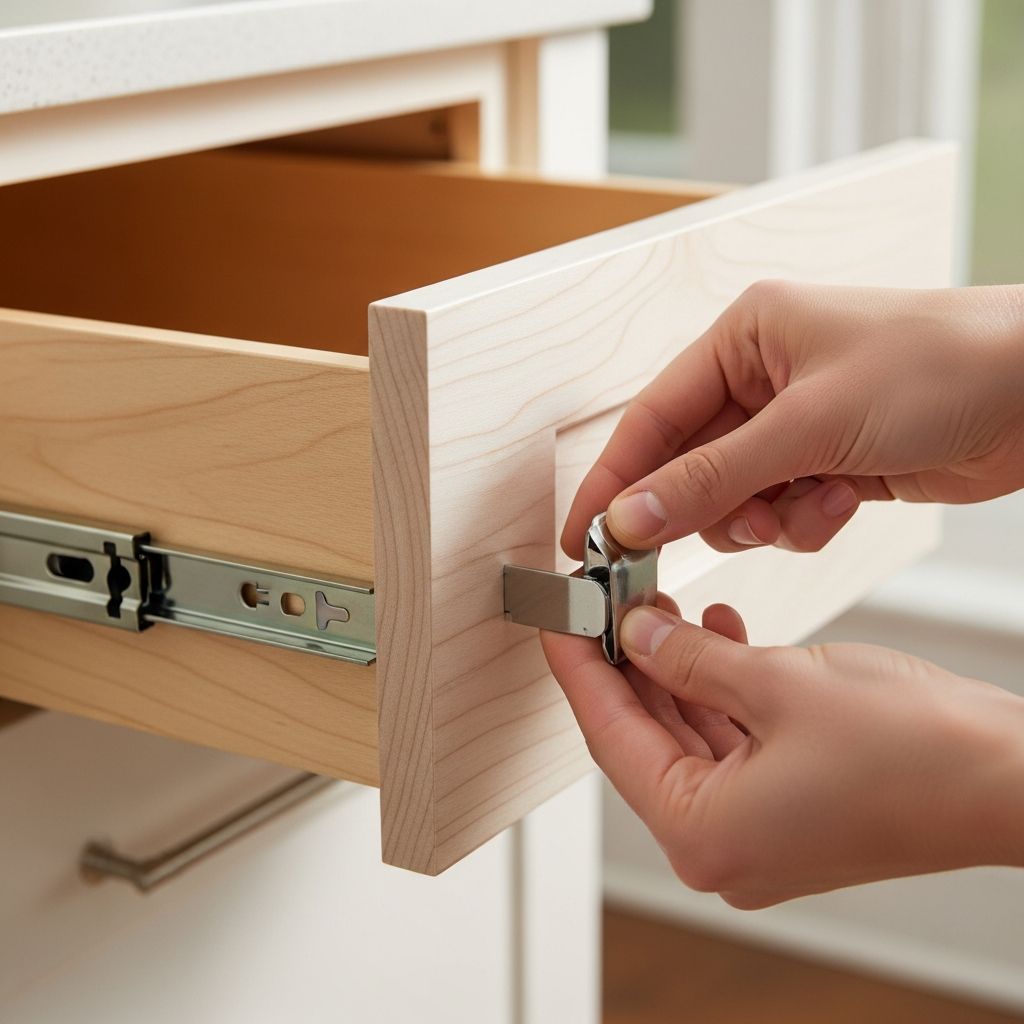
Before diving into removal processes, it’s essential to familiarize yourself with the components. KraftMaid employs full-extension ball-bearing runners with integrated locking mechanisms, typically featuring orange release levers and gray adjustment knobs. These allow for easy detachment while maintaining stability during use. Drawer fronts may attach via brackets or direct screws, depending on the model—slab fronts often screw directly into the box, while paneled versions use adjustable brackets.
Base pull-out units, such as 9-inch or 12-inch trays, utilize side-access clips or under-unit releases, paired with over-travel stops for secure positioning. Recognizing these elements prevents common errors like forcing tracks or misaligning runners.
Tools Required for the Job
Most tasks demand minimal equipment, promoting accessibility for DIY enthusiasts:
- Phillips or flat-head screwdriver (for bracket screws and covers)
- 3/8-inch wrench (for certain pull-out adjustments)
- Optional: Pliers for stubborn clips, clean cloth for post-removal wiping
No specialized tools are needed, as KraftMaid designs prioritize user-friendliness. Always work on a stable surface to protect drawers from impacts.
Step-by-Step Guide to Removing Standard KraftMaid Drawers
Standard drawer removal is straightforward and takes under a minute per drawer. Follow these steps meticulously:
- Fully extend the drawer: Pull the drawer completely out until it stops, exposing the full-extension runners.
- Locate the locking mechanisms: At the rear of each track, identify the orange components— these are the release levers.
- Disengage the levers: Using both hands, pull the orange levers outward toward the sides of the drawer box. This unlocks the runners from the cabinet frame.
- Lift and remove: Gently tilt the front upward and lift the entire box out. Avoid dragging to prevent scratching the tracks.
Tip: If the drawer resists, ensure levers are fully pulled; partial engagement can mimic a jam.
Adjusting Drawer Box Height and Alignment
Post-removal, or without full extraction, height tweaks are simple. On each runner’s end, a gray plastic adjuster controls vertical positioning:
- Flip the adjuster outward to raise the rear of the drawer.
- Flip inward to lower it.
For side-to-side leveling, manipulate the track locking mechanisms directly:
| Adjustment Type | Action | Effect |
|---|---|---|
| Raise side | Push gray knob toward cabinet back | Lifts that side higher on frame |
| Lower side | Pull gray knob toward cabinet front | Drops that side lower |
These micro-adjustments ensure even alignment across multiple drawers, crucial for aesthetic uniformity in kitchen islands or vanities.
Handling Drawer Front Adjustments
Bracket-Mounted Fronts
For drawers with bracket attachments:
- Remove the plastic bracket cover by prying gently with a screwdriver.
- Loosen screws securing the bracket to the drawer box (vertical adjustment) or to the front panel (horizontal/side-to-side).
- Shift the front as needed, then retighten screws.
- Reattach the cover by aligning its grooves with bracket tabs for a snap-fit.
Slab Front Drawers
Slab styles attach directly via screws through the drawer box into the front panel:
- Access screws from inside the box, behind the front.
- Loosen (don’t remove fully) to slide or tilt the panel.
- Realign precisely, then tighten while checking gaps.
Both methods allow for reveal adjustments—typically 1/2-inch even spacing around the front.
Removing and Adjusting Base Tray Pull-Outs
KraftMaid base trays differ by width, requiring model-specific techniques.
9-Inch Units
- Fully extend the unit.
- Through side openings, slide black clips inward on each of the three ball-bearing runners.
- Lift out once all clips release.
12-Inch Units
Without side access:
- Extend fully.
- From underneath, press all three black clips inward simultaneously.
- Lift carefully, supporting the weight evenly.
Reinstallation for Both: Extend cabinet runners fully, align middle runner first, then sides. Slide in slowly and test full extension.
Fine-Tuning Pull-Out Alignment
Vertical: Use gray knobs on locking mechanisms, same as drawers—push back to raise, front to lower.
Horizontal: Loosen front nuts with 3/8-inch wrench, shift left/right, retighten.
Depth/Reveal: Adjust rear screws inside the unit—clockwise tightens (pulls front closer), counterclockwise loosens (adds gap).
Over-travel stops: Loosen rear screws, slide stops behind unit to engage, or pull wooden knob up to disengage for deeper access.
Common Mistakes and Troubleshooting
Avoid these pitfalls for frustration-free maintenance:
- Forcing levers: Always pull orange components fully outward; partial pulls cause binding.
- Misaligned reinstallation: Middle runner first prevents skewing.
- Over-tightening screws: Snug is sufficient—excess force strips threads.
- Ignoring over-travel: Disengage stops before deep cleaning to avoid drawer rollback.
If a drawer won’t extend fully, check for debris on runners or misadjusted stops. Clean tracks with a soft brush and mild soap.
Maintenance Best Practices
Regular care extends drawer life:
- Wipe runners monthly with a damp cloth; avoid harsh chemicals.
- Lubricate with silicone spray annually for smoother glide.
- Inspect screws quarterly, tightening as needed.
- Empty drawers before heavy adjustments to reduce strain.
For persistent issues, consult KraftMaid’s support resources or a certified installer.
Frequently Asked Questions (FAQs)
Can I remove KraftMaid drawers without tools?
Yes, standard drawer boxes release via orange levers alone; fronts and pull-outs may need a screwdriver.
How do I fix a crooked drawer front?
Loosen bracket screws, realign, and tighten. Use gray knobs for box-level tweaks.
What’s the warranty on KraftMaid slides?
Limited lifetime on functional hardware; check your installation docs for details.
Are adjustments reversible?
Fully—simply reverse the steps to restore original positioning.
How often should I clean the runners?
Every 3-6 months, or more in high-use kitchens.
Advanced Tips for Custom Installations
In remodels, pre-adjust runners before final install. For stacking drawers, level from bottom up. Integrate soft-close upgrades per manufacturer specs for enhanced performance.
Word count: 1678 (excluding HTML tags and metadata).
References
- How to Remove and Adjust KraftMaid Drawers and Drawer Fronts — KraftMaid. 2024-04-30. https://www.youtube.com/watch?v=talIij2SPBo
- How to Adjust KraftMaid Base Tray Pull Out Cabinets — KraftMaid. 2024-04-30. https://www.youtube.com/watch?v=SECY0iD9Wd8
- How to Adjust KraftMaid Base Pull Out Cabinets — KraftMaid. Date not specified; official demo video. https://www.youtube.com/watch?v=ZAzZTESxSao
- Adjusting Cabinet Hinges, Drawers and Fronts — KraftMaid. Accessed 2026. https://www.kraftmaid.com/support/cabinet-adjustment-tips/
- Cabinet Installation Support — KraftMaid. Accessed 2026. https://www.kraftmaid.com/support/cabinet-installation/
Similar Articles




Read full bio of medha deb