Ladybug vs Asian Lady Beetle: Key Differences
Learn to distinguish between ladybugs and Asian lady beetles and understand their impact on your home.
Ladybug vs. Asian Lady Beetle: Understanding the Key Differences
Many homeowners and gardeners often confuse ladybugs with Asian lady beetles, assuming they are the same insect. While both belong to the same insect family, Coccinellidae, they are distinctly different bugs with varying appearances, behaviors, and seasonal patterns. Understanding these differences is crucial for determining whether you have a beneficial garden ally or a potential household pest. This comprehensive guide will help you identify which beetle you’re dealing with and understand their impact on your home and garden.
Visual Identification: Spotting the Differences
While ladybugs and Asian lady beetles share a similar general appearance, careful observation reveals several distinctive visual characteristics that can help you tell them apart.
Size Comparison
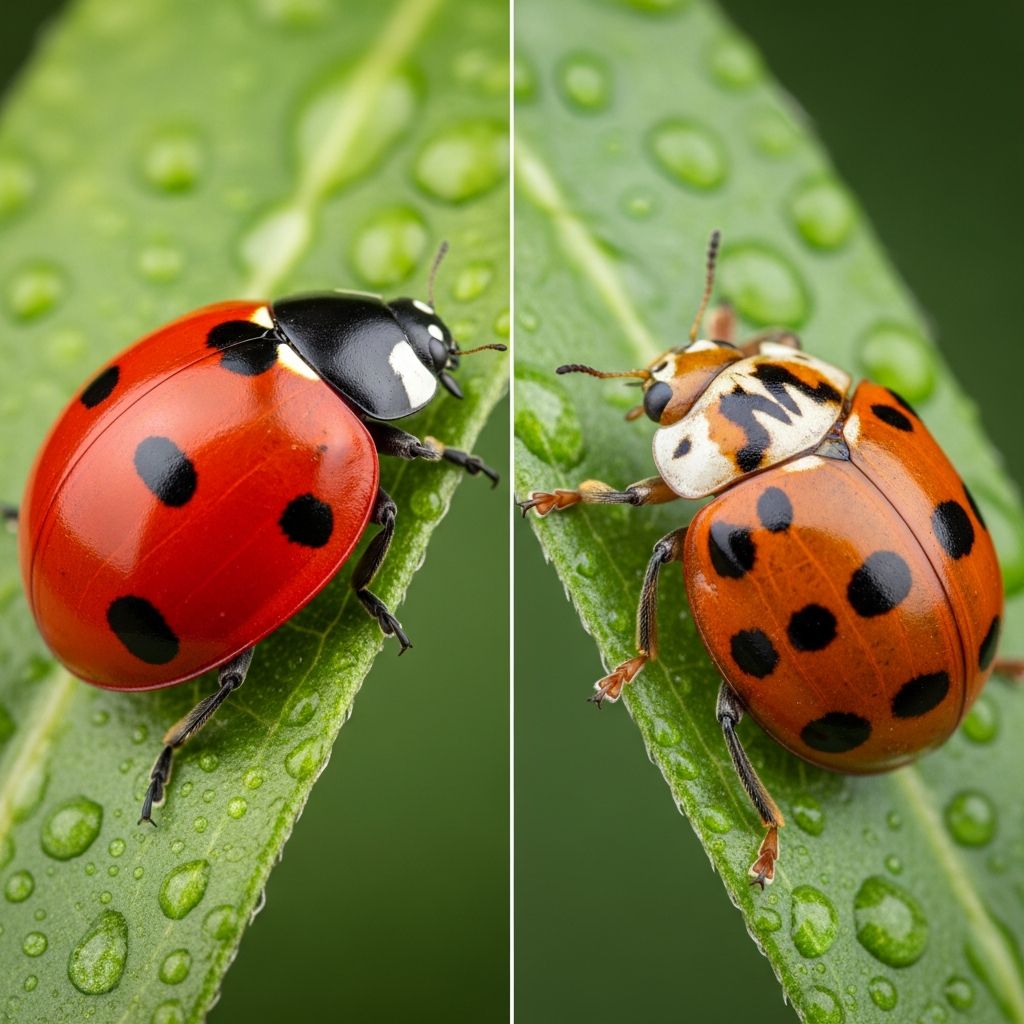
The first noticeable difference between these insects is their size. Ladybugs are generally smaller, typically measuring around 5 to 7 millimeters in length. Asian lady beetles, by contrast, are slightly larger, ranging from 5.5 to 8.5 millimeters in length and about 5.5 millimeters in width. This size difference may seem minimal, but when observing these insects side by side, the Asian lady beetle appears noticeably more substantial.
Body Shape and Structure
Another distinguishing feature lies in their body shape. Ladybugs have a distinctly round, dome-shaped appearance with a smooth, symmetrical form. Asian lady beetles, however, tend to be more oval and elongated, appearing slightly less compact than their ladybug counterparts. This subtle difference in shape can be a helpful identifying factor when you’re examining these beetles in your garden or home.
Color Variations
While both insects often display red or orange coloring, the consistency of their hues differs significantly. Ladybugs maintain a bright, uniform red color with consistent black spots on their wing covers, known as elytra. Asian lady beetles, however, display much greater color variation. They can range from bright red to orange, pale yellow, or even rusty golden tones. Some Asian lady beetles may have very few or no spots at all, which is a clear indicator of their species.
The Distinctive “M” Marking
Perhaps the most reliable way to distinguish an Asian lady beetle from a ladybug is the presence of a distinctive white “M” or “W”-shaped marking on their head. This marking appears on the white pronotum, the area between the beetle’s head and body, and varies in size and thickness but is consistently present on Asian lady beetles. In contrast, ladybugs have a mostly black head with only small, white markings on the sides that resemble cheeks. Additionally, ladybug heads appear shorter and less pointed compared to Asian lady beetles.
Spot Patterns
Ladybugs consistently display black spots on their wing covers, with the number of spots varying by species but remaining relatively uniform in size and shape. Asian lady beetles, conversely, have inconsistent spot patterns. Some may have numerous spots, while others may have few or none at all. The absence of spots on an Asian lady beetle is a definitive identifier distinguishing it from a traditional ladybug.
Behavioral Differences: Lifestyle and Habits
Beyond their physical appearance, ladybugs and Asian lady beetles exhibit significantly different behavioral patterns that affect how they interact with your garden and home.
Garden Feeding Habits
Both ladybugs and Asian lady beetles are voracious consumers of garden pests, particularly aphids. A single ladybug can consume up to 5,000 aphids throughout its lifetime, making them invaluable for natural pest control. Asian lady beetles similarly feed on aphids and other harmful insects that damage plants. In this respect, both insects provide genuine benefits to gardeners and agricultural environments by naturally reducing pest populations without the need for chemical pesticides.
Social Behavior and Congregation
One of the most significant behavioral differences between these two insects is their social tendency. Ladybugs are generally solitary and prefer to remain outdoors where food sources are abundant. They rarely congregate in large numbers and tend to disperse throughout gardens and natural areas. Asian lady beetles, by contrast, are highly social insects that exhibit strong swarming behavior, particularly as temperatures drop. They gather in large groups on reflective surfaces like windows and sliding glass doors, often on the sunny sides of buildings.
Seasonal Patterns and Overwintering Behavior
The most troublesome difference between ladybugs and Asian lady beetles emerges during the colder months, when their winter shelter preferences diverge dramatically.
Ladybug Winter Shelter
As temperatures cool in autumn, ladybugs seek natural outdoor shelters for hibernation. They prefer to overwinter under leaves, in tree crevices, under rocks, and in similar protected outdoor locations. This natural behavior means ladybugs rarely enter homes and do not become household pests during winter months. Their preference for outdoor shelters makes them unobtrusive during the cold season.
Asian Lady Beetle Invasion
Asian lady beetles, however, actively seek warm indoor environments as temperatures begin to drop in fall. They are notorious for gathering in massive numbers on the sunny sides of buildings and finding their way inside through cracks, crevices, and other openings in your home’s exterior. Once indoors, they congregate in dark, quiet spaces to hibernate, often in enormous groups that can number in the thousands. This behavior transforms them from garden helpers into household nuisances during the winter months.
Impact on Humans and Property
Understanding how these insects affect humans and property is essential for homeowners deciding how to respond to their presence.
Ladybug Safety and Benefits
Ladybugs are considered highly beneficial and harmless insects. They do not sting and rarely bite, and when they do, the bite feels like a light pinch. Ladybugs pose no threat to humans, pets, or property and are often viewed as symbols of good luck. Many gardeners actively encourage ladybug populations in their gardens because of their pest-control benefits. Ladybugs will not produce odors or cause staining of your home’s surfaces.
Asian Lady Beetle Nuisances
While Asian lady beetles are not inherently dangerous to humans, they can create significant problems when they invade homes. These beetles “bite” by scraping the skin they land on, which can be uncomfortable. More troublesome is their ability to release a foul-smelling, yellowish liquid from their leg joints when threatened or crushed—a process called “reflex bleeding.” This excretion is not poisonous but can trigger minor allergic reactions in sensitive individuals and can stain walls, fabrics, and furniture with permanent yellowish marks.
Comparison Table: Ladybugs vs. Asian Lady Beetles
| Feature | Ladybug | Asian Lady Beetle |
|---|---|---|
| Size | 5-7 mm | 5.5-8.5 mm |
| Shape | Round, dome-shaped | Oval, elongated |
| Color | Bright, uniform red | Red, orange, yellow, or tan |
| Spot Pattern | Consistent black spots | Inconsistent or no spots |
| Head Marking | Black with white “cheeks” | White “M” marking |
| Behavior | Solitary, outdoor preference | Social, swarming tendency |
| Winter Shelter | Outdoor natural sites | Indoor warm locations |
| Home Invasion | Rarely enters homes | Frequently invades homes |
| Bite/Odor | Rarely bites, no odor | May bite, releases foul odor |
| Staining | No staining | Yellowish stains possible |
Garden Impact: Pests vs. Helpers
Both insects provide valuable services to gardeners by consuming harmful pests. However, their overall impact on your garden and property differs significantly. Ladybugs remain beneficial allies throughout the year, staying in your garden without becoming household pests. Asian lady beetles, while helpful in the garden during warm months, become problematic once they seek indoor shelter. This dual nature of Asian lady beetles makes them both beneficial garden insects and potential household nuisances depending on the season.
How to Prevent Asian Lady Beetle Infestations
If you’ve identified Asian lady beetles invading your home, several preventative measures can help reduce their numbers:
- Seal cracks and crevices around windows, doors, and siding before fall arrives
- Install or repair weather stripping on exterior doors and windows
- Caulk gaps around utility pipes and cables entering your home
- Screen vents and chimney openings with fine mesh
- Avoid outdoor lighting that attracts beetles to the sides of your home
- Use caulk or sealant to close openings between trim and siding
Removing Asian Lady Beetles from Your Home
If Asian lady beetles have already entered your home, gentle removal methods are most effective. Use a vacuum cleaner to collect them, disposing of the contents in sealed bags outside. Alternatively, use a broom and dustpan to sweep them into a container and release them outdoors away from your home. Avoid crushing these beetles indoors, as the resulting stains from reflex bleeding can permanently damage surfaces. Professional pest control services can also help eliminate large infestations.
Frequently Asked Questions
Q: Can ladybugs harm my home or garden?
A: No, ladybugs are beneficial insects that do not cause harm to homes or gardens. They are harmless to humans and pets and help control garden pests by consuming aphids and other harmful insects.
Q: How can I tell if I have an Asian lady beetle infestation?
A: If you notice large numbers of beetles gathering on windows, walls, or other reflective surfaces during fall and winter months, particularly on the sunny sides of your home, you likely have Asian lady beetles. Look for the distinctive white “M” marking on their heads to confirm identification.
Q: Are Asian lady beetles dangerous to my pets?
A: Asian lady beetles are not poisonous, but pets may experience minor digestive upset if they consume large quantities. The reflex bleeding liquid they release can cause minor irritation but is not toxic.
Q: Can I use insecticides to eliminate Asian lady beetles?
A: While insecticides can be used, they are often unnecessary and can harm beneficial insects. Preventative sealing of entry points is more effective and environmentally friendly. If infestation is severe, consult professional pest control services.
Q: Should I encourage ladybugs in my garden?
A: Yes, absolutely. Ladybugs are excellent natural pest controllers and pose no threat to your home. Planting flowers that attract them, such as dill, fennel, and yarrow, can increase their populations in your garden.
Q: Do Asian lady beetles eat the same pests as ladybugs?
A: Yes, both insects feed primarily on aphids and other soft-bodied garden pests. In this respect, they provide similar benefits to gardens during the growing season.
References
- Ladybugs vs Asian Lady Beetles — Plunkett’s Pest Control. Accessed December 2025. https://plunketts.net/blog/ladybugs-vs-asian-lady-beetles
- Ladybugs vs. Asian Lady Beetles: What’s the Difference? — Bug Out Service. Accessed December 2025. https://www.bugoutservice.com/beetle-exterminators/beetle-control/ladybugs-vs-asian-lady-beetles-key-differences/
- Spot the Difference: Ladybug and Asian Beetle — Insect Lore. Accessed December 2025. https://www.insectlore.com/blogs/ladybugs/spot-the-difference-ladybug-and-asian-beetle
Similar Articles







Read full bio of medha deb