Replacing Your Lawn Mower Spark Plug: Step-By-Step Guide
Master the essential skill of replacing your mower's spark plug safely and correctly.
Complete Guide to Replacing Your Lawn Mower Spark Plug
The spark plug is one of the most critical components in any gas-powered lawn mower, responsible for igniting the fuel mixture that powers your engine. Over time, spark plugs accumulate carbon deposits, become fouled, or wear out completely, leading to starting difficulties, poor performance, and increased fuel consumption. Fortunately, replacing a spark plug is a straightforward maintenance task that any homeowner can accomplish with basic tools and a little patience. This comprehensive guide will walk you through every step of the process, from preparation to installation, ensuring your mower runs smoothly and efficiently.
Why Regular Spark Plug Maintenance Matters
A well-maintained spark plug directly impacts your mower’s reliability and performance. When spark plugs degrade, they can cause the engine to misfire, start reluctantly, or stall unexpectedly. Regular inspection allows you to catch problems early, extending your equipment’s lifespan and reducing maintenance costs. Many manufacturers recommend checking spark plugs at the beginning of each mowing season and replacing them every one to two years, depending on usage frequency and operating conditions.
Essential Tools and Materials You’ll Need
Before you begin any work on your mower, gather the following items to ensure the job proceeds smoothly and safely:
- Spark plug socket (typically 13/16 inch or 5/8 inch)
- Ratchet wrench or adjustable wrench
- Wire brush for cleaning
- Spark plug gap tool or feeler gauge
- New replacement spark plug (correct model for your mower)
- Protective gloves and safety goggles
- Clean cloth or compressed air
- Penetrating lubricant (such as WD-40) for stubborn plugs
- Owner’s manual or service documentation
Most spark plugs cost under $10, making this one of the most economical maintenance tasks you can perform. Having all materials ready before starting prevents interruptions and ensures a more efficient process.
Preparing Your Mower for Maintenance Work
Proper preparation is essential for both safety and effectiveness. First, position your lawn mower on flat, stable ground, preferably on concrete or a garage floor. Never attempt spark plug maintenance on an inclined surface, as this can allow fuel or oil to leak unpredictably. Allow the engine to cool completely before touching any components—a hot engine poses burn risks and can damage delicate parts when you’re working on them. This cooling period typically requires 15 to 30 minutes after the mower’s last use.
Check that you have ample working space and good lighting to see all components clearly. Clear away any debris, grass clippings, or dirt from the engine area, as these can fall into the spark plug opening during removal. A clean work environment reduces contamination risks and makes the entire process more straightforward.
Locating and Accessing Your Spark Plug
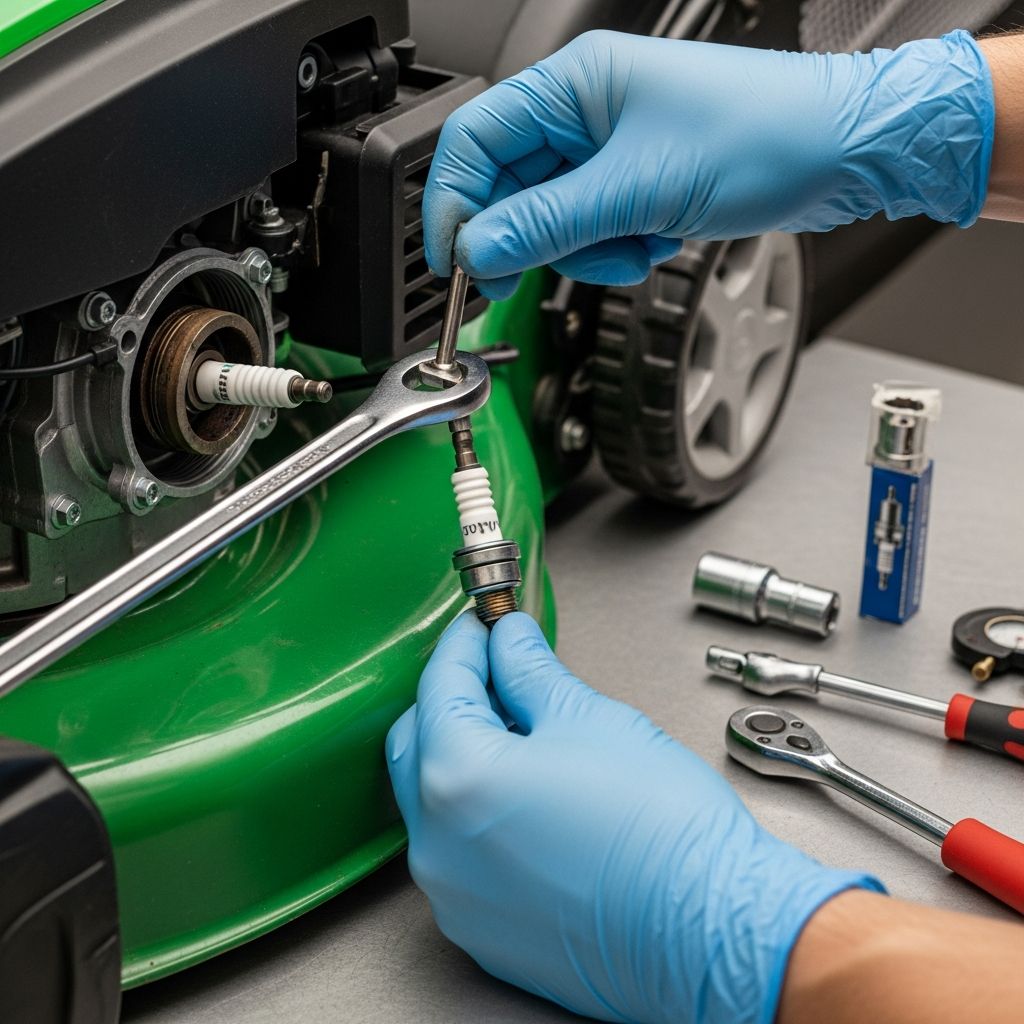
The spark plug on most residential lawn mowers is positioned on the side of the engine block. Begin by examining the engine carefully to identify the spark plug wire or lead—a rubber or plastic-coated cable connected to the top of the spark plug. Some mowers have engine covers that obstruct access; if yours does, use a screwdriver to carefully remove these covers.
Once you’ve identified the spark plug, gently grasp the rubber boot (the protective covering on the spark plug wire) and carefully pull it straight away from the spark plug tip. Avoid yanking on the wire itself, as rough handling can damage the connection. If the boot resists, gently wiggle it while pulling—the connection should separate cleanly without excessive force.
Take a moment to inspect the spark plug wire for any visible damage, cracks, or corrosion. A damaged wire may need replacement if it shows signs of deterioration, which could affect engine performance beyond just the spark plug itself.
Removing the Old Spark Plug Safely
With the spark plug wire fully disconnected, position your spark plug socket over the spark plug tip. Using your ratchet wrench, turn the socket counterclockwise to begin loosening the plug. If the plug turns smoothly, continue until it’s loose enough to unscrew by hand. However, if you encounter resistance or feel the socket is binding, stop immediately and apply penetrating lubricant around the base of the spark plug. Let the lubricant soak for a few minutes before attempting again.
Once the plug is loose enough, remove the socket and carefully unscrew the spark plug by hand, turning it counterclockwise until it pulls free from the engine. This final hand-removal step gives you better control and reduces the risk of cross-threading or damaging the plug.
Inspecting the Removed Spark Plug
Examining the old spark plug provides valuable information about your engine’s condition and can indicate underlying problems. Use your wire brush to gently remove loose dirt, carbon deposits, and grime from the plug’s exterior. For heavy carbon buildup, carefully scrape away deposits using a sturdy knife or similar tool.
Next, inspect the condition thoroughly:
| Spark Plug Condition | Interpretation | Action |
|---|---|---|
| Slight carbon deposits, intact electrodes | Normal wear for the age of the plug | Clean thoroughly and reuse if within service life |
| Heavy carbon buildup, wet appearance | Indicates fuel-rich mixture or oil leakage | Consider replacing; check fuel and oil levels |
| Cracked or chipped porcelain | Physical damage that compromises function | Replace immediately |
| Burned or corroded electrodes | Advanced wear or electrical issues | Replace immediately |
| Black, oily coating | Excessive oil in combustion chamber | Replace and investigate engine oil levels |
If the plug appears to be in good condition after cleaning and still has time remaining on its recommended service life, you can reinstall it. However, if you observe cracks, burned electrodes, or a corroded appearance, replacement is necessary.
Understanding and Adjusting the Spark Plug Gap
The spark plug gap—the distance between the center electrode and the ground electrode—directly affects combustion and engine performance. Each lawn mower engine requires a specific gap measurement, typically between 0.028 and 0.040 inches, depending on the manufacturer’s specifications.
Consult your owner’s manual or check the ceramic insulator on the spark plug itself for the required gap specification. Using a spark plug gap tool or feeler gauge, measure the current gap by inserting the gauge between the electrodes.
If adjustment is needed, gently bend the curved ground electrode (the side electrode that curves toward the center) to increase or decrease the gap. Use steady, controlled pressure—bending too forcefully can crack the electrode or damage the ceramic insulator. After adjustment, recheck the gap with your tool to confirm it matches the specification.
Identifying the Correct Replacement Spark Plug
Spark plugs are not universal components; using an incorrect model can result in poor performance or engine damage. To identify the correct spark plug for your mower, you have several options:
- Check your owner’s manual for the specific spark plug model number and part code
- Look at the ceramic insulator of the old spark plug, where the model number is typically printed
- Take the old spark plug to your local auto parts or lawn equipment store, where staff can identify the correct replacement
- Note your engine’s make and model and bring this information to a parts specialist who can recommend the appropriate plug
When purchasing a new spark plug, specify whether it’s for a lawn mower rather than an automobile, as some models have slight design differences optimized for small engine applications.
Installing Your New Spark Plug Correctly
Before installation, confirm that your new spark plug has been gapped correctly according to manufacturer specifications. Hold the spark plug upright and manually thread it into the spark plug hole, turning it clockwise by hand. This hand-threading step is critical—it allows you to feel if the plug is seating correctly and prevents cross-threading, which can damage the engine’s threads.
Once the plug is finger-tight, use your spark plug socket and ratchet wrench to snug it further, turning clockwise until firm resistance is felt. The proper tightness is crucial: under-tightening allows the plug to loosen and fall out during operation, while over-tightening can strip threads or damage the plug. For most lawn mower engines, the correct tightness is approximately 15 foot-pounds of torque, which translates to firmly snug but not excessively tight.
After installation, reconnect the spark plug wire boot to the top of the spark plug, pushing it firmly until you hear or feel a click indicating a secure connection. Gently tug on the wire to confirm it’s seated properly.
Testing and Troubleshooting After Replacement
Once you’ve completed the installation, it’s time to test your work. Start the mower engine using the normal starting procedure. A properly installed spark plug should allow the engine to start readily and run smoothly. If the engine hesitates to start, idles roughly, or sputters during operation, stop immediately and allow the engine to cool.
Check that the spark plug wire is fully connected and seated correctly. If the connection looks secure, remove the spark plug and verify that it’s been installed to the proper tightness—neither too loose nor over-tightened. Confirm that you used the correct spark plug model for your mower. If problems persist after these checks, consult a professional service technician, as the issue may involve other engine components.
Seasonal Maintenance Recommendations
To maximize your spark plug’s lifespan and maintain optimal engine performance, establish a regular inspection schedule. At the beginning of each mowing season, check the spark plug visually for signs of wear or damage. If you notice any concerning conditions, perform a cleaning or replacement at that time. Many lawn care professionals recommend replacing spark plugs annually or every 100 hours of engine operation, whichever comes first, though some quality plugs can extend beyond this interval.
Proper fuel quality, regular oil changes, and air filter maintenance all contribute to spark plug longevity. A well-maintained engine produces less carbon buildup and runs more efficiently, reducing strain on the spark plug and extending its useful life.
Frequently Asked Questions About Spark Plug Maintenance
How often should I replace my lawn mower spark plug?
Most manufacturers recommend replacing spark plugs every one to two years or every 50-100 hours of operation. However, this varies by mower model and usage intensity. Checking your owner’s manual provides the most accurate guidance for your specific equipment.
Can I clean a spark plug instead of replacing it?
Yes, if inspection reveals only carbon deposits without electrode damage or cracking, a thorough cleaning may restore functionality. Use a wire brush, spray cleaner, and compressed air. However, if the plug shows physical damage or has reached the end of its service life, replacement is safer and more reliable.
What happens if I use the wrong spark plug model?
Using an incorrect spark plug can cause starting problems, poor fuel economy, reduced power, and potentially engine damage. The gap setting may be wrong, and the plug may not fit properly in the socket, creating safety and performance issues.
Is it normal for a spark plug to get wet or oily?
A wet or heavily oiled spark plug indicates potential problems with your engine, such as oil seepage into the combustion chamber or a fuel mixture that’s too rich. While cleaning might provide temporary relief, addressing the underlying issue is important for long-term engine health.
How tight should a spark plug be?
The correct tightness is approximately 15 foot-pounds of torque. In practical terms, tighten the plug until you feel firm resistance, then give it just one additional quarter-turn. Over-tightening can damage threads or the ceramic insulator.
Conclusion
Replacing a lawn mower spark plug is an accessible maintenance task that can save you money and keep your equipment running reliably. By following these detailed steps—from preparation and removal through inspection, gapping, and installation—you can confidently handle this essential maintenance yourself. Regular spark plug care, combined with other routine maintenance practices, ensures your lawn mower starts reliably, runs efficiently, and provides years of dependable service. When in doubt, consulting your owner’s manual or seeking professional assistance ensures the job is done correctly.
References
- How to Check and Change Spark Plugs on a Lawn Mower in 8 Steps — Lawn Starter. https://www.lawnstarter.com/blog/lawn-care-2/how-to-change-lawn-mower-spark-plugs/
- How to Check, Clean & Change Spark Plugs — Briggs and Stratton. https://www.briggsandstratton.com/eu/en_gb/support/faqs/browse/servicing-the-spark-plug.html
- How to Replace a Lawn Mower Spark Plug — Joe Blair Garden Supply. https://www.joeblairlawnmower.com/blog/replace-a-lawn-mower-spark-plug
Similar Articles


Read full bio of medha deb