Learn the Basics of Home Insulation
Master home insulation fundamentals to boost energy efficiency and comfort.
Home insulation is one of the most effective and cost-efficient ways to improve your home’s energy performance, reduce utility bills, and enhance overall comfort. Whether you’re planning a full home renovation or simply looking to upgrade existing insulation, understanding the fundamentals of how insulation works, the different types available, and proper installation techniques is essential. This comprehensive guide will walk you through everything you need to know about home insulation basics.
What Is Home Insulation and Why Does It Matter?
Insulation is material designed to slow down the transfer of heat between your home’s interior and exterior environments. During winter months, insulation helps retain warmth inside your home, while in summer, it prevents external heat from entering. This temperature regulation reduces the workload on your heating and cooling systems, leading to lower energy consumption and decreased utility costs.
Beyond financial savings, proper insulation contributes to enhanced comfort by maintaining more consistent indoor temperatures and reducing drafts and cold spots. It also plays a role in sound dampening and can improve indoor air quality when combined with proper air sealing techniques. For homeowners concerned about environmental impact, adequate insulation reduces energy consumption and your home’s carbon footprint.
Understanding R-Value
The R-value is the most important metric when evaluating insulation effectiveness. R-value measures thermal resistance—the ability of insulation material to resist heat flow. The higher the R-value, the better the insulation performs at slowing heat transfer and maintaining temperature stability in your home.
R-values vary based on insulation type, thickness, and density. Different areas of your home require different R-value recommendations. Attics, being the highest point in your home and most exposed to temperature extremes, typically require the highest R-values. The recommended level for most attics is R-38 or approximately 10 to 14 inches, depending on the insulation type used. Walls, basements, and crawl spaces have different requirements based on climate zone and local building codes.
When selecting insulation materials, always check the packaging for R-value ratings and compare them against your area’s recommended levels. Your local building department or a professional energy auditor can provide specific R-value recommendations for your climate zone and home construction type.
Types of Insulation Materials
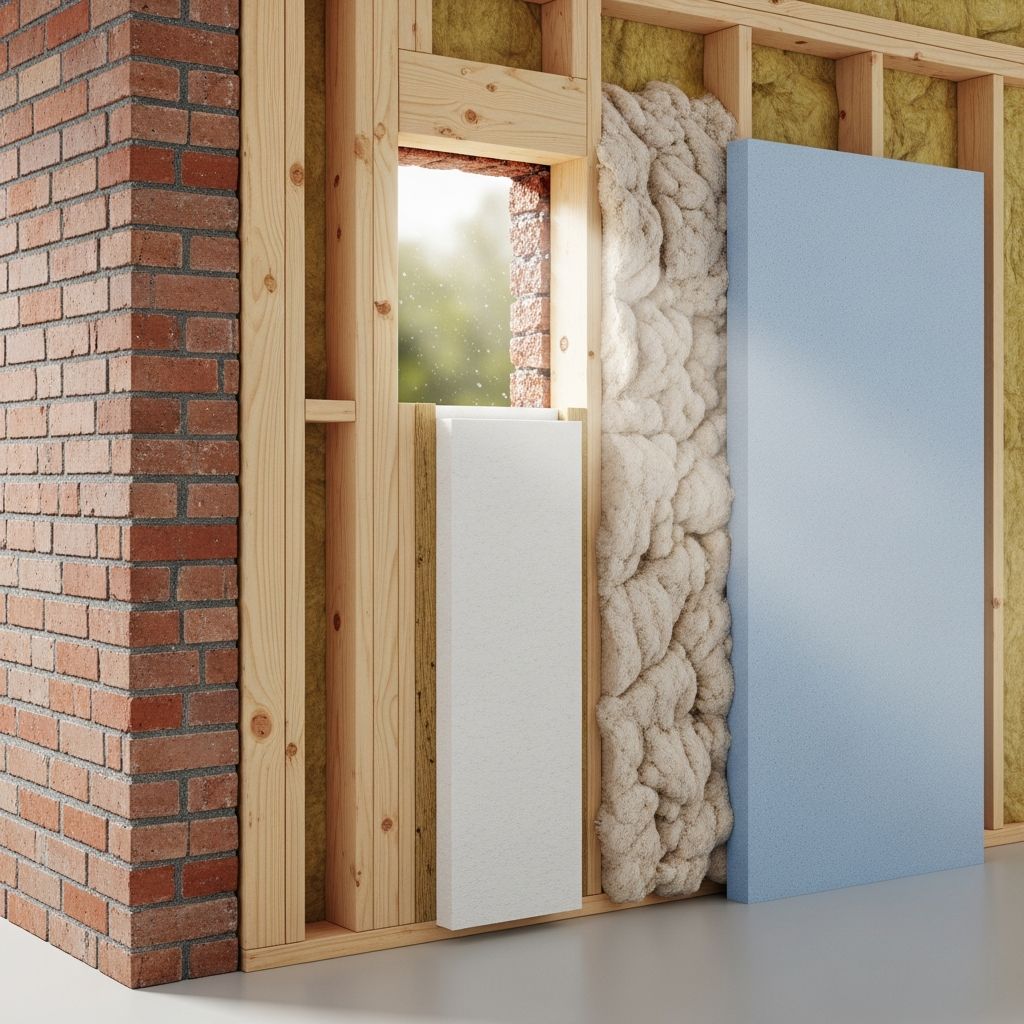
Several insulation materials are available, each with distinct characteristics, advantages, and applications. Choosing the right type depends on your budget, installation preferences, and specific home needs.
Fiberglass Insulation
Fiberglass remains one of the most popular and affordable insulation options. It comes in two primary forms: batts (pre-cut blankets) and rolls (continuous sheets). Fiberglass batts are typically 16 or 24 inches wide and fit standard stud and joist spacing, making them ideal for do-it-yourself installation. Rolls offer flexibility for irregular spaces and can be cut to custom lengths.
Fiberglass insulation is non-combustible, provides decent R-values per inch, and is relatively easy to install. However, it requires careful handling to avoid compression, which reduces effectiveness. When installing fiberglass, ensure it fits snugly without being compressed, and maintain consistent coverage without gaps or voids.
Mineral Wool Insulation
Mineral wool, made from rock or slag fibers, offers superior fire resistance and sound dampening compared to fiberglass. It maintains its effectiveness even when exposed to moisture and resists settling over time. Mineral wool batts and rolls are slightly more expensive than fiberglass but provide better long-term performance in damp environments or areas prone to moisture issues.
Cellulose Insulation
Made from recycled paper treated with fire retardants, cellulose is an environmentally friendly option with excellent R-values per inch. Cellulose is typically installed by blowing it into cavities, making it ideal for retrofitting existing walls and irregular spaces. It provides superior air sealing compared to batts but requires professional installation equipment.
Rigid Foam Insulation
Rigid foam boards, available in extruded polystyrene, expanded polystyrene, or polyurethane varieties, offer high R-values in minimal thickness. These materials are ideal for basement rim joists, foundation walls, and exterior applications. Rigid foam requires careful cutting and sealing with appropriate caulk or expanding foam to prevent thermal bridging through gaps.
Spray Foam Insulation
Spray foam expands as it’s applied, filling gaps and cavities completely and creating an effective air seal. Available in open-cell and closed-cell varieties, spray foam provides excellent thermal performance and moisture resistance. Closed-cell spray foam offers higher R-values and better moisture protection but comes at a premium price. Professional installation is typically recommended for spray foam applications.
Where to Insulate: Priority Areas
While insulating your entire home is ideal, energy experts recommend prioritizing specific areas that have the greatest impact on energy efficiency. Understanding where heat loss occurs most significantly helps direct your insulation efforts and budget effectively.
Attics
The attic represents the highest priority for insulation upgrades. Heat naturally rises, and an inadequately insulated attic allows substantial heat loss during winter and heat gain during summer. Attics are also the most accessible area for DIY insulation installation. Adding or upgrading attic insulation to the recommended R-38 level significantly improves home energy efficiency and comfort. When adding insulation, work from the perimeter toward the attic opening to ensure complete coverage.
Basement and Crawl Spaces
Basements and crawl spaces are major sources of energy loss, particularly the rim joist area where the foundation meets the house framing. Air sealing and insulating these areas creates a thermal break and prevents unconditioned air from entering living spaces. After air sealing the rim joist area, insulate each cavity with rigid foam insulation or fiberglass batts cut to fit without compression.
Walls
Wall insulation provides important thermal resistance, particularly in exterior walls that directly contact outdoor temperatures. In existing homes, wall insulation often requires professional blown-in installation. During renovation or new construction, batts or spray foam can be installed in wall cavities before drywall installation.
Ducts and Penetrations
Air ducts passing through unconditioned spaces like attics and basements should be insulated and sealed. Pay special attention to all duct penetrations going through the attic floor—seal these with expanding foam. Uninsulated or poorly insulated ducts waste conditioned air and reduce HVAC system efficiency. Additionally, fill wiring and plumbing holes with expanding foam and caulk around electrical junction boxes to prevent air leakage.
Air Sealing: The Foundation of Insulation Success
Effective insulation works best when combined with comprehensive air sealing. Even with excellent insulation R-values, air leaks undermine performance by allowing conditioned air to escape and outdoor air to enter. Professional energy auditors often compare poorly sealed homes to “open chimneys,” where warm air rises and escapes while cold air infiltrates.
Identifying Air Leaks
Check for gaps in your attic that facilitate air movement by looking for dirty insulation—dust accumulates around air leaks as air movement carries particles. Common leak locations include rim joists, electrical penetrations, duct penetrations, gaps around pipes and chimneys, and gaps between new and existing insulation.
Sealing Materials and Techniques
Different gap sizes require different sealing materials. Small holes (1/4 inch or less) seal effectively with silicone or acrylic latex caulk applied with a caulk gun. Larger gaps (1/4 inch to 3 inches) require expanding spray foam insulation. Special high-temperature heat-resistant caulk seals areas around flues and chimneys where standard caulk might fail due to heat exposure. Build metal dams around flues and pipes to keep insulation away from heat sources before sealing gaps with heat-resistant caulk.
Installation Techniques for Optimal Performance
Proper installation is crucial for achieving rated R-values and maximum energy efficiency. Poor installation techniques significantly reduce insulation effectiveness regardless of the material type selected.
Fiberglass Batt Installation
When installing fiberglass batts, lay them perpendicular to joists for maximum coverage of structural members. Cut insulation to fit cavity dimensions precisely without compression. Never cover recessed light fixtures unless they are rated IC (Insulated Ceiling). Create barriers around can lights using sheet metal or wire mesh, maintaining at least 3 inches clearance from unrated fixtures. When adding additional insulation layers, use unfaced insulation (with no vapor retarder) to cover joist tops and reduce heat loss through the frame.
Rigid Foam Installation
Rigid foam boards require precise cutting and fitting to minimize thermal bridging through gaps. After installation, seal all seams and penetrations with expanding foam or foam-compatible caulk. Ensure complete contact between foam and framing surfaces to maximize thermal performance and prevent air leaks through gaps.
Safety Considerations
Always wear appropriate personal protective equipment when installing insulation, including gloves, safety glasses, and a dust mask or respirator depending on material type. Ensure adequate ventilation, and follow manufacturer safety guidelines carefully. For spray foam or blown-in applications, professional installation is recommended due to equipment requirements and safety considerations.
Common Installation Mistakes to Avoid
Understanding common installation errors helps prevent costly mistakes and ensures maximum insulation performance. Compressed insulation—whether from forcing batts into tight spaces or walking on them during installation—significantly reduces R-value effectiveness. Gaps and voids in coverage create thermal shortcuts where heat transfers directly through uncovered cavities. Blocking ventilation openings with insulation restricts necessary attic airflow and can promote moisture accumulation and mold growth. Placing insulation directly against heat sources like recessed lights without proper clearance creates fire hazards and allows heat to degrade insulation materials.
Moisture Management and Vapor Barriers
Proper moisture control protects insulation effectiveness and prevents structural damage from mold and rot. Vapor barriers and vapor retarders slow moisture movement through wall and ceiling assemblies, protecting insulation from moisture accumulation. In cold climates, vapor barriers typically belong on the warm (interior) side of insulation. In mixed or humid climates, vapor barrier placement is more complex and should follow local building code recommendations.
When adding additional attic insulation, using unfaced (no vapor retarder) insulation for upper layers allows any moisture that enters the cavity to dry toward the attic space rather than accumulating in the insulation.
Measuring Your Home’s Current Insulation Levels
Before planning upgrades, measure existing insulation thickness in your attic and determine its R-value based on material type. In the attic, use a ruler to measure insulation depth in several locations to ensure consistent coverage. Compare your measurements against recommended R-38 levels to determine whether additional insulation is needed. Professional energy audits can provide comprehensive assessments of your home’s overall insulation and air sealing performance, identifying the most cost-effective upgrade priorities.
Cost-Benefit Analysis and Return on Investment
Insulation improvements provide strong returns through reduced energy costs and improved comfort. Attic insulation upgrades typically offer the fastest payback periods due to their relatively low cost and significant energy savings. Basement and crawl space improvements provide the next tier of return, followed by wall insulation in older homes. While upfront costs vary based on insulation type and installation method, most homeowners recoup investments through energy savings within 5 to 10 years, with continued savings for decades afterward.
Frequently Asked Questions
Q: What R-value should my attic have?
A: Most attics should be insulated to R-38, which translates to approximately 10 to 14 inches depending on the insulation type. Your specific recommendation may vary based on climate zone and local building codes.
Q: Can I install insulation myself?
A: Fiberglass batts and some rigid foam applications are suitable for DIY installation with proper safety precautions. Spray foam and blown-in insulation typically require professional installation. Always follow manufacturer guidelines and wear appropriate protective equipment.
Q: Should I remove old insulation before adding new insulation?
A: Generally, you can add new insulation over existing insulation if it’s in good condition and not excessively compressed or contaminated. However, address any moisture damage or pest issues before adding new insulation.
Q: What’s the difference between faced and unfaced insulation?
A: Faced insulation has a vapor retarder (typically kraft paper or foil) on one side, while unfaced insulation has no vapor barrier. Use faced insulation for initial installations and unfaced for additional layers to allow proper moisture drying.
Q: How can I tell if I have air leaks?
A: Look for dirty or discolored insulation in your attic, which indicates air movement. Thermal imaging cameras can also reveal air leaks, or hire a professional for a blower door test to identify leakage locations.
Q: Is spray foam insulation worth the extra cost?
A: Spray foam provides superior air sealing and higher R-values in minimal thickness, making it excellent for specific applications. For whole-home solutions, its premium cost may not offer proportional benefits compared to combined batts and air sealing strategies.
References
- A Do-It-Yourself Guide to Sealing and Insulating with Energy Star — U.S. Environmental Protection Agency. May 2008. https://www.energystar.gov/ia/partners/publications/pubdocs/DIY_Guide_May_2008.pdf
- ASHRAE Standard 90.1 – Energy Standard for Buildings Except Low-Rise Residential Buildings — ASHRAE (American Society of Heating, Refrigerating and Air-Conditioning Engineers). https://www.ashrae.org/
- Insulation Materials: Thermal Resistance — U.S. Department of Energy, Energy Efficiency and Renewable Energy. https://www.energy.gov/energysaver/insulation-materials-thermal-resistance
- North American Insulation Manufacturers Association (NAIMA) Guidelines — NAIMA. https://www.naima.org/
Similar Articles






Read full bio of medha deb