Glow Better: A Complete Guide to LED Bedroom Lighting
Design a cozy, efficient, and sleep-friendly bedroom using LED lighting the smart way.
LED Bedroom Lighting: Design a Cozy, Efficient Retreat
LED lighting has completely changed how bedrooms look and feel, making it easier than ever to create a space that is relaxing, functional, and energy efficient. Instead of relying on one harsh ceiling light, modern bedrooms use layers of LED lighting to support sleep, reading, getting dressed, and winding down at the end of the day.
This guide walks through how to plan a bedroom lighting layout, choose the right LED products and color temperatures, blend style with function, and add smart control so your lights work the way you actually live.
Why LEDs Belong in the Bedroom
Switching to LED lights in the bedroom is about more than just saving electricity. It is about comfort, control, and creating a calm atmosphere that supports better rest.
- Energy savings: LEDs use significantly less power than incandescent bulbs, so lights can stay on longer without spiking the utility bill.
- Long life: Quality LED bulbs and strips can last for years, reducing the hassle of replacements—especially in hard-to-reach fixtures.
- Low heat output: LEDs stay relatively cool, which helps keep the bedroom comfortable and reduces fire risks around fabrics.
- Design flexibility: LED strips, mini spots, and slim fixtures can tuck under beds, inside coves, or behind headboards where older bulbs never fit.
Planning Your Bedroom Lighting Layout
Good bedroom lighting starts with a layout that matches how the room is used. The key is to think in zones, not just fixtures. Most bedrooms benefit from three main lighting layers: ambient, task, and accent.
- Ambient lighting: The main light that fills the room and makes moving around safe and easy.
- Task lighting: Focused light for reading, dressing, applying makeup, or working at a desk.
- Accent lighting: Gentle highlights that add depth, soften shadows, and create a cozy mood.
Before buying any fixtures, sketch a rough plan of your bedroom showing the bed, windows, closet, door, and any furniture like a desk or dresser. Mark where you need brighter task light and where soft glow would feel nice, such as behind a headboard or under a floating shelf.
Choosing the Right Color Temperature
Color temperature determines whether the light feels warm and cozy or cool and energetic. For bedrooms, the goal is usually calm and relaxing, not bright and clinical.
| Color Temperature (K) | Appearance | Best Uses in Bedroom |
|---|---|---|
| 2200–2700K | Very warm, candle-like light | Night lights, late-evening lamps, under-bed glow |
| 2700–3000K | Warm white, cozy and inviting | General bedroom use, bedside lamps, wall sconces |
| 3000–3500K | Neutral warm; slightly crisper | Closets, dressing areas, small desks in the bedroom |
| 4000K+ | Cool white, energetic | Usually avoid for evening use; may suit a heavily used work nook |
Many homeowners now choose tunable white LEDs that can shift from cool to warm through a dimmer or app. Cooler light can be used briefly during the day for tasks, then switched to warm tones in the evening to help the body wind down.
Ambient Lighting: Setting the Base Layer
Ambient light should give you even, gentle brightness without glare. Rather than one bare fixture in the center of the ceiling, aim for diffused or indirect LED sources.
Effective ambient options include:
- Flush-mount or semi-flush ceiling fixtures: Choose LED fixtures with diffusers that soften the light and avoid harsh shadows.
- LED downlights: Recessed fixtures spread across the ceiling can provide uniform brightness, especially in larger bedrooms.
- LED cove lighting: Strips hidden in a ceiling cove wash light across the ceiling and walls for a soft, hotel-like glow.
Whenever possible, connect ambient lighting to a dimmer so brightness can drop at night. Full brightness is helpful for cleaning or packing, but most evenings feel more comfortable at 30–60% output.
Task Lighting: See Clearly Where It Matters
Task lighting focuses on specific activities. In a bedroom, the main task zones are usually beside the bed, at a mirror or vanity, inside the closet, and sometimes at a small desk.
Bedside Reading and Relaxing
Instead of relying on a bright overhead light, use dedicated LED fixtures near the bed so one person can read without lighting up the entire room.
- Wall-mounted reading lamps: Swing-arm or spotlight-style LED fixtures mounted above or beside the headboard give directional light that can be aimed at a book.
- Table lamps with LED bulbs: A classic option; choose warm white bulbs, and consider lamps with integrated USB ports for convenience.
- Integrated headboard lighting: LED strip or puck lights built into the headboard provide subtle, low-glare illumination.
Look for fixtures with focused beams and individual switches, so each side of the bed can control its own light. A separate tiny night-light level is helpful for late-night trips without waking a partner.
Closets and Dressing Areas
Poor closet lighting makes it harder to see colors and fabrics. LED fixtures work well here because they can be compact, bright, and motion-activated.
- LED strip lights along closet rods: These shine down onto clothing and make colors easier to distinguish.
- Battery or plug-in LED bars: Mounted on closet ceilings or walls, these are simple upgrades for older wardrobes.
- Mirror or vanity lights: LED fixtures around a mirror provide even illumination for grooming and makeup.
Accent Lighting: Adding Atmosphere and Style
Accent lighting is where bedrooms can become truly inviting. Small touches of indirect LED light add depth and a relaxing feel that is difficult to achieve with overhead lighting alone.
- Under-bed lighting: LED strips installed under the bed frame create a low, floating glow that doubles as a nighttime guide.
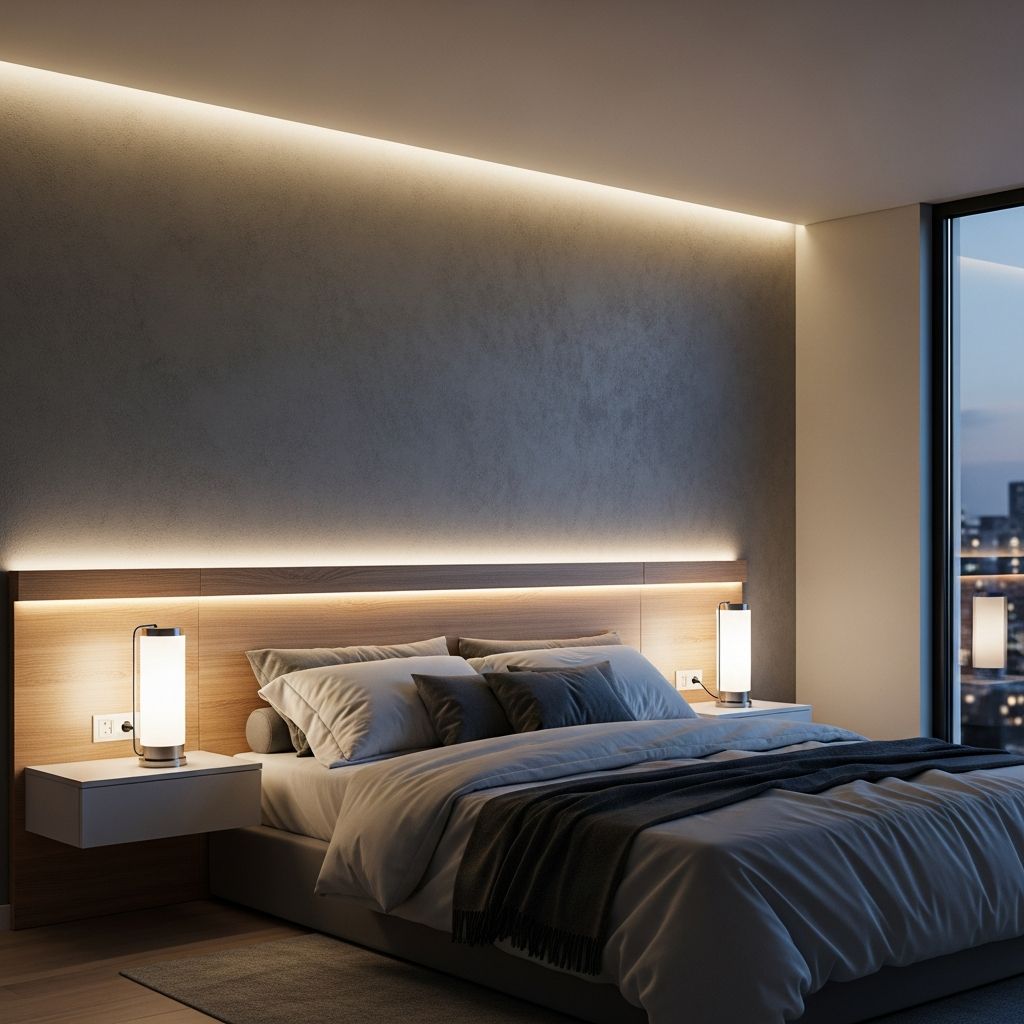
- Backlit headboards: Strips or panels behind the headboard wash light up the wall, framing the bed in soft illumination.
- Shelf and niche lighting: Small LED strips under floating shelves highlight decor and break up dark wall spaces.
- Wall-washer lights: LED fixtures aimed at textured walls or artwork create subtle visual interest.
Accent lights are especially powerful when on their own switched circuit or controlled by smart devices, so they can be turned on without the brighter ambient lighting.
Using LED Strip Lights in the Bedroom
LED strip lights have become a favorite for bedroom projects because they are slim, flexible, and easy to tuck into places where traditional fixtures cannot go. They are available in many brightness levels and colors, including tunable white and RGB color-changing options.
Common LED strip placements in a bedroom include:
- Under the bed frame to create a floating effect.
- Inside a ceiling cove for indirect ambient light.
- Behind a TV or monitor to reduce eye strain and add a soft glow.
- Under shelves or along the back edge of a headboard.
- Around mirrors to create a vanity-style light without bulky fixtures.
When using strips, pay attention to adhesive quality, power supply capacity, and whether the strip is dimmable or smart-enabled. A clean installation with hidden wiring dramatically improves the final look.
Smart Controls and Dimming for Better Sleep
Controls are just as important as fixtures. Smart switches, dimmers, and bulbs allow brightness and color to shift with time of day, which can support a healthier sleep routine.
- Bedside control: Ensure at least one switch or smart button is reachable from the bed so lights can be turned off without getting up.
- Scenes and schedules: Smart systems can dim lights automatically in the evening and gently brighten them in the morning.
- Voice control: Connecting LED lighting to voice assistants makes it simple to turn off all lights at once or activate a reading scene.
- Night mode: Create a scene with very low, warm light levels for nighttime movement without fully waking the body.
Even without smart devices, basic wall dimmers add flexibility. Use higher levels for cleaning and organizing, then dial things down for relaxing or preparing to sleep.
Design Ideas for Different Bedroom Styles
The best LED lighting plan matches the style of the bedroom. The fixtures, finishes, and layouts below can be mixed and matched to suit personal taste.
Modern and Minimal Bedrooms
- Use slim recessed downlights or low-profile LED panels for clean ceilings.
- Choose linear LED strips in coves or behind the headboard for subtle, architectural lines.
- Opt for monochrome color palettes with warm-white light for a tranquil feel.
Cozy and Traditional Bedrooms
- Combine a warm-glow LED chandelier or semi-flush fixture with fabric shades.
- Add table lamps with LED bulbs and soft, diffused shades on both sides of the bed.
- Use under-bed or floor-level LEDs for a gentle guiding light at night.
Kids’ and Teen Bedrooms
- Incorporate color-changing LED strips under beds, desks, or shelves for playful effects.
- Keep at least one warm-white reading light near the bed to support nighttime routines.
- Use smart controls with time limits or schedules so bright colors dim automatically at bedtime.
Safety and Practical Considerations
LEDs are generally safe and reliable, but basic precautions matter, especially in a room full of fabrics, pillows, and wood furniture. Always match bulbs and strips to compatible drivers, power supplies, and dimmers.
- Choose certified products from reputable brands with clear wattage and voltage information.
- Avoid overloading power supplies when running long strip-light runs.
- Keep power adapters and extension cords away from bedding and rugs.
- In rental spaces, consider plug-in fixtures and removable adhesive strips to avoid damage.
Good ventilation around LED drivers and transformers extends their life and reduces the risk of overheating. For complex installations, a licensed electrician can ensure connections and control systems are wired correctly.
Quick Planning Checklist
Use this brief checklist when designing or upgrading bedroom lighting with LEDs.
- Identify the main activities in the room: sleeping, reading, dressing, working, relaxing.
- Map out three layers of light: ambient, task, and accent.
- Choose warm color temperatures for most fixtures, with optional tunable white where flexibility is needed.
- Decide where LED strips will add value: under-bed, coves, shelves, closets, or headboards.
- Plan control points: wall switches, lamps, dimmers, and any smart devices.
- Confirm power needs, product compatibility, and basic safety practices.
FAQs About LED Bedroom Lighting
What brightness level is best for bedroom LEDs?
Bedroom lighting usually feels comfortable when the main ambient lights provide enough brightness to move around safely without feeling harsh. Instead of aiming for one exact number, use dimmable LED fixtures and adjust the light level based on the time of day and activity.
Are color-changing LEDs good for bedrooms?
Color-changing (RGB or RGBW) LEDs can be fun in kids’ rooms or for accent lighting, but they should not replace warm white lighting completely. Keep at least one layer of warm white light for reading and winding down, and use colors sparingly, especially close to bedtime.
Can LED lights disrupt sleep?
Very bright, cool white or blue-heavy light late at night can make it harder to fall asleep. To support better rest, select warm color temperatures and lower brightness levels in the evening, especially for lights used close to the eyes like reading lamps or strip lights near the bed.
Do I need an electrician to install LED strips?
Simple plug-in LED strip kits can often be installed without professional help, as long as instructions are followed and outlets are used safely. Hardwired strips, new circuits, and complex smart-control setups are better left to licensed electricians for safety and reliability.
How can I make a rental bedroom feel better with LEDs?
In rentals, focus on upgrades that do not require rewiring, such as swapping in warm white LED bulbs, adding plug-in floor or table lamps, and using peel-and-stick LED strips under beds or shelves. These changes can dramatically improve comfort and mood while remaining easy to remove when it is time to move.
Similar Articles







Read full bio of medha deb