Leyland Cypress Trees: Growing Guide & Care
Master the art of growing Leyland cypress trees with expert tips on planting, pruning, and maintenance.
Leyland Cypress Trees: Complete Growing and Care Guide
Leyland cypress trees are among the most popular choices for creating fast-growing privacy screens and windbreaks in residential landscapes. These evergreen conifers are prized for their rapid growth rate, attractive foliage, and ability to adapt to various growing conditions. Whether you’re looking to establish a natural boundary or add visual interest to your garden, understanding how to properly grow and maintain Leyland cypress trees is essential for success.
What Are Leyland Cypress Trees?
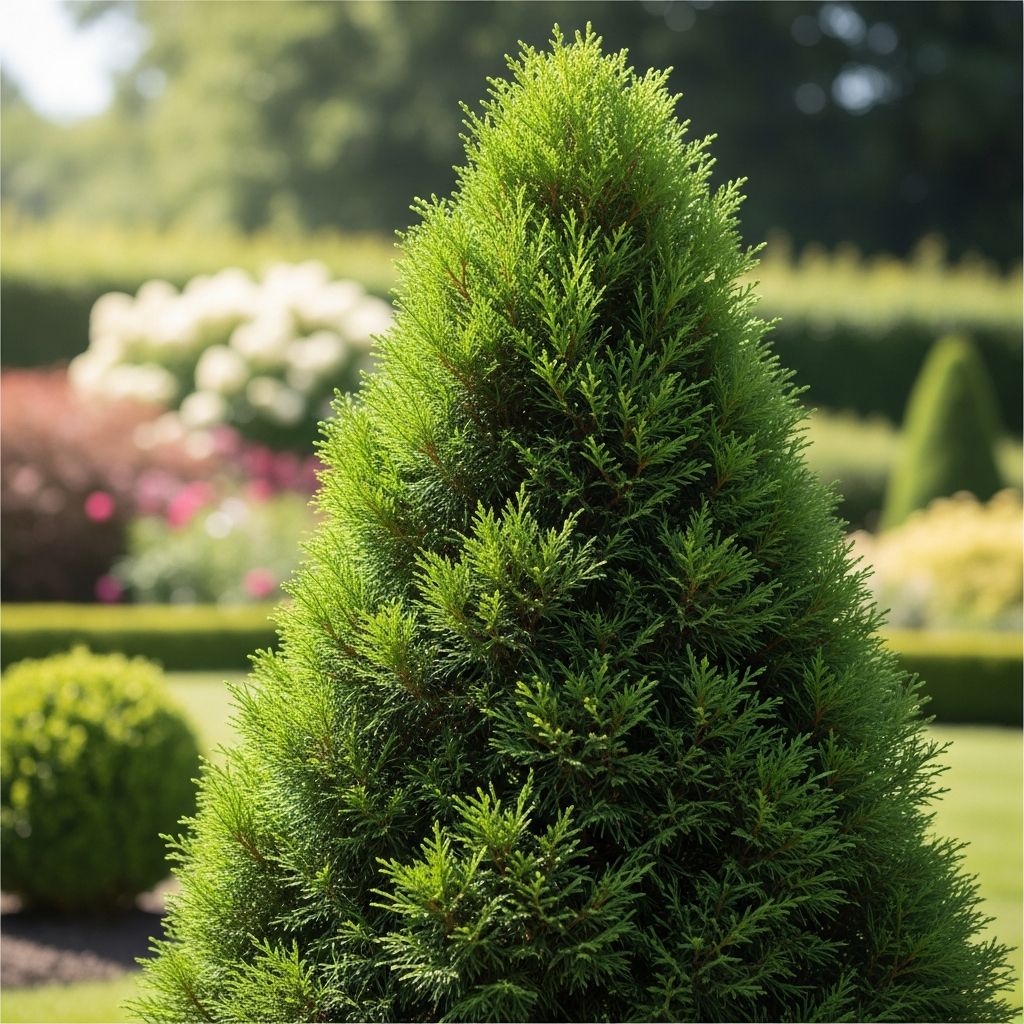
The Leyland cypress (Cupressocyparis x leylandii) is a fast-growing hybrid conifer that combines the best traits of its parent species. These evergreen trees feature soft, feathery foliage in shades of deep green or golden-yellow, depending on the variety. The most common variety, ‘Castlewellan,’ displays attractive yellow-green leaves that add visual interest to any landscape.
One of the defining characteristics of Leyland cypress is its narrow, columnar growth habit. The tree naturally develops a classic pyramidal shape with scale-like leaves arranged in flat sprays. When the foliage is crushed, it releases a distinctive, strong resinous aroma. The trees produce small, ball-like brown cones measuring just 2-3mm across, which appear during summer and autumn months.
Growth Rate and Size
Leyland cypress trees are renowned for their exceptional growth speed, making them an ideal choice for gardeners seeking immediate visual impact. These vigorous growers can add 3 to 4 feet to their height annually under optimal conditions, with growth rates ranging from 75 to 90 centimeters per year.
Given proper growing conditions, a young Leyland cypress can easily reach 10 meters in height within just 10 years. Mature trees in ideal settings can attain impressive heights of 40 to 70 feet, with a spread of 15 to 25 feet. However, without regular maintenance, these trees can become challenging to manage due to their vigorous nature.
The good news is that disciplined pruning from an early age can significantly restrict growth. With consistent trimming two to three times annually, Leyland cypress trees can be maintained at heights as modest as 2 meters, making them suitable for smaller properties and more refined landscapes.
Ideal Growing Conditions
Sunlight Requirements
Leyland cypress trees thrive in full sun to partial shade environments. For optimal growth and dense foliage development, provide your trees with at least 6 hours of direct sunlight daily. While these adaptable trees can tolerate shadier conditions beneath high tree canopies, they will develop fuller, more attractive foliage when exposed to adequate light.
Soil and Site Selection
One of the greatest advantages of Leyland cypress is their remarkable adaptability to various soil types. These trees grow well in most reasonable soils and demonstrate excellent tolerance to diverse soil characteristics. However, they do have specific preferences worth noting:
Leyland cypress trees thrive when their roots remain moist and cool. Given their origins in the Pacific Northwest, they perform best in well-draining soils that retain adequate moisture. The trees are intolerant of waterlogged conditions and poorly draining soils, as their shallow root systems cannot tolerate flooding. Similarly, excessively dry soils stress these trees and limit their growth potential.
These hardy conifers demonstrate impressive adaptability to harsh conditions, including coastal locations and exposed sites. They show excellent salt tolerance and winter hardiness across hardiness zones 6 to 10, making them suitable for diverse climates and regions.
Planting Leyland Cypress Trees
Planting Timeline and Preparation
The ideal time to plant Leyland cypress trees is during autumn or early spring. These seasons provide optimal conditions for root establishment before plants experience stress from extreme temperatures. Prepare your planting site by ensuring adequate drainage and loosening compacted soil.
When creating a Leyland cypress hedge, plant trees in a single row, spacing them appropriately to allow for their mature width. This arrangement ensures that each tree receives adequate sunlight and air circulation, promoting healthy growth and reducing disease susceptibility.
Initial Care After Planting
During the first growing season following planting, provide regular watering during dry spells. This is particularly crucial during hot, dry periods when the soil can quickly dry out. Consistent moisture helps establish strong root systems and promotes vigorous initial growth. Water deeply and thoroughly, ensuring the moisture reaches the entire root zone.
Pruning and Maintenance
Regular Trimming Schedule
The key to maintaining attractive, well-shaped Leyland cypress trees is consistent pruning. Unlike many evergreen conifers, Leyland cypress responds well to regular trimming and can be shaped into formal hedges or screens. Plan to trim your trees two to three times annually to maintain neatness and control growth.
For best results, begin pruning early in a tree’s life. This early intervention trains the tree to grow in your desired form and prevents the development of overgrown, uncontrollable specimens. Allow new growth to develop approximately 45 centimeters above your final desired height before cutting back to the target level. This technique ensures healthy regrowth and maintains an attractive appearance.
Techniques for Overgrown Trees
If you inherit or neglect an overgrown Leyland cypress hedge, it’s possible to restore it with careful pruning. Reduce the height to your desired level and trim the sides back as far as necessary without cutting into bare wood beyond the existing foliage. This approach allows the tree to maintain some green foliage for photosynthesis and recovery.
Safety Precautions
When trimming Leyland cypress trees, always observe proper safety practices. Wear protective gloves and clothing to shield your skin, as contact with the foliage can cause irritation for some individuals. When using powered hedge trimmers or working at height, exercise extreme caution and consider using a professional service for large trees or difficult-to-reach areas.
Common Problems and Solutions
Disease and Pest Issues
While generally hardy and low-maintenance, Leyland cypress trees can face challenges in hot, humid summer conditions. Canker disease and bagworm infestations are notable problems in certain regions. Ensuring adequate air circulation through proper pruning and maintaining tree vigor through appropriate watering help prevent these issues.
Root System Considerations
Leyland cypress trees have shallow root systems that make them intolerant of soil compaction and flooding. Avoid heavy foot traffic or lawn equipment operation directly over the root zone. Additionally, refrain from placing landscape fabric or plastic weed barriers around tree trunks, as these materials can impede water infiltration and harbor diseases.
Soil Management
To maintain healthy Leyland cypress trees, focus on soil care. Applying organic mulch around the base helps keep roots cool, prevents soil drying, blocks weeds, and protects tree trunks from weed trimmer damage. However, keep mulch pulled back several inches from the trunk to prevent fungal issues.
Choosing and Purchasing Leyland Cypress Trees
Leyland cypress trees are widely available from nurseries, garden centers, and online suppliers in various sizes. Young plants typically range from 20 to 30 centimeters high, while mature specimens can reach 1.5 to 2 meters tall. Hedging specialists often offer the widest selection of sizes and grades.
Given the rapid growth rate of Leyland cypress, investing in mature plants may only be worthwhile if immediate screening is essential. Younger trees establish quickly and will rapidly reach desired heights with proper care. Before purchasing, honestly assess your commitment to maintaining these trees through regular pruning, as this is non-negotiable for keeping them under control.
Leyland Cypress as Privacy Screens and Windbreaks
The combination of fast growth, dense foliage, and columnar shape makes Leyland cypress trees exceptional choices for privacy screens and windbreaks. Their rapid growth means you can establish substantial visual barriers in just a few years, compared to decades required by slower-growing alternatives.
These evergreen conifers provide year-round screening, maintaining their attractive green foliage even during winter months. Whether used as individual specimen trees or planted in rows to form hedges, Leyland cypress instantly transforms bare landscapes into lush, private outdoor spaces.
Frequently Asked Questions
Q: How tall do Leyland cypress trees grow?
A: Mature Leyland cypress trees can reach heights of 40 to 70 feet with spreads of 15 to 25 feet, depending on growing conditions. However, regular pruning from an early age can restrict growth to as little as 2 meters.
Q: How fast do Leyland cypress trees grow?
A: These trees are extremely fast-growing, typically adding 3 to 4 feet per year, or 75 to 90 centimeters annually. This rapid growth makes them ideal for quickly establishing privacy screens.
Q: What hardiness zones are suitable for Leyland cypress?
A: Leyland cypress thrives in hardiness zones 6 through 10, demonstrating excellent winter hardiness and adaptability to diverse climates.
Q: How often should I prune my Leyland cypress?
A: For optimal appearance and growth control, trim Leyland cypress trees two to three times annually. Begin pruning early in the tree’s life to establish desired shape and prevent overgrowth.
Q: Can Leyland cypress tolerate partial shade?
A: Yes, Leyland cypress trees tolerate partial shade and will grow under high tree canopies. However, they develop fuller, denser foliage when receiving at least 6 hours of direct sunlight daily.
Q: Are Leyland cypress trees drought-tolerant?
A: Once established, Leyland cypress shows reasonably good drought tolerance. However, during the first growing season and in extremely hot, dry conditions, supplemental watering helps maintain vigor.
References
- How to Grow and Care for Leyland Cypress — Gardeners’ World. 2024. https://www.gardenersworld.com/how-to/grow-plants/leyland-cypress/
- How to Keep Leyland Cypress Trees Green & Healthy — Monster Tree Service. June 2025. https://www.monstertreeservice.com/the-buzz/2025/june/a-guide-to-keeping-your-leyland-cypress-trees-gr/
- Leyland Cypress Hedge: A Perfect Privacy Screen — PlantingTree. 2024. https://www.plantingtree.com/blogs/gardening/leyland-cypress-hedge-a-perfect-privacy-screen
- Featured Tree: Leyland Cypress — Arbor Day Foundation. 2024. https://www.arborday.org/perspectives/featured-tree-leyland-cypress
- Fast Growing Tree for Privacy: Leyland Cypress — Davey Blog. 2024. https://blog.davey.com/fast-growing-tree-for-privacy-leyland-cypress/
- Leyland Cypress — Arkansas Cooperative Extension Service, University of Arkansas. 2006. https://www.uaex.uada.edu/yard-garden/resource-library/plant-week/leyland-cypress-2-3-06.aspx
Similar Articles







Read full bio of medha deb