Managing Eastern Lubber Grasshoppers Effectively
Comprehensive strategies to control and eliminate Eastern lubber grasshoppers from gardens and landscapes safely.
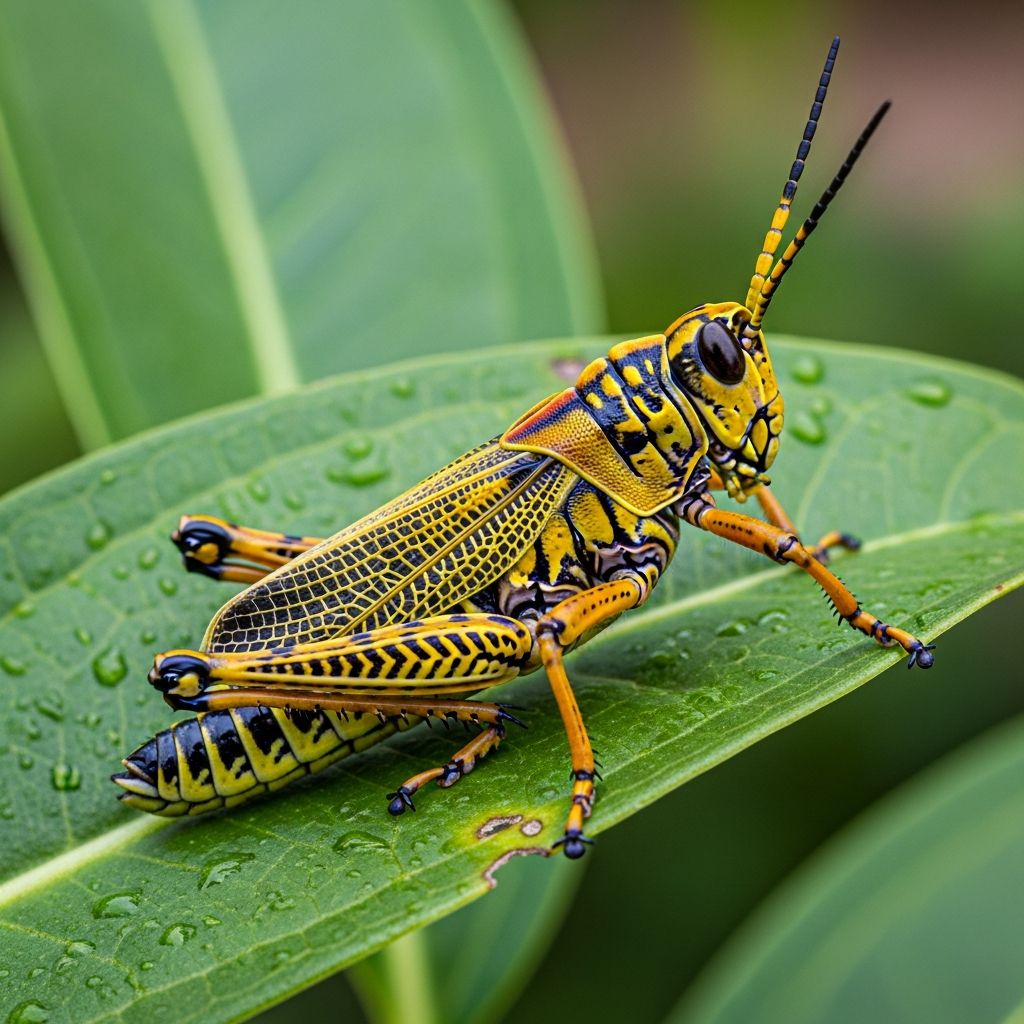
Eastern lubber grasshoppers (Romalea microptera) pose a significant threat to gardens, orchards, and ornamental plants across the southeastern United States, particularly in Florida and Georgia. These large, colorful insects can defoliate vegetation rapidly, causing substantial damage to crops and landscapes. Effective management requires understanding their biology and implementing timely interventions.
Understanding the Eastern Lubber Grasshopper
The Eastern lubber grasshopper is one of the largest grasshopper species in North America, with adults reaching up to 4 inches in length. They exhibit striking coloration, often featuring yellow, black, and red patterns that serve as a warning to predators due to their toxic secretions. Unlike many grasshoppers, lubbers are flightless, relying on hopping for mobility, which influences control strategies.
These pests are polyphagous, feeding on a wide variety of plants including citrus, vegetables, and ornamentals like amaryllis, lilies, and oleander. Nymphs emerge in spring from egg pods laid in the soil the previous fall, developing through several instars before maturing into adults by summer. Their life cycle makes early intervention critical for population control.
Signs of Infestation and Early Detection
Detecting lubber grasshoppers early prevents widespread damage. Look for clusters of black nymphs with yellow stripes marching across plants, stripping leaves as they go. Adults are more solitary but leave behind skeletonized foliage and excrement. Damage is most evident on tender shoots and broadleaf plants.
- Sudden defoliation on preferred hosts like lilies and citrus.
- Groups of nymphs (1/4 to 2 inches long) on low vegetation.
- Foamy secretions or regurgitation on plants from disturbed adults.
- Egg pods: foam-covered clusters 2-3 inches deep in soil near host plants.
Regular scouting in spring, especially along field edges and weedy borders, allows for proactive measures.
Prevention Strategies for Long-Term Control
Preventing lubber outbreaks is more efficient than reactive treatment. Focus on habitat modification and cultural practices to make your landscape less attractive.
| Strategy | Description | Benefits |
|---|---|---|
| Mowing Borders | Keep vegetation short around gardens and orchards. | Reduces shelter, exposes nymphs to predators and heat. |
| Plant Selection | Avoid susceptible ornamentals; choose less preferred species. | Lowers feeding pressure and boosts bait efficacy. |
| Soil Tillage | Turn soil in fall to disrupt egg pods. | Exposes eggs to desiccation and predators. |
| Barrier Treatments | Apply to 3-60 ft margins around protected areas. | Prevents migration into crops. |
Implementing these reduces the need for insecticides and supports natural enemies like birds and parasitic flies.
Manual Removal Techniques
For low to moderate populations, handpicking is the most environmentally friendly and immediate solution. This method is particularly effective against adults and small nymph clusters.
Wear gloves and use a container of soapy water or a freezer bag. Sweep or pluck grasshoppers into the solution where they drown quickly. For larger numbers, use a net or aspirator. Freezing captured specimens humanely kills them without mess or chemicals.
- Target early morning when lubbers are sluggish.
- Focus on undersides of leaves and plant bases.
- Dispose in sealed bags or soapy water to prevent escape.
- Repeat daily during peak nymph activity.
In one documented case, a gardener captured 15 adults over a week, preventing further egg-laying and damage to lilies. This approach suits residential settings and avoids chemical residues.
Biological and Natural Controls
Lubbers have natural enemies including fungi, nematodes, and protozoans, but harnessing them requires patience. Nosema locustae-based baits (e.g., Nolo Bait) infect grasshoppers, reducing feeding and reproduction over time. Place bait stations in dry, protected areas to avoid moisture degradation.
Encourage predators like birds, lizards, and parasitic wasps by maintaining diverse habitats. Microbial insecticides like spinosad target nymphs effectively and are safer around pets and children, though slower-acting.
Oil sprays or homemade garlic-chili mixtures can repel small nymphs but are less reliable on adults due to their size and detoxifying abilities.
Chemical Control Options
When populations exceed manual capacity, targeted insecticides are necessary. Nymphs are most vulnerable; adults resist many sprays due to their exoskeleton and metabolism.
Effective active ingredients include:
- Carbaryl (5% granular bait): Highly effective on all stages, especially in non-preferred host areas.
- Bifenthrin, permethrin, cyhalothrin, esfenvalerate: Contact sprays for direct hits on nymphs.
- Spinosad: Microbial option for safer application.
Apply granular baits early spring (e.g., 6 lbs per 5,000 sq ft) to target hatching nymphs, followed by liquid sprays. Add adjuvants like spreader-stickers for better penetration. Treat per label, focusing on borders to block entry.
Integrated Pest Management (IPM) Approach
The best results come from combining methods in an IPM framework: monitor, prevent, and escalate as needed.
- Scout weekly from March to June.
- Handpick if under 10 per 100 sq ft.
- Deploy baits and mowing for moderate pressure.
- Use targeted sprays for outbreaks.
- Evaluate post-season for adjustments.
This minimizes environmental impact while protecting plants.
Seasonal Timeline for Action
| Season | Life Stage | Recommended Actions |
|---|---|---|
| Fall | Egg-laying | Till soil, remove debris. |
| Early Spring | Hatching nymphs | Granular baits, mowing, handpicking. |
| Late Spring/Summer | Growing nymphs/adults | Contact sprays, biologicals, barriers. |
| Late Summer | Adults declining | Capture to prevent eggs, monitor. |
Timing aligns with nymph vulnerability for maximum efficacy.
Frequently Asked Questions (FAQs)
Are Eastern lubber grasshoppers dangerous to humans?
No, they are not venomous or aggressive but secrete foul-tasting foam when handled. Wash hands after contact.
Can I use dish soap to kill lubbers?
Yes, soapy water drowns them effectively during handpicking. It’s not suitable for spraying large areas.
How do I prevent lubbers from entering my garden?
Create treated barriers and mow surrounding weeds. Choose resistant plants.
Do lubbers fly?
No, adults are wingless and poor fliers, making border treatments viable.
Is spinosad safe for vegetable gardens?
Yes, follow label rates; it’s approved for edibles with pre-harvest intervals.
Environmental Considerations and Safety
Always prioritize pollinators and beneficial insects. Apply treatments in evenings and avoid bloom periods. In residential areas, opt for low-toxicity options first. Proper use per labels protects waterways and non-target species.
Lubbers play a role in ecosystems as prey, so control only when damage thresholds are met—typically when nymphs exceed densities causing economic loss.
References
- Biology and Management of the Eastern Lubber Grasshopper — Journal of Integrated Pest Management, Oxford Academic. 2018-05-04. https://academic.oup.com/jipm/article/9/1/10/4938808
- The Eastern Lubber Grasshopper — UF/IFAS Extension Indian River County Blog. 2023-03-08. https://blogs.ifas.ufl.edu/indianriverco/2023/03/08/the-eastern-lubber-grasshopper/
- Lubber Grasshopper Treatment — Bug Spray. Accessed 2026. https://bugspray.com/article/lubber-grasshopper-treatment
- Kill, Kill, Kill the Eastern Lubber Grasshopper — Tampa Bay Times. 2018-07-19. https://www.tampabay.com/features/homeandgarden/kill-kill-kill-the-eastern-lubber-grasshopper/1223224/
Similar Articles








Read full bio of medha deb