Deck Staining With A Sprayer: Complete DIY Guide
Achieve professional results staining your deck using a sprayer: complete guide to prep, application, and maintenance for lasting beauty.
Master Deck Staining with a Sprayer: Your Complete DIY Guide
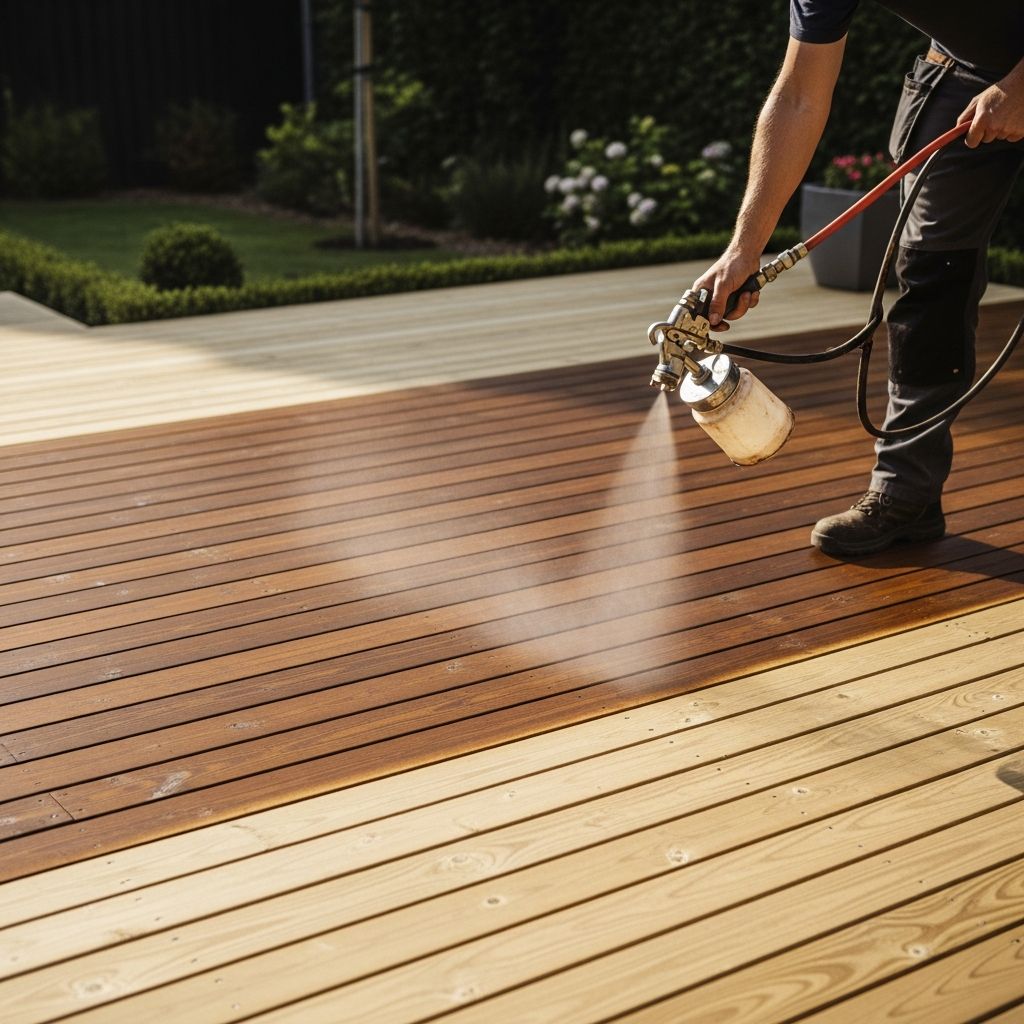
Staining a deck refreshes its appearance and shields wood from harsh weather, UV rays, and moisture. Using a paint sprayer revolutionizes this task by enabling rapid, uniform coverage that brushes and rollers struggle to match, ideal for large surfaces. This guide walks you through every phase, from initial cleanup to final touches, ensuring a pro-level outcome without professional costs.
Why Choose Spraying for Deck Refinishing?
Sprayers outperform traditional methods in speed and quality. They atomize stain into fine particles for deeper wood penetration, minimizing waste and eliminating brush marks for a seamless look. Homeowners report finishing expansive decks in hours rather than days, with even distribution that enhances wood grain visibility.
- Time Savings: Cover vast areas quickly, perfect for weekend warriors.
- Superior Uniformity: Avoid lap marks and streaks common with manual application.
- Enhanced Protection: Better absorption leads to longer-lasting defense against elements.
- Versatility: Handles stains, paints, and sealers on railings, boards, and spindles.
According to industry experts, sprayers can reduce project time by up to 70% while improving finish durability.
Essential Tools and Materials Roundup
Gather these items before starting to streamline your workflow. Quality equipment prevents frustrations like clogs or uneven sprays.
| Category | Items | Purpose |
|---|---|---|
| Sprayer | Airless or HVLP model (e.g., Graco Magnum or Wagner Control Pro) | Main application tool for even misting |
| Cleaning | Pressure washer, deck cleaner solution | Removes grime, mildew for optimal adhesion |
| Prep | Sandpaper (80-120 grit), wood filler, painter’s tape, drop cloths | Smooths surface, protects surroundings |
| Stain | Exterior-grade oil- or water-based stain | Provides UV and water resistance |
| Safety | Gloves, goggles, respirator mask | Guards against fumes and overspray |
| Finishing | Back-brushing brush or pad, extension wand | Works stain into grain post-spray |
Invest in a sprayer suited to your deck size: HVLP for precision on detailed railings, airless for broad floors.
Thorough Deck Preparation: The Foundation of Success
A pristine surface is non-negotiable; skipping prep leads to peeling and short-lived results. Dedicate a full day to this step for best outcomes.
Cleaning Every Inch
Begin with a pressure washer at 1500-2000 PSI to blast away dirt, algae, and old finish remnants. Apply deck cleaner via sprayer first for tough spots—let it dwell 10-15 minutes, then rinse thoroughly. Dry completely (1-2 days) under sun to avoid trapping moisture.
Inspecting and Repairing Damage
Check for loose boards, protruding nails, or rot. Hammer or replace as needed. Fill cracks with exterior wood filler, then sand smooth. This creates a level canvas for stain absorption.
Sanding for Optimal Absorption
Use a orbital sander with 80-grit paper on rough areas, finishing with 120-grit for a satin feel. Sanding opens wood pores, boosting stain penetration by 30-50% per woodworking standards. Vacuum debris to prevent grit-embedded finishes.
Pro Tip: Mask off house siding, plants, and furniture with plastic sheeting and tape. Lay drop cloths below to capture runoff.
Selecting the Perfect Stain Type
Not all stains are equal. Match your choice to climate and wood type for endurance.
- Solid Stains: Opaque coverage hides flaws, lasts 3-5 years.
- Semi-Transparent: Reveals grain, ideal for new wood, reapply every 1-2 years.
- Oil-Based: Deep penetration, flexible with wood movement.
- Water-Based: Low VOC, quick dry, soap-and-water cleanup.
Choose products labeled for vertical and horizontal surfaces. Stir thoroughly—never shake—to prevent bubbles.
Sprayer Setup and Calibration
Proper tuning avoids common pitfalls like spits or orange peel texture.
- Fill with stain, prime the sprayer per manual.
- Select tip size: 515 for stains, smaller for railings.
- Test on cardboard: Adjust pressure for 8-12 inch fan pattern, 10-14 inches from test surface.
- Fine-tune flow for steady output without drips.
Practice overlapping passes at arm’s length. Low-pressure HVLP models reduce overspray by 55%.
Step-by-Step Spraying Technique
Execute in sections to maintain wet edges and prevent lap marks.
Targeting Railings and Spindles First
Start high: Spray verticals from top down, fanning motion at 45-degree angle. Keep gun perpendicular, trigger only while moving. This prevents runs on intricate parts.
Main Deck Floor Application
Work end-to-end along board grain. Hold 10-12 inches away, overlap 50% per pass. Light first coat, allow 30-60 min tack-free, then second for depth.
Back-Brushing for Perfection
Immediately after spraying a section, brush stain into wood with a wide synthetic brush. This evens puddles, fills gaps, and drives product deeper.
Avoid direct sun or wind—aim for 50-85°F, low humidity mornings.
Drying, Curing, and Second Coats
Patience yields durability. First coat dries in 1-4 hours; apply second same day if tack-free. Full cure takes 24-48 hours—no foot traffic. Water-based cures faster but check labels. Seal with clear topcoat after 72 hours for extra UV shield.
Troubleshooting Common Sprayer Issues
| Problem | Cause | Solution |
|---|---|---|
| Overspray | High pressure, wrong distance | Lower PSI, increase distance to 14 inches |
| Clogging | Thick stain, dirty filters | Strain stain, clean after each use |
| Uneven Coverage | Inconsistent speed | Maintain steady arm sweep, overlap properly |
| Drips/Runs | Trigger held stationary | Keep moving, back-brush promptly |
Pro Tips for Flawless, Long-Lasting Results
- Divide deck into 10×10 ft zones; complete one before advancing.
- Use extension poles for reach without ladders.
- Clean sprayer immediately post-use with solvent or water flush.
- Annual inspections: Re-stain when water no longer beads.
- For multi-level decks, spray bottom-up to catch drips.
These strategies, drawn from professional practices, extend finish life by years.
Maintenance for Year-Round Deck Vitality
Post-stain care sustains beauty. Sweep debris weekly, rinse pollen seasonally. Re-clean annually before re-staining. Address mold promptly with oxygen bleach solutions. Proper upkeep can double stain lifespan per USDA wood preservation guidelines.
Frequently Asked Questions
Can beginners use sprayers for deck staining?
Yes, with practice on scrap wood. Modern models like Wagner or Graco feature user-friendly controls for novices.
How many coats are ideal?
Two thin coats outperform one heavy; apply wet-on-wet if possible for seamless blending.
Oil or water-based stain—which is better?
Oil penetrates deeper for humid climates; water-based suits dry areas with easier cleanup.
What’s the best weather for spraying?
50-85°F, low wind (<10mph), no rain forecast for 24 hours.
How often should I re-stain?
Every 1-3 years, depending on exposure and stain type—test with water droplet absorption.
References
- 7 Tips: How To Paint Or Stain A Deck With A Sprayer — TriTech Industries. 2023. https://tritechindustries.com/how-to-paint-or-stain-a-deck-with-a-sprayer/
- How to Stain Your Deck Quickly with a Paint Sprayer — Paintlab.ie. 2023. https://www.paintlab.ie/blogs/guide/how-stain-your-deck-quickly-paint-sprayer
- How to Stain a Deck with a Paint Sprayer — YouTube (Wagner SprayTech). 2022-05-15. https://www.youtube.com/watch?v=TXTsaxw51JA
- How to Stain your Deck Quickly with a Paint Sprayer — The DIY Playbook. 2023. https://thediyplaybook.com/paint-sprayer-to-stain-our-deck/
- THE EASIEST WAY TO STAIN YOUR DECK — YouTube (Graco). 2023-06-10. https://www.youtube.com/watch?v=u-bEJnGMVv0
Similar Articles




Read full bio of medha deb