Bolt Cutters: 5-Step Guide To Safe, Effective Cutting
Unlock the power of bolt cutters: Learn selection, safe techniques, maintenance, and pro applications for any cutting task.
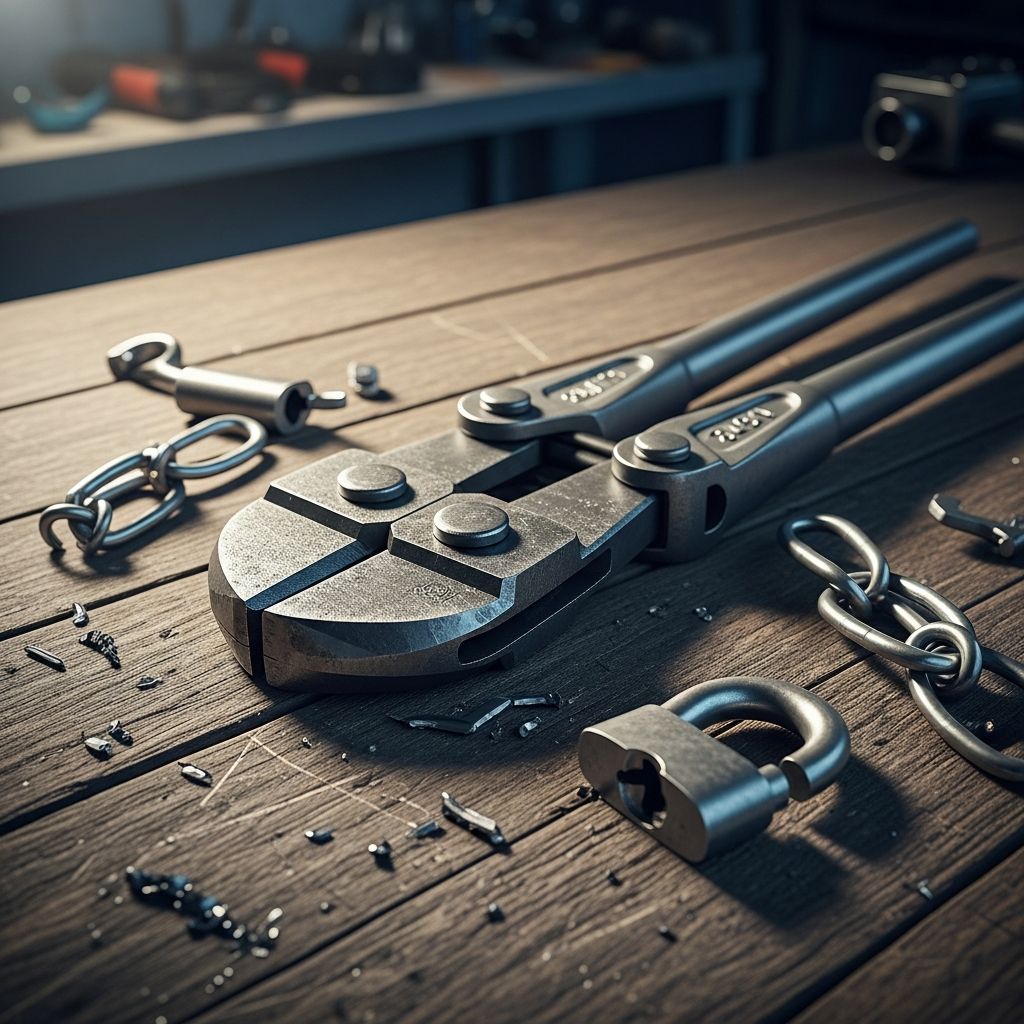
Mastering Bolt Cutters: The Ultimate Toolbox Essential
Bolt cutters stand as indispensable heavy-duty tools designed to shear through tough materials like chains, bolts, rods, and padlocks with precision and power. Leveraging long handles for mechanical advantage, they concentrate force at the jaws to tackle metals up to high tensile strengths.
Understanding Bolt Cutter Fundamentals
At their core, bolt cutters operate on leverage principles, where extended handles amplify user-applied force to the cutting edges. Jaws typically feature hardened steel blades with wedge-shaped profiles that focus pressure on a small contact area, enabling cuts through materials under 150,000 PSI tensile strength, such as carbon steel chains or grade 5 bolts. This design distinguishes them from pliers or shears, prioritizing brute force over finesse.
Key components include the handles (often rubber-gripped for comfort), pivot point (for leverage multiplication), and jaws (replaceable in premium models). Understanding these allows users to select tools matching task demands, from light wire trimming to severing thick rebar.
Types of Bolt Cutters for Every Application
Bolt cutters vary by jaw configuration, build quality, and intended use, ensuring versatility across scenarios.
- Center-Cut Models: Feature straight-aligned jaws for balanced cutting power, excelling on pipes, cables, rods, and standard chains. Ideal for general tasks due to even force distribution.
- Angle-Cut Variants: Jaws angled 25-30 degrees for accessing tight spaces, perfect for overhead work or confined areas without awkward positioning.
- Clipper-Cut Designs: Optimized for flush cuts against surfaces, leaving minimal protrusion—suited for padlocks or fixtures flush to walls.
- Standard vs. Heavy-Duty: Standard cutters handle up to 1/4-inch soft metals; heavy-duty versions with longer handles (30-42 inches) conquer 3/4-inch hardened steel.
- Compact and Light-Duty: 12-18 inch sizes for portability, cutting thin wires, light chains, or garden fencing.
Selecting the Right Size: A Practical Breakdown
Size dictates cutting capacity, with longer tools providing superior leverage for thicker materials. Here’s a guide based on common diameters:
| Size (inches) | Max Cut Diameter (Soft Metal) | Best Applications |
|---|---|---|
| 12-14 | 1/4 inch (6mm) | Thin rods, light chains, wire fences |
| 18-24 | 3/8 inch (10mm) | Medium chains, bolts, padlocks |
| 30-36 | 5/8 inch (16mm) | Heavy chains, rebar ties, galvanized wire |
| 42+ | 11/16 inch (18mm) | Ultra-thick steel rods, transport chains |
Match size to material hardness: For HRC 35 steel, capacities drop (e.g., 14-inch cuts 7mm max). Always test on scrap first.
Step-by-Step: How to Use Bolt Cutters Effectively
- Inspect and Prepare: Check jaws for damage, ensure handles are dry and gripped firmly with both hands. Wear gloves, eye protection, and sturdy footwear.
- Position the Material: Place the item perpendicular to jaws in the deepest cutting notch for maximum leverage. Avoid angled insertions to prevent blade slippage.
- Apply Steady Pressure: Squeeze handles smoothly with body weight, rocking slightly if needed. For tough cuts, use full arm extension and pivot from hips.
- Execute the Cut: Apply even force until blades meet; release and reposition for multiple bites on very thick items. Never force beyond resistance to avoid jaw damage.
- Post-Cut Check: Clear debris from jaws; inspect for burrs or wear.
Pro Tip: For rusted or case-hardened materials, apply penetrating oil beforehand and use heavy-duty models.
Safety Protocols: Preventing Injuries and Tool Failure
Safety is paramount with these high-force tools. Common hazards include pinch points, flying debris, and kickback.
- Always secure the workpiece in a vise if possible to minimize movement.
- Maintain three points of contact (two hands, one foot braced) for stability.
- Never cut materials exceeding rated capacity—risk of jaw fracture or handle snap.
- Store in dry conditions; avoid dropping to preserve jaw alignment.
- For overhead cuts, use angle-cut types and ladder spotters.
Canadian Centre for Occupational Health and Safety emphasizes selecting cutters matching material type and size, plus regular inspections.
Maintenance and Longevity Tips
Proper care extends tool life significantly.
- Cleaning: Wipe jaws and pivot after each use; lubricate with light machine oil weekly.
- Sharpening: Hone cutting edges with a fine file at 60-degree angle if dullness appears—do not grind excessively.
- Jaw Replacement: On modular models, swap worn jaws per manufacturer specs.
- Storage: Hang vertically or in padded cases to prevent handle warping.
- Inspection Points: Check pivot bolts for tightness, handles for cracks quarterly.
Heavy-duty users report 5-10x lifespan extension with routine maintenance.
Real-World Applications Across Industries
Bolt cutters prove versatile in professional and DIY settings.
- Construction: Shearing rebar ties, grade-70 chains, or corroded mesh for site prep.
- Security and Locksmithing: Bypassing padlocks on gates or facilities (18-inch compact models preferred).
- Emergency Response: Firefighters use titanium variants for grilles, hurricane clips, or vehicle extrication.
- Automotive Repair: Removing seized bolts, cables, or exhaust hangers.
- Agriculture/Home Use: Trimming fences, chains, or livestock gates (light-duty sizes).
Common Mistakes and How to Avoid Them
Avoid these pitfalls for optimal results:
- Undersizing: Leads to excessive effort and failure—scale up for hardness.
- Poor Positioning: Angled cuts cause blade wear; always perpendicular.
- Neglecting PPE: Debris hazards demand goggles and gloves.
- Overforcing: Better multiple controlled cuts than one aggressive snap.
Frequently Asked Questions (FAQs)
What materials can bolt cutters handle?
They excel on carbon steel chains (up to 3/4 inch), padlocks, grade 5 bolts, rods, and wires under 150,000 PSI. Avoid case-hardened or boron alloys.
How do I know if my bolt cutters are the right size?
Refer to size charts: 24-inch for 3/8-inch medium steel; test on similar scrap.
Can bolt cutters cut hardened locks?
Standard models struggle; opt for heavy-duty with hardened jaws for better results, but specialized tools may be needed for high-security.
Are bolt cutters safe for home use?
Yes, with light-duty sizes and safety gear. Always follow protocols to prevent injury.
How often should I maintain bolt cutters?
Clean after use, lubricate weekly, inspect monthly for professional use.
References
- Guide to Bolt Cutters — Zoro. Accessed 2026. https://www.zoro.com/resourcehub/guide-to-bolt-cutters/
- How to Choose the Right Bolt Cutter for Heavy-Duty Tasks — Jusheng Tool. Accessed 2026. https://www.jushengtool.com/blog/how-to-choose-the-right-bolt-cutter-for-heavy-duty-tasks495
- The Ultimate Guide to Choosing the Right Cutter — UD Machine. Accessed 2026. https://ud-machine.com/blog/cutter-to-cut/
- Bolt Cutter Uses — FESTAR Tools. Accessed 2026. https://festartool.com/boltcuttersize/
- Bolt Cutters: Must-Have Tools for Every Toolbox — Enrgtech. Accessed 2026. https://www.enrgtech.co.uk/blog/bolt-cutters-must-have-tools-for-every-toolbox/
- The Different Types of Cutters and What You Need to Know — RS Online UK. Accessed 2026. https://uk.rs-online.com/web/content/discovery/ideas-and-advice/cutters-guide
- Cutting Tools for Bolts, Cables, and Strapping — CCOHS. 2022-01-01. https://www.ccohs.ca/oshanswers/safety_haz/hand_tools/cutting.pdf
Similar Articles








Read full bio of medha deb