Undefined Carpet Tile Cuts: Expert Guide For Precise Trimming
Unlock pro-level techniques for precise carpet tile cutting to achieve seamless flooring results in any room.
Mastering Carpet Tile Cuts
Carpet tiles offer a versatile and affordable way to update flooring, allowing for easy installation and customization. Achieving a professional look hinges on precise cutting, especially around irregular edges, corners, and obstacles. This guide explores proven techniques to cut carpet tiles effectively, drawing from practical methods used by flooring professionals.
Essential Tools for Precision Cutting
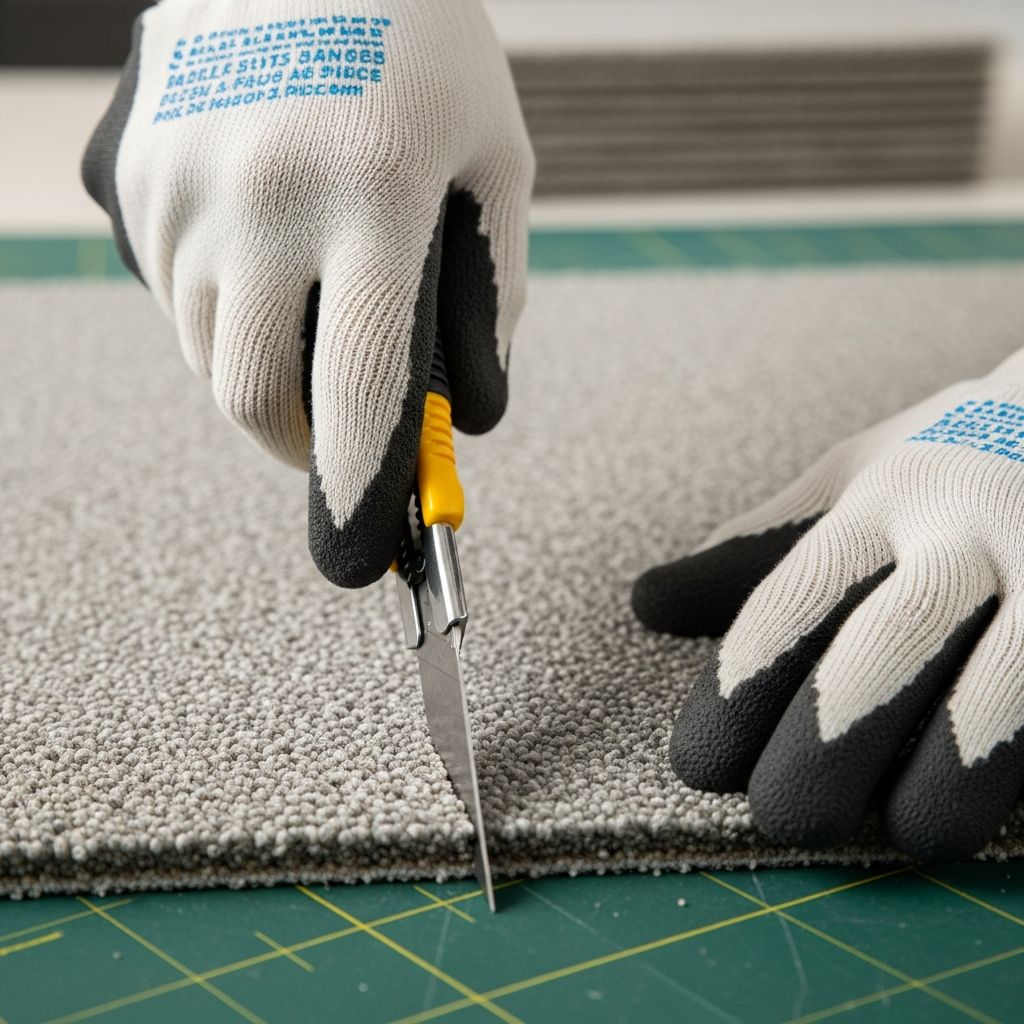
Success in cutting carpet tiles starts with the right equipment. A sharp utility knife is indispensable, as dull blades cause ragged edges and uneven cuts. Pair it with a sturdy metal ruler or straightedge for guiding straight lines. For marking, use a chalk line or carpenter’s pencil that won’t smudge the backing.
- Utility knife: Retractable with replaceable blades for clean slices.
- Straightedge: Heavy-duty metal ruler at least 24 inches long to prevent slipping.
- Cutting mat: Protects surfaces and provides a non-slip base.
- Adhesive or tape: Double-sided options secure tiles during fitting.
- Marker or chalk: Fine-tip for accurate outlining on the tile backing.
Specialized cutters like those with wall gauges can simplify edge work by eliminating measuring tapes, producing dust-free results ideal for resilient and carpet tiles.
Preparation Steps Before Cutting
Before making any cuts, prepare the subfloor and plan the layout. Ensure the surface is clean, level, and dry to prevent tile shifting. Start by dry-laying tiles in the center of the room, working outward to minimize cuts along walls. Check tile direction arrows on the backing to maintain pattern consistency across seams.
Measure room dimensions twice, accounting for a 1/4-inch expansion gap around perimeters. This gap accommodates subfloor movement and allows tiles to fit snugly without buckling.
| Room Area | Starting Point | Expansion Gap |
|---|---|---|
| Square/Rectangular | Center | 1/4 inch all sides |
| Irregular | Most prominent feature | Adjust per wall |
| With obstacles | Around fixtures first | 1/8-1/4 inch |
Straight Edge Cutting Techniques
For walls and straight borders, position a full tile face-up against the wall, aligning with adjacent tiles. Mark the overlap on the tile backing using a pencil. Flip the tile over, secure the straightedge along the mark, and score deeply with the utility knife in one firm pass. Snap or cut through the backing fully.
Pro tip: Always cut from the backing side to avoid fraying the carpet fibers. Test fit the cut tile, trimming minimally if needed for a tight seam.
Handling Complex Corners
Irregular corners challenge beginners, but flipping tiles as templates simplifies the process. For a protruding corner, place the target tile in position and overlay a full tile to trace the exact contour needed. Press firmly and mark intersection points.
- Push the working tile tightly into the corner.
- Overlay a full tile perpendicularly to capture the angle.
- Mark cut lines on both edges using the overlay’s straight side.
- Connect marks with a straightedge and cut carefully.
In non-square corners, mark two points first, then use another tile to extend lines accurately without a tape measure. Fold the corner to verify fit before final cuts.
Cutting Around Obstacles and Fixtures
Fixed objects like pipes, vents, or furniture require notched cuts. Use the adjacent installed tile as a guide: butt the new tile against it, then slide an extra tile underneath to transfer the obstacle shape precisely.
For external corners around columns, fill adjacent spaces first. Mark the tile bottom where it meets the corner, then cut out the notch using overlapping tiles for reference. Pull the blade toward you slowly for control, ensuring safety.
Video demonstrations show installers bridging gaps with full tiles to guarantee exact fits, even at angles. This method preserves tile squareness and avoids short pieces that misalign.
Advanced Patterns and Directional Layouts
Many carpet tiles feature directional arrows for pattern alignment. Lay rows following the arrow orientation, typically quarter-turned or monolithic. For borders, cut strips from spare tiles and miter corners at 45 degrees for seamless joins.
In office settings, start from the longest wall and work inward, using striped patterns for visual flow. Adjust cuts dynamically as you progress to maintain uniformity.
Safety and Common Mistakes to Avoid
Always wear cut-resistant gloves and eye protection. Cut on a stable surface, keeping hands clear of the blade path. Never pull the knife toward yourself; push away for safer strokes.
- Avoid dull blades: Replace after 3-5 tiles to prevent tearing.
- Don’t rush corners: Double-check marks with test fits.
- Steer clear of scissors: They crush fibers; knives shear cleanly.
- Prevent slipping: Tape tiles down during marking.
Troubleshooting Fit Issues
If seams gap, recut with slight overlap. Buckling indicates poor subfloor prep—remove and flatten. Frayed edges? Seal with latex adhesive. For patterned mismatches, reorder matching tiles early.
Pro Finishing Touches
After cutting, peel adhesives carefully, aligning fibers directionally. Roll seams with a flooring roller for adhesion. Vacuum thoroughly before foot traffic. Expect minor trims during install; order 10-15% extra tiles for waste.
Frequently Asked Questions
Can I reuse offcuts for borders?
Yes, save clean straight cuts for edging, but avoid frayed pieces to maintain quality.
What’s the best knife for thick tiles?
Heavy-duty utility knives with hooked blades excel for resilient backings.
How do I cut without measuring?
Tile-on-tile templating transfers shapes perfectly, as shown in expert videos.
Do I need adhesive for all installs?
Glue-down tiles require it; loose-lay works on flat subfloors but secure edges.
How long do cuts stay sharp?
Sharpen or replace blades every few tiles for consistent precision.
Benefits of Carpet Tiles Over Rolls
Modular design simplifies replacements and cuts. DIY-friendly with no seaming tools needed. Cost-effective for high-traffic areas like offices or basements.
References
- How to cut and fit carpet tiles in an office – part 3 — Fenston Carter (YouTube). 2022-02-23. https://www.youtube.com/watch?v=lKKwDMvi6X0
- Cutting in a carpet tile complicated corner without a tape — YouTube. N/A. https://www.youtube.com/watch?v=hOApzTyQBPw
- How to Install Carpet Tiles (with Special Cuts) — YouTube. N/A. https://www.youtube.com/watch?v=Jz-Lld6E8_s
- How to Cut Carpet Tiles | Tile Laying & Fitting Guide — Carpet Tile Solutions. N/A. https://www.carpettilesolutions.com/fitting-guide
- How to Cut Resilient & Carpet Tile | Bullet Tools RCT Cutters — YouTube. N/A. https://www.youtube.com/watch?v=Mx555g47cH8
Similar Articles







Read full bio of medha deb