Undefined: 7 Essential Tools For Cutting Peel And Stick Tiles
Unlock precise cutting techniques for peel and stick tiles to achieve flawless DIY flooring and backsplash installations every time.
Mastering Cuts for Peel and Stick Tiles
Peel and stick tiles offer a versatile, mess-free solution for updating floors, backsplashes, and walls. Their self-adhesive backing simplifies installation, but achieving precise cuts is key to a professional finish. This guide explores essential tools, material-specific techniques, and pro tips to handle straight lines, curves, and intricate shapes confidently.
Why Precision Matters in Tile Cutting
Accurate cuts ensure tiles fit snugly around edges, outlets, and obstacles, preventing gaps or overlaps that compromise durability and aesthetics. Poor cuts can lead to peeling edges or adhesive failure over time. With the right approach, even novices can produce clean results, saving time and materials during renovations.
Essential Tools for Every Project
Gather these basics before starting:
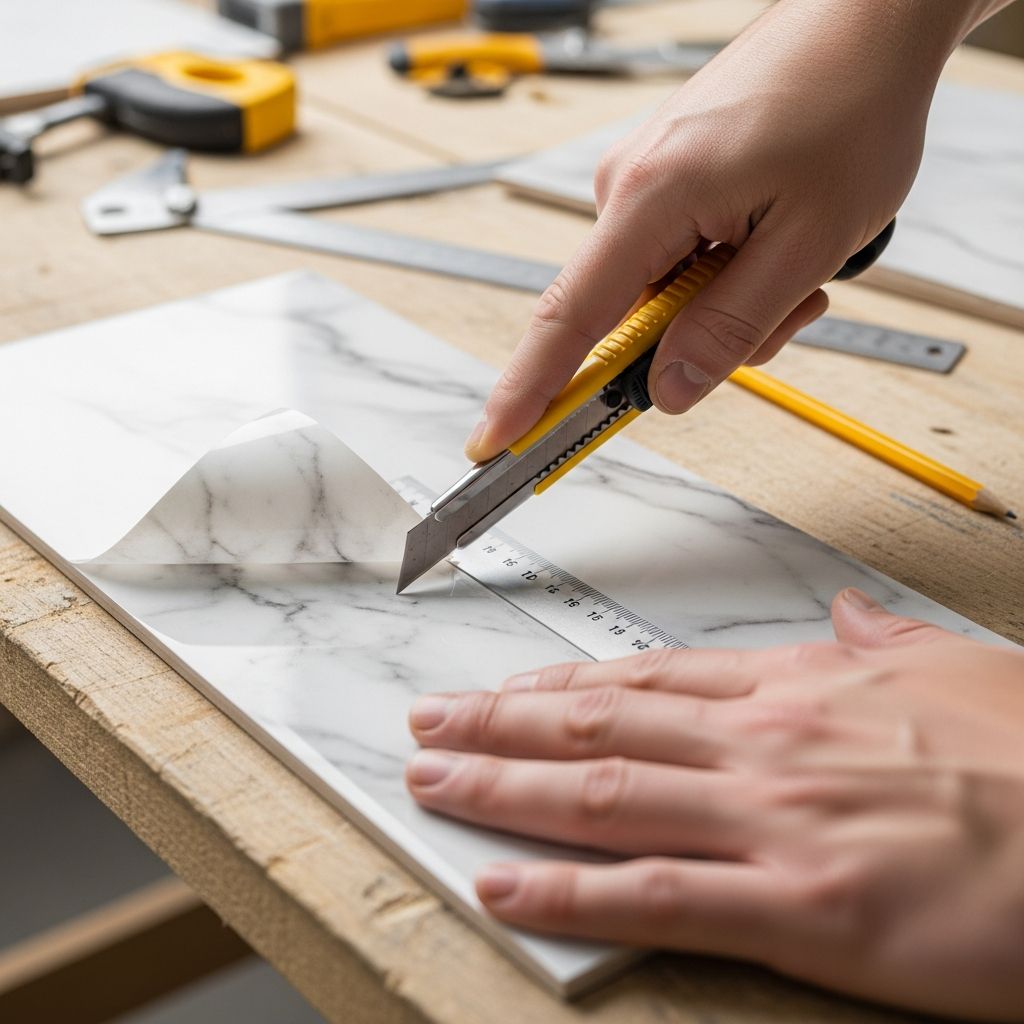
- Utility knife with sharp, replaceable blades for scoring and slicing.
- Straightedge or ruler for guiding straight cuts.
- Scissors ideal for soft materials like vinyl.
- Pencil or marker for precise measurements and marks.
- Pliers for snapping rigid tiles or handling small pieces.
- Cutting mat or buffer cushion to protect surfaces and stabilize tiles.
- Tape measure for accurate sizing.
Invest in high-quality blades to avoid jagged edges. Replace dull ones frequently to maintain control.
Measuring and Marking Fundamentals
Success begins with exact measurements. Lay tiles in a dry run to identify cut lines. Use a tape measure for dimensions, then transfer marks with a pencil. For straight cuts, align a straightedge along the line. Double-check angles with a square tool to ensure perpendicularity, especially around corners or fixtures.
| Material Type | Recommended Measuring Tip |
|---|---|
| Vinyl | Light pencil marks; tiles are forgiving. |
| PVC/ALU | Firm marks; score deeply for clean snaps. |
| Mother of Pearl/SPC | Multiple passes; use straightedge firmly. |
Cutting Techniques by Material Type
Soft Vinyl Peel and Stick Tiles
Vinyl tiles are the most beginner-friendly due to their flexibility. Mark your line, then use scissors for quick cuts or a utility knife with light pressure along the score. For thicker variants, score multiple times before tearing. This method yields smooth edges without chipping.
PVC-Based Tiles
These 2-4mm thick tiles feature a PVC film over a composite core. Score the surface deeply with a utility knife guided by a ruler, penetrating the wear layer. Snap along the groove by hand or over a table edge. Finish by trimming the adhesive backing with scissors if needed. Avoid scissors on uncut PVC to prevent uneven tears.
Aluminum Composite (ALU) Tiles
Metallic ALU panels demand firmer scoring due to their hardness. Apply steady, forceful strokes with a fresh blade. Snap as with PVC, but expect more resistance. The process mirrors PVC but requires patience to avoid surface scratches on visible areas.
Mother of Pearl and Natural Shell Tiles
These delicate, 2mm-thick tiles with fiber mesh backing resist simple snapping. Score repeatedly, then use pliers to separate shell pieces one by one over a table. Trim the mesh and adhesive separately. For efficiency, a small rotary cutter works well on irregular shapes.
SPC and Mixed PVC/ALU Tiles
Stone Plastic Composite (SPC) offers rigidity and flatness. Treat like ALU: deep scoring followed by snapping. Mixed tiles follow the harder material’s method. Protect adjacent tiles with masking tape during cuts.
Handling Curves and Notches
Straight cuts are straightforward, but curves around pipes or outlets require finesse. For vinyl, use fine scissors or a craft knife with a pivoting motion. On rigid tiles, score outlines, then nibble away excess with the knife tip. A tile nibbler tool excels for clean notches without cracking.
Advanced Cutting Strategies
For efficiency in large projects, stack tiles and cut multiples at once, aligning marks perfectly. A clever trick for edge matching: place a full tile over an installed one, trace the profile, and cut to duplicate the contour precisely. This ensures seamless fits in irregular spaces like wall returns.
Video demonstrations highlight this: position the new tile atop the existing edge, mark the overhang, and cut along that line for a mirror-image fit.
Safety Protocols and Best Practices
Always wear cut-resistant gloves and eye protection. Work on a stable, protected surface. Secure tiles to prevent slipping. Dispose of blades safely in a puncture-proof container. Ventilate areas to avoid inhaling dust from composite materials.
- Keep blades sharp to reduce force and slip risk.
- Score away from your body.
- Test cuts on scraps first.
Troubleshooting Common Issues
Jagged edges: Dull blade or insufficient scoring—sharpen or replace.
Chipping on rigid tiles: Score lighter initially, build depth gradually.
Adhesive tearing: Cut backing separately after snapping the face.
Curves not smooth: Use finer tools like manicure scissors for vinyl.
Enhancing Longevity Post-Cut
After cutting, store unused tiles with backing intact. Clean edges with a soft cloth before adhering. Allow cuts to acclimate to room temperature. For high-traffic areas, seal edges with clear caulk for added protection.
FAQ
Can I use a tile saw for peel and stick tiles?
No, wet saws generate heat and moisture that damage adhesive. Stick to manual methods.
What’s the best blade for utility knives?
Heavy-duty snap-off blades with 5-8 notches for extended life and precision.
How do I cut around outlets?
Template the outlet with paper, transfer to tile, and score/nibble carefully.
Are peel and stick tiles suitable for floors?
Yes, especially SPC variants, but ensure subfloor is level and clean.
Can I paint cut edges?
For metallic tiles, use compatible paint to match and seal.
Project Ideas and Applications
Beyond backsplashes, use cut tiles for renter-friendly floor updates, laundry room accents, or furniture upgrades. Mix materials for custom patterns, cutting precisely for borders.
References
- Your Easy to Follow Guide: How to cut peel and stick tile — Colamo. 2023. https://www.colamo.net/blogs/guide/how-to-cut-peel-and-stick-tile
- Install Guide: How To Cut Peel And Stick Backsplash Tile — YipsCazoTile. 2023. https://yipscazotile.com/blogs/installtion/how-to-cut-peel-and-stick-backsplash-tile
- PEEL AND STICK TILE TRICK HOW TO CUT PEEL AND STICK TILE — YouTube (EPTC Epic Time Pass Channel). 2019-04-15. https://www.youtube.com/watch?v=IVgVuR72xpk
Similar Articles






Read full bio of medha deb