Dual Flush Toilet Adjustment: Step-By-Step Guide
Complete guide to optimizing your dual flush toilet performance and water efficiency.
Understanding Your Dual Flush Toilet System
Modern dual flush toilets represent a significant advancement in water conservation technology, offering homeowners the ability to choose between two different flush volumes depending on their needs. Unlike traditional single-flush toilets that use the same amount of water for every flush, dual flush systems provide separate mechanisms for liquid and solid waste removal. This innovative design can reduce household water consumption by up to 67 percent compared to standard toilets, making them an environmentally responsible choice for any home.
The dual flush mechanism operates through a straightforward yet elegant system. When you press one button, it activates a shorter flush cycle that uses approximately 0.8 gallons of water, ideal for liquid waste. When you press the alternative button, it triggers a full flush cycle using around 1.6 gallons, necessary for solid waste removal. Understanding how these two mechanisms work together is essential before attempting any adjustments to your system.
Essential Tools and Safety Preparation
Before beginning any adjustment work on your dual flush toilet, gathering the appropriate tools ensures a smooth process and prevents potential damage to the system. Having everything you need within arm’s reach also minimizes frustration and allows you to work efficiently.
The following tools are typically required for most dual flush toilet adjustments:
- Adjustable wrench for loosening and tightening connections
- Flathead screwdriver for prying and adjustment mechanisms
- Phillips head screwdriver for fastening various components
- Pliers for gripping and bending components when necessary
- Adjustable spanner for precision work on smaller parts
- Clean towels or rags for wiping away excess water
Safety should always be your priority when working with toilet mechanisms. Begin by turning off the water supply valve, which is typically located on the wall behind the toilet. Turn the valve clockwise until water flow stops completely. Flush the toilet once to empty the tank, which reduces the amount of water you’ll encounter during adjustments. This step is crucial for preventing spills and maintaining a clean work environment.
Accessing the Internal Components
Once the water supply is shut off and the tank is empty, you’re ready to access the toilet’s internal mechanisms. Carefully lift the tank lid straight up, as these ceramic components are fragile and can break if dropped or bumped. Many people find it helpful to wrap the lid in a towel and place it on a stable surface away from the work area to prevent accidental breakage.
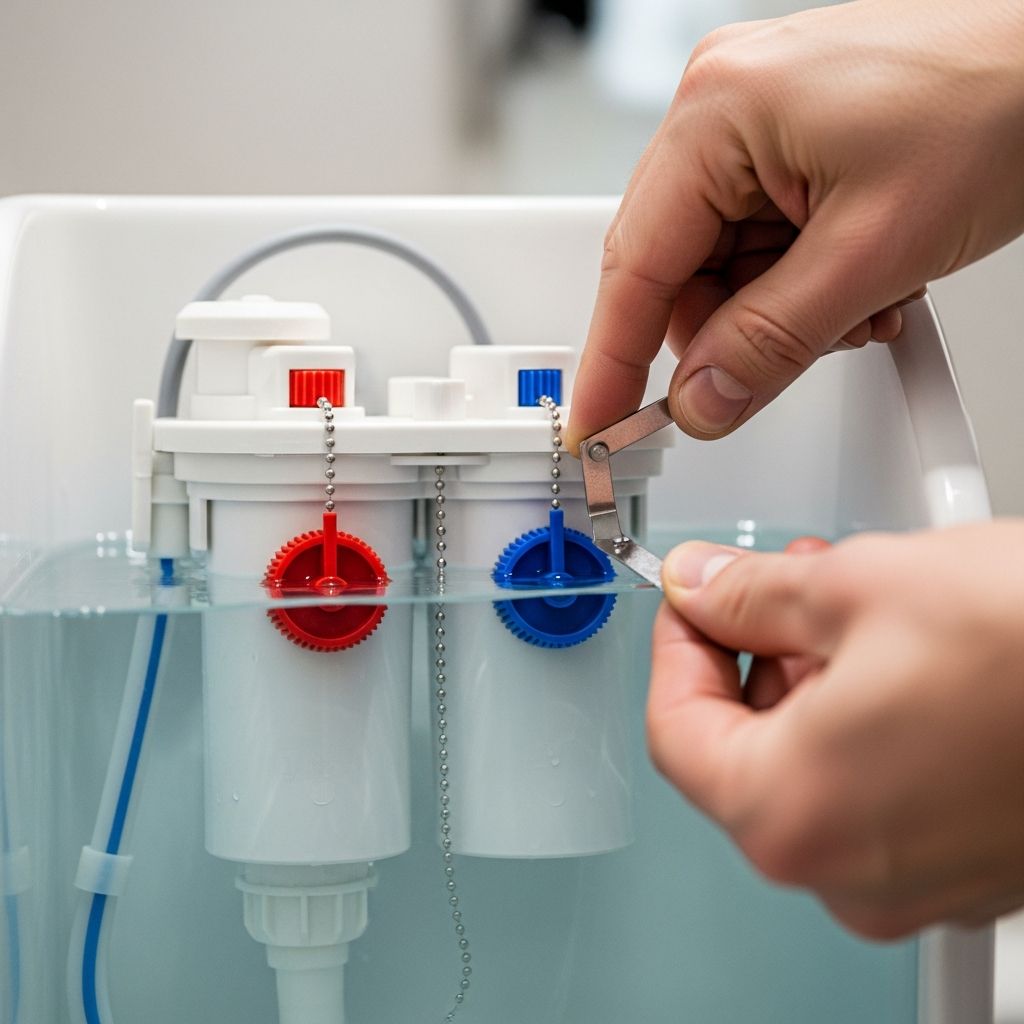
Inside the tank, you’ll observe several key components that work together to create the dual flush action. The dual flush valve sits at the center bottom of the tank, connected to the fill valve that controls water entry. Two adjustment mechanisms—typically colored blue for half-flush and red for full-flush—allow you to control how much water is released during each flush cycle. Familiarizing yourself with these components before making adjustments helps prevent mistakes and ensures you understand what each adjustment controls.
Calibrating Water Level Settings
The water level in your toilet tank directly impacts flush effectiveness. If the water level is too low, neither flush option will work properly, resulting in incomplete bowl clearing. If it’s too high, you’ll waste water and may experience continuous running issues. Proper water level is crucial for optimal dual flush performance.
Most dual flush systems should maintain water levels approximately halfway to completely covering the oval-shaped windows on the flush valve. To adjust the water level, locate the fill valve height adjustment mechanism. This is typically controlled by a thumbscrew or clip-based system at the top of the fill valve assembly. For fill valves with a fixed locking collar, twist the inner base to unlock, then extend or contract the height as needed before twisting back to lock. For models with a sliding snap tab, release the tab, rotate to free the detent, adjust the length, then rotate back and slide the tab upward to relock.
After making water level adjustments, turn the water supply back on and allow the tank to fill. Observe where the water stops and compare it to the factory water line marked on your tank’s interior. You may need to make small additional adjustments, turning the adjustment mechanism slightly past your desired point to ensure it settles into the correct detent position.
Optimizing Half-Flush Performance
The half-flush or short-flush setting is designed for liquid waste removal and should use minimal water while still effectively clearing the bowl. This setting is typically controlled by the blue adjustment dial or slider on your dual flush unit. To optimize this setting, begin by positioning the blue float or adjustment dial to its highest position, which minimizes water usage.
Perform a test flush by pressing the half-flush button and observing the results. If the toilet fails to clear the bowl completely, you need to increase water volume. Lower the blue adjustment by one click and test again. Continue this process incrementally until the toilet produces one strong flush action that clears the bowl without leaving excess water behind. Most users find that the adjustment point falls somewhere in the middle of the available range, though this varies depending on your specific toilet model and personal preference.
When testing the half-flush setting, place a small piece of toilet tissue in the bowl during each attempt. This provides a clear visual indicator of whether the flush has sufficient power to clear waste effectively. Once you’ve found the optimal setting, mark it mentally or with a small piece of tape so you can return to it if the adjustment shifts over time.
Fine-Tuning Full-Flush Capability
The full-flush setting, typically controlled by the red adjustment dial, should provide sufficient water to completely clear solid waste and toilet paper from the bowl. This cycle requires more water than the half-flush but should still operate efficiently without wasting excessive amounts. Begin by setting the red float or dial to its highest position, then perform a test flush.
If the full-flush doesn’t clear the bowl completely, systematically lower the red adjustment dial one setting at a time, performing a test flush after each change. Unlike the half-flush setting which seeks the lowest effective water level, the full-flush setting should remain high enough to ensure reliable performance. Once the bowl clears completely on the first flush, you’ve found your optimal setting. If you need more water than the initial setting provides, it may indicate a deeper issue with your toilet’s valve system that requires professional attention.
Addressing Common Flush Issues
Even after proper adjustment, you may encounter occasional issues with your dual flush toilet. Understanding common problems and their solutions helps you maintain optimal performance over time. One frequent issue involves the flush closing immediately after releasing the button. This typically indicates insufficient water level in the tank.
To resolve this problem, ensure your water level is adjusted to at least halfway covering the oval windows on the dual flush valve. If you’ve already set the water level correctly but the problem persists, check that both adjustment dials are set to their maximum positions initially. Additionally, verify that the refill tube—the small rubber hose visible inside the tank—is directing water down the overflow pipe rather than directly into the tank. The roller clamp controlling this tube should be set to position 8 for full flow.
Another common issue is incomplete bowl clearing, which may indicate that your fill valve lacks sufficient output capacity. Fluidmaster and other manufacturers produce premium fill valves like the PerforMAX 400AH model specifically designed to handle dual flush systems effectively. If your current fill valve struggles to refill the bowl adequately between flushes, upgrading to a higher-capacity model may be necessary.
Maintaining Seals and Valve Components
Over time, the rubber seal at the base of your dual flush valve can deteriorate or accumulate mineral deposits, leading to water leaks or poor flush performance. Regular inspection helps identify problems before they worsen. Remove the dual flush valve from its seat and examine both the valve seal and the plastic seat it rests upon. If you notice black residue on your fingers when touching the seal, this indicates wear and the seal requires replacement.
If the seal appears intact but performance has declined, clean both the seal and the seat using a soft cloth to remove any mineral buildup. For more stubborn deposits, use a gentle cleaning product designed for toilet tanks, as harsh chemicals can damage the rubber components. After cleaning, reseat the angled seat adapter and ensure it’s properly positioned before reattaching the dual flush valve.
Managing Float and Adjustment Mechanisms
The float assemblies that control flush volume must be properly aligned and free-moving to ensure consistent performance. Periodically check that the blue and red adjustment floats slide smoothly without sticking or binding. If you notice sluggish movement, remove the dual flush valve completely and clean the float assemblies with a soft brush and water to remove mineral deposits or debris.
When reattaching the floats after cleaning, ensure they’re positioned correctly so they can move freely throughout their entire adjustment range. The floats should barely contact the activation buttons inside the toilet tank without creating resistance. If the floats are too long or positioned incorrectly, they may not respond properly to button presses, or conversely, they may activate prematurely. Make fine adjustments by reshaping the float support arms slightly if necessary, always being careful not to apply excessive force that could break these delicate components.
Testing After Adjustments
After making any adjustments to your dual flush toilet, comprehensive testing ensures everything functions correctly before returning to normal use. Turn the water supply valve counterclockwise to restore water flow, allowing the tank to fill completely. Wait until the fill valve shuts off automatically, indicating the tank has reached the correct level.
Perform at least three test flushes with each button, alternating between half-flush and full-flush cycles. Place tissue in the bowl during testing to verify complete waste removal. Note how the water flows, whether the bowl clears completely, and how quickly the tank refills between flushes. The entire process from button press through bowl clearing to tank refilling should take less than 30 seconds total.
Pay attention to unusual sounds, such as prolonged hissing after the flush completes, which might indicate improper valve seating or fill valve issues. If you notice water running continuously or dripping into the bowl, the flush valve seal may not be seated correctly and requires repositioning or replacement.
Long-Term Maintenance Recommendations
Maintaining your dual flush toilet’s performance extends its lifespan and ensures water efficiency remains optimized. Monthly inspections of the tank interior help identify developing problems before they become serious. Look for signs of mineral buildup on the flush valve, discoloration of the tank walls, or visible corrosion on metal components.
Quarterly cleaning of the dual flush mechanism prevents mineral deposits from impairing float movement and valve responsiveness. Use a toilet bowl cleaner specifically formulated for dual flush systems, applying it to the tank interior and allowing it to soak for the recommended time. For stubborn mineral deposits, a soft brush can gently remove buildup without damaging sensitive components.
If your area has hard water, consider installing a water softener or using a tank additive designed to prevent mineral accumulation. These preventive measures significantly reduce maintenance requirements and help maintain consistent flush performance over many years.
Frequently Asked Questions
Q: How often should I adjust my dual flush toilet?
A: Adjustments are typically needed only when you notice performance changes or inconsistent flushing. Once properly calibrated, most dual flush toilets maintain their settings indefinitely unless mineral buildup or component wear occurs. Annual inspections help identify developing issues early.
Q: Can I adjust my dual flush toilet without turning off the water?
A: No, turning off the water supply is essential for safety and cleanliness. Working with a full tank creates messy conditions and increases the risk of accidental water discharge during adjustments. Always shut off the water valve first.
Q: What if neither flush button responds after adjustment?
A: Check that the connection chain between the buttons and valve mechanisms is properly attached and has appropriate slack. If connections are secure, the issue may involve a stuck or deteriorated flush valve seal that requires professional replacement.
Q: How can I tell if the water level is correct?
A: Proper water level should reach approximately halfway to completely covering the oval windows on your dual flush valve. You can also mark the factory water line with a piece of tape for easy reference during adjustments.
Q: Is it normal for my toilet to make a hissing sound after flushing?
A: Brief hissing as the fill valve operates is normal, but prolonged hissing after the tank fills suggests the flush valve seal may not be seated properly. This typically requires valve repositioning or seal replacement.
Q: Can hard water damage my dual flush mechanism?
A: Yes, mineral deposits from hard water accumulate on float assemblies and valve seals, reducing efficiency and responsiveness. Regular cleaning and water softening solutions help prevent this damage.
Q: What’s the difference between a clip-based and snap-tab fill valve adjustment?
A: Clip-based systems use a locking collar twisted to unlock and lock height adjustments. Snap-tab systems use a sliding tab that must be released before making adjustments and then slid back to secure the setting. Both achieve the same result but use different locking mechanisms.
Q: Should I replace my fill valve if adjustments don’t improve performance?
A: If your fill valve cannot maintain sufficient water level for proper flushing even when adjusted to maximum settings, upgrading to a higher-capacity model like the PerforMAX 400AH may be necessary for reliable dual flush operation.
Q: How do I prevent my dual flush adjustment settings from shifting?
A: Ensure all locking mechanisms—whether clips, collars, or snap tabs—are fully engaged after adjustments. Loose locks allow gradual drift of settings over time. Periodic checks help catch shifting before it affects performance.
Q: Can I clean mineral deposits from the flush valve without removing it?
A: Limited cleaning is possible without removal using toilet tank cleaners that soak overnight, but thorough cleaning requires complete valve removal. For persistent deposits, professional cleaning or valve replacement may be more effective.
References
- Dual Flush Valve Installation Instructions — Lowe’s. 2024. https://pdf.lowes.com/productdocuments/fb6363c9-c93a-4fb6-99b9-6f3276ade8ab/63224023.pdf
- Solutions for Common Dual Flush Toilet Problems — Fluidmaster. 2025. https://fluidmaster.com/toilet-problems/dual-flush-toilet/
- One Piece Toilet Dual Flush Installation & User Manual — The Home Depot. 2024. https://images.thdstatic.com/catalog/pdfImages/bf/bfc730e2-de08-4fd8-8280-5b3d781ed265.pdf
Similar Articles








Read full bio of medha deb