Mastering Foam Density Measurement Techniques
Unlock precise methods to measure foam density for optimal material selection in cushions, mattresses, and insulation projects.
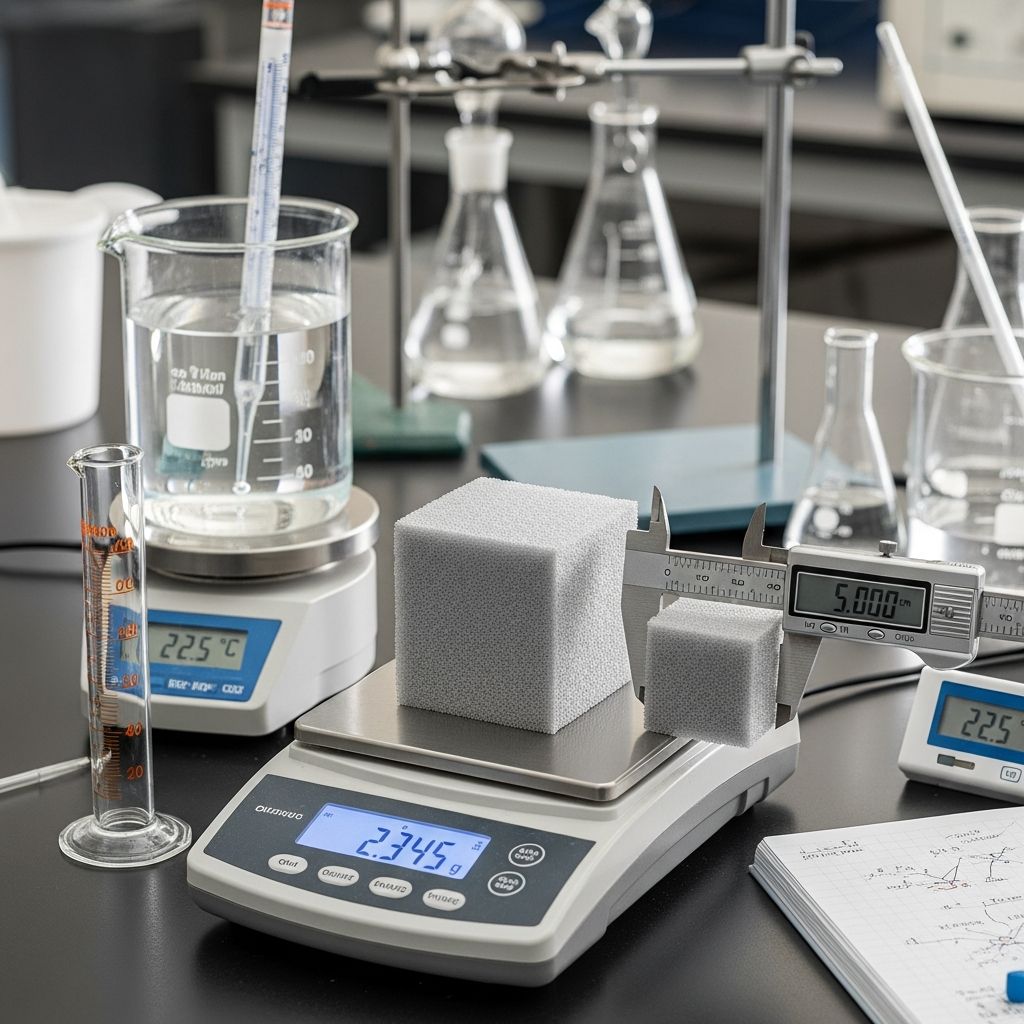
Foam density represents the mass of foam material per unit volume, typically expressed in pounds per cubic foot (PCF) or kilograms per cubic meter (kg/m³), serving as a critical indicator of durability, support, and performance in applications like mattresses, upholstery, and insulation.
Why Foam Density Matters in Everyday Applications
Understanding foam density helps consumers and professionals select materials that balance comfort, longevity, and cost-effectiveness. Higher density foams generally offer superior resilience and support but at a premium price, while lower densities prioritize affordability and flexibility. In mattresses, densities above 4 PCF indicate premium quality capable of lasting over a decade, whereas values below 1.5 PCF may compress prematurely. For spray foam insulation, precise density control ensures thermal efficiency—open-cell at 0.4-0.75 PCF for soundproofing and closed-cell at 1.75-2.5 PCF for structural reinforcement.
Core Principles of Density Calculation
Density is fundamentally calculated as mass divided by volume: Density = Weight (lbs or kg) / Volume (ft³ or m³). This universal formula applies across foam types, from polyurethane in furniture to specialized sponge materials in industrial uses. Accurate measurements demand calibrated tools and consistent sample preparation to avoid errors from uneven curing or surface variations.
Essential Tools for Reliable Foam Density Testing
To achieve precise results, assemble these calibrated instruments:
- Digital scale or balance: For weighing samples in pounds, grams, or kilograms with 0.01 lb accuracy.
- Calipers or digital ruler: Measures dimensions to 0.01 inch for volume computation.
- Graduated cylinder or overflow container: Essential for water displacement on irregular shapes.
- Cutting tools (sharp knife, bandsaw): Ensures clean, uniform samples without compression.
- Calculator or spreadsheet software: Performs conversions and computations swiftly.
Calibrate scales and gauges before each session, and work in a controlled environment to minimize humidity-induced weight fluctuations.
Step-by-Step Guide: Measuring Density in Regular-Shaped Foam
For blocks, slabs, or cylinders—common in mattress cores and upholstery—direct dimensional analysis yields straightforward results.
- Prepare the sample: Cut a representative piece, ideally 12x12x4 inches, removing any denser outer skin for core density assessment.
- Measure dimensions: Use calipers for length (L), width (W), and height (H) in inches. For cylinders, record diameter (for radius r) and height.
- Compute volume: Convert to feet (divide inches by 12), then Volume = L × W × H (rectangular) or πr²h (cylindrical).
- Weigh the sample: Record weight in pounds or kilograms on a stable surface.
- Calculate density: Divide weight by volume. Example: A 6x6x1 inch sample (0.5 ft³ volume) weighs 0.45 lbs, yielding 0.9 PCF.
| Shape | Volume Formula | Example Dimensions (inches) | Volume (ft³) |
|---|---|---|---|
| Rectangular | L × W × H / 1728 | 12 × 12 × 4 | 2.37 |
| Cylinder | πr²h / 1728 | r=6, h=12 | 3.77 |
Handling Irregular Foam Shapes with Water Displacement
Oddly shaped samples, like trimmed upholstery scraps or spray foam test cores, require the Archimedes’ displacement principle: submerged volume equals displaced fluid.
- Fill container: Pour water into a graduated cylinder to a marked level (e.g., 400 mL), noting the meniscus bottom.
- Submerge sample: Gently lower the foam; use weights if buoyant. Record new level (e.g., 460 mL).
- Determine volume: Subtract initial from final reading (60 mL = 0.0021 ft³).
- Weigh separately: Dry and measure mass (e.g., 96 g = 0.21 lbs).
- Compute density: 0.21 lbs / 0.0021 ft³ ≈ 100 PCF (adjust units accordingly).
This method excels for field testing but requires drying samples post-immersion to prevent water absorption skewing weights.
Industry-Specific Protocols for Spray Foam and Mattresses
Spray Foam Contractor Best Practices
In insulation jobs, test cured foam (24-48 hours post-application) from marked wall sections. Target open-cell 0.4-0.75 PCF for acoustics and closed-cell 1.75-2.5 PCF for vapor barriers. Cube samples simplify volume math, and deviations signal equipment recalibration needs.
Mattress Foam Evaluation
Slab densities dictate longevity: 1.8+ PCF for comfort layers, 4+ PCF for bases. Cut central cores avoiding edges, as quilting compresses surfaces.
Density vs. Firmness: Key Distinctions
Density measures mass distribution, while firmness (Indentation Force Deflection, IFD) quantifies compression resistance per ASTM D3574. A 25% IFD test compresses a 50 in² disc to 25% strain, rating pressure in lbs—low IFD means softer feel independent of density. High-density foams can be soft if cell structure is open, emphasizing holistic material specs.
| Property | Measurement | Typical Range | Impact |
|---|---|---|---|
| Density | PCF or kg/m³ | 0.4-6 PCF | Durability, weight |
| Firmness (25% IFD) | lbs force | 20-60 lbs | Comfort, support |
Troubleshooting Common Measurement Errors
- Inaccurate scaling: Verify zero-point; use tare for containers.
- Volume miscalculation: Double-check conversions (1 ft³ = 1728 in³).
- Sample inconsistencies: Test multiples, average results; reject uncured foam.
- Environmental factors: Humidity alters polyurethanes—test in 50-70% RH.
Understanding Density Ranges Across Foam Types
• Low-density (0.5-1.5 PCF): Budget cushions, disposable packaging.
• Medium (1.5-4 PCF): Everyday mattresses, seating.
• High (4+ PCF): Luxury support, medical bedding.
Spray foams cluster lower for expansion efficiency.
Frequently Asked Questions (FAQs)
What units are standard for foam density?
Primarily pounds per cubic foot (PCF) in North America for consumer products; kg/m³ internationally.
Does higher density mean firmer foam?
Not always—firmness depends on cell structure and chemistry; test both metrics.
How accurate is water displacement for porous foams?
Effective if samples dry fully; buoyant low-densities need weights.
Can I measure density without specialized tools?
Approximate with kitchen scales and rulers, but calibrate for reliability.
Why test multiple samples?
Foam varies by batch/location; averages ensure representativeness.
Advanced Tips for Professional Foam Assessment
For labs, employ ASTM standards: D3574 for urethanes, D1056 for silicones, integrating density with resilience (ball rebound) and tensile tests. Software like spreadsheets automates batch analysis, plotting density against performance for quality control.
References
- How to Measure Foam Density — UWI Foam. 2023. https://uwinfoam.com/how-to-measure-foam-density/
- How Contractors Should Measure Spray Foam Densities — Handcrafted Hose. 2023. https://www.handcraftedhose.com/post/how-contractors-should-measure-spray-foam-densities
- How Is Foam Density Measured in a Mattress? — Saatva. 2023. https://www.saatva.com/blog/how-is-foam-density-measured/
- Foam Firmness vs Density and Why It’s Important — Rogers Corporation. 2025-01-01. https://www.rogerscorp.com/blog/2025/foam-firmness-vs-density-and-why-its-important
- How is Foam Density Measured? — Sleep Foundation. 2023. https://www.sleepfoundation.org/mattress-information/foam-density
Similar Articles







Read full bio of medha deb