Mastering Latex Paint Thinning Techniques
Unlock professional results by learning precise methods to adjust latex paint consistency for brushing, rolling, and spraying applications.
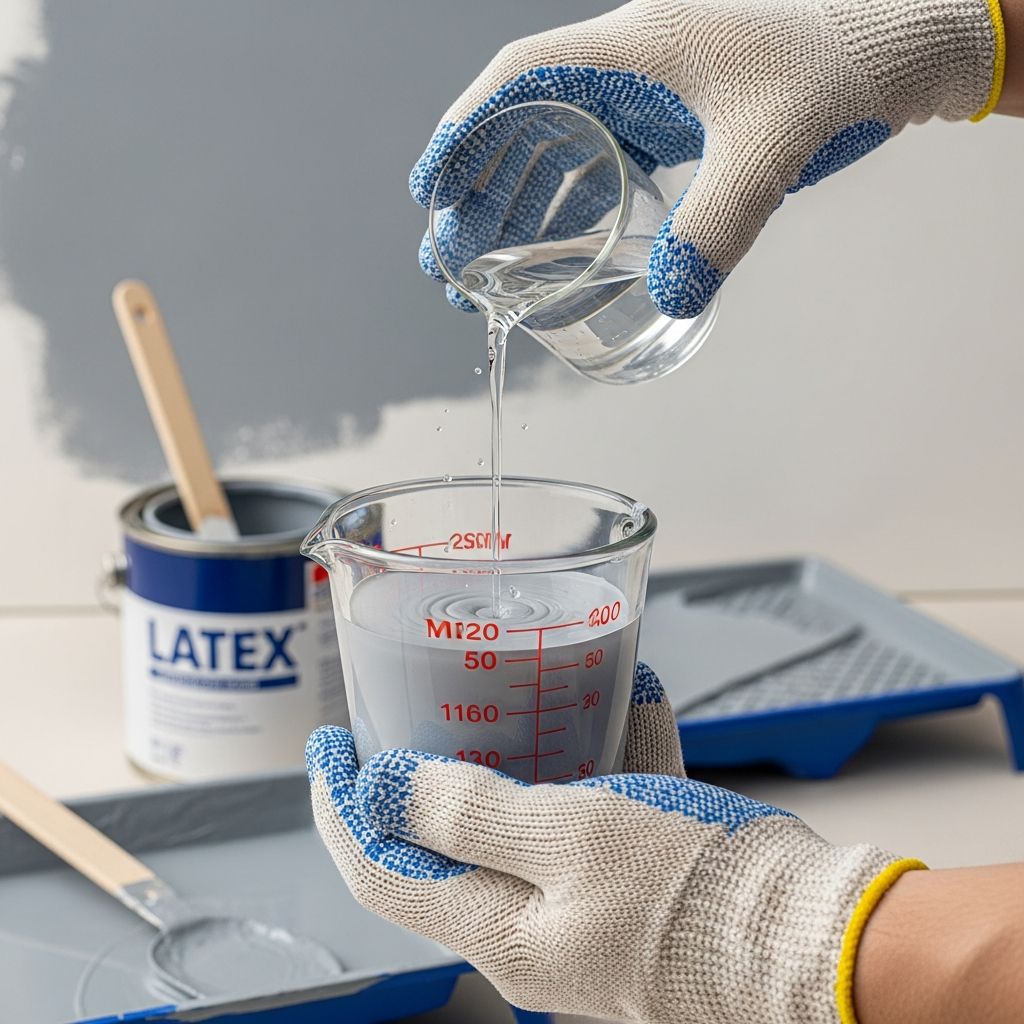
Latex paint, a water-based emulsion prized for its versatility, low VOC emissions, and straightforward cleanup, often requires thinning to reach optimal consistency for various application methods. Whether brushing interior walls, rolling exteriors, or spraying with airless equipment, proper thinning ensures even coverage, reduced brush marks, and professional-grade results.
Understanding the Need for Thinning Latex Paint
Latex paints can thicken over time due to evaporation, storage conditions, or formulation differences among brands. Thick paint leads to uneven application, roller lint pickup, or sprayer clogs. Thinning restores fluidity, allowing better leveling on surfaces and minimizing defects like orange peel texture in sprayed finishes.
- Evaporation in opened cans reduces water content, creating clumps.
- High temperatures during application cause paints to thicken on the surface.
- Spraying demands finer mist for siding or trim, necessitating precise viscosity.
Adjusting consistency also enhances adhesion on tricky surfaces and prevents lap marks when working in sections.
Assessing Paint Viscosity Before Thinning
Always test paint thickness first to avoid unnecessary or excessive dilution. Simple at-home methods confirm if thinning is required.
- Stir thoroughly and dip a wooden stick or paddle into the paint.
- Lift it out: Thick, slow drips indicate need for thinning; steady, uniform flow suggests readiness.
- For sprayers, perform a test spray on cardboard—sputtering or globs mean it’s too thick; even fan pattern is ideal.
These checks prevent over-thinning, which weakens opacity and causes runs.
Selecting the Right Thinner for Latex Paint
Water is the primary thinner for latex paints due to compatibility with its acrylic or vinyl binders. Use room-temperature, clean tap water; distilled if minerals are present in your supply.
| Thinner Type | Use Case | Amount per Gallon | Notes |
|---|---|---|---|
| Clean Water | General brushing/rolling | 4-8 oz | Safest, blends seamlessly |
| Floetrol or Conditioners | Spraying/Outdoor | 5-10% volume | Improves flow, reduces bubbles |
| Avoid Solvents | N/A | None | Curdles water-based formulas |
Paint conditioners like Floetrol extend open time and aid leveling, especially in hot or windy conditions.
Step-by-Step Guide to Thinning Latex Paint
Follow this process for consistent results, working in a well-ventilated area with protective gear.
- Prepare Workspace: Lay drop cloths, wear gloves, goggles, and a mask.
- Strain Paint: Pour into a clean 5-gallon bucket through a mesh strainer to remove debris.
- Initial Mix: Stir vigorously with an up-and-down motion for 5 minutes to break up settled pigments.
- Add Thinner Incrementally: Start with 10% (e.g., 12.8 oz per gallon for airless sprayers), mix 2-3 minutes, test viscosity.
- Rest and Retest: Let sit 10-15 minutes for full integration, then recheck with stick or spray test.
- Adjust as Needed: Add more in 5% increments, never exceeding 25% total to maintain coverage.
For rolling, aim for 4-8 oz water per gallon to ease application and eliminate dry spots. HVLP sprayers may need 10-20% with half water, half conditioner.
Application-Specific Thinning Ratios
Different tools demand tailored consistencies.
- Brushing: Minimal thinning (5-10%) for control and to avoid drips.
- Rolling: 4-8 oz/gallon breaks surface tension, ensuring smooth walls without holidays.
- Airless Sprayers: 10-15% (1/8-1/4 cup/gallon) for fine mists on exteriors.
- HVLP: Up to 20-25%, split between water and Floetrol for atomization.
Test each batch on scrap material matching your project surface.
Common Mistakes and How to Avoid Them
Over-thinning leads to poor hiding, sags, and multiple coats. Under-thinning causes clogs and stippling.
- Don’t thin entire cans—work in small batches.
- Avoid hot/cold water shocking the emulsion.
- Never circular stir; it traps air bubbles.
- Use same-day thinned paint to prevent spoilage.
Budget paints often need more adjustment due to thicker formulas.
Advanced Tips for Professional Finishes
Elevate your results with these pro techniques:
- Strain after thinning to catch any new particulates.
- In hot weather, thin slightly more and work in shade.
- For primers/sealers, use conditioners like Zinsser Bullseye 1-2-3 additives.
- Monitor sprayer pressure: Lower for thinned paint to prevent overspray.
- Clean tools immediately with soapy water.
Store unused paint sealed tightly; remix before future use.
Safety Considerations When Handling Paint
Thinning doesn’t alter core safety protocols. Ventilate spaces, avoid skin contact, and dispose of waste per local regulations. Flammable additives are unnecessary and risky for latex.
Frequently Asked Questions (FAQs)
Can I thin latex paint with anything besides water?
Primarily water or latex conditioners; solvents like mineral spirits ruin the formula.
How do I know if I’ve over-thinned my paint?
It runs off the stick too quickly, sprays as mist without build, or sags on test surfaces.
Is thinning required for all latex paints?
No, but older cans or sprayer use often demand it. Always test first.
Does thinning affect paint durability?
Minimal impact if kept under 15-20%; excessive dilution reduces film thickness.
What’s the best water amount for roller application?
4-8 ounces per gallon improves flow without compromising coverage.
Tools and Supplies Checklist
- 5-gallon bucket and strainer
- Wooden mixing paddle
- Measuring cup
- Drop cloths and PPE
- Test cardboard/scrap wood
- Floetrol (optional)
References
- How To Thin Latex Paint For Airless Paint Sprayer — Rongpeng. Accessed 2026. https://www.rongpeng.com/Air-tools-news/How-To-Thin-Latex-Paint-For-Airless-Paint-Sprayer
- Quick Tip: How To Thin Latex Paint — YouTube (Craig McCaskill). Accessed 2026. https://www.youtube.com/watch?v=HBFOyS-xBkU
- Paint Too Thick? Thin It Yourself! — Ace Paints Furniture. Accessed 2026. https://www.acepaintsfurniture.com/paint-too-thick-thin-it-yourself
- Thinning Latex for HVLP — NC Woodworker Forum. Accessed 2026. https://ncwoodworker.net/forums/index.php?threads/thinning-latex-for-hvlp.35775/
- Your thoughts on thinning latex paint — Garage Journal. Accessed 2026. https://www.garagejournal.com/forum/threads/your-thoughts-on-thinning-latex-paint.432536/
Similar Articles



Read full bio of medha deb