Mastering Lock Nut Installation Techniques
Discover expert methods to securely install lock nuts, preventing loosening in high-vibration environments for reliable fastening.
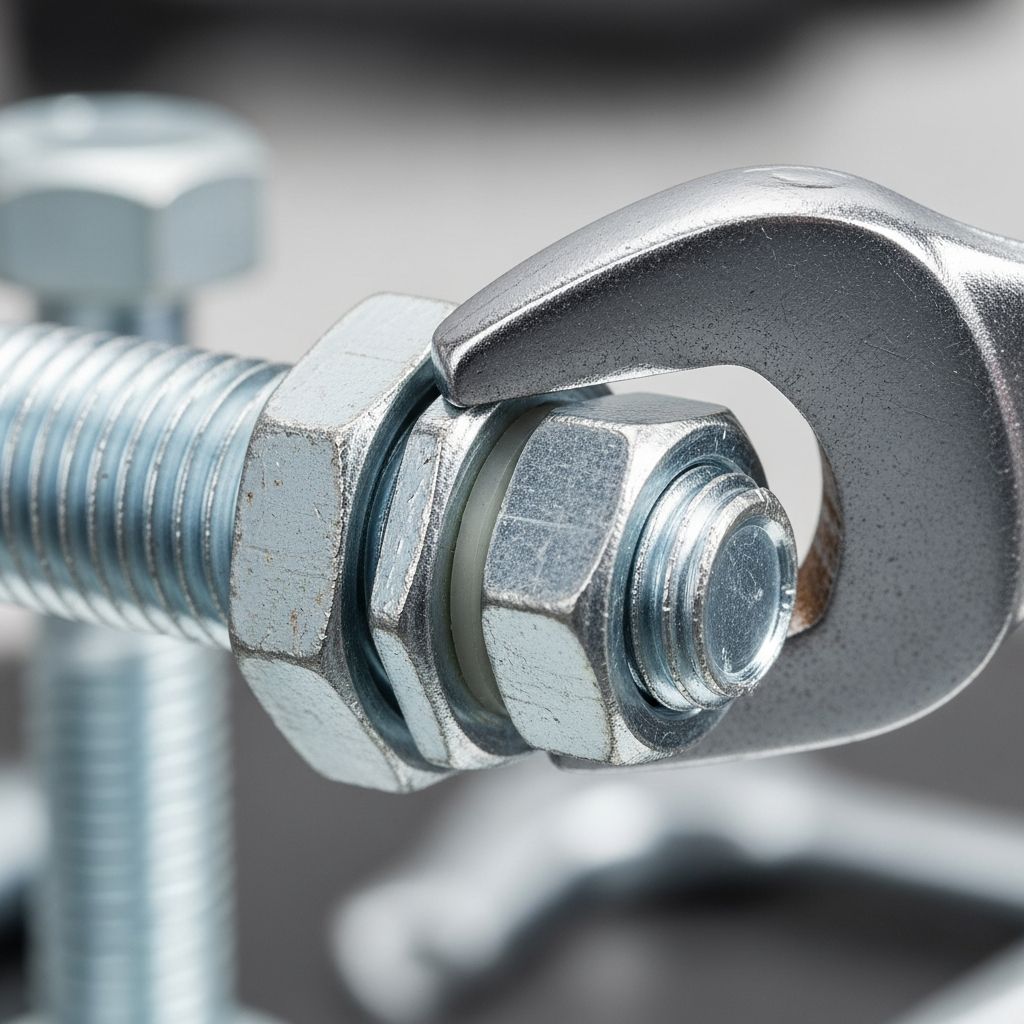
Lock nuts represent a critical advancement in fastening technology, designed specifically to resist the effects of vibration, shock, and thermal expansion that cause standard nuts to loosen over time. These specialized fasteners incorporate mechanisms such as deformed threads, nylon inserts, or metal locking features to maintain tension and security in demanding applications ranging from automotive assemblies to electrical enclosures.
Understanding the Fundamentals of Lock Nuts
At their core, lock nuts function like conventional hex nuts but with added resistance to rotation. This is achieved through two primary principles: prevailing torque, which generates friction via altered thread geometry, and positive locking, which uses mechanical deformation or inserts to grip the bolt threads firmly. For instance, in environments exposed to constant motion, such as machinery or vehicles, these nuts prevent catastrophic failures by ensuring components remain tightly secured.
Selecting the appropriate lock nut begins with assessing the application’s demands. Factors include load type (static or dynamic), environmental exposure (corrosive, high-temperature), and material compatibility. Metric sizes like M6, M8, M10, and M12 dominate general use, while imperial equivalents suit older machinery. Always match the nut’s thread pitch and direction—right-hand (clockwise) or left-hand (counterclockwise)—to the bolt for optimal performance.
Essential Tools for Successful Installation
Proper tooling is non-negotiable for installing lock nuts without damaging threads or compromising lock integrity. A calibrated torque wrench ensures precise tightening to manufacturer specifications, preventing under- or over-torquing. Standard combinations include:
- Adjustable wrenches or socket sets for initial seating.
- Thread lubricant (e.g., anti-seize compound) to reduce galling, especially with stainless steel fasteners.
- Clean rags and wire brushes for debris removal.
- Calipers for verifying thread dimensions and fit.
For specialized types, additional items like hex keys for set screws or pliers for crimping may be required. Always inspect tools for wear, as damaged jaws can strip nut faces.
Step-by-Step Installation for Common Lock Nut Types
Nylon Insert Lock Nuts: Versatile Vibration Fighters
Nylon insert lock nuts, often called Nyloc nuts, feature a polymer ring that deforms under pressure to create radial grip on the bolt threads. Ideal for automotive, machinery, and general assembly, they offer reusability up to three times before the insert loses efficacy.
- Clean the bolt threads thoroughly to remove oil, dirt, or old lubricant, which could reduce friction effectiveness.
- Slide the nut onto the bolt by hand until the nylon insert contacts the threads; it will resist further manual advancement.
- Using a torque wrench, tighten to the recommended value—typically 75-80% of a standard nut’s torque to account for prevailing resistance. Rotate clockwise for right-hand threads.
- Verify by attempting to rotate the nut counterclockwise; it should hold firm without spinning freely.
A common pitfall is overtightening, which can embed nylon too deeply, stripping threads on removal. In high-heat scenarios above 250°F (121°C), opt for metal alternatives as nylon softens.
Prevailing Torque and Stover Lock Nuts: Friction-Based Security
These nuts use distorted or ovalized threads at one end to generate consistent locking torque. Stover nuts, with their single-deformed face, excel in one-directional applications like conduit fittings.
| Nut Type | Locking Mechanism | Best Applications | Torque Range (ft-lb for M10) |
|---|---|---|---|
| Nylon Insert | Polymer deformation | Automotive, low-heat | 15-25 |
| Stover/Prevailing | Thread distortion | Electrical, machinery | 20-30 |
| Jam Nut Pair | Adjacent tightening | Adjustable fixtures | 10-20 (inner), 25-35 (outer) |
- Thread the nut onto the bolt with the deformed section facing the desired lock direction.
- Seat firmly against the workpiece, then apply torque wrench until the specified value is reached, feeling increased resistance from the locking feature.
- For conduit sealing locknuts, insert the conduit into the enclosure first, position the locknut externally, and secure with an internal bushing or standard nut.
Advanced Types: Shear Nuts and Face Lock Nuts
Shear nuts incorporate a breakaway hex head, leaving a smooth dome for tamper resistance; tighten until the head shears at the rated torque (e.g., 50 Nm for certain sizes). Face lock nuts use wave springs and set screws for adjustable positioning, common in bearing mounts.
Installation for face lock: Loosen set screws, thread onto shaft, align in keyway if applicable, retighten screws to compress the spring section, ensuring no thread alteration.
Conduit and Electrical Enclosure Applications
In electrical systems, sealing locknuts provide both mechanical hold and environmental protection. Thread the locknut fully onto conduit end, insert into enclosure entry (nut outside), and tighten an internal rigid conduit locknut or bushing. This assembly ensures grounding continuity and a watertight seal per standards.
Pro tip: For hazardous locations, verify compliance with NEC or equivalent codes, using listed components to prevent arcing or moisture ingress.
Troubleshooting Common Installation Issues
Problems like thread galling—where metal threads seize due to friction—arise from dry installation or dissimilar metals. Mitigate with lubricant, slower wrench speeds, and material mixing (e.g., steel bolt with brass nut).
- Galling: Clean and lubricate; use anti-galling compounds.
- Insufficient Lock: Check torque; replace deformed nuts.
- Over-Torquing: Leads to stripped threads—use torque wrench religiously.
- Reusability Limits: Nylon types degrade after 2-5 cycles; inspect insert integrity.
Safety Protocols and Best Practices
Always wear eye protection and gloves during installation to guard against flying debris from shearing or high-torque slips. Confirm hardware specs match assembly requirements, and perform torque checks post-installation, especially in vibration-prone setups.
For critical applications like aircraft or bridges, consult engineering standards (e.g., ASME B18.2.2). Periodic retightening may be needed for non-permanent locks under extreme conditions.
Selecting the Right Lock Nut Size and Material
Common sizes span M3 to M20 for metric, with widths from 5.5mm to 13mm across flats. Stainless steel resists corrosion; brass suits marine use; zinc-plated carbon steel balances cost and strength.
Match to bolt diameter precisely—e.g., M10 nut for 10mm bolt. For high-precision, measure pitch (coarse vs. fine) with a thread gauge.
Frequently Asked Questions (FAQs)
What is the standard torque for a 10mm lock nut?
Torque varies by grade and type, but for grade 8.8 M10 nylon insert nuts, aim for 20-30 ft-lb (27-40 Nm). Always reference manufacturer data.
Can lock nuts be reused?
Nylon inserts allow 2-5 reuses if undamaged; prevailing torque types are single-use for max performance. Inspect before reinstalling.
How do I prevent lock nuts from loosening in high-vibration areas?
Combine with lock washers, use jam nut pairs, or select shear/permanent types. Regular torque audits help.
Are left-hand thread lock nuts available?
Yes, for counterclockwise applications like certain pedals or turnbuckles; specify when ordering.
What materials are best for outdoor use?
Stainless steel (A2/A4 grades) or hot-dipped galvanized for corrosion resistance in wet or saline environments.
Advanced Tips for Professional Results
For bearing shafts, align lock nuts with keyways using spring washers and clips to prevent spin. In assembly lines, automate torque application for consistency. Test assemblies under simulated loads to validate hold.
Lock nuts extend fastener lifespan, reducing downtime and maintenance costs. Investing time in proper installation yields reliable, failure-resistant joints.
References
- SEALING LOCKNUT Installation Guide — Thomas & Betts (TNB). Accessed 2026. http://www-public.tnb.com/shared/inst/TA00598-TB2.pdf
- Installation and Removal – SKF Lock Nuts — SKF Group. Accessed 2026. https://www.skf.com/group/products/rolling-bearings/accessories/lock-nuts/keyway/installation-and-removal
- A Complete Guide to Locking Nuts — RS Components. 2023-01-17 (Updated 2026-01-15). https://uk.rs-online.com/web/content/discovery/ideas-and-advice/locking-nuts-guide
- How To Use Locking Nuts | Accu Tutorials — Accu (YouTube). Accessed 2026. https://www.youtube.com/watch?v=nX5IhcgyVBc
- Locknuts Product Guide — Taper Line, Inc. Accessed 2026. https://taperline.com/locknuts-product-guide/
- Nylon Insert Lock Nuts – Vibration Resistant Nuts | Fasteners 101 — YouTube. Accessed 2026. https://www.youtube.com/watch?v=exoYOASX9c0
- Proper Use of Fiber or Nylon Self-Locking Nuts — National Transportation Safety Board (NTSB). Accessed 2026. https://www.ntsb.gov/Advocacy/safety-alerts/Documents/SA-028.pdf
Similar Articles








Read full bio of Sneha Tete