Orchid Watering: Expert Guide For Thriving Orchids
Unlock the secrets to perfect orchid hydration for lush growth and endless blooms in your home.
Mastering Orchid Watering Techniques
Orchids captivate with their delicate beauty, but their health hinges on precise hydration practices. Proper watering prevents common issues like root rot or dehydration, fostering robust growth and stunning flowers. This guide explores effective strategies tailored to these epiphytic plants.
Understanding Orchid Water Needs
Unlike typical houseplants, orchids thrive in environments mimicking their natural habitats—airy roots exposed to air with intermittent moisture. Their specialized root covering, called velamen, absorbs water efficiently but requires drying periods to breathe. Overly wet conditions lead to fungal issues, while insufficient hydration causes shriveled leaves.
Key factors influencing water requirements include potting medium (bark, moss, or sphagnum), light exposure, humidity, temperature, and growth stage. In active blooming, plants demand more moisture to sustain flowers.
Signs Your Orchid Craves Water
Visual cues guide timing better than calendars. Inspect roots through clear pots: plump green roots indicate sufficient hydration; silvery-gray, wrinkled ones signal thirst.
- Root Color Test: Green roots are hydrated; gray means water now.
- Pot Weight: Heavier when wet, lighter when dry—learn the feel over time.
- Finger or Skewer Probe: Insert into medium; dryness an inch deep warrants watering.
- Leaf Inspection: Wrinkled or floppy leaves suggest chronic underwatering.
Proven Watering Methods for Success
Several techniques suit different setups, emphasizing thorough wetting followed by complete drainage.
Soaking Method: The Gold Standard
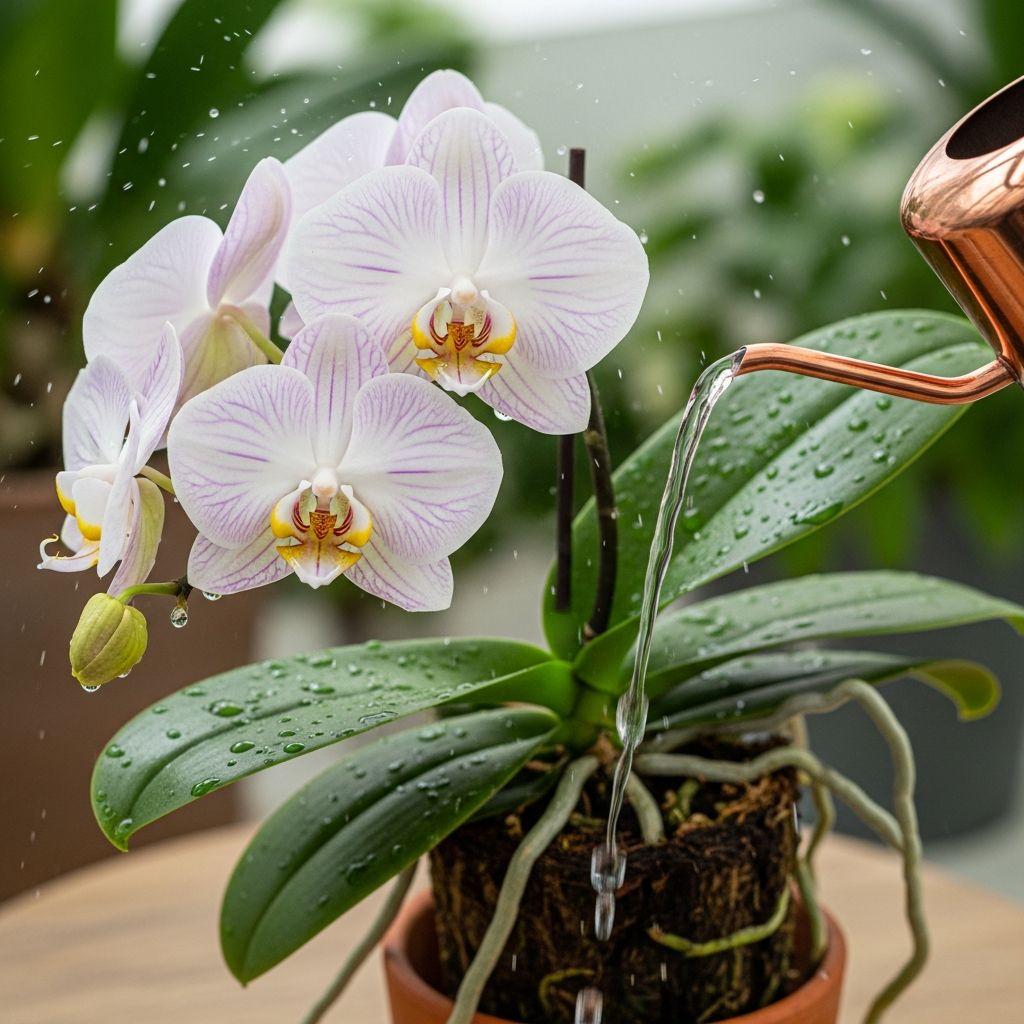
Place the orchid in its grower pot into a basin, filling water to halfway up the sides using room-temperature liquid. Soak 20-30 minutes (up to 2 hours if severely dry), then drain fully. This hydrates roots without crown wetting.
Top-Down Watering
Pour water evenly over the medium until it exits drainage holes, allowing roots brief absorption time. Ideal for quick sessions, but ensure no standing water remains.
Ice Cube Approach
Place 2-3 ice cubes atop the medium weekly for small pots; they melt gradually, mimicking slow tropical rains. Research debunks shock myths, confirming safety.
Misting as a Supplement
Spray leaves and exposed roots 8-10 times in dry air for humidity boosts, never as sole hydration. Avoid flowers and crown to prevent rot.
| Method | Pros | Cons | Best For |
|---|---|---|---|
| Soaking | Deep hydration, easy | Messy if indoors | All types |
| Top-Down | Quick, precise | Risk of crown wetting | Experienced growers |
| Ice Cubes | Hands-off, slow release | Overkill in humid areas | Forgetful owners |
| Misting | Increases humidity | Insufficient alone | Dry climates |
Frequency Guidelines by Season and Environment
Adjust based on conditions: water every 7-10 days generally, more in summer heat (twice weekly), less in winter (every 2-3 weeks). High light or low humidity accelerates drying; monitor weekly.
- Summer/Growth Phase: Twice weekly if roots dry quickly.
- Winter/Dormancy: Every 10-14 days, as evaporation slows.
- Blooming: Increase slightly for flower support.
Tailoring Care to Orchid Varieties
Different species have unique preferences due to anatomy.
Phalaenopsis (Moth Orchids)
Popular for homes, water when roots silver—about weekly. Steady but not constant moisture suits them.
Cattleya and Oncidium
Pseudobulbs store water; allow full drying between waterings, every 10-14 days.
Dendrobium
Frequent in growth (spring/summer), sparse in rest (winter).
Paphiopedilum (Lady Slippers)
Keep medium evenly moist; no full dries.
Special Cases: Kokedama and Bromeliad Hybrids
Submerge moss balls 10-15 minutes every 5-7 days. For tank types, refill central cups weekly, mist leaves.
Water Quality and Temperature Essentials
Use tepid, preferably rainwater or distilled to avoid mineral buildup. Tap water works if low in salts; let sit overnight to dechlorinate. Cold shocks roots—always room temp.
Avoiding Fatal Watering Mistakes
Common pitfalls derail even seasoned growers.
- Overwatering: Leads to black roots, rot. Fix: Repot in fresh medium, reduce frequency.
- Underwatering: Brittle roots, leaf drop. Remedy: Thorough soak, monitor closer.
- Crown Drenching: Causes basal rot. Direct to roots only.
- Ignoring Drainage: Standing water drowns roots.
Advanced Tips for Thriving Orchids
Humidity Hacks: Pebble trays or humidifiers maintain 50-70% levels, reducing watering needs.
Travel Prep: Soak pre-trip; use self-watering wicks for extended absences.
Fertilizer Integration: Use diluted during watering (every third time) for balanced nutrition.
Pot Choices: Clear pots with slits promote air flow, aiding dryness checks.
Frequently Asked Questions
Can orchids tolerate cold water or ice?
Yes, ice cubes provide slow hydration without shock, as they warm gradually.
Should orchid medium stay constantly moist?
No—allow drying to prevent rot; consistent but not soggy is ideal.
How do I water while on vacation?
Soak thoroughly beforehand or employ wick systems for steady supply.
Is misting enough for hydration?
No, use as supplement; primary methods like soaking ensure deep moisture.
What if roots are always green?
Reduce frequency—overwatering likely; check environment for high humidity.
References
- How to Water Your Orchid (And How Often) — Westerlay Orchids. 2023. https://www.westerlay.com/orchid-care/how-to-water-your-orchid
- How to Water Orchids: How often & How Much — Lively Root. 2023. https://www.livelyroot.com/blogs/plant-care/how-to-water-orchids
- How to Water Your Orchid — Costa Farms. 2023. https://costafarms.com/blogs/get-growing/how-to-water-your-orchid
- How Do You Water an Orchid Plant: A Complete Guide — Just Add Ice Orchids. 2023. https://www.justaddiceorchids.com/orchid-care-blog/orchid-watering
- Watering — American Orchid Society. 2023. https://www.aos.org/orchid-care/watering
- How Much Should I Water My Orchid? — rePotme. 2023. https://www.repotme.com/pages/orchid-watering
Similar Articles








Read full bio of Sneha Tete