Mastering Plant Propagation from Cuttings
Unlock the secrets to effortlessly multiply your favorite plants using simple cutting techniques for lush gardens and thriving indoor greenery.
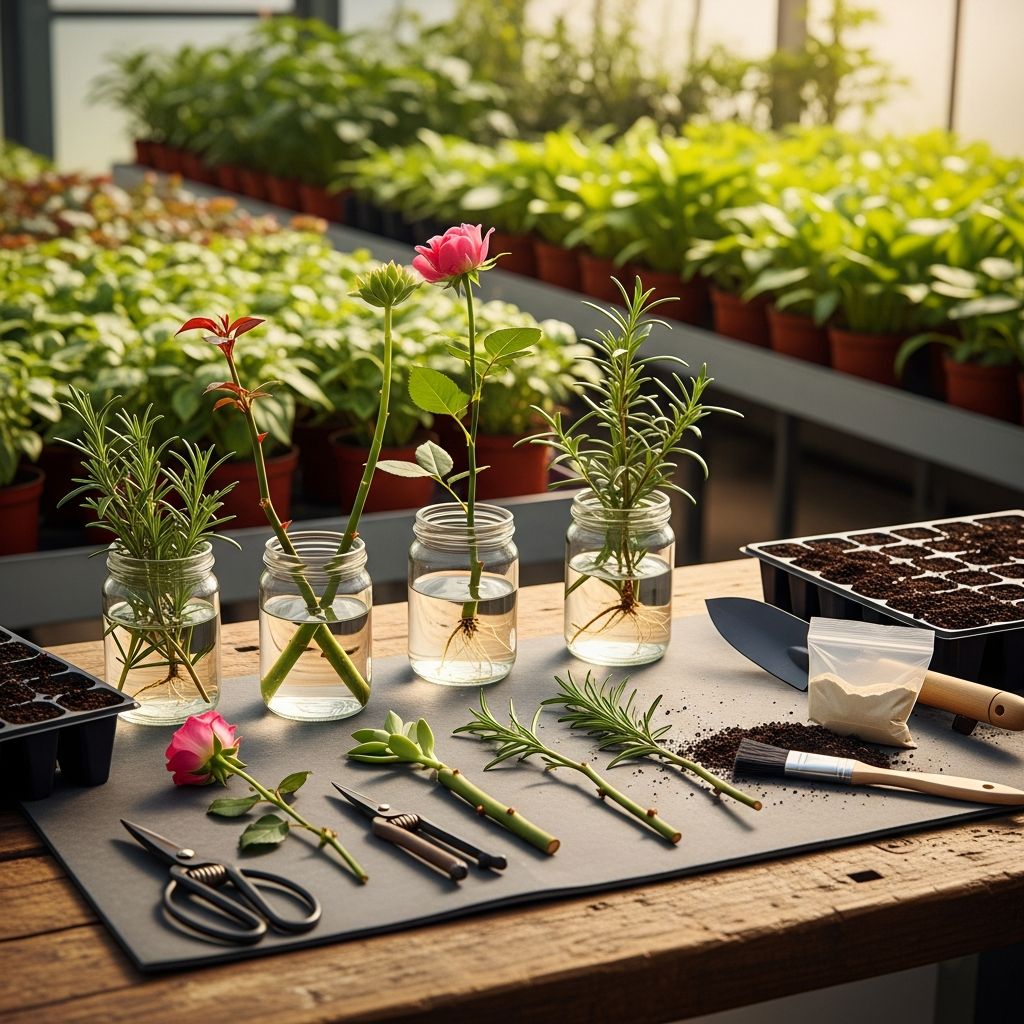
Plant propagation through cuttings offers gardeners a cost-effective way to expand their collections without purchasing new specimens. This asexual method involves taking portions of stems, roots, or leaves from a parent plant and coaxing them to develop new roots and shoots, creating genetically identical clones. Ideal for both indoor houseplants and outdoor shrubs, it leverages the plant’s natural ability to form adventitious roots—those that emerge from non-root tissues like stems or leaves.
Why Choose Cuttings for Propagation?
Unlike seed propagation, which introduces genetic variation, cuttings ensure offspring match the parent plant precisely in traits like flower color, growth habit, and disease resistance. This is particularly valuable for hybrid varieties that don’t breed true from seeds. Success rates can exceed 90% with proper technique, making it accessible for home gardeners. Propagation also promotes healthier plants by encouraging dense root systems and allows preservation of rare or heirloom specimens.
Essential Tools and Materials
Gathering the right equipment sets the foundation for success. Key items include:
- Sharp pruners or scissors: Ensure clean cuts to minimize tissue damage and infection risk. Sterilize with alcohol between uses.
- Rooting hormone: Powder, gel, or liquid forms containing auxins like IBA stimulate root initiation.
- Rooting medium: Sterile mixes such as peat-perlite, vermiculite, or coconut coir provide aeration, drainage, and moisture retention without soil-borne pathogens.
- Containers: Pots, trays, or propagation domes with drainage holes; clear plastic bags create humidity.
- Labels and markers: Track varieties and dates.
Optional extras like grow lights and heat mats boost rooting in cooler climates.
Types of Plant Cuttings
Plants respond differently based on their physiology. Here’s a breakdown:
| Cutting Type | Best For | Length | Timing |
|---|---|---|---|
| Tip/Stem | Herbaceous perennials, houseplants | 4-6 inches | Spring/Summer |
| Softwood | Trees, shrubs | 4-8 inches | Early summer |
| Semi-hardwood | Woody shrubs | 4-6 inches | Late summer |
| Hardwood | Deciduous trees | 6-12 inches | Dormant winter |
| Root | Perennials like phlox | 2-4 inches | Fall |
| Leaf | Succulents, African violets | Whole leaf | Any time |
Each type targets specific growth stages for optimal hormone levels and vigor.
Step-by-Step Guide to Stem Cuttings
Stem cuttings are the most common and versatile. Follow these steps:
- Select material: Choose healthy, disease-free stems with at least 2-3 nodes (growth points where leaves and roots emerge).
- Prepare the cutting: Cut just below a node at a 45-degree angle for maximum surface area. Remove lower leaves to prevent rot.
- Apply enhancements: Dip the base in rooting hormone, tapping off excess. For woody types, use wounding—scrape the bark or make slits to expose cambium tissue, the green layer rich in rooting cells.
- Plant: Poke a hole in the medium with a pencil, insert 1-2 inches deep, and firm gently.
- Create environment: Water thoroughly, cover with plastic for 80-90% humidity, and place in bright indirect light at 65-75°F.
Roots typically form in 2-6 weeks; tug gently to check.
Advanced Techniques: Wounding and Heel Cuttings
To boost success on challenging plants, employ wounding or heel methods.
Wounding: Intentionally damage the stem base by scraping or slicing to trigger callus formation—a mass of undifferentiated cells that births roots. Vertical slits or bark removal exposes more cambium, increasing hormone response sites. Pros include faster rooting and stronger systems; cons are higher rot risk if overdone. Ideal for semi-ripe cuttings from climbers and shrubs.
Heel Cutting: “Heel” refers to a sliver of older wood tugged from the parent stem. This retains natural hormones and vascular tissue, simplifying the process with lower infection odds. Best for softwood stems and deciduous plants. Dip in hormone post-heel removal for synergy.
Both outperform plain cuts on woody species, with wounding suiting vigorous rooters and heels for delicate ones.
Root and Leaf Cuttings Explained
Root Cuttings: Dig up pencil-thick roots in fall, cut into 2-4 inch segments, and lay horizontally in moist medium. Orient top-up if identifiable (thinner end). Cover lightly; new shoots emerge topside. Suited to oriental poppy or horseradish.
Leaf Cuttings: For succulents like jade, sever leaves cleanly and let callus 1-2 days. Place on sand or insert petiole (leaf stalk) into medium. Tiny plantlets form at the base. African violets use petiole-only cuts in vermiculite.
Optimal Rooting Media and Conditions
Media must balance moisture and oxygen. Coarse artificial mixes like 1:1 peat-vermiculite excel—sterile, weed-free, and pathogen-resistant. Avoid garden soil. Maintain even moisture without sogginess.
Humidity is critical early on; mist or dome enclosures prevent desiccation. Bottom heat (70-75°F) via mats speeds rooting by 20-50%. Provide 12-16 hours of indirect light; avoid direct sun to prevent scorching.
Using Rooting Hormones Effectively
Auxins mimic natural signals, with IBA strongest for hardwoods and NAA for soft tissues. Concentrations vary: quick-dip for easy rooters, prolonged soaks for tough ones. Combine with wounding for 30-50% higher success. Overuse inhibits; always follow labels.
Caring for Rooted Cuttings
Once roots fill the pot (4-6 weeks), acclimate by gradually removing covers over 7-10 days. Transplant to potting soil, fertilize lightly after 4 weeks with diluted balanced formula. Harden off outdoor plants by increasing exposure. Water consistently, avoiding extremes.
Troubleshooting Common Issues
- No roots: Check hormone strength, temperature, or light; retry with fresh medium.
- Rot: Improve drainage/airflow; sterilize tools.
- Wilting: Boost humidity or trim leaves.
- Slow growth: Extend day length with LEDs.
Seasonal Propagation Strategies
Align with growth cycles: softwood in spring for rapid roots, hardwood in winter for dormancy storage. Indoor LEDs enable year-round houseplant propagation.
Best Plants for Beginners
- Pothos and philodendron: Root in water effortlessly.
- Spider plant: High success, forgiving.
- Geraniums: Fragrant, quick.
- Boxwood: Reliable shrub.
FAQs
Can I propagate in water?
Yes, for vining houseplants like pothos. Change water weekly; transition to soil post-roots to avoid weak systems.
How long until transplant?
3-8 weeks, depending on type. Roots 1-2 inches long signal readiness.
Is rooting hormone necessary?
Not always for easy plants, but it doubles success on woody ones.
What if cuttings rot?
Excess moisture culprit; use perlite-heavy mix and vent daily.
Can I propagate patented plants?
For personal use yes, but not for sale without permission.
Environmental and Ethical Considerations
Opt for peat-free media to protect bogs. Propagate natives to boost biodiversity. This method reduces nursery demand, cutting transport emissions.
References
- Propagation by Cuttings: Wounding vs Heel Cutting — Grow Organic. 2023. https://www.groworganic.com/blogs/articles/propagation-by-cuttings-wounding-vs-heel-cutting
- Propagation by Cuttings, Layering and Division — Virginia Cooperative Extension (pubs.ext.vt.edu). 2022-01-15. https://www.pubs.ext.vt.edu/426/426-002/426-002.html
- Starting Plants From Cuttings for the Home Gardener — University of Georgia CAES. 2024. https://fieldreport.caes.uga.edu/publications/B1553/starting-plants-from-cuttings-for-the-home-gardener/
Similar Articles








Read full bio of Sneha Tete