Mastering Plumber’s Putty: Complete Guide
Discover expert techniques for applying plumber's putty to achieve leak-free seals on sinks, faucets, and drains with this in-depth tutorial.
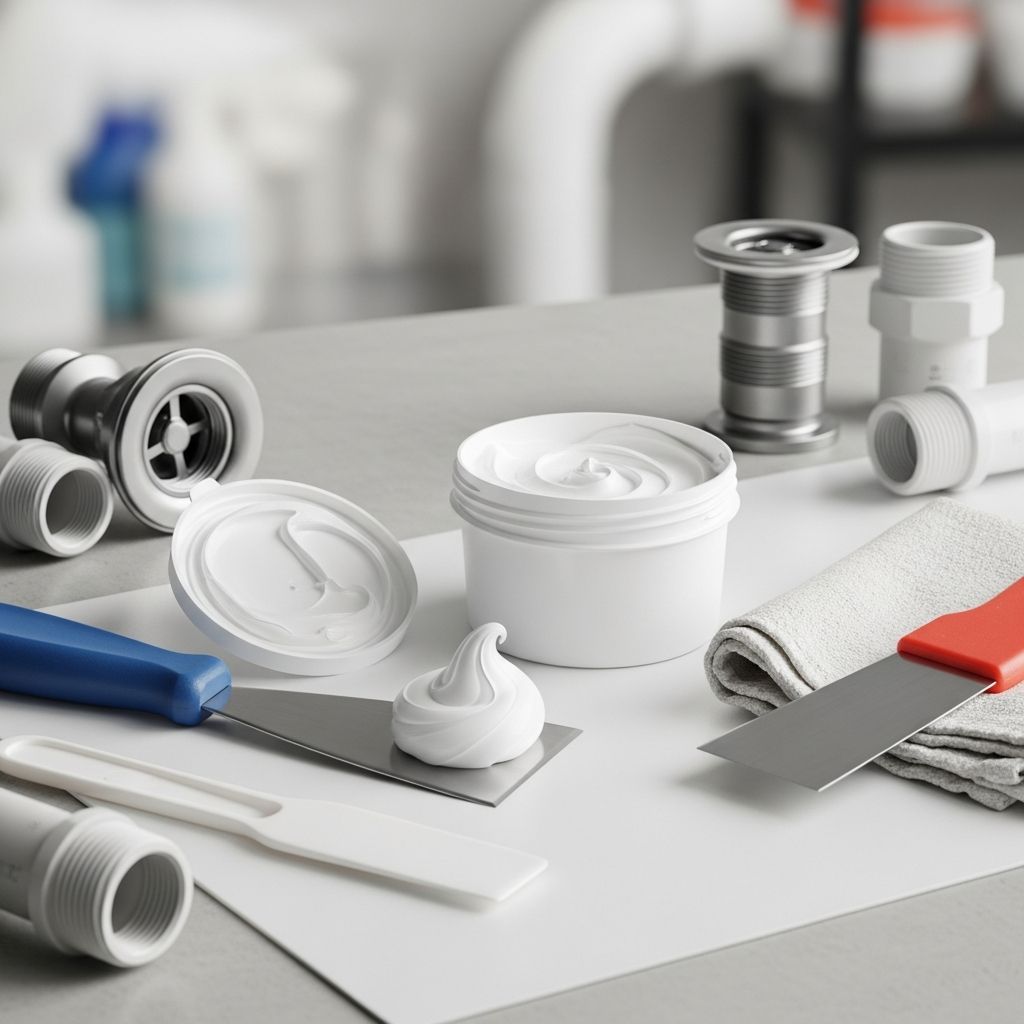
Plumber’s putty serves as a versatile, pliable sealant essential for creating reliable, watertight connections in non-pressurized plumbing setups. This clay-like material excels in filling gaps between fixtures like sinks, faucets, and drains without hardening or adhering permanently, allowing for easy adjustments and cleanup.
Understanding the Basics of Plumber’s Putty
At its core, plumber’s putty is a soft, moldable compound resembling modeling clay, formulated specifically for plumbing tasks. It prevents water from seeping through joints where metal fixtures meet sinks or basins, making it indispensable for DIY projects and professional installations alike. Unlike traditional adhesives, it remains flexible indefinitely, resisting cracking over time while enabling fixtures to be repositioned without residue buildup.
Composed primarily of natural ingredients like clay, linseed oil, and fillers, standard plumber’s putty provides a non-shrinking barrier that squeezes out excess during tightening for optimal gap coverage. However, it can leave oily stains on sensitive surfaces such as granite or marble, prompting the development of stain-free variants that omit oils entirely. These modern options maintain the same sealing efficacy without discoloration risks, broadening their utility in modern kitchens and bathrooms.
Why Choose Plumber’s Putty Over Other Sealants?
Plumber’s putty stands out for its immediate usability—no waiting for curing or drying, which sets it apart from caulks or silicones that require hours to set. This feature proves invaluable during time-sensitive repairs, as fixtures become operational right after installation in normal conditions.
Key advantages include effortless removal of excess material with a cloth, non-adhesive properties that prevent damage during disassembly, and suitability for indoor, non-exposed applications. In contrast, silicone forms a permanent bond, complicating future adjustments.
| Feature | Plumber’s Putty | Silicone Caulk |
|---|---|---|
| Cure Time | None (use immediately) | 24+ hours |
| Adhesion | Non-adhesive | Permanent bond |
| Cleanup | Wipes off easily | Requires solvents |
| Best For | Drains, faucets | Exposed joints, showers |
| Surface Compatibility | Metal, porcelain | Versatile, including plastic |
This comparison highlights plumber’s putty’s niche: quick, reversible seals on metal fixtures.
Selecting the Right Type of Plumber’s Putty
Not all plumber’s putty suits every job. Traditional formulas work well on porcelain or stainless steel but risk staining natural stone. Opt for oil-free, stain-free versions like those from reputable manufacturers for countertops or vanity tops.
- Standard Putty: Cost-effective for basic metal-to-sink applications; shelf life up to 2 years if sealed.
- Stain-Free Putty: Ideal for granite, marble; prevents discoloration while offering identical pliability.
- Hercules or Oatey Brands: Trusted for consistency and reliability in professional settings.
Always verify compatibility with your fixture’s material instructions, as plastic components demand alternative sealants.
Essential Tools and Materials for Success
Gathering supplies beforehand streamlines the process:
- Plumber’s putty (1/4 lb tub suffices for most jobs)
- Clean rags or paper towels
- Scraper or putty knife for old residue
- Gloves (optional, for mess-free handling)
- Adjustable wrench for tightening
Work in a well-lit area with good ventilation, especially if removing old sealants.
Step-by-Step Application Guide for Sink Drains
Installing a kitchen sink basket strainer exemplifies the process, applicable to similar fixtures.
- Prepare Surfaces: Thoroughly clean the sink opening and strainer flange, scraping away debris or prior sealant. Dry completely to ensure adhesion-free contact.
- Soften the Putty: Pinch off a golf-ball-sized portion and knead vigorously for 1-2 minutes until uniform and crack-free. Warmth from hands activates pliability.
- Shape into Rope: Roll into a 1/2-inch diameter snake, long enough to circle the flange (typically 12-18 inches).
- Apply Evenly: Press the rope onto the underside of the strainer flange, overlapping and smoothing ends seamlessly.
- Assemble Fixture: Position strainer in sink hole, add rubber washer and locknut from below, then hand-tighten followed by wrench (avoid over-tightening to prevent cracking).
- Cleanup and Test: Wipe squeezed-out putty immediately. Run water to check for leaks; readjust if needed.
In cold environments (<50°F), pause 10 minutes post-installation for settling before testing.
Applying Plumber’s Putty to Faucets and Tub Drains
For bathroom faucets, form putty into a thick donut under the base before mounting. Tighten mounting nuts while observing excess extrusion, signaling full compression. Tub popup drains or shower assemblies follow suit: encircle the flange, secure tailpiece to pipe, and verify seal integrity.
Pro Tip: For multi-handle faucets, apply individually to each valve base for comprehensive coverage.
Common Mistakes and How to Avoid Them
Even seasoned DIYers falter without precautions:
- Inadequate Surface Prep: Residue undermines seal; always degrease and dry.
- Insufficient Kneading: Lumpy putty creates voids—knead until silky.
- Gaps in Application: Overlap ends meticulously.
- Over-Tightening: Cracks porcelain; snug is sufficient.
- Wrong Material Pairing: Skip plastics or acrylics.
When to Avoid Plumber’s Putty Altogether
This sealant shines in select scenarios but falters elsewhere:
- Plastic or PVC fixtures (use silicone)
- Pressurized pipes (thread tape required)
- Toilet flanges (caulk preferred)
- Outdoor/exposed areas (lacks UV resistance)
- Porous stones without stain-free formula.
Consult manufacturer specs to confirm suitability.
Storage, Shelf Life, and Maintenance
Store in its sealed container at room temperature, away from direct sun. Properly kept, it lasts 2 years from manufacture. Discard if hardened or odorous. For leftovers, press into wax paper to prevent sticking.
Frequently Asked Questions (FAQs)
Does plumber’s putty dry or harden?
No, it stays pliable indefinitely, providing a flexible seal without curing.
How soon can I use the fixture after application?
Immediately in standard conditions; wait 10 minutes if cold.
Can plumber’s putty be used on plastic drains?
No, it may not adhere properly; opt for silicone.
Will it stain my quartz countertop?
Standard putty might; choose stain-free variants.
Is it reusable if I remove the fixture?
Fresh putty is best; old material loses efficacy.
Advanced Tips from Plumbing Pros
For enduring results, combine with rubber gaskets where possible, enhancing mechanical seals. In high-vibration areas, a thin silicone bead beneath putty adds stability without impeding removability. Regularly inspect seals annually, reapplying as needed.
Experiment with putty thickness: thinner for precise fits, thicker for irregular gaps. This adaptability cements its role in diverse plumbing challenges.
References
- How to Use Plumbers Putty Step by Step — Lowe’s. 2023. https://www.lowes.com/n/how-to/use-plumbers-putty
- Understanding Plumber’s Putty: Cure Time and Application Tips — Orea Teai. 2023-10-01. http://oreateai.com/blog/understanding-plumbers-putty-cure-time-and-application-tips/642783426348d4500e1f85350b24f73c
- How to Properly Use Plumber’s Putty – Tips, Mistakes to Avoid and When to Use — Oatey. 2023. https://www.oatey.com/faqs-blog-videos-case-studies/blog/how-properly-use-plumbers-putty-tips-mistakes-avoid-and-when-use
- How to Use Plumber’s Putty | Repair and Replace — YouTube (AMRE Supply). 2019-09-12. https://www.youtube.com/watch?v=49a27LKG4kI
Similar Articles








Read full bio of Sneha Tete