Toilet Flange Installation: Complete Step-By-Step Guide
Unlock the secrets to a leak-proof toilet setup with our detailed guide on selecting, preparing, and installing a durable toilet flange for lasting performance.
Mastering Toilet Flange Installation
The toilet flange serves as the critical connection between your toilet and the drainpipe, ensuring waste flows smoothly while preventing leaks and odors. A properly installed flange guarantees stability and hygiene in any bathroom. This guide explores everything from understanding flange fundamentals to executing a flawless installation, empowering homeowners to tackle this essential plumbing task confidently.
Understanding the Toilet Flange: Function and Importance
A toilet flange, also known as a closet flange, is a pipe fitting that anchors the toilet to the floor and seals it to the drainpipe. It typically features slots for mounting bolts and a central opening matching the drain size, usually 3 or 4 inches. Without a secure flange, toilets can rock, leak, or fail to drain properly, leading to water damage, mold growth, and costly repairs.
Flanges bear the full weight of the toilet—often over 100 pounds when filled—and resist shifting during use. They must withstand daily flushing forces, temperature changes, and moisture exposure. Industry standards require flanges to sit flush with or slightly above the finished floor for optimal wax ring compression, creating a watertight barrier. Poor installation accounts for many bathroom plumbing issues, making precise setup vital.
Types of Toilet Flanges for Every Scenario
Selecting the right flange depends on your plumbing material, floor type, and project needs. Common varieties include:
- Plastic (PVC/ABS) Flanges: Affordable and lightweight, ideal for modern drainpipes. They solvent-weld directly to PVC or ABS pipes using primer and cement for a strong bond.
- Brass or Stainless Steel Flanges: Durable for cast iron or lead pipes, resisting corrosion. These often use compression or mechanical seals.
- Offset Flanges: Adjust drain alignment by 1-2 inches, perfect for non-standard layouts.
- Flange Spacers/Extensions: Raise low flanges to floor level using stackable rings or kits like set-rite systems.
- No-Cut/Repair Flanges: Surface-mount options for damaged existing flanges without pipe alterations.
Match flange material to your drainpipe to comply with plumbing codes and avoid joint failures. For tile floors, choose flanges with adjustable heights; for wood subfloors, ensure screw compatibility.
Essential Tools and Materials Checklist
Gathering supplies upfront prevents mid-project delays. Here’s a comprehensive list:
| Category | Items | Purpose |
|---|---|---|
| Tools | Adjustable wrench, putty knife, hacksaw, screwdriver, drill with bits, utility knife | Disassembly, cutting, securing components |
| Materials | New flange, wax ring (or non-wax seal), toilet bolts/caps, plumber’s putty, PVC primer/cement (if applicable), silicone caulk | Sealing, mounting, finishing |
| Safety/Utility | Bucket, rags/sponge, gloves, flashlight, level | Cleanup, measurement, protection |
Invest in quality items like Johni-bolts for flexible positioning and anti-corrosion screws for longevity.
Preparing for Installation: Safety First
Before starting, shut off the water supply at the valve behind the toilet and flush to drain the tank. Sponge out residual water to minimize mess. Protect surrounding areas with drop cloths. Inspect the subfloor for rot or damage—replace if needed to support the toilet’s weight. Measure drainpipe height relative to the finished floor; ideal flange position is level with or 1/8-inch above.
Wear gloves to handle waste residue and ensure good ventilation if using solvents. Have a helper for lifting the heavy toilet.
Step-by-Step Guide to Removing the Old Flange
Successful replacement begins with clean removal:
- Disconnect Water Line: Use an adjustable wrench to loosen the supply line nut. Plug the line to prevent drips.
- Remove Toilet: Unscrew base nuts, rock the toilet to break the wax seal, and lift it away. Plug the drain to block sewer gases.
- Detach Old Flange: For glued flanges, cut the pipe below with a hacksaw. For screwed ones, remove fasteners. Scrape residue with a putty knife.
- Clean the Area: Wipe the drainpipe and floor thoroughly for a smooth new install.
Avoid damaging the subfloor during extraction to maintain structural integrity.
Installing a New Flange: Precision Techniques
- Cut and Dry-Fit Pipe: Trim drainpipe to height using a hacksaw. Test-fit the flange for alignment.
- Apply Primer and Cement (PVC/ABS): Coat pipe and flange hub evenly. Insert flange, twist 1/4 turn, and hold for 30 seconds.
- Position Flange: Push down until flush with floor. Use spacers if below grade.
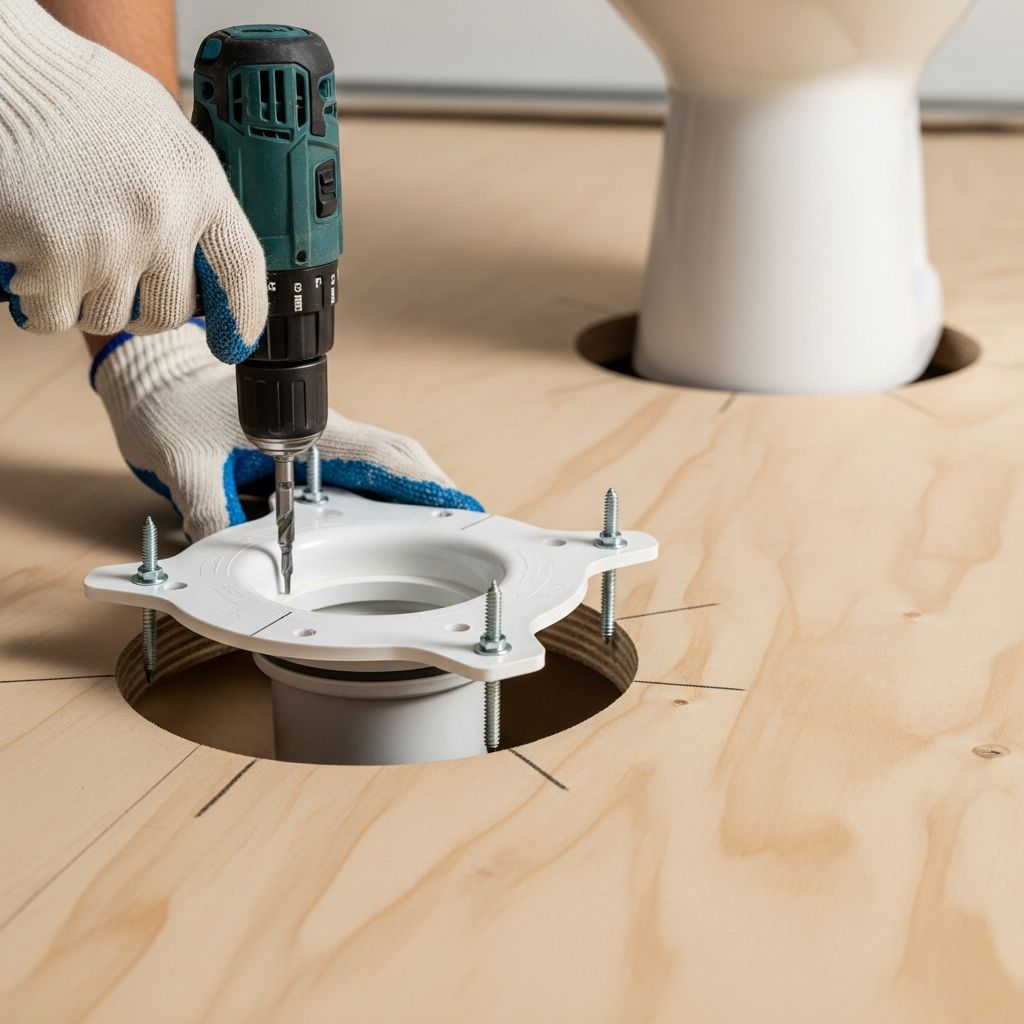
- Secure to Floor: Drill pilot holes and fasten with corrosion-resistant screws into subfloor—not drywall. Verify levelness.
- Insert Bolts: Place T-bolts or Johni-bolts in slots, pointing up.
For metal pipes, use mechanical compression fittings or no-hub bands for secure joints.
Sealing and Reinstalling the Toilet
Place a wax ring on the flange horn, centering it carefully. A reinforced or double ring provides extra thickness for uneven fits. Lower the toilet straight down onto bolts without twisting to preserve the seal. Hand-tighten nuts, then use a wrench for snug fit—never overtighten to avoid cracks.
Reconnect water line, turn on supply, and check for leaks. Apply caulk around the base, leaving front open for leak detection.
Troubleshooting Common Installation Issues
Even pros encounter hurdles. Here’s how to fix them:
- Rocking Toilet: Loosen nuts, insert shims under base, retighten.
- Low Flange: Stack spacers or use extension kits.
- Leaks at Base: Replace wax ring—never reuse, as it deforms permanently.
- Mismatched Pipe: Use adapters or transition fittings.
- Slippery Bolts: Apply plumber’s tape or replace with brass.
Test with multiple flushes and monitor for 24 hours.
Advanced Tips for Long-Lasting Results
Anchor flanges directly to subfloor joists when possible for superior hold. Consider rubber gasket seals over wax for easier maintenance and reusability. In high-moisture areas, opt for stainless steel to combat corrosion. Regularly inspect flanges during remodels, as age weakens seals.
For tile installations, dry-fit tiles first to confirm flange height. Offset flanges solve alignment woes without repiping.
FAQs: Your Toilet Flange Questions Answered
What height should the flange be?
It must sit flush with or slightly above the finished floor for proper wax ring compression.
Can I reuse a wax ring?
No—compressed rings lose sealing ability, risking leaks.
Plastic or metal flange—which is best?
Match to pipe material: PVC for plastic drains, metal for cast iron.
How do I fix a broken subfloor around the flange?
Remove damaged wood, sister new joist sections, then reinstall.
Is caulk necessary around the base?
Optional but recommended for aesthetics and minor leak trapping; leave front unsealed.
Maintenance and When to Call a Pro
Annually check for rocking or odors. Tighten loose bolts promptly. If pipes are damaged or you’re dealing with cast iron in an old home, consult a licensed plumber to avoid code violations or structural risks.
Mastering flange installation saves thousands in repairs and boosts home value. With patience and these steps, achieve pro-grade results safely.
References
- A Step-by-Step Guide to Replacing a Toilet and Toilet Flange — Superior Tool. 2023. https://www.superiortool.com/blog/post/a-step-by-step-guide-to-replacing-a-toilet-and-toilet-flange-featuring-the-superring.html
- Instruction Guide – Toilet Flange — Lowe’s (Oatey). N/A. https://pdf.lowes.com/productdocuments/4052409e-889d-4fcd-b68e-12ba97f28593/47769034.pdf
- Five Best Practices When Installing a Toilet Flange — Oatey. 2023. https://www.oatey.com/faqs-blog-videos-case-studies/blog/five-best-practices-when-installing-toilet-flange
Similar Articles



Read full bio of Sneha Tete