Mastering Travertine Cuts: Pro Techniques
Unlock expert methods to slice travertine tiles and pavers cleanly, avoiding chips and cracks for flawless flooring projects.
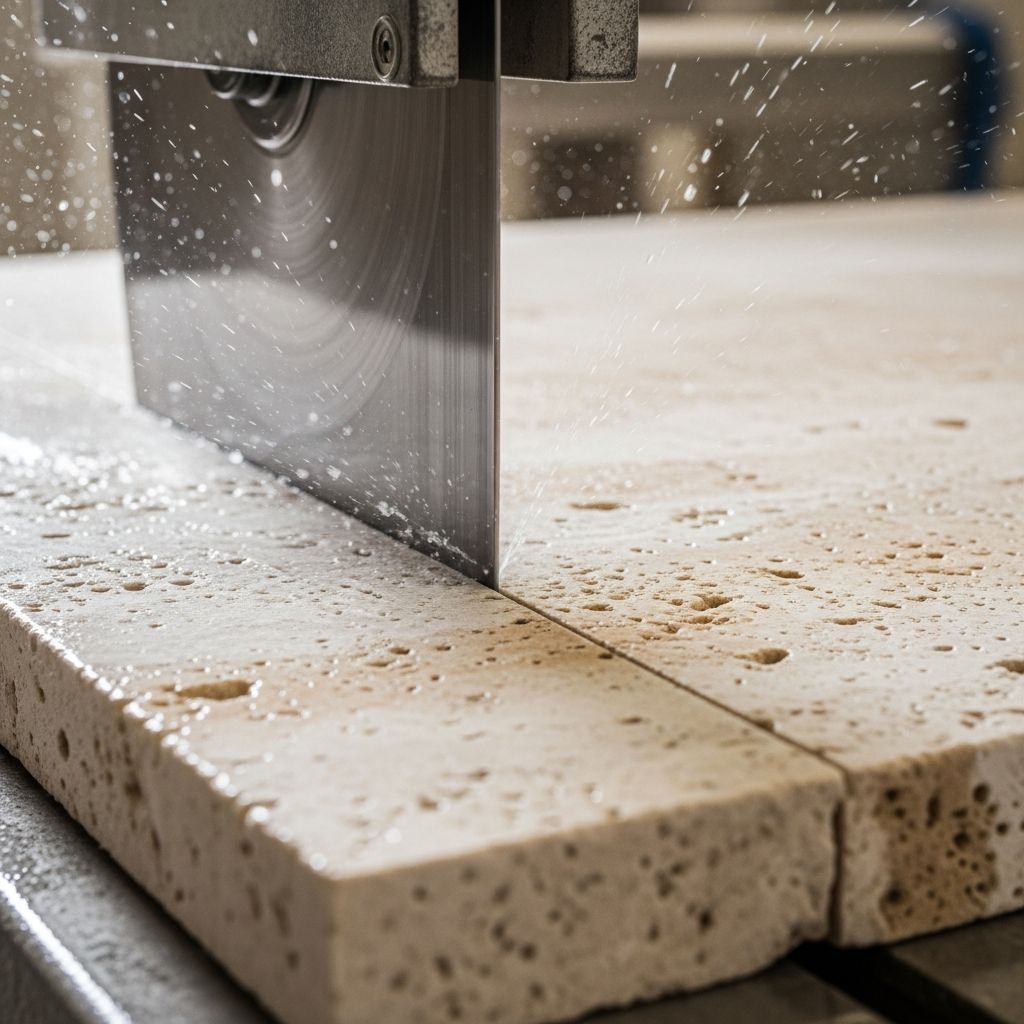
Travertine, a durable natural limestone, brings timeless elegance to floors, walls, and patios. However, its density demands precise cutting methods to preserve its beauty and integrity. This guide explores optimal tools, preparation strategies, and execution tips for various cuts, ensuring clean edges and minimal waste.
Why Travertine Requires Specialized Cutting
Unlike ceramic tiles, travertine is porous and brittle, prone to thermal cracking from friction heat. Proper techniques use water-cooled systems to mitigate dust and stress, maintaining structural soundness. Selecting diamond-infused blades prevents jagged breaks common with standard tools.
Essential Tools for Precision Cuts
Gather these items before starting:
- Wet saw with continuous-rim diamond blade for straight lines.
- Angle grinder equipped with diamond disc for curves.
- Diamond masonry bits or hole saws for penetrations.
- Measuring tape, straightedge, and grease pencil for markings.
- Safety gear: goggles, respirator, gloves, and ear protection.
- Water source, clamps, and sanding pads for finishing.
A workbench provides stability, reducing vibration-induced errors.
Preparation: Measuring and Marking Accurately
Accuracy begins with precise measurements. Lay out your layout dry to identify cuts, then transfer dimensions to tiles using a tape measure. Mark lines with chalk or pencil, employing a straightedge for uniformity. Double-verify angles with a square to avoid compounding errors during installation.
For complex patterns, create paper templates to trace onto tiles, ensuring seamless fits around obstacles like drains or cabinets.
Straight Cuts with Wet Saws: Step-by-Step
Wet saws excel for long, linear sections due to water’s cooling effect, which slashes chipping risks by 80% compared to dry methods.
- Fill the reservoir and test water flow over the blade.
- Secure the tile on the tray, aligning marks precisely with the blade path.
- Start the saw; perform a shallow scoring pass at low speed.
- Advance steadily on the full cut, supporting both tile sides to prevent flexing.
- Cut polished face up—chipping, if any, hides underneath.
Maintain moderate pressure; excessive force binds the blade. For large 24×24 tiles, use a sled or reinforced table for support.
Handling Curved and Notched Cuts
Angle grinders offer maneuverability for irregular shapes. Clamp the tile firmly outdoors to manage dust.
- Trace curves lightly with pencil.
- Equip a 4-5 inch diamond blade rated for stone.
- Score deeply along the line in segments.
- Grind inward gradually, tilting for control.
- Alternate sides on thick pieces to meet in the middle.
Avoid overheating by pausing for water dips. This method suits L-shapes around pipes or outlets.
Drilling Holes in Travertine
Holes for fixtures require diamond bits to navigate the stone’s hardness without spiderwebbing cracks.
| Hole Type | Tool Recommendation | Key Tip |
|---|---|---|
| Small (<1 inch) | Masonry drill bit | Low RPM, constant water spray |
| Large (>1 inch) | Diamond hole saw | Pilot hole first, angled start |
- Mark center; tape surface to reduce slip.
- Pilot small holes for guidance on big bores.
- Drill wet, progressing slowly without downward force.
- Level the tool once centered; polish interiors if exposed.
For outlets, multiple holes with connecting cuts yield clean notches.
Preventing Chipping and Cracks
Chips mar aesthetics; prevention hinges on technique and blades. Opt for continuous-rim diamonds over segmented for smoother glides. Additional safeguards:
- Score first on all cuts thicker than 1/2 inch.
- Support undersides fully during sawing.
- Employ painter’s tape over marks to guide blades.
- Finish edges with 200-grit diamond pads or files.
Test blades on scraps; dull edges exacerbate damage.
Safety Protocols for Stone Cutting
Stone dust irritates lungs; silica exposure risks silicosis. Mitigate with:
- Respirators (N95+), goggles, and hearing protection.
- Outdoor or ventilated setups with dust extraction.
- Stable footing; no loose clothing near blades.
- Water management to suppress particulates.
Inspect tools pre-use; unplug when adjusting. Children and pets stay clear.
Post-Cut Finishing for Professional Results
Raw edges demand refinement. Wet-sand progressively from 120 to 400 grit, honing to match factory polish. Chiseled looks? Use carbide chisels lightly tapped for texture. Seal cuts post-install to repel stains in porous travertine.
Common Mistakes and Fixes
| Mistake | Consequence | Fix |
|---|---|---|
| Rushing the cut | Cracks or binds | Slow, steady feed |
| Dry cutting | Overheat, dust | Always wet method |
| Wrong blade | Chips, wear | Diamond stone-rated |
| Poor support | Flex breaks | Clamp or sled |
Avoid manual snap cutters; travertine’s density causes unpredictable fractures.
Advanced Tips for Large-Scale Projects
Batch-mark tiles for consistency. Rent industrial wet saws for volume, featuring longer beds. Diagonal cuts in patterns? Custom sleds on portable saws work economically. Hone skills on offcuts to build confidence.
FAQs
Can beginners cut travertine at home?
Yes, with a rented wet saw and practice scraps. Start simple; pros handle intricacies.
Is an angle grinder safe for travertine?
Effective for curves if clamped securely and used wet. Generates kickback risk—steady hands essential.
How to cut thick pavers?
Score both faces, flip midway for symmetry. Diamond blades mandatory.
Manual tile cutter viable?
No; travertine’s brittleness leads to chips. Wet saws superior.
Best blade for chip-free edges?
Continuous-rim diamond on wet saws.
Choosing Quality Travertine
Select uniform slabs; tumbled edges forgive minor imperfections. Thickness consistency aids even cuts. Source from reputable suppliers for consistent density.
References
- How to cut travertine at home? – Econaturetile — Econaturetile. 2023. https://econaturetile.com.au/how-to-cut-travertine/
- How to Cut Travertine Pavers Safely and Accurately — Buildmart. 2025-07-03. https://buildmart.com.au/2025/07/03/how-to-cut-travertine-pavers-safely-and-accurately/
- Best way to Cut 24 x 24 Travertine? — Fine Homebuilding. 2023. https://www.finehomebuilding.com/forum/best-way-to-cut-24-x-24-travertine
Similar Articles








Read full bio of medha deb