Mastering Vinyl Wallpaper Installation
Transform your spaces with flawless vinyl wallpaper application using expert techniques for prep, hanging, and finishing.
Vinyl wallpaper offers durability, moisture resistance, and easy maintenance, making it ideal for high-traffic areas like kitchens and bathrooms. This guide provides a complete roadmap to achieve professional results through meticulous preparation, precise application, and proper finishing touches.
Understanding Vinyl Wallpaper Types
Vinyl wallpaper comes in various forms, each suited to different skill levels and room conditions. Peel-and-stick varieties feature self-adhesive backing for quick DIY projects, while unpasted types require separate adhesive application for a customizable hold. Pre-pasted options have dried adhesive activated by water, simplifying the process for larger areas. Selecting the right type depends on wall texture, pattern complexity, and desired longevity.
Key benefits include scrubbability and resistance to fading, ensuring long-term vibrancy. For patterned designs, note orientation markers like barcodes to align repeats correctly from the start.
Gathering Essential Tools and Materials
Success hinges on having the right equipment ready. Compile these items before beginning:
- Level and plumb line tool for straight alignment
- Utility knife with fresh blades for precise cuts
- Plastic smoothing tool or scraper to eliminate bubbles
- Seam roller for tight edge adhesion
- Paste brush, roller, or tray for adhesive distribution
- Drop cloths and painter’s tape to protect floors and fixtures
- Primer, spackle, sandpaper (220-grit), and mild detergent for prep
- Wallpaper adhesive compatible with vinyl (heavy-duty for textured walls)
- Putty knife for creasing and trimming
- Soft sponge and clean cloths for cleanup
Invest in quality adhesive from reputable suppliers to prevent peeling. For peel-and-stick, ensure walls are dust-free for optimal grip.
Preparing Walls for Optimal Adhesion
Flawless preparation prevents failures like bubbling or lifting. Start by clearing the room of furniture and covering floors. Remove old wallpaper using a scoring tool, warm water spray, and scraper—pull at a 10-15 degree angle to minimize wall damage. Sand scored areas lightly to reactivate residue if needed.
Repair imperfections: fill cracks and holes with spackle, sand smooth once dry, then wipe with a soap-water solution. Rinse thoroughly and allow 24 hours drying. Apply mold-inhibiting primer on porous surfaces like drywall to seal and enhance bonding. Test adhesion in an inconspicuous spot.
| Wall Condition | Recommended Prep Step | Why It Matters |
|---|---|---|
| Existing Wallpaper | Score, soak, scrape | Ensures new layer bonds directly to wall |
| Cracked/Uneven | Spackle, sand, prime | Creates smooth base for even adhesion |
| New Drywall | Prime only | Reduces absorbency for uniform paste |
| Glossy Paint | Sand lightly, clean | Increases surface grip |
Maintain room temperature above 65°F during prep and install to activate adhesives properly.
Planning Your Layout and Measurements
Avoid misalignment by mapping the project. Identify the room’s focal point—often opposite a main entry—and draw a plumb line there using a level. Measure wall height, adding 4-6 inches excess per strip for trimming. For patterns, unroll and match repeats before cutting subsequent pieces.
Calculate rolls needed: divide wall perimeter by strip width (typically 20.5 inches), multiply by height-adjusted strips, and add 10-15% waste. Cut first strip along plumb line, centering patterns symmetrically.
Applying Adhesive Correctly
For Unpasted Vinyl Wallpaper
Lay strips face-down on a protected table. Apply adhesive evenly with a roller or brush, covering edges fully but avoiding excess to prevent bubbling. Book the strip by folding ends to center, let rest 8-10 minutes for even saturation.
For Peel-and-Stick Vinyl
Peel backing incrementally—start with 6-12 inches at the top—to control placement and prevent sticking mishaps.
Paste-the-Wall Method (Select Types Only)
Roll adhesive directly on wall sections matching strip size. Not ideal for all vinyl due to potential edge lifting; test first.
Work in sections to keep adhesive wet. Use heavy-bodied paste for vinyl’s weight.
Hanging the First Strip Precisely
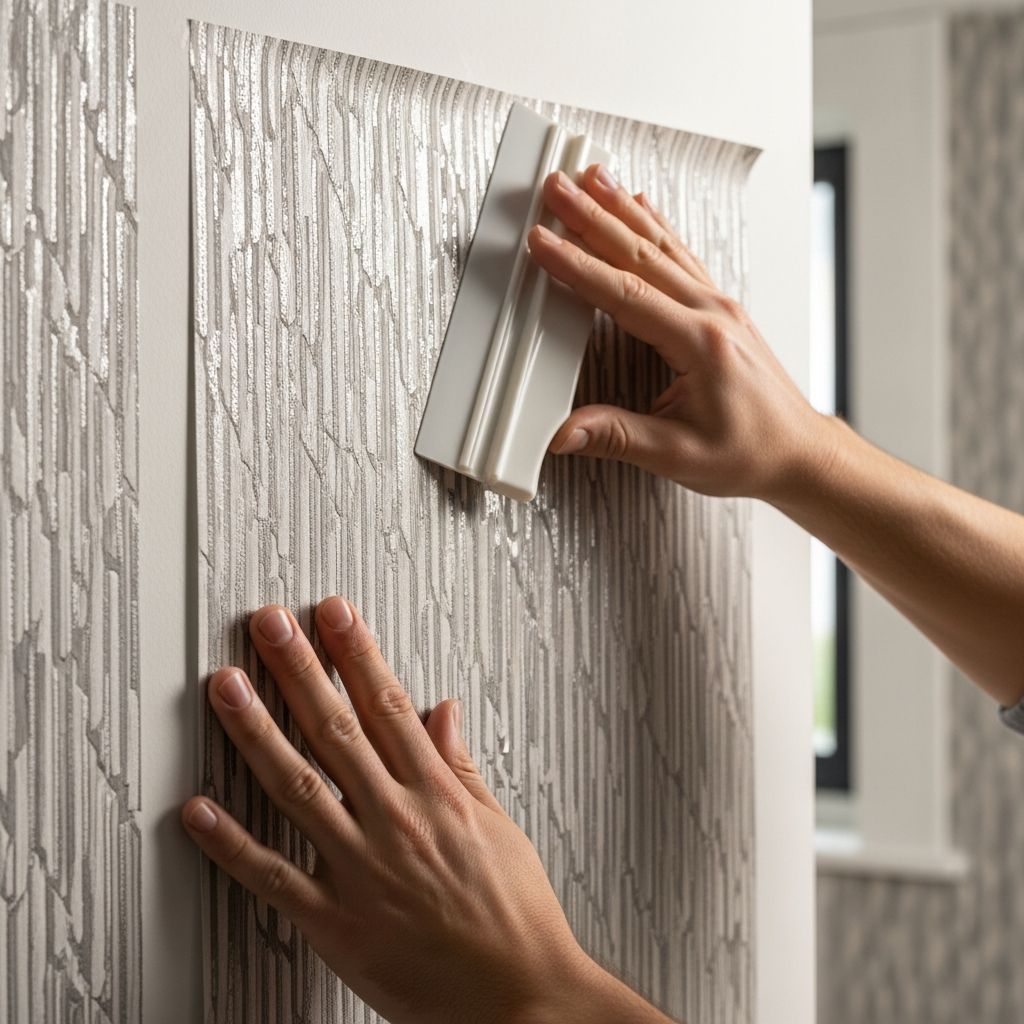
Position top edge along ceiling, aligning with plumb line. Gently press center first, smoothing outward with plastic tool to expel air. Crease into ceiling-wall joint with putty knife for clean trim line. Maintain slight overlap at corners if walls are uneven.
Proceed downward, checking plumb frequently. For patterns, slide into alignment before full commitment.
Installing Subsequent Strips
Butt edges tightly without overlap unless specified. Roll seams firmly. Match patterns by overlapping slightly during alignment, then trim excess for invisible joints. Smooth from center to edges, chasing bubbles outward.
Handle around obstacles: turn off power, score outlets, cut X-shapes, fold flaps behind plates. Use sharp blades for crisp edges.
Trimming and Finishing Touches
Once adhered, trim top/bottom excess with straightedge and utility knife. Double-cut seams by overlapping slightly, scoring both layers, then peeling away middle for perfect match. Wipe excess paste immediately with damp sponge—never rub.
Final pass with seam roller ensures durability. Allow 24-48 hours curing before heavy contact.
Troubleshooting Common Issues
Bubbles: Pierce with pin, press out, or re-soak for unpasted. Seams gapping: Re-paste lightly, roll firmly. Pattern mismatch: Reverse strips or contact supplier.
- Mismatched color: Pause and verify roll batches.
- Peeling edges: Reactivate with paste, smooth.
- Blisters: Slit, flatten, dry.
Special Considerations for Vinyl
Vinyl’s durability shines in humid areas but requires ventilation during install. Avoid direct sunlight on fresh installs to prevent uneven drying. For textured vinyl, use more adhesive and firmer smoothing.
Removing Vinyl Wallpaper Later
Score surface, spray warm water or remover solution from bottom up. Wait 15-20 minutes, then peel at low angle. Stubborn spots yield to steamers.
Frequently Asked Questions
Can beginners install vinyl wallpaper?
Yes, with peel-and-stick; unpasted suits experienced DIYers.
How long does installation take?
One accent wall: 2-4 hours; full room: 1-2 days.
Is primer always necessary?
Essential for porous walls; optional on sealed paint.
What’s the best adhesive for vinyl?
Heavy-duty, mold-resistant formulas.
Can vinyl wallpaper go in bathrooms?
Absolutely—choose vinyl-coated for moisture resistance.
Maintenance for Longevity
Clean with mild soap and sponge; avoid abrasives. Vinyl resists stains, simplifying upkeep compared to paint.
References
- How to Install Spoonflower Vinyl Wallpaper — Spoonflower Support. 2023-10-01. https://support.spoonflower.com/hc/en-us/articles/29790636382093-How-to-Install-Spoonflower-Vinyl-Wallpaper
- How to Install Vinyl Wallpaper in Your Home — Angi. 2024-05-15. https://www.angi.com/articles/how-to-install-vinyl-wallpaper.htm
- How-To Wallpaper with Peel & Stick, Traditional and Vinyl Wallpaper — I Spy DIY. 2023-08-20. https://ispydiy.com/how-to-wallpaper-with-peel-stick-traditional-and-vinyl-wallpaper/
- How to Hang Unpasted Wallpaper For Beginners — Chrissy Marie Blog. 2022-11-10. https://chrissymarieblog.com/how-to-hang-wallpaper
- Installing Vinyl Wallpaper — Roman Decorating Products. 2024-02-28. https://romandecoratingproducts.com/blogs/how-to/install-vinyl-wallpaper
Similar Articles



Read full bio of medha deb