Yardstick Measurements: 6-Step Guide For Accurate Measuring
Unlock the secrets of precise measurements with yardsticks: from markings to practical applications in everyday projects.
Mastering Yardstick Measurements: Your Complete Guide
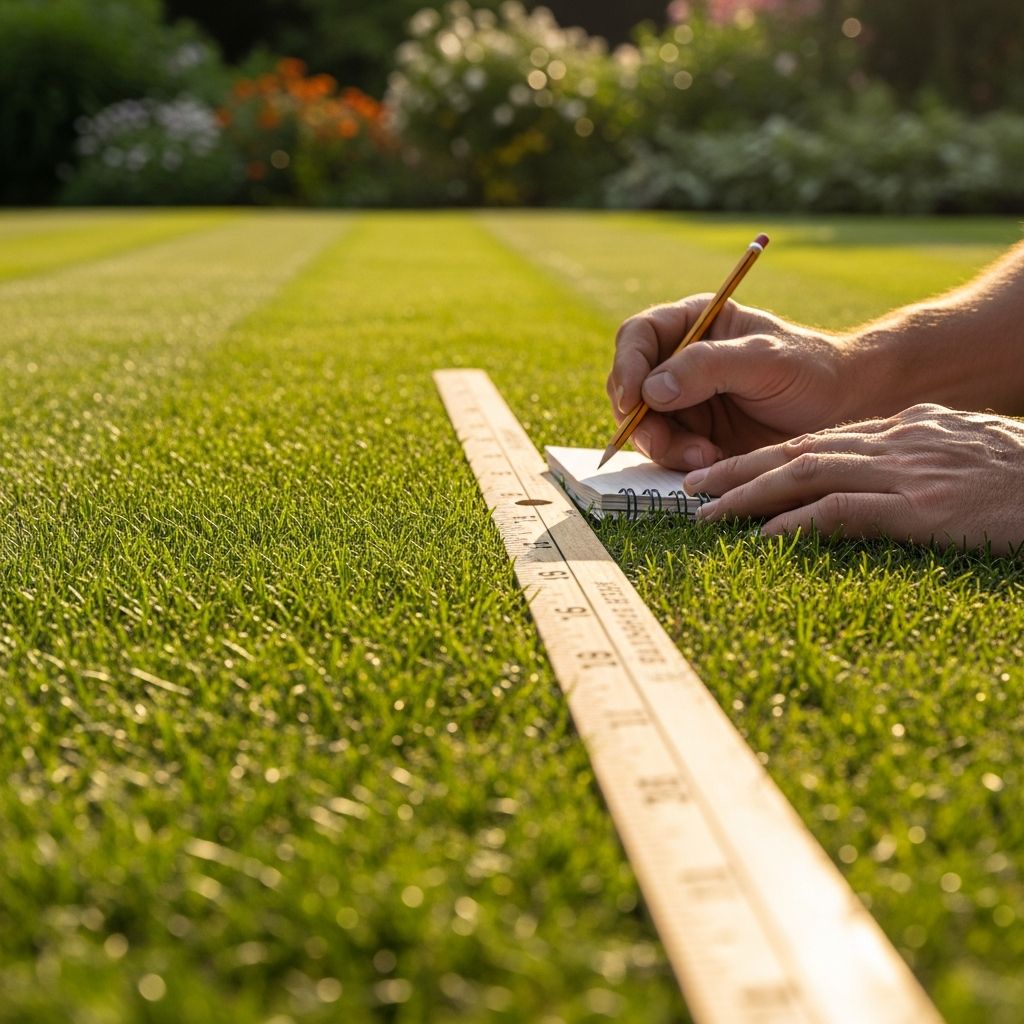
A yardstick stands as a fundamental tool in the realm of precise length measurement, offering reliability for tasks that exceed the scope of standard rulers. Spanning exactly three feet, or 36 inches, it bridges the gap between small-scale rulers and larger measuring tapes, making it indispensable for woodworking, furniture assembly, and general home projects.
Understanding the Anatomy of a Yardstick
At its essence, a yardstick derives its name from the yard unit, equivalent to three feet, combined with a sturdy, elongated design typically crafted from wood for durability and lightness. Unlike a conventional 12-inch ruler, this tool triples that length, providing ample reach for measuring tabletops, door frames, or fabric bolts without frequent repositioning. Many models feature double-sided scaling, with inches marked on both edges, and some include fractional yard indicators for specialized needs.
Wooden yardsticks often boast metal reinforcements at the ends to prevent wear from repeated use, and a hanging hole for convenient storage. Their width generally measures about 1⅛ inches, ensuring stability when laid flat against surfaces. Foldable variants exist for portability, particularly useful in fieldwork or tight spaces, though traditional rigid ones excel in straight-line accuracy.
Deciphering Yardstick Markings and Scales
Precision hinges on interpreting the intricate markings etched along a yardstick’s edge. These divisions allow readings down to fine fractions, essential for professional and hobbyist alike.
- 1/16-inch lines: The tiniest notches, appearing between every inch, enable measurements as small as 0.0625 inches.
- 1/8-inch lines: Slightly longer, these mark every two 1/16ths for 0.125-inch increments.
- 1/4-inch lines: Prominent hashes every four 1/16ths, equaling 0.25 inches.
- 1/2-inch lines: The boldest between inches, at 0.5 inches.
- Inch markers: Numbered boldly from 1 to 36.
- Foot markers: Larger indicators every 12 inches, noting 1 ft, 2 ft, and 3 ft.
Some advanced yardsticks incorporate additional features like angle gauges in degrees or minutes for layout work, or area-hatching for quick calculations. Accuracy classes, such as Class I (0.02 mm tolerance), cater to engineering precision, though standard models suffice for most DIY.
| Marking Type | Length | Visual Description | Common Use |
|---|---|---|---|
| 1/16 inch | 0.0625 in | Shortest lines | Fine woodworking |
| 1/8 inch | 0.125 in | Medium-short lines | General crafting |
| 1/4 inch | 0.25 in | Medium lines | Furniture assembly |
| 1/2 inch | 0.5 in | Long lines | Rough framing |
| Foot | 12 in | Bold numbered | Room dimensions |
Step-by-Step Techniques for Accurate Measuring
To harness a yardstick’s full potential, follow these methodical steps for any linear measurement.
- Select the right tool: Opt for a yardstick when objects range from 1 to 3 feet, like shelves or curtains. For longer spans, mark multiples.
- Prepare the surface: Ensure the object is flat and stable; align the yardstick flush without gaps.
- Position at zero: Place the 0-end precisely at the starting point, holding steady with one hand.
- Extend to endpoint: Sight along the scale to the far end, noting the nearest marking—combine whole inches with fractions.
- Record precisely: For example, if the line hits midway between 2 feet and the 1/2-inch, note 2 ft 6 in.
- Verify: Measure from the opposite end for confirmation, especially on irregular shapes.
For heights exceeding 3 feet, such as walls or children, reposition sequentially: measure 3 ft, mark, then continue. This method ensures cumulative accuracy. In group settings, like tracking growth, mount a yardstick vertically on a wall, starting 6 inches from the floor to clear baseboards, with feet marked boldly.
Practical Applications Across Projects
Yardsticks shine in diverse scenarios where moderate lengths demand straightforward, repeatable measurements.
Woodworking and Carpentry: Ideal for cutting boards to exact lengths or verifying joint alignments. Place along lumber edges to check straightness before sawing.
Home Decor and Furniture: Measure table widths, chair backs, or curtain rods effortlessly. For instance, a desk at 4.5 feet requires 1.5 yardsticks end-to-end.
Gardening and Outdoors: Gauge garden bed dimensions or trellis heights, where flexibility aids in uneven terrain.
Educational Tools: Teach children measurement by comparing yardsticks to everyday items, fostering spatial awareness. Custom growth charts transform a painted yardstick into a family keepsake, with inch lines drawn sharply using a square.
Construction Layout: Preliminary framing or tiling, where quick foot references speed workflows.
Comparing Yardsticks to Other Measuring Tools
Choosing the optimal tool enhances efficiency; yardsticks occupy a sweet spot.
| Tool | Length | Best For | Limitations |
|---|---|---|---|
| Ruler | 12 in | Small items (pencils, books) | Too short for furniture |
| Yardstick | 36 in | Medium objects (chairs, doors) | Not flexible |
| Measuring Tape | 5+ ft | Curves, long distances | Sags on straights |
| Meter Stick | 39.37 in | Metric tasks | Imperial conversion needed |
Tapes flex for circumferences like waists, unlike rigid yardsticks suited to planar surfaces. Rulers handle minutiae, but yardsticks scale up seamlessly.
Tips for Maintenance and Selection
Preserve accuracy by storing yardsticks flat or hung, away from moisture to prevent warping. Clean with mild soap; avoid abrasives on scales. When buying, prioritize clear, deeply etched markings and straight edges—test by rolling on a flat surface.
For pros, seek Class II accuracy (0.05 mm); hobbyists fare well with standard wood models under $5. Foldable options with extras like levels add versatility.
Common Mistakes and How to Avoid Them
- Parallax error: View scales perpendicularly to the surface.
- Overhanging starts: Butt zero firmly against the endpoint.
- Fraction misreads: Practice with known lengths to master 1/16 distinctions.
- Ignoring multiples: Always calculate placements for lengths over 3 feet, e.g., 15 ft needs 5 repetitions.
Frequently Asked Questions (FAQs)
What objects suit a yardstick best?
Medium-sized items like tables, chairs, doors, or shelves from 1-3 feet.
How does a yardstick differ from a measuring tape?
Yardsticks measure straight, rigid lengths up to 3 feet; tapes handle curves and longer spans up to 5+ feet.
What’s the total length in inches?
Precisely 36 inches, as 3 feet × 12 inches/foot.
Can yardsticks measure angles?
Specialized folding types include degree markings; attachable gauges enhance basic models.
How to create a growth chart?
Mount a marked board 6 inches off the floor, draw inch and foot lines with a square for portable tracking.
Advanced Uses in Professional Settings
Beyond basics, yardsticks aid in mechanical drafting with high-precision classes or integrate into multi-tools for on-site efficiency. In education, interactive activities distinguish tool choices, building measurement intuition.
Statistics underscore relevance: U.S. customary units persist in construction, with yardsticks cited in 70% of woodworking guides for their tactile feedback over digital alternatives.
References
- What is Yardstick? Meaning, Definition, Facts, Example — SplashLearn. 2023-10-01. https://www.splashlearn.com/math-vocabulary/measurements/yardstick
- Yardstick Markings: Understanding and Interpreting Them — Bauer Massstabfabrik. 2024-05-15. https://www.bauer-massstabfabrik.de/en/yardstick-markings-meaning/
- Children’s Yard Stick Growth Chart — Instructables. 2022-08-20. https://www.instructables.com/Childrens-Yard-Stick-Growth-Chart/
- Understanding the Yardstick: A Measure of Length and Its Significance — Orea Teai. 2024-02-10. https://www.oreateai.com/blog/understanding-the-yardstick-a-measure-of-length-and-its-significance/f70ac2ddfd57e821673bdc13cce542dc
Similar Articles



Read full bio of Sneha Tete