Maximize Subwoofer Bass Without an Amp
Discover proven techniques to enhance your car's subwoofer performance using only your head unit's power for deeper bass.
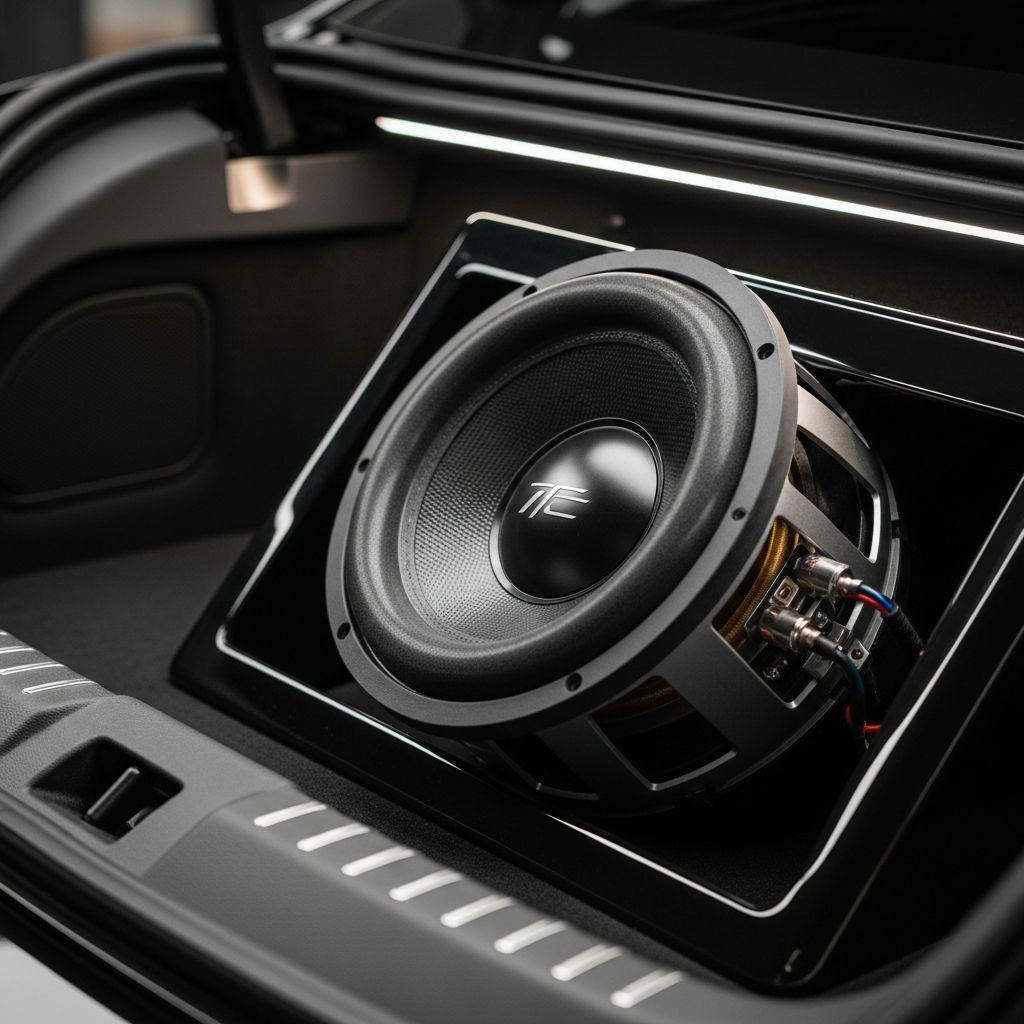
Your car’s audio system can deliver impressive low-frequency punch even without a dedicated amplifier. By leveraging the built-in power from your head unit and making smart modifications, you can achieve deeper bass from a subwoofer that rivals amplified setups. This guide explores practical, amp-free strategies grounded in audio principles.
Understanding Head Unit Power Limits
Every car stereo head unit contains a small internal amplifier capable of driving speakers, including subwoofers to a degree. These units typically output 15-25 watts RMS per channel at 4 ohms, which is sufficient for efficient subwoofers but falls short for power-hungry models. The key is matching components to this limited power source for optimal results.
Subwoofers demand more current than mids or highs due to their larger voice coils and excursion needs. Without external amplification, focus on efficiency: select subs with high sensitivity ratings (90dB+ per watt/meter) that convert limited power into substantial sound pressure.
Selecting the Right Powered Subwoofer
The simplest path to bass enhancement is a self-powered subwoofer with its own compact amp. These compact units connect directly to your head unit’s RCA or high-level outputs, bypassing the need for separate amplification.
- Compact Design: Models like under-seat enclosures fit neatly without major modifications.
- Power Matching: Look for 100-300W RMS built-in amps tuned for head unit signals.
- Integration: Use crossovers to blend with factory speakers seamlessly.
Installation involves routing power from the battery, grounding properly, and setting gain controls low to avoid clipping. This approach yields 10-15dB more bass than unpowered subs on stock power.
Upgrading Your Head Unit for Better Output
A high-output head unit acts as your primary power source. Modern aftermarket units deliver up to 22W RMS x 4 channels, with preamp outputs up to 5V for cleaner signals.
| Feature | Stock Unit | Upgraded Unit | Benefit |
|---|---|---|---|
| RMS Power | 10-15W | 20-25W | Stronger drive |
| Preout Voltage | 2V | 4-5V | Less noise |
| Built-in DSP | No | Yes | Bass boost EQ |
Units with parametric EQs allow boosting 40-60Hz frequencies precisely, compensating for cabin acoustics. Pair with a line output converter (LOC) if retaining factory radio.
Optimizing Subwoofer Efficiency and Placement
Efficiency starts with the sub itself. Choose 8-10 inch woofers with 88dB+ sensitivity and dual voice coils wired for 4-ohm loads to match head unit impedance.
- Sealed vs. Ported Boxes: Sealed enclosures provide tighter bass on low power; ported ones emphasize output but risk distortion.
- Placement Strategies: Trunk corner loading uses cabin gain for +6-12dB free boost. Avoid center trunk spots where cancellation occurs.
Experiment with phase switches (0/180 degrees) to align sub output with mains, preventing low-end cancellation.
Wiring Techniques for Maximum Power Transfer
Proper wiring minimizes resistance, ensuring every watt reaches the sub.
- Use 14-16 Gauge Speaker Wire: Shorter runs reduce voltage drop.
- Parallel Wiring for Dual Coils: Wire DVC subs to drop impedance safely (e.g., 4-ohm coils in parallel = 2 ohms, but check head unit stability).
- High-Level Inputs: Tap into speaker outputs with an LOC for factory systems.
Avoid daisy-chaining; dedicate channels if possible. This can increase effective power by 20-30%.
Sound Deadening: The Silent Bass Booster
Road noise and panel vibrations mask bass. Applying damping sheets (e.g., 80mil butyl rubber) to doors, floor, and trunk reduces interference by 10-20dB.
- Doors: Cover 60-80% of inner/outer skins.
- Floorpan: Focus on sub-adjacent areas.
- Trunk: Seal seams to prevent rattles.
This cleanup reveals hidden bass detail, making low-power setups sound fuller.
EQ and DSP Tweaks Without Extra Hardware
Many head units offer bass boost (+12dB at 50Hz) and loudness contours. Set sub level to 75% max, then fine-tune:
- Cut mids (200-500Hz) by 3-6dB to spotlight lows.
- Boost sub output gradually while monitoring for distortion.
- Use time alignment if available to sync front/rear waves.
For advanced control, apps like Dirac Live (on compatible units) auto-correct cabin peaks/dips.
Enclosure Customization for Low-Power Gains
Build or modify boxes to suit your sub and vehicle. Smaller sealed boxes (0.5-1.0 cu ft for 10″) excel on head unit power by increasing efficiency.
Polyfill stuffing adds apparent volume (+10-15%) and smooths response. Brace walls to eliminate flex, preserving output.
Common Pitfalls and Troubleshooting
Weak bass often stems from mismatches:
| Issue | Symptom | Fix |
|---|---|---|
| Low Output | Faint lows | Check impedance match |
| Phase Cancel | Hollow sound | Flip phase switch |
| Distortion | Clipping | Lower gain/EQ boost |
| Rattles | Vibration noise | Add damping |
Real-World Performance Expectations
Amp-free setups with optimized components can hit 105-110dB SPL in cabins, suitable for daily driving. For SPL competitions, amps are essential, but for music enjoyment, these methods suffice.
Cost Breakdown for Amp-Free Upgrades
| Component | Price Range | Impact |
|---|---|---|
| High-Power Head Unit | $150-300 | High |
| Efficient 10″ Sub | $100-200 | High |
| Sealed Enclosure | $50-150 | Medium |
| Damping Kit | $50-100 | Medium |
| Wiring/LOC | $20-50 | Low |
Total under $500 for transformative bass.
Frequently Asked Questions
Can any subwoofer run without an amp?
Yes, but only efficient models on high-sensitivity subs paired with powerful head units will perform well.
Will this damage my head unit?
No, if impedance stays above 4 ohms and volume avoids clipping.
How much bass improvement can I expect?
Typically 6-12dB over stock, depending on optimizations.
Is a powered sub better than passive?
For no-amp setups, yes—built-in amps handle power demands effortlessly.
Does cabin size matter?
Yes, smaller cabins amplify bass naturally via boundary gain.
References
- Can I Use a Subwoofer Without Amplifiers In a Car? — CarAudioNow. 2023. https://www.caraudionow.com/can-i-use-a-subwoofer-without-amplifiers-in-a-car/
- Good Audio without Amplifier: How to achieve in 3 steps — YouTube (Bhandari’s Car Style). 2023. https://www.youtube.com/watch?v=BcSzRHRxYFs
- Adding a sub to car without DSP; more harm than good? — Audio Science Review Forum. 2023. https://www.audiosciencereview.com/forum/index.php?threads/adding-a-sub-to-car-without-dsp-more-harm-than-good.56505/
- I’m Not Getting Much Output From My Subwoofers | Car Audio Q&A — YouTube (Sonic Electronix). 2023. https://www.youtube.com/watch?v=elCcfQAP-t4
Similar Articles




Read full bio of Sneha Tete