Mosquito Hawks: Separating Fact from Fiction
Learn why mosquito hawks aren't what their name suggests and how they differ from crane flies.
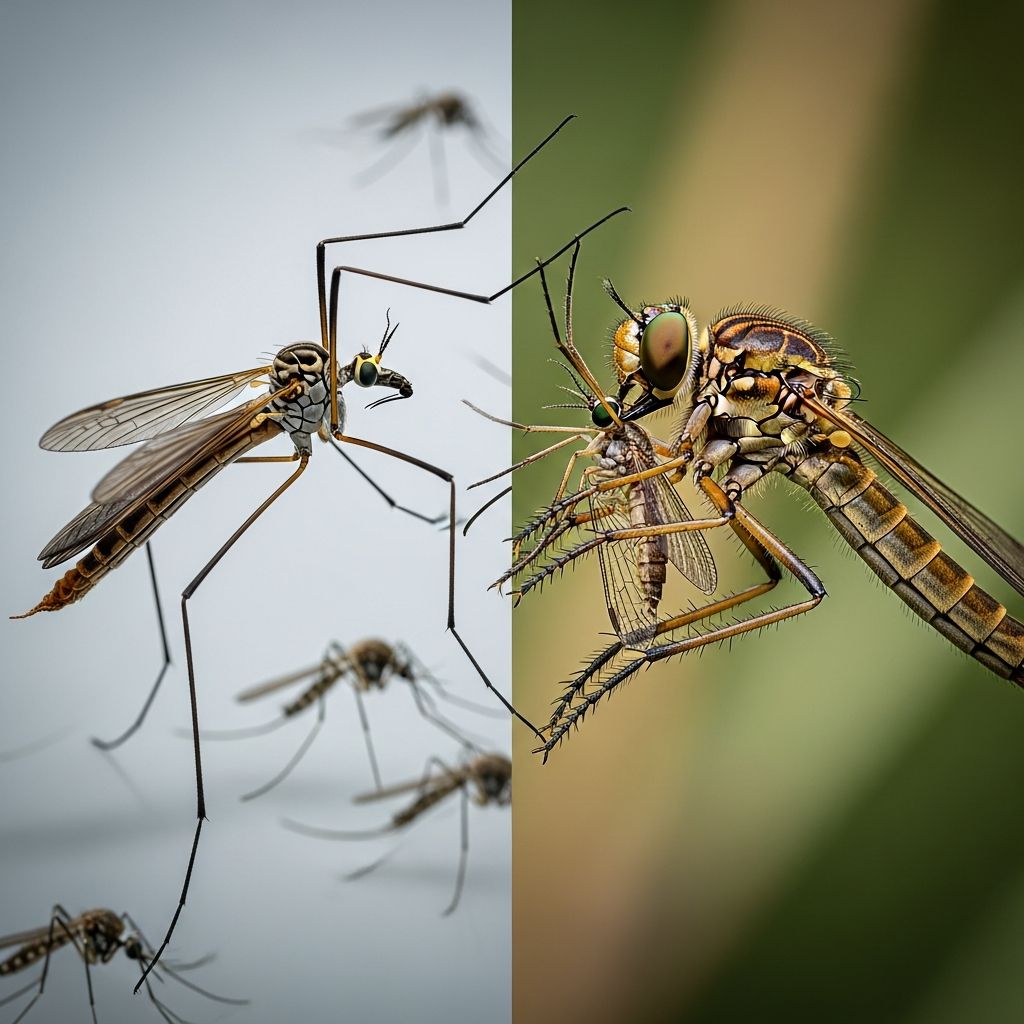
When warm weather arrives, many homeowners spot unusual insects around their properties and wonder what they are. A common discovery is an insect that resembles an oversized mosquito, which many people immediately assume is a predatory species designed to control the mosquito population. This misconception has persisted for decades, leading to widespread confusion about a group of insects collectively known as “mosquito hawks.” Understanding what these insects actually are—and what they are not—is essential for homeowners seeking to manage their pest populations effectively.
The Misleading Name: Why “Mosquito Hawk” Is a Misnomer
The term “mosquito hawk” is one of the most persistent misnomers in entomology. This umbrella label refers not to a single species but to a collection of insects that were historically believed to prey on mosquitoes. The name originated from the assumption that larger insects would naturally hunt smaller ones, particularly mosquitoes. However, this logical-sounding premise does not hold up to scientific scrutiny.
The category of “mosquito hawk” encompasses several different insect types, including crane flies, dragonflies, and damselflies. While dragonflies and damselflies are indeed effective predators of mosquitoes and other small flying insects, crane flies—the insects most commonly called “mosquito hawks”—do not feed on mosquitoes at all. This fundamental misunderstanding has led generations of homeowners to believe they have natural mosquito control at work on their property when they spot crane flies.
Understanding Crane Flies: The Mistaken Identity
Crane flies are often the source of this confusion because of their striking appearance. Adults typically resemble oversized mosquitoes, featuring slender bodies and extraordinarily long, delicate legs that can stretch approximately one inch in length. Some species can achieve wingspans of up to three inches, making them unmistakably large insects.
The resemblance to mosquitoes is more than superficial. Crane flies belong to the order Diptera—the true flies—and are distantly related to mosquitoes. There are approximately 1,458 species of crane flies in the family Tipulidae. These insects thrive in moist environments similar to those preferred by mosquitoes, such as areas near standing water, damp soil, and vegetation near streams and lakes. This habitat overlap further contributes to the confusion between the two insects.
Despite their mosquito-like appearance and similar habitat preferences, crane flies are fundamentally different from mosquitoes in their feeding behavior and biology. Adult crane flies lack the specialized needle-like sucking mouthparts that mosquitoes possess. Some species have developed short mouthparts for feeding on nectar from flowers, but many species have no functional mouthparts whatsoever. These insects focus their brief adult lives entirely on reproduction rather than feeding.
Lifecycle and Behavioral Differences Among Mosquito Hawks
All insects categorized as “mosquito hawks”—including crane flies, dragonflies, and damselflies—share a common characteristic: they undergo complete metamorphosis with four distinct life stages: egg, larva, pupa, and adult. However, the timeline and ecological role of each group differs significantly.
Crane Fly Lifecycle: Crane flies lay their eggs in moist soil, and when larvae emerge, they feed on the roots of grasses, decaying organic matter, decomposing wood, and vegetation. Some larvae are aquatic or semi-aquatic, consuming small aquatic organisms and decaying plant material near stream surfaces. These larvae, commonly called “leatherjackets,” spend the majority of their life in this larval stage, making their primary ecological impact through the consumption and decomposition of plant material. Adult crane flies have remarkably short lifespans, typically living only 10 to 15 days.
Dragonfly and Damselfly Lifecycle: In contrast to crane flies, dragonfly and damselfly nymphs are aggressive predators. These nymphs extend a hinged lower mouthpart—sometimes called a “mask”—that rapidly captures prey including mosquito larvae, tadpoles, and small fish. As adults, dragonflies and damselflies are equally effective hunters, consuming many mosquitoes and other small flying insects during their lifespans, which extend from several weeks to several months. This dramatic difference in adult lifespan means that dragonflies and damselflies have far greater opportunity to impact mosquito populations than crane flies ever could.
Physical Characteristics: A Comparison Table
| Feature | Crane Flies | Dragonflies | Damselflies |
|---|---|---|---|
| Appearance | Tan-colored, mosquito-like, fragile | Colorful torso and wings | Colorful torso and wings |
| Body Structure | Slender body with long stilt-like legs | Robust body with large compound eyes | Slender body with large compound eyes |
| Adult Lifespan | 10-15 days | Several weeks to months | Several weeks to months |
| Adult Feeding Behavior | No feeding or nectar consumption | Active mosquito predator | Active mosquito predator |
| Larval Diet | Decaying plant material, roots | Mosquito larvae, small aquatic organisms | Mosquito larvae, small aquatic organisms |
| Threat to Humans | None | None | None |
Safety and Threat Assessment: What Crane Flies Actually Do
One of the most beneficial aspects of understanding the true nature of crane flies is recognizing that they pose no threat to humans, pets, or property. Despite their somewhat intimidating size and appearance, crane flies are completely harmless. They do not bite, they do not sting, and they do not transmit diseases.
The primary complaint homeowners voice about crane flies is their annoying behavior of flying in groups and buzzing around lights and windows, particularly during their brief adult phase. While undoubtedly irritating, this behavior causes no actual harm. Their presence in a yard or home is merely a temporary nuisance associated with seasonal emergence.
Crane fly larvae, despite their presence in soil and vegetation, cause minimal damage to most residential landscapes. While they do feed on grass roots and organic matter, the damage is typically negligible in well-maintained yards and does not warrant control measures.
Regional Variations and Common Names
The confusion surrounding these insects is compounded by the numerous regional names applied to them across North America. Crane flies are variously called “mosquito hawks,” “skeeter eaters,” “gallinippers,” “gollywhoppers,” and “daddy longlegs” in different regions of the United States. Outside the United States, “daddy longlegs” typically refers to arachnids rather than crane flies, adding another layer of confusion.
The scientific name for the crane fly family is Tipulidae, and adult specimens are classified in the order Diptera. When researching or discussing these insects, using the scientific family name or the term “crane fly” ensures clear communication and avoids the persistent misconceptions associated with colloquial names.
Actual Mosquito Control: What Really Works
For homeowners genuinely concerned about mosquito populations, understanding that crane flies provide zero mosquito control is important for developing an effective strategy. True mosquito hawks—namely dragonflies and damselflies—are far more effective, but they cannot be reliably attracted or maintained in residential settings as a primary control method.
Effective mosquito management requires a multi-pronged approach including elimination of standing water where mosquitoes breed, removal of vegetation where mosquitoes rest, and in some cases, application of targeted pesticides or hire of professional pest control services. Waiting for crane flies to appear in hopes they will control mosquitoes is a futile strategy that will only lead to continued frustration.
Frequently Asked Questions
Do mosquito hawks actually eat mosquitoes?
No. Crane flies, the insects most commonly called “mosquito hawks,” do not feed on mosquitoes or any other insects. Dragonflies and damselflies, which are also categorized as “mosquito hawks,” are effective predators of mosquitoes, but these are separate insects with different appearances and lifespans.
Are crane flies dangerous to humans?
Crane flies are completely harmless to humans. They do not bite, sting, transmit diseases, or pose any threat whatsoever. Their only drawback is their annoying habit of flying around lights during their brief adult phase.
Can I distinguish a crane fly from a mosquito?
Yes. While crane flies resemble oversized mosquitoes, several distinguishing features set them apart. Crane flies have much longer legs than mosquitoes, lack the needle-like sucking mouthparts visible in mosquitoes, and appear tan or brown in color. Additionally, crane flies are far larger, sometimes reaching wingspans of up to three inches.
Should I try to eliminate crane flies from my property?
This is unnecessary. Since crane flies pose no threat and provide no significant pest control benefits, eliminating them offers no practical advantage. If their presence bothers you, simply allow them to complete their natural lifecycle, which lasts only 10 to 15 days in the adult stage.
What is the best way to control mosquitoes in my yard?
The most effective approach combines multiple strategies: eliminating standing water, maintaining vegetation through trimming, using fans to disrupt flight patterns, and applying mosquito repellent treatments. In severe cases, professional pest control services can apply targeted pesticides. Relying on natural predators alone, including dragonflies, is insufficient as a primary control method.
Conclusion: Moving Beyond the Misconception
The persistent belief that crane flies control mosquito populations is a myth without scientific basis. The term “mosquito hawk” is fundamentally misleading when applied to crane flies, which neither consume mosquitoes nor possess any characteristics that would make them effective predators. Understanding this distinction allows homeowners to develop realistic expectations about pest management and avoid wasting time or resources based on misinformation.
When encountering the tan-colored, long-legged insects around your home in spring and early summer, recognize them for what they truly are: harmless, temporary visitors engaged in reproduction during their brief adult lives. Meanwhile, the true mosquito predators—dragonflies and damselflies—provide genuine but limited pest control benefits in appropriate habitats. For comprehensive mosquito management, focus on proven methods of elimination and prevention rather than relying on any insect species to solve the problem entirely.
References
- Crane Fly vs. Mosquito Hawk: What’s The Difference? — Mosquito Joe. Accessed April 2026. https://mosquitojoe.com/blog/difference-between-crane-fly-and-mosquito-hawk/
- Crane Fly (mosquito hawk, mosquito eater) — Chula Vista Vector Control Program. Accessed April 2026. https://www.cvmosquito.org/crane-fly-mosquito-hawk-mosquito-eater
- Crane Fly – Field Guide to Common Texas Insects — Texas A&M AgriLife Extension. Accessed April 2026. https://texasinsects.tamu.edu/crane-fly/
- Crane fly — Wikipedia. Accessed April 2026. https://en.wikipedia.org/wiki/Crane_fly
- Mosquito Hawks? Giant Mosquitoes? Nope. They’re Crane Flies! — Mosquito and Vector Management District. Accessed April 2026. https://www.mvmdistrict.org/mosquito-hawks-giant-mosquitoes-nope-they-re-crane-flies
- Dragonfly — Wikipedia. Accessed April 2026. https://en.wikipedia.org/wiki/Dragonfly
Similar Articles








Read full bio of medha deb