Motorized Awning Repair Guide
Complete instructions for diagnosing and fixing common motorized awning issues.
Understanding Motorized Awning Systems
Motorized awnings are convenient outdoor structures that extend and retract with the push of a button, providing shade and weather protection for patios, RVs, and decks. These systems combine electrical components, mechanical drive mechanisms, and fabric structures into an integrated unit. When functioning properly, a motorized awning enhances both comfort and property value. However, like any mechanical system, motorized awnings require maintenance and occasional repairs to maintain optimal performance.
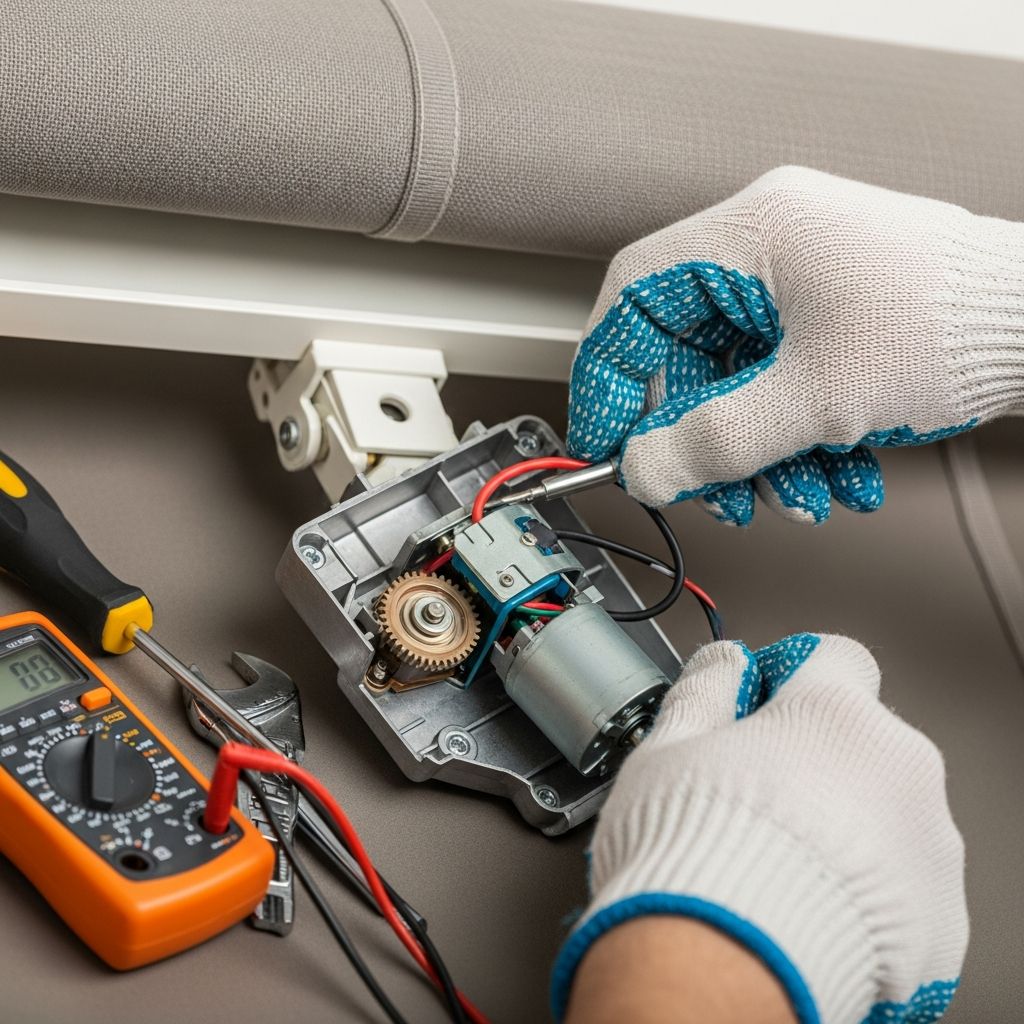
The typical motorized awning consists of several key components working together: an electric motor that drives the system, a planetary gear mechanism that transfers power, bearing assemblies that support rotating shafts, a roller tube that holds the fabric, and end caps that secure the structure. Understanding how these parts interact is essential for effective troubleshooting and repair work.
Diagnosing Motor and Electrical Issues
Motor failure represents one of the most common problems affecting motorized awnings. Before assuming your motor requires replacement, perform a systematic electrical inspection to identify the actual source of malfunction. Begin by examining all wiring connections for signs of corrosion, wear, or damage that could interrupt electrical flow to the motor.
Check the power supply to ensure adequate voltage is reaching your awning system. Many motorized awnings operate on 12-volt power systems, particularly in recreational vehicles. A multimeter can quickly verify whether sufficient power is available at the connection point. Look for damaged insulation, fraying wires, or areas where cables contact sharp edges or moving components.
If your awning fails to respond to the control switch, inspect the fuse or circuit breaker dedicated to the awning motor. A blown fuse often indicates an electrical overload or short circuit upstream. Replace the fuse with an identical amp rating before concluding the motor itself has failed. Should the fuse blow repeatedly after replacement, stop operation immediately and consult a professional, as this suggests a more serious electrical problem.
Addressing Incomplete Retraction
An awning that refuses to fully retract or extend poses both safety and storage concerns. This issue frequently stems from misalignment between the mechanical adjustment settings and the actual physical limits of your awning system. The front cover of most motorized awnings conceals two critical adjustment screws that control deployment and retraction limits.
Remove the cover located at one end of the awning by unscrewing two Phillips head fasteners. Underneath, you’ll find two Allen key adjusting screws: the upper screw controls maximum extension distance, while the lower screw manages how far the awning retracts. Make adjustments gradually, testing the awning after each small turn to find the optimal position. Extreme adjustment changes can cause mechanical binding or create gaps in the fabric coverage.
Before making mechanical adjustments, verify that no physical obstructions block the awning’s path. Inspect the channels, arms, and roller area for debris, dried sealant, or accumulated dirt that might impede smooth operation. Clear away any obstacles and lubricate the moving parts with appropriate cleaners and lubricants.
Correcting Arm Misalignment Problems
Motorized awnings employ parallel arms on both sides to ensure even, balanced extension and retraction. When one arm extends further than the other or retracts at a different rate, the fabric hangs unevenly and stress concentrates on one side of the structure. This misalignment accelerates wear and can cause permanent damage to the roller tube or fabric.
Start by visually inspecting the full extension and retraction paths of both arms. Look for branches, leaves, debris, or other obstacles that might catch one arm and prevent normal movement. Leaves collecting in channels create friction that slows one side of the mechanism. Clean these areas thoroughly with a brush or compressed air.
Apply appropriate lubricant to all moving components, including the arm joints, roller mechanism, and gear assemblies. Proper lubrication reduces friction and allows both arms to move at equal speeds. Many motorized awning systems benefit from periodic light machine oil or specialized awning lubricants. However, avoid over-lubrication, which attracts dirt and causes buildup over time.
If alignment issues persist after clearing obstructions and lubricating components, the arm support brackets may have bent or loosened. Visually inspect brackets for signs of deformation, and check all fastening bolts to ensure they remain tight. Bent brackets require professional welding or replacement, as attempting to straighten them may create stress points that fail later.
Motor Disassembly and Bearing Maintenance
Serious motor problems sometimes require complete disassembly to access internal components. This task demands careful attention to detail, as motorized awning motors contain multiple small parts that must be reassembled in precise sequence. Begin by removing all fasteners holding the motor unit to the awning chassis, typically Phillips head screws and pop rivets. Mark each component’s position before removal using photographs or careful notes.
Disconnect the motor from the planetary gear mechanism by removing the hex head bolts that connect these two sections. The planetary gears appear as a gray metal drum-shaped component. Carefully pull the motor unit free and set it aside on a clean work surface. Next, slide the white plastic manual crank assembly off the drive shaft and reserve it for later reinstallation.
The planetary gear pack often becomes stuck to the roller tube from years of friction and dust accumulation. If hand removal proves impossible, use a pry bar or flat screwdriver to gently work around the gear pack’s circumference until it slides free. Forcing the component can crack internal gears, so patience and gentle persuasion work better than aggressive prying.
Internal motor bearings require special attention, as they wear from years of continuous operation. Many motorized awning motors employ sleeve bearings with felt washers that retain light machine oil. If the bearing has become rough or seized, heat the area gently with a micro torch until the bearing moves freely. Use needle-nose pliers to carefully extract the friction ring that retains the bearing assembly.
Clean the bearing pocket thoroughly with solvent and examine the friction ring for distortion. Wash the felt washer in clean solvent and allow it to dry completely before reinstallation. Polish both the armature shaft and the interior of the sleeve bearing using a soft scrubbing pad and WD-40, removing any rust or corrosion that developed during storage.
Apply fresh bearing grease to the cleaned components: a small dab pushed into the bearing pocket and a light film rubbed onto the armature shaft where it contacts the bearing. Reassemble the bearing into its recess, place the felt washer on top, and press the spring washer into position to retain the assembly. This maintenance often restores full function to motors that initially appeared beyond repair.
Fabric Damage Assessment and Patching
The awning fabric endures constant exposure to sun, wind, rain, and temperature fluctuations, eventually developing tears, holes, or UV damage. Small damages can be repaired using patch kits designed specifically for awning materials. Cut patches from matching fabric at least 2 inches larger than the damage on all sides to ensure adequate coverage and adhesion.
Clean the damaged area thoroughly to remove dirt and debris that might prevent proper bonding of the patch. Apply adhesive according to the repair kit instructions, pressing the patch firmly in place and allowing adequate curing time before exposing the awning to moisture or stress. Professional awning repair services use industrial-grade adhesives and techniques for larger or critical repairs.
Assess whether damage warrants complete fabric replacement by examining the overall condition of the material. Fabric showing brittleness, rotting, or pulling away from the roller tube has deteriorated beyond simple patching and requires full replacement. Modern awning fabrics offer improved durability, UV resistance, and water repellency compared to older materials, making replacement a worthwhile investment.
Complete Fabric Replacement Procedure
Replacing awning fabric requires careful removal of the old material without damaging the underlying roller tube structure. The fabric attaches to the roller tube through retaining screws buried in the tube’s groove, approximately 2 to 3 inches from each end. These screws feature Phillips heads and are intentionally recessed to protect them from weather.
Locating these hidden screws requires careful visual inspection and a #1 Phillips screwdriver, as standard #2 Phillips drivers may slip and strip the screw heads. Gently tease out all four screws (two at each end) and reserve them for reattaching the new fabric. Remove the end cap by loosening the pinch bolt with a 1/2-inch socket and gently tapping the cap off the outboard rail. The bolt need not be completely removed, only loosened enough to allow cap removal.
Carefully roll out the old fabric from the roller tube, taking note of how it was originally wrapped. Position the new fabric over the tube, centered side-to-side in the groove. Use a small 1/16-inch drill bit to create guide holes through the rubber spline at your existing screw locations. This ensures new screws follow the original alignment path.
Insert the #1 Phillips screws through the drilled pilot holes and into the old screw holes in the roller tube. Use a gentle twisting motion with slight up-down and left-right orbital movements as you install each screw, allowing the tip to locate and seat in the original hole. Continue tightening until the screw head sits below the lip of the groove, securing the fabric without creating a protrusion that catches water.
Preventive Maintenance Strategies
Regular maintenance extends motorized awning lifespan and prevents costly emergency repairs. Conduct visual inspections at least twice yearly, checking for fabric tears, loose bolts, corrosion on metal components, and signs of water damage or mold growth. Clean the fabric and mechanisms regularly to prevent dirt and debris accumulation that restricts movement.
Apply protective treatments to the fabric to preserve its UV resistance and water-repellency. Many manufacturers recommend specialized cleaning products and protective coatings designed for specific awning materials. Lubricate all moving components annually, being careful not to over-apply lubricants that attract dust and dirt.
During off-seasons, fully retract motorized awnings and secure them to prevent wind damage. Extended deployment in high winds stresses the structure and can damage arms or misalign the mechanism. Snow and ice accumulation on extended awnings creates dangerous loads that bend arms or strain motors.
When Professional Repair Is Necessary
Certain motorized awning problems exceed the scope of homeowner DIY repair. If you hear grinding noises from the motor or mechanism, stop operation immediately, as this indicates internal damage that may worsen without professional intervention. Bent awning arms cannot safely support the fabric and require professional replacement to prevent collapse.
Motors that fail repeatedly despite fuse and wiring replacement likely have internal defects requiring complete replacement. Attempting to repair severely damaged motors often costs nearly as much as purchasing new units. Professional RV service centers and awning specialists maintain comprehensive spare parts inventories and possess diagnostic equipment that quickly identifies complex problems.
Common Questions About Motorized Awning Repair
What tools do I need for basic motorized awning repairs?
Essential tools include Phillips and #1 Phillips screwdrivers, Allen key sets, socket wrenches with appropriate sizes, pliers, a drill with small bits, and lubricants. Many repairs require only basic hand tools rather than specialized equipment.
How can I manually retract my awning if the motor fails?
Most motorized awnings provide manual override systems accessible by removing end covers. Lippert awnings use a 7/16-inch socket to wind the manual nut counterclockwise, while Dedic models require a 3/8-inch socket for the same operation. You may need a ladder to reach the adjustment points.
Is it safe to repair a motorized awning myself?
Many basic repairs like fabric patching, bolt tightening, and lubrication are safely performed by homeowners. Complex electrical work, motor repair, or structural welding should be handled by professionals to ensure safety and proper function.
How often should I perform maintenance on my motorized awning?
Inspect your awning at least twice yearly, more frequently if exposed to harsh weather conditions. Annual lubrication and cleaning prevent most common problems from developing.
What is the typical cost of motorized awning repair versus replacement?
Simple repairs like fabric patching or bearing maintenance cost $100-$300. Motor replacement ranges from $500-$1500 depending on the specific model. Complete awning replacement typically costs $2000-$5000, making preventive maintenance and early repair financially beneficial.
References
- Repairing Your Oasis Elite Door Awning — Wheeled Horizons Blog. 2017-02-15. https://wheeledhorizons.blogspot.com/2017/02/repairing-your-oasis-elite-door-awning.html
- Most Common Retractable Awning Problems & How to Fix Them — Aleko Products Blog. https://blog.alekoproducts.com/most-common-retractable-awning-problems-how-to-fix-them/
- How to fix an electric awning that doesn’t retract fully — Tropical Zooms YouTube. https://www.youtube.com/watch?v=JODlf5kuQhI
- What Are Common RV Awning Problems and How to Fix Them — Carefree of Colorado. https://www.carefreeofcolorado.com/blog/what-are-common-rv-awning-problems/
- Is Your Power Awning Not Working? | RV Troubleshooting — My RV Works, Inc. YouTube. https://www.youtube.com/watch?v=8-wsD2u0oKc
- Awning Repair: 5 Common Problems You Can Fix Yourself — CFL Awnings. https://cflawnings.com/awning-repair-5-common-problems-you-can-fix-yourself/
- Electric RV Awning Maintenance & Troubleshooting Guide — Awnlux Pro. https://awnluxpro.com/blogs/news/electric-rv-awning-maintenance-troubleshooting-guide
Similar Articles



Read full bio of medha deb