Mounting Hooks on Easel-Back Frames
Transform your tabletop picture frames into stunning wall displays with simple hook installations that ensure secure and level hanging every time.
Standing picture frames with easel backs offer convenient tabletop display options, but converting them for wall hanging expands their versatility in home decor. This process involves selecting appropriate hardware, preparing the frame, and installing hooks to ensure stability and aesthetic appeal. Whether for family photos, artwork, or motivational prints, proper hook addition prevents damage and promotes long-lasting use.
Why Upgrade Standing Frames to Wall Mounts
Easel-back frames dominate household displays due to their portability and ease of setup. However, wall mounting frees up surface space, creates gallery walls, and enhances visual impact in living rooms, hallways, or offices. Common challenges include frame imbalance from added weight or improper hook placement leading to crooked hangs. Addressing these ensures frames remain level and secure, even in high-traffic areas.
Benefits extend beyond functionality: customized heights allow eye-level viewing, while grouped arrangements foster thematic storytelling. For heavier frames over 10 pounds, reinforced hooks distribute weight evenly, reducing wall stress. This upgrade suits renters avoiding permanent fixtures and homeowners seeking budget-friendly refreshes.
Essential Tools and Materials Overview
Gathering supplies streamlines the project, minimizing interruptions. Core items include screwdrivers (Phillips and flat-head), measuring tape, pencil for markings, and wire cutters for adjustments. Hardware kits typically feature D-rings, sawtooth hangers, or metal channels suited to frame material—wood, metal, or composite.
- Screws and anchors: Match size to frame thickness; use #6 or #8 for most applications.
- Hanging wire: Nylon-coated steel for durability and rust resistance.
- Bumpers: Self-adhesive rubber pads to prevent wall scratches and frame wobbling.
- Level tool: Bubble or laser for precise alignment.
- Optional: Stud finder for secure wall attachment points.
Budget kits cost under $10, available at hardware stores or online. Verify compatibility with frame dimensions before purchase—frames under 8×10 inches need lighter hardware, while larger ones require robust options.
Assessing Your Frame for Hook Compatibility
Not all standing frames suit wall conversion equally. Inspect the back panel: remove the easel strut by unscrewing or unclipping it, revealing mounting surfaces. Wood frames offer straightforward screwing into solid backs; metal ones may have pre-channeled sides for sliding hardware.
Measure frame height and width. Position hooks 1/3 down from the top (e.g., 4 inches on a 12-inch tall frame) for optimal balance. Test weight by lifting: lightweight photos under 5 pounds use sawtooth designs; mirrors or canvases demand D-rings with wire.
| Frame Type | Recommended Hook | Max Weight | Installation Ease |
|---|---|---|---|
| Wood Easel-Back | D-Ring or Sawtooth | 20 lbs | High |
| Metal Side-Loading | Omni Hangers | 15 lbs | Medium |
| Plastic/Composite | Adhesive Hooks | 8 lbs | Very High |
Detailed Steps for Installing D-Ring Hooks
D-rings provide superior strength for varied frame sizes. Begin by laying the frame face-down on a soft cloth to avoid scratches.
- Mark positions: Use tape to measure 1/3 down each side rail, penciling small dots 1/4 inch from the back edge.
- Pre-drill holes: Employ a bit slightly smaller than screws to prevent wood splitting, especially on hardwoods.
- Attach rings: Orient D-rings upward, screwing tightly with a screwdriver. Ensure rings face inward for wire threading.
- Thread wire: Cut a length 12-18 inches longer than frame width. Loop through one ring, twist securely, stretch across, and repeat on the opposite side, leaving 2-4 inches slack for hanging angle.
- Secure ends: Wrap excess wire around the main line 4-6 times, snipping and bending tails flat to avoid snags.
Test by lifting; adjust slack for desired lean—tighter for flush walls, looser for slight forward tilt.
Sawtooth Hanger Method for Lightweight Frames
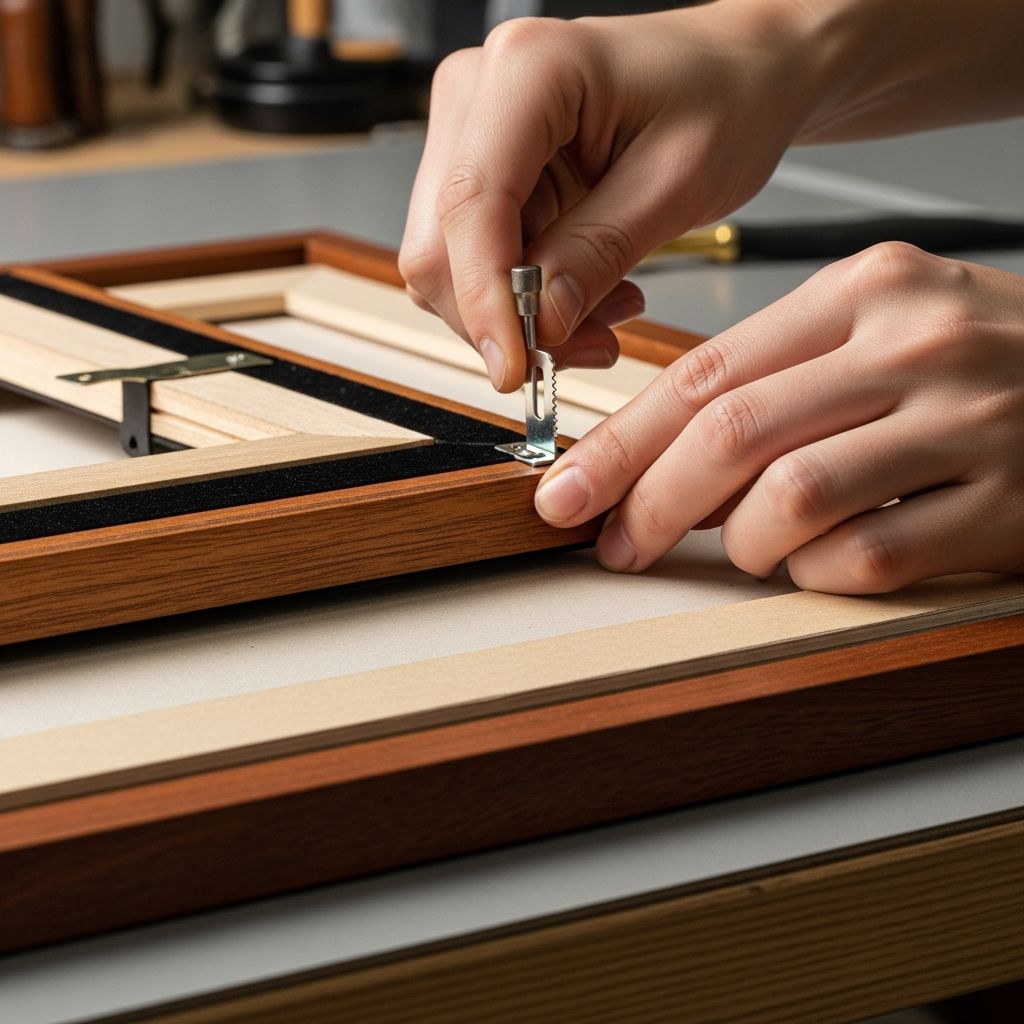
Sawtooth hangers suit slim, light frames under 10 pounds, centering on the top rail for single-nail simplicity.
- Locate the frame’s midpoint atop the back.
- Align hanger teeth downward, tapping gently with a hammer until nails embed fully.
- Secure any loose ends with pliers; add bumpers to bottom corners.
This no-wire option minimizes sagging but limits adjustability. For stability, pair with two hangers spaced 4 inches apart on wider frames.
Special Techniques for Metal Frames
Metal frames often feature side channels, ideal for Omni or Euro hangers without drilling.
- Slide hangers into top 1/3 positions, screwing into channels with flat-head tools.
- Face holes inward, even with frame top for wire attachment.
- Wrap wire as with D-rings, ensuring symmetry.
Avoid overtightening to prevent channel deformation. These kits include bumpers, enhancing wall protection.
Safety Precautions and Common Mistakes to Avoid
Prioritize safety: wear eye protection during hammering or drilling. Overloading hooks risks falls—never exceed rated capacities. Common pitfalls include uneven spacing causing tilts, insufficient wire slack leading to frame lean-back, and skipping bumpers that mar paint.
Wall prep matters: locate studs with a finder for loads over 15 pounds; otherwise, use plastic anchors in drywall. After installation, hang at eye level (57-60 inches from floor center) using a level across the top edge.
Creative Display Ideas Post-Installation
With hooks ready, experiment: create salon-style clusters mixing frame sizes around furniture focal points. Thematic groupings—like vacation photos in hallways—add narrative depth. For galleries, maintain 2-3 inches between frames, aligning tops or centers for cohesion.
Incorporate lighting: LED strips behind frames highlight textures. Seasonal swaps keep displays fresh, leveraging removable hardware for easy changes.
Troubleshooting Installation Issues
Frame tilts? Readjust wire slack or reposition hooks symmetrically. Wire slips? Add extra twists or use crimp sleeves. Wood cracks? Opt for adhesive alternatives or smaller screws next time.
For persistent wobbles, reinforce with turnbuckles tightening wire tension. Test hangs overnight before finalizing.
FAQs
Can I add hooks to glass-front frames without removing backing?
Yes, access via easel strut removal; flex backing gently if needed, but avoid force to prevent glass shifts.
What if my frame lacks solid wood for screwing?
Use heavy-duty adhesive hooks rated for 20+ pounds, curing 24 hours before hanging.
How do I hang multiple frames evenly?
Cut paper templates matching frame sizes, tape to wall, nail through marked spots, then swap in frames.
Are there no-drill options for renters?
Command strips or monkey hooks grip drywall securely up to 50 pounds without residue.
What’s the best wire length for a 24×36 frame?
Approximately 48 inches, allowing 4-inch slack on each side for balanced drop.
Advanced Tips for Professional Results
Enhance durability with clear sealant on screw holes, preventing moisture ingress. For oversized art, combine D-rings with French cleats for flush mounts. Inventory kits yield multiples, enabling batch projects.
Maintenance: Dust frames monthly; inspect wire annually for frays, replacing proactively. This ensures decades of reliable display.
References
- How to Position and Attach a Hanging Kit to Your Metal Picture Frame — Frame Destination. 2021-11-02. https://www.framedestination.com/blog/diy/how-to-position-and-attach-the-hanging-kit-to-your-metal-picture-frame-package
- How To Install Picture Frame Hanging Hardware — Custom Picture Frames. N/A. https://www.custompictureframes.com/installing-picture-frame-hanging-hardware
- 7 Easy-to-Install Picture Hangers for Beginners — Picture Hang Solutions. N/A. https://www.picturehangsolutions.com/blogs/info/7-easy-to-install-picture-hangers-for-beginners
Similar Articles








Read full bio of medha deb