Mounting Lights On Drop Ceilings: Complete DIY Guide
Master the art of securely attaching light fixtures to suspended ceilings with our detailed, step-by-step guide for safe and professional results.
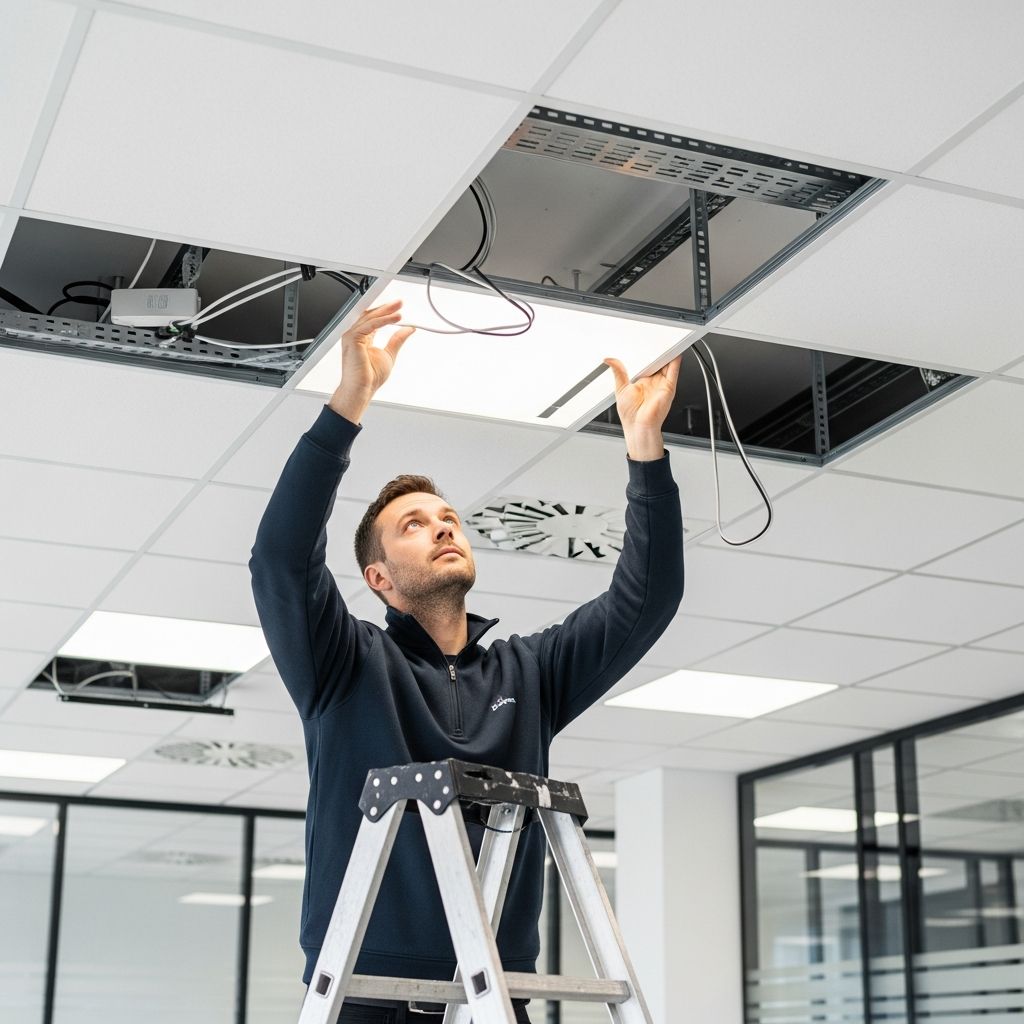
Mounting Lights on Drop Ceilings
Suspended ceilings, also known as drop or acoustic ceilings, offer a versatile and accessible way to update interior spaces while concealing wiring and ducts. Adding light fixtures to these systems requires careful planning to maintain structural integrity and comply with safety standards. This guide provides a complete walkthrough for homeowners and DIY enthusiasts to successfully integrate fixtures like recessed lights, pendants, or track systems into existing grid frameworks.
Understanding Suspended Ceiling Anatomy
Before mounting any fixture, familiarize yourself with the components of a drop ceiling. The system consists of interlocking metal grid members—main tees spanning 4 feet apart parallel to joists, and 2-foot or 4-foot cross tees forming 2×2 or 2×4 foot panels. Hanger wires suspend the grid from structural joists above, typically spaced every 4 feet. Wall molding anchors the perimeter, and tiles or panels rest on the grid flanges.
Fixtures add concentrated weight, often exceeding 10-50 pounds, which demands reinforcement. Standard grids support lightweight tiles (about 1-2 lbs per sq ft), but lights require supplemental support to prevent sagging or failure.
Essential Tools and Materials
Gather these items for a smooth installation:
- Tin snips or aviation snips for cutting grid and flashing
- Level (4-foot magnetic preferred)
- Tape measure and chalk line
- Drill with bits for wood/metal, plus screwdriver set
- Wire cutters and pliers
- Ladder or scaffolding
- Safety gear: gloves, goggles, dust mask
Materials include extra hanger wires (12-gauge), grid clips or splices, mounting brackets specific to your fixture, and possibly plywood backing for heavy loads. Consult fixture instructions for exact hardware.
Planning Your Fixture Layout
Start with a detailed room diagram. Mark joist locations (usually 16-24 inches on-center), electrical boxes, HVAC vents, and doors. Position lights for even illumination—typically 4-6 feet apart in general areas, closer for task lighting.
Account for grid alignment: Main tees run perpendicular to joists, so fixtures should straddle them. For recessed cans, center over 2×2 or 2×4 bays. Add extra hanger wires at each fixture corner, as noted in manufacturer guides. Use string lines snapped on the ceiling plane to visualize main tee paths every 4 feet.
| Fixture Type | Grid Span | Extra Support Needed |
|---|---|---|
| Recessed Can (4-6″) | 2×2 ft | 4 hanger wires + clips |
| Surface Mount/Fluorescent | 2×4 ft | Brackets + plywood |
| Pendant/Track | Custom cut | Independent hanger kit |
Reinforcing the Grid Framework
Locate overhead joists by tapping or using a stud finder. Snap chalk lines for main tees 4 feet apart. Install wire fasteners (screws or anchors) into joists every 4 feet along these lines. Cut hanger wires to reach from fastener to grid plane plus 12 inches; pre-bend 6 inches from end, thread through fastener, and wrap three times for security.
For even leveling, stretch taut strings across the room at planned grid height, bending wires 90 degrees where they intersect. This ensures a plumb system before hanging tees. Trim main tees so cross-tee slots align 2-3 inches from walls, allowing border panel fits.
Modifying the Grid for Fixture Openings
Remove tiles around the fixture site. For a standard 2×2 recessed light, cut cross tees with tin snips: snip bulb and stem first, bend, then trim flanges; file edges smooth. Snap tees into main tee slots, ensuring the opening matches fixture dimensions (e.g., 12×12 inches for 4-inch cans).
Install perimeter clips or splice main tees across the span using S-clips or rivets for stability. For larger or heavier fixtures, add radial wires from joists directly to a mounting ring or channel[10]. Always verify level by adjusting wire bends.
Installing Supplemental Supports
Heavy fixtures (over 10 lbs) need independent support. Use adjustable hanger bars spanning joists, or channel clips attached to grid with screws[10]. For fluorescents, mount a 1×4 plywood nailing strip across joists above the grid, then secure the fixture frame to it.
Thread additional hanger wires through fixture flanges and twist securely to existing grid wires. Per NEC guidelines, secure luminaires to structure and interlock grid members[10]. Test by applying upward/downward force before wiring.
Electrical Integration and Wiring
Ensure power is off at the breaker. Run NM cable or MC from the panel through joist holes (drill 1-1/8″ for 12/2 wire). Install an octagon box rated for ceiling fans if needed, securing to a joist or adjustable bar[10].
Feed wires through fixture housing. For recessed lights, use remodel cans with built-in clamps that grip drywall or grid. Connect grounds first, then hots and neutrals with wire nuts. Install gaskets for air-tight seals in insulated ceilings.
Securing and Testing the Fixture
Position the fixture into the grid opening, engaging clips or torsion bars. Tighten screws to brackets. Replace tiles around it, trimming as needed with a utility knife along molding lines.
Turn power on and test. Check for hums, flickers, or heat. Inspect grid levelness post-install; adjust wires as necessary. Clean debris and inspect annually for sagging wires or corrosion.
Safety Considerations and Code Compliance
Observe weight limits: grids handle 5-10 psf uniformly, but point loads require engineering. In seismic zones, use earthquake clips. Fire-rated assemblies may need specific UL-listed fixtures. Consult local codes; independent fixture support is often mandatory[10].
Wear PPE, use stable ladders, and work with a partner for overhead tasks. Avoid overloading circuits—limit recessed cans to 12 on a 15A circuit.
Common Challenges and Solutions
- Uneven grid: Re-bend all wires to strings before final tees.
- Tight joist spacing: Offset mains parallel to joists with perpendicular crosses.
- Heavy pendants: Use ceiling-rated swivel hangers tied to joists.
- Tile cuts: Score and snap mineral fiber panels; use straightedge for precision.
Frequently Asked Questions (FAQs)
Can I hang any light from a drop ceiling?
No, only fixtures with grid-compatible mounts or supplemental supports. Chandeliers need joist-anchored chains.
How much weight can a suspended ceiling hold?
Typically 5-15 lbs per sq ft with reinforcements; check manufacturer specs.
Do I need an electrician?
For basic recessed lights, DIY is fine if code-compliant. Complex wiring requires a pro.
Will lights affect insulation?
IC-rated (insulation contact) fixtures prevent fire risks; use airtight housings.
How do I remove a fixture later?
Disconnect power, unclip grid, lower fixture, and restore tiles.
Advanced Techniques for Custom Installs
For coves or indirect lighting, fabricate L-channel extensions from main tees, suspended via wires. In commercial spaces, integrate with fire sprinklers by offsetting grids. LED strips can clip directly to tees without major mods. Always mock up on the floor first.
Retrofit kits simplify upgrades: clip-on LED panels snap into existing 2×2 grids, bypassing wiring hassles. For sloped ceilings, use flexible wire pendants adjusted to plane.
References
- Suspension Grid Installation — Rockfon. Accessed 2026. https://www.rockfon.com/en-us/documents-and-resources/ceiling-installation/grid-installation/
- How To Install A Suspended Ceiling (Installation Guide) — YouTube (Armstrong Ceilings). 2015-02-05. https://www.youtube.com/watch?v=P5xgm-lK4pc
- How To Install Your Armstrong Suspended Ceiling Panels — Armstrong/Lowes. Accessed 2026. http://pdf.lowes.com/installationguides/042369060479_install.pdf
- Installing Suspended Ceilings — Millard Lumber. Accessed 2026. https://www.millardlumber.com/HowTo/sceiling/suspended.htm
- CGC Suspended Ceiling System Quick Start Guide — CGC/Timber Mart. 2019-01. https://timbermart.ca/wp-content/uploads/2019/01/cgc_ceilings_-_installation_guide.pdf
- Installation Instructions – Drop Ceilings — Armstrong Ceilings. Accessed 2026. https://www.armstrongceilings.com/content/dam/armstrongceilings/residential/installation/drop-ceiling-instructions-en.pdf
Similar Articles






Read full bio of medha deb