Mushrooms Growing in Grass: Causes, Types & Solutions
Complete guide to identifying mushrooms in your lawn and effective removal strategies.
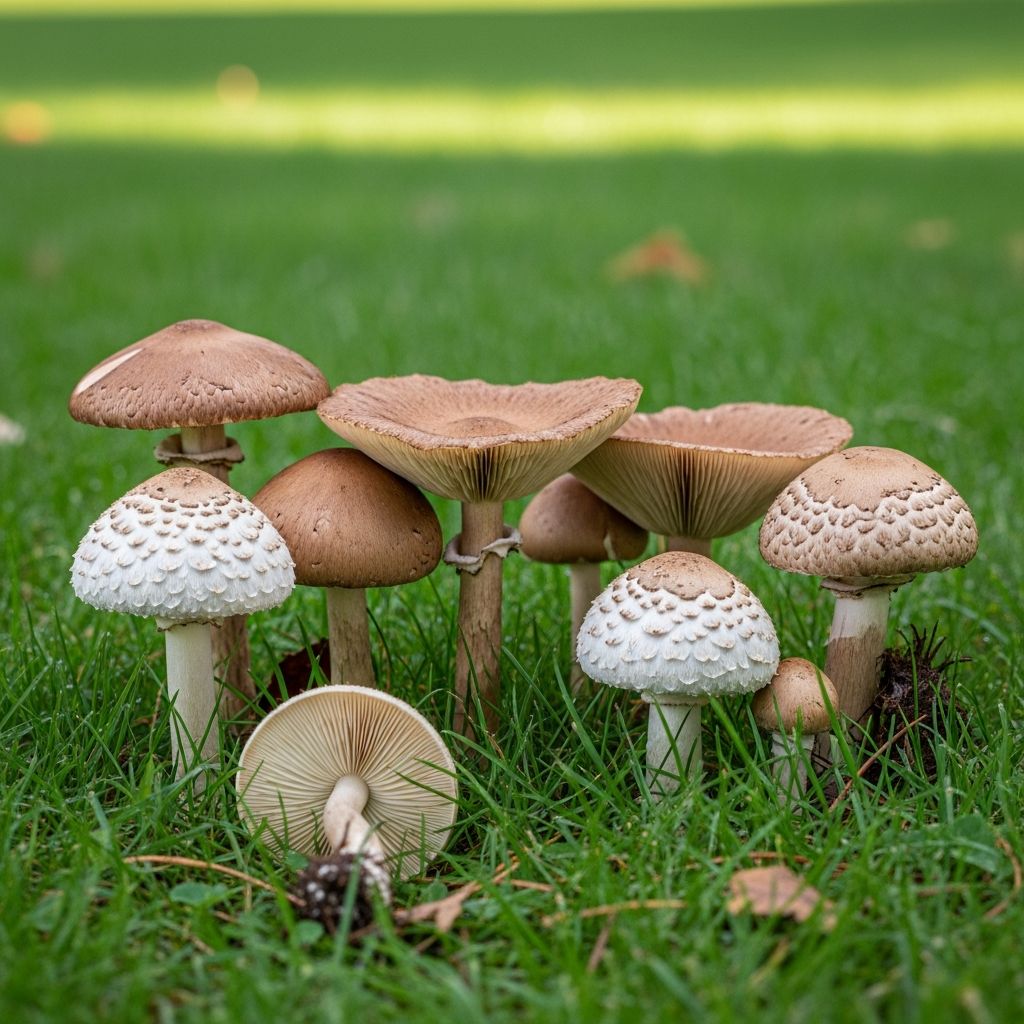
Why Mushrooms Grow in Your Lawn
Mushrooms appearing in your lawn are not a sign of poor care—they’re actually a natural part of lawn ecosystems. Understanding why they develop is the first step toward managing them effectively. Mushrooms grow in grass due to several interconnected environmental factors that create ideal conditions for fungal fruiting bodies to emerge.
The primary reason mushrooms appear in lawns is excess moisture. Fungi thrive in damp environments, and overwatering your lawn or poor drainage can create the perfect breeding ground for mushroom spores. If your yard receives frequent rainfall or you have areas where water pools, mushrooms are more likely to flourish. Compacted soil also contributes to mushroom growth by reducing water drainage and creating anaerobic conditions that favor fungal development.
Dead organic matter in your soil provides food for fungi. Rotting wood, decomposing thatch, and buried plant roots all serve as nutrient sources for fungal colonies. When conditions become moist and warm, these fungi produce fruiting bodies—the mushrooms we see above ground. Shaded areas of your yard are particularly susceptible because they retain moisture longer than sunny spots and have less UV exposure to inhibit fungal growth.
Additionally, newly seeded or newly installed sod lawns often develop mushrooms during establishment. The frequent irrigation required for new grass creates consistently moist soil conditions ideal for fungal fruiting. These mushrooms typically disappear naturally once watering schedules are reduced.
Common Lawn Mushroom Species
Identifying the mushroom species in your yard helps determine whether action is necessary and what removal strategy might work best. Most lawn mushrooms are harmless or beneficial, but some resemble poisonous varieties. Here are twelve commonly found lawn mushroom types:
Fairy Ring Mushroom (Marasmius oreades)
The fairy ring mushroom is one of the most recognizable lawn fungi. This edible species features a light brown, flat cap measuring 0.4 to 2 inches wide and grows 0.75 to 3 inches tall. The lamellae sit under the broad cap and are distinctly visible. Fairy ring mushrooms can create rings up to 15 feet in diameter and appear in North America and Europe. These mushrooms are generally harmless but can be confused with poisonous species, so positive identification is essential before handling.
Meadow Mushroom (Agaricus campestris)
Also called field mushrooms, meadow mushrooms are among the most common yard fungi. These small mushrooms stand only 1 to 2 inches tall with caps spanning 1 to 4 inches wide. They feature white or gray-brown caps with pink or brown gills underneath and grow amid grass during summer months. Found throughout North America and parts of Asia, Europe, New Zealand, and northern Africa, meadow mushrooms are harmless and even edible, though they closely resemble deadly varieties. Always keep children and pets away from unidentified mushrooms.
Lawyer’s Wig Mushroom (Coprinus comatus)
Known as the shaggy mane or shaggy ink cap, the lawyer’s wig mushroom stands tall among grass blades, growing 2 to 8 inches tall and approximately 2 inches wide. This distinctive mushroom begins as white and elongated but quickly shrivels from the bottom up, turning inky black when picked or as it releases spores. It’s popular among mushroom connoisseurs as an edible species and does not typically form fairy rings. However, the appearance alone should not serve as definitive identification.
Parasol Mushroom (Macrolepiota procera)
The parasol mushroom is an edible gill fungus characterized by a white-brown patterned cap with gills visible underneath. A distinctive ring on the stalk that moves up and down helps identify this species. Parasol mushrooms can form fairy rings and occasionally confuse homeowners with poisonous look-alikes, emphasizing the importance of accurate identification.
Ringless Honey Mushroom
These mushrooms feature a distinctive golden cap resembling honey in color. They typically grow on tree stumps or tree trunks, particularly from oak trees, rather than directly in grass. Ringless honey mushrooms are most commonly observed from September to November in the Eastern United States. While growing on woody material rather than grass itself, they’re frequently spotted in residential yards.
Puffball Mushrooms
Puffball mushrooms represent several different fungal types, including giant puffballs that can grow up to two feet wide. These unique mushrooms lack gills or stems and exist as round, ball-like structures. When stepped on or disturbed, smaller puffball varieties release brown spores. These mushrooms are generally harmless and add visual interest to lawns despite their unusual appearance.
Yellow Fieldcap Mushroom (Bolbitius titubans)
Also called the slick mushroom, this tiny, non-poisonous species varies in color between yellow and green. The rounded tops can resemble colored marbles in your yard from a distance. Heights range from 1 inch to 5 inches, with cap widths generally under 3 inches. You’re more likely to observe these mushrooms in heavily composted yards. This species is found in Britain, Ireland, parts of mainland Europe, and the United States.
Russula Species
Russula mushrooms are among the most common beneficial soil fungi found fruiting in lawns and forests. These mushrooms are characteristic for their bright white gills and stalks combined with brightly colored caps, most often red. As fruiting bodies of beneficial fungi, Russula species likely help nearby trees access soil nutrients. Most Russula species are harmless, and several are edible, though they can be confused with species causing gastrointestinal distress. These mushrooms should be perfectly safe and even beneficial in your yard.
Panaeolus foenisecii
These small mushrooms, common in newly laid sod, measure 1 to 3 inches tall with caps less than 1.5 inches wide. Featuring slender stems, brown gills, brown spores, and cone-shaped heads, these fungi are particularly prominent in North America, especially the Pacific Northwest, and Europe. They appear frequently during sod establishment when frequent irrigation creates ideal growing conditions.
Mycorrhizal Fungi
Some beneficial fungi, known as mycorrhizal fungi, connect themselves to tree, shrub, and herbaceous plant roots, helping plants absorb nutrients and water from the soil. While mycorrhizal fungi associated with turf produce only microscopic spores, many mycorrhizal fungi of trees and some shrubs produce spore-bearing mushrooms. These mushrooms sometimes appear in lawns when their host tree is nearby. Many landscape trees—particularly oaks, pines, and other conifers—cannot grow properly without these fungal partners.
Stem Base Rot Fungus
Unlike decorative mushrooms, stem base rot primarily affects grasses during seedling stages, caused by fungi of the genus Pythium. Warm, humid weather favors outbreak of this disease, recognizable by rotting shoot bases in seedlings and black, dying roots. More developed lawns can develop brown, slimy areas, and gradually, the entire lawn may become affected as brown roots completely decompose.
Understanding Fairy Rings
Fairy rings represent a specific type of fungal growth pattern that deserves detailed attention. These distinctive formations are caused by soil-inhabiting fungi of the class Basidiomycetes, with approximately 50 species known to form fairy rings, with Marasmius oreades, Agaricus campestris, Lycoperdon spp., and Scleroderma spp. being most common.
Fairy ring fungi don’t attack grass directly but instead break down organic matter in the soil. As decomposition occurs, nitrogen is released, which grass uses to grow vigorously, creating a contrasting green ring. In cases where fungal mycelia become very dense and inhibit water movement into the soil, grass in the ring may turn brown. Mycelia may also deplete soil nutrients and produce toxic hydrogen cyanide levels.
Three Types of Fairy Ring Formations
Fairy rings manifest in three distinct patterns depending on fungal activity and environmental conditions:
Type 1: No mushroom fruiting bodies appear above ground, but a light ring of chlorotic yellow grasses is enclosed by two dark green rings. Digging at this spot reveals white mycelium in the soil.
Type 2: Fruiting bodies may appear under wet conditions, but otherwise only a single dark green ring is visible where grasses grow more vigorously.
Type 3: The most visible type features fruiting bodies clearly visible, often arranged in ring patterns, though fairy rings can form other shapes. Grasses in the inner ring area may yellow and die.
Fairy Ring Symptoms and Diagnosis
Dark green circles, arcs, or rings of thick, fast-growing grass develop anytime from spring green-up until the first hard frost in fall. These rings typically measure between 2 and 15 feet in diameter, though larger or smaller rings exist. Mushrooms or puffballs may appear in the same ring pattern under wet conditions, and rings of brown or dead grass may develop.
Removing Mushrooms from Your Lawn
Removing mushrooms requires understanding that the visible fruiting bodies are only the above-ground portion of larger fungal colonies. Several removal strategies exist with varying effectiveness:
Manual Removal: Hand-picking mushrooms removes the visible fruiting bodies but doesn’t eliminate the underground mycelium responsible for regrowth. This temporary solution works best when mushrooms appear sporadically rather than in established patterns.
Mowing: Regularly mowing your lawn prevents mushrooms from maturing enough to release spores. This breaks the fungal reproduction cycle while managing lawn appearance.
Aeration and Drainage Improvement: Improving soil drainage through aeration reduces the excess moisture mushrooms require. Breaking up compacted soil allows better water movement and reduces fungal habitat suitability.
Fungicide Treatment: Commercial fungicides can suppress mushroom growth, though they typically target the mycelium rather than established fruiting bodies. Apply fungicides according to label directions for best results.
Organic Matter Removal: Removing buried wood, dead roots, and excessive thatch eliminates nutrient sources supporting fungal colonies. Raking and composting organic debris reduces fungal food supplies.
Prevention Strategies
Preventing mushroom growth is more effective than repeatedly removing fruiting bodies. Implement these strategies to create a less favorable environment for fungal development:
Optimize Watering Practices: Water your lawn only enough to keep grass healthy without creating a consistently wet environment. Overwatering, often motivated by enthusiasm for growing lush grass, paradoxically encourages mushroom growth. Water deeply but infrequently rather than shallow daily watering that maintains surface moisture.
Eliminate Shade: Increase sunlight exposure by pruning lower tree branches and removing shade-causing obstacles. UV exposure inhibits fungal growth and helps soil dry faster after rainfall.
Remove Rotting Wood: Clear buried wood, dead tree roots, and fallen branches from your lawn. Without these nutrient sources, fungal colonies lack sustenance to produce fruiting bodies.
Improve Drainage: Install drainage measures such as French drains, rain gardens, or grading adjustments to direct water away from problem areas. Better drainage reduces the moisture that fungi need to thrive.
Aerate Compacted Soil: Aerating your lawn annually or semi-annually improves soil structure, water infiltration, and oxygen availability. These improvements create conditions less favorable for fungal growth.
Reduce Thatch Buildup: Excessive thatch provides organic matter for fungal decomposition. Regular dethatching removes this fungal food source and improves overall lawn health.
When to Worry About Lawn Mushrooms
Most mushrooms in lawns are harmless or beneficial, but certain situations warrant concern. Mushrooms producing large quantities of spores may trigger allergic reactions in sensitive individuals. Additionally, some lawn mushrooms resemble poisonous species, creating safety concerns if children or pets might consume them. When mushroom identification is uncertain and the lawn is heavily used, removing fruiting bodies prevents accidental poisoning.
Fairy rings can indicate dense fungal colonization that might eventually harm grass through nutrient depletion or water movement inhibition. Addressing fairy rings through improved drainage and fungal management protects long-term lawn health.
Most importantly, one must have absolute, positive identification before dining on any lawn mushrooms. Misidentification can cause serious illness or death, making wild mushroom consumption risky without expert knowledge.
Frequently Asked Questions
Q: Are lawn mushrooms harmful to my grass?
A: Most lawn mushrooms don’t directly harm grass. They decompose organic matter, sometimes releasing nutrients that actually benefit grass growth. However, dense fungal colonies in fairy rings can inhibit water movement, causing brown patches.
Q: Can I eat mushrooms growing in my lawn?
A: Some lawn mushrooms are edible, but positive identification is essential. Many edible species closely resemble poisonous varieties, and misidentification can cause serious illness. Never consume wild mushrooms without expert verification.
Q: How long do fairy rings last?
A: Fairy rings can persist for years or even decades as underground mycelium continues decomposing organic matter. However, improving drainage and reducing organic matter eventually limits fungal growth and breaks the ring pattern.
Q: Do fungicides permanently eliminate lawn mushrooms?
A: Fungicides suppress mushroom growth temporarily but don’t permanently eliminate the underlying fungal colony. Combining fungicide application with drainage improvement and organic matter removal provides more lasting results.
Q: Why do mushrooms appear after heavy rain?
A: Heavy rain creates the moist conditions mushrooms need to fruit. The saturated soil triggers mature fungal colonies to produce fruiting bodies that release spores, which is why mushroom flushes commonly follow rainy periods.
References
- Mushrooms in the lawn: causes, common types & treatment — Plantura. Accessed 2025-12-03. https://plantura.garden/uk/lawn/problems/mushrooms-in-the-lawn
- Russula species among most common beneficial soil fungi — Holden Forestry Group. Accessed 2025-12-03. https://holdenfg.org/blog/common-lawn-mushrooms-and-what-to-do-about-them/
- 12 Lawn Mushroom Types and Removal Tips — Angie’s List. Accessed 2025-12-03. https://www.angi.com/articles/common-yard-mushrooms.htm
- Lawn Mushrooms and Fairy Rings — Missouri Botanical Garden. Accessed 2025-12-03. https://www.missouribotanicalgarden.org/gardens-gardening/your-garden/help-for-the-home-gardener/advice-tips-resources/insects-pests-and-problems/diseases/miscellaneous-diseases/lawn-mushrooms
- Mushrooms and Other Nuisance Fungi in Lawns — UC IPM (University of California Integrated Pest Management). Accessed 2025-12-03. https://ipm.ucanr.edu/home-and-landscape/mushrooms-and-other-nuisance-fungi-in-lawns/pest-notes/
Similar Articles








Read full bio of medha deb