Natural Ways to Banish Smoke Odor from Your Vehicle
Discover effective, earth-friendly techniques to eliminate stubborn smoke smells from your car interior without harsh chemicals.
Smoke odors, whether from cigarettes, cigars, or other sources, can permeate every corner of your car’s interior, lingering long after the last puff. These smells cling to fabrics, plastics, and even the air system due to microscopic particles known as volatile organic compounds (VOCs) that embed deeply into porous surfaces. Fortunately, you can tackle this issue using simple, sustainable methods that rely on everyday household items. This guide outlines comprehensive, environmentally conscious approaches to restore freshness to your vehicle, drawing from practical cleaning techniques that prioritize safety and efficacy.
Understanding Why Smoke Persists in Cars
Smoke residue doesn’t just hover in the air; it settles into upholstery, carpets, headliners, and ventilation systems. Porous materials like cloth seats act like sponges, absorbing oily particles that release odors over time. Hard surfaces such as dashboards and plastics trap residues too, while the HVAC system recirculates tainted air. Addressing the problem requires a multi-layered strategy: removal of sources, deep cleaning, and odor neutralization. By starting with ventilation and progressing to targeted treatments, you can systematically eliminate the stench without synthetic sprays or professional detailing.
Initial Preparation: Clearing and Ventilating
Before applying any cleaners, prepare your car for treatment. Begin by removing all potential odor sources to prevent recontamination.
- Empty ashtrays, trash bins, and cup holders of butts, ash, wrappers, or stained items.
- Take out floor mats, seat covers, and loose belongings; inspect and air them outdoors.
- Roll down all windows or open doors fully, allowing fresh air to circulate for several hours, ideally with fans for enhanced airflow.
This step dilutes airborne VOCs and exposes hidden debris. Park in a shaded, well-ventilated area to avoid heat buildup, which can intensify smells.
Thorough Vacuuming for Particle Removal
A powerful vacuum is your first line of defense against embedded particles. Smoke ash hides in seams, crevices, and under seats, continuously emitting odors.
- Detach floor mats and vacuum their undersides separately.
- Use crevice tools on seats, focusing on stitching, folds, and gaps between cushions and backrests. Press firmly while separating seams for deeper suction.
- Target headliner, door panels, trunk, and cargo areas.
- Employ upholstery attachments for mats and carpets, repeating passes until no visible dust appears.
For best results, vacuum in sections and shake out mats outside. This mechanical removal prevents residues from redepositing during later steps.
Natural Absorbers: Baking Soda and Beyond
Baking soda, or sodium bicarbonate, excels at neutralizing acids in smoke particles, making it a cornerstone of eco-friendly deodorizing.
Application Guide:
| Surface | Amount | Dwell Time | Follow-Up |
|---|---|---|---|
| Fabric Seats & Carpets | Generous sprinkle | 24-36 hours | Vacuum thoroughly (2-3 passes) |
| Headliner & Mats | Light layer | Overnight | Shake and vacuum outdoors |
| Trunk/Cargo Area | Moderate cover | 12-24 hours | Vacuum + air dry |
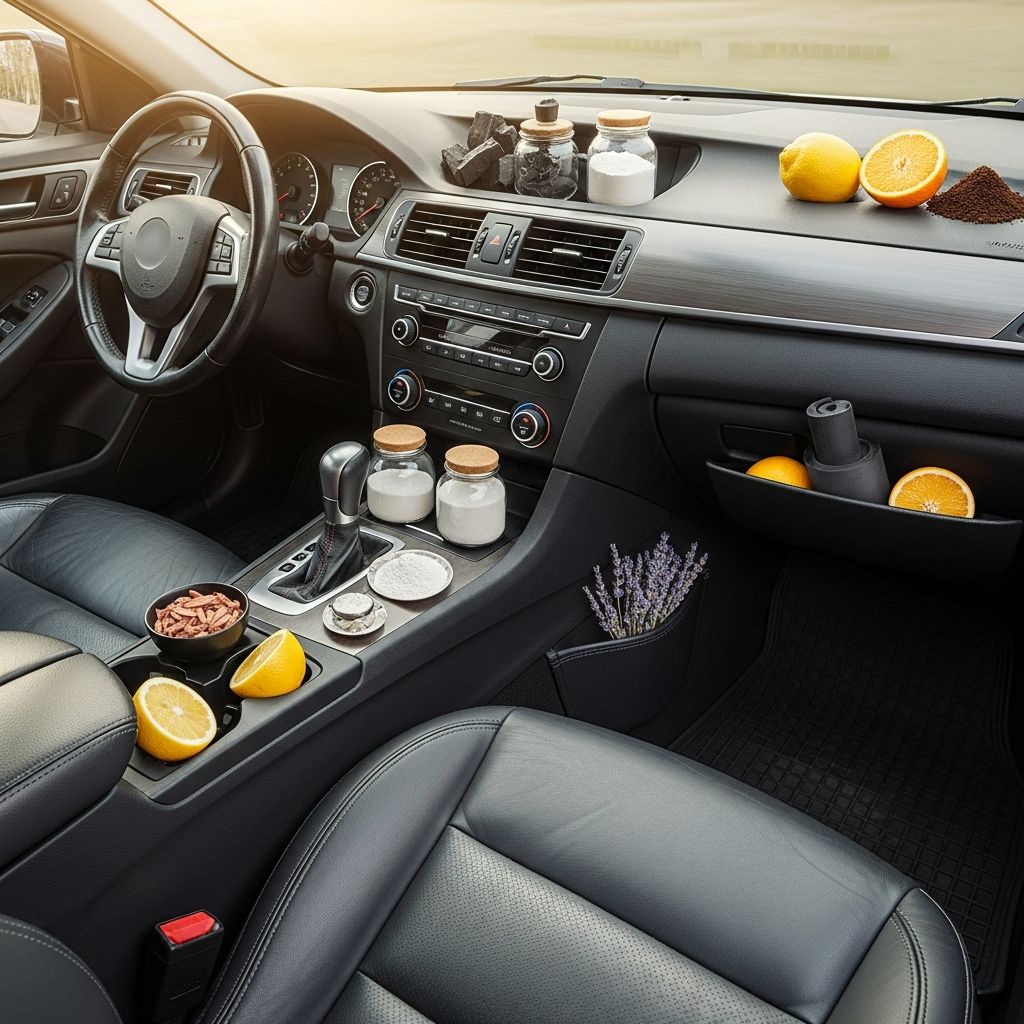
Sprinkle liberally, let sit covered (doors closed), then vacuum meticulously. Repeat if needed. Alternatives like coffee grounds or activated charcoal bowls work similarly; place open containers on seats overnight to absorb lingering VOCs.
Cleaning Hard Surfaces with Vinegar Solutions
Vinegar’s acetic acid breaks down smoke films on non-porous areas without harsh solvents.
- DIY Spray: Mix 1/4 cup white vinegar, 1/2 tsp dish soap, and 2 cups water in a bottle. Shake well.
- Spray on dashboards, plastics, windows, mirrors, and consoles; wipe with microfiber cloths.
- For leather or vinyl, dilute further and test a small spot first.
Dry completely to avoid moisture traps. This method also tackles bacteria, enhancing overall freshness.
Revitalizing the HVAC and Air System
The ventilation system harbors the worst offenders, recirculating odors endlessly.
- Replace Cabin Filter: Empty glovebox, unhinge it, pull out the old filter (often grimy), and install a new one—no tools needed for most models.
- Deodorize Vents: Roll down windows, set HVAC to recirculate, max fan, coldest temp. Locate intake near windshield base; spray natural deodorizer (or vinegar mist) directly in. Let run 10-15 minutes, then air out.
Fresh filters prevent future buildup, ensuring clean air flow.
Advanced Treatments for Stubborn Odors
If initial efforts fall short, escalate with these enhancers:
- Dryer Sheets: Wipe seats, belts, and carpets; their surfactants lift residues.
- Vinegar Bowls: Leave shallow dishes overnight; vapors neutralize gases.
- Fabric Refresher: Use plant-based sprays on upholstery post-vacuuming, then recirculate air.
For extreme cases, consider ozone cautiously (unoccupied vehicle only, followed by ventilation), but natural methods suffice for most.
Preventive Measures for Long-Term Freshness
Maintenance keeps smoke at bay:
- Use seat covers and mats for easy cleaning.
- Replace cabin filters every 15,000 miles or annually.
- Avoid eating/smoking inside; designate no-smoking zones.
- Weekly vacuum and wipe-downs trap issues early.
Incorporate open-window drives to flush systems naturally.
FAQ: Common Questions on Smoke Odor Removal
Q: How long does baking soda take to work?
A: Optimal results come after 24-36 hours of dwell time on surfaces.
Q: Can I use these methods on leather interiors?
A: Yes, but dilute vinegar heavily and use conditioner afterward to prevent drying.
Q: Is vinegar safe for car electronics?
A: When diluted and wiped dry immediately, yes; avoid direct sprays on screens.
Q: What if the smell returns after cleaning?
A: Check/replace HVAC filter and repeat baking soda treatment; residue may need multiple rounds.
Q: Are natural methods as effective as commercial products?
A: For most cases, yes, especially when combined systematically; they target root causes without masking.
Expected Outcomes and Tips for Success
Most vehicles show marked improvement after one full cycle, with complete elimination in 2-3 days. Consistency is key—don’t skip steps. These techniques minimize environmental impact, using biodegradable agents that break down safely. Track progress by sniffing vents and fabrics daily.
References
- The Ultimate Guide To Getting Smoke Smell Out Of Your Car — Homemade Simple. Accessed 2026. https://www.homemadesimple.com/beyond-the-home/how-to-get-smoke-smell-out-of-car/
- How to Get Rid of Smoke Smell in a Car: A Step-By-Step Guide — We Can Fix That. Accessed 2026. https://wecanfixthat.com/remove-smoke-smell-from-car/
- Expert Tips on How to Get Rid of Cigarette Smell In a Car — Toyota of Orlando. Accessed 2026. https://www.toyotaoforlando.com/blogs/6087/how-to-get-rid-of-cigarette-smell-in-a-car
- How to Get Smoke Smell Out of Your Car — Chemical Guys. Accessed 2026. https://www.chemicalguys.com/blogs/interior-how-tos/how-to-get-smoke-smell-out-of-car
- How To Remove Bad Smells and Even Get Rid of Cigarette Odor — YouTube (Chemical Guys). Accessed 2026. https://www.youtube.com/watch?v=Yl8c8pIu5Gg
- How to Remove Smoke Odor from Your Car: Proven Steps — Master Creations Inc. Accessed 2026. https://www.mastercreationsinc.com/blogs/our-blog/remove-smoke-odor-from-car
Similar Articles



Read full bio of medha deb