Negroni Cocktail: Classic Recipe And 4 Modern Variations
Discover the rich history and perfect recipes for crafting an iconic Italian cocktail
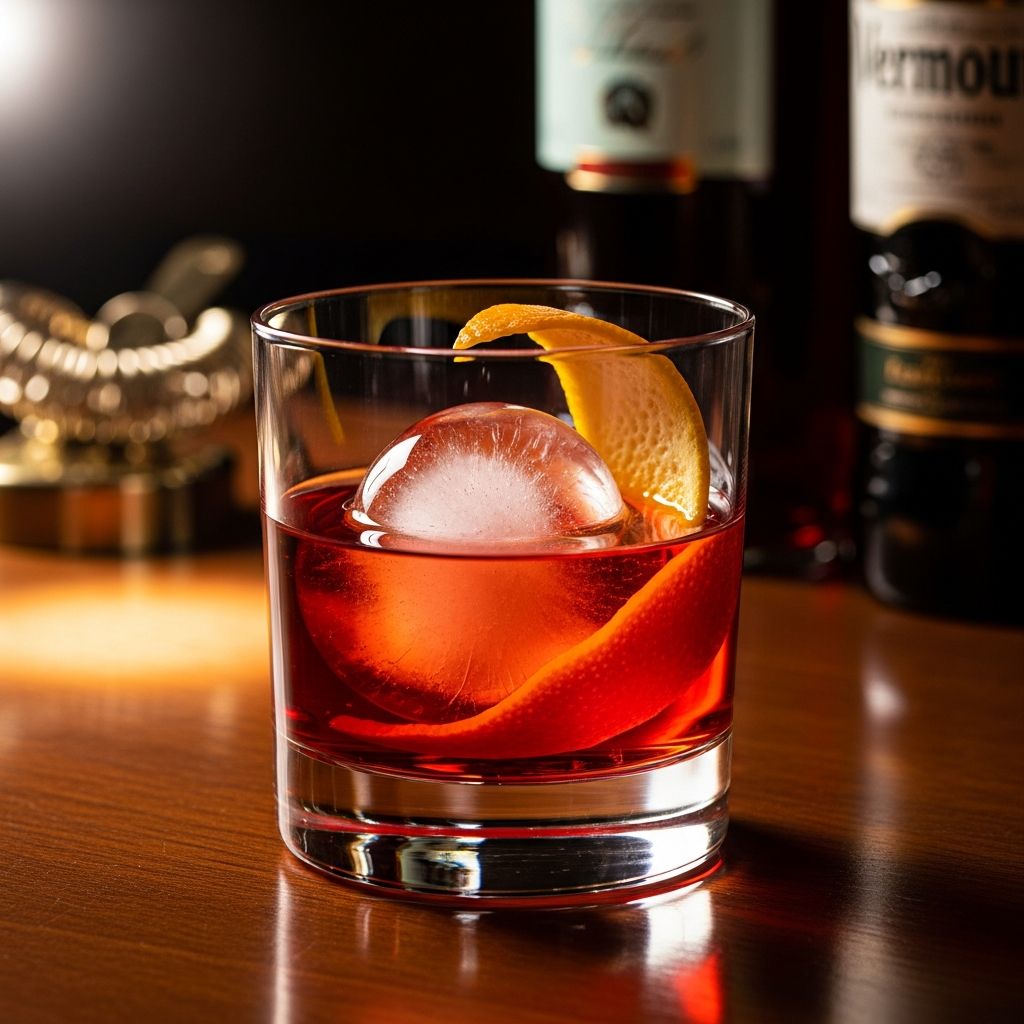
The Negroni: A Timeless Cocktail Icon
Few cocktails command the respect and admiration that the Negroni does in the world of mixology. This Italian aperitif has transcended its origins to become a global symbol of sophistication, simplicity, and refined taste. With just three primary components—gin, Campari, and sweet vermouth—the Negroni represents an elegant approach to cocktail craftsmanship that continues to captivate both seasoned drinkers and newcomers alike.
Origins and Historical Development
The Negroni’s story begins in Florence, Italy, around 1919, where a chance request at a local bar would forever change cocktail history. Count Camillo Negroni, an Italian nobleman and world traveler, frequented a Florence establishment where he enjoyed the Americano, a popular aperitif cocktail consisting of Campari, sweet vermouth, and soda water. Seeking a drink with greater potency and substance, the Count approached his favorite bartender, Fosco Scarselli, with an unconventional request: to strengthen his beloved Americano by replacing the soda water with gin.
Scarselli’s creative modification proved transformative. By making this simple substitution, he inadvertently created what would become one of the world’s most iconic cocktails. The bartender also made an aesthetic adjustment, swapping the traditional lemon garnish of the Americano for an orange peel, adding visual appeal and a subtle citrus character to the drink. The combination was so remarkable that other patrons soon began requesting “one of Count Negroni’s drinks,” and the name eventually became synonymous with the cocktail itself.
Interestingly, the Negroni’s lineage traces back through several precursor cocktails. The Milano-Torino, believed to have been invented in the 1860s at the Caffè Camparino in Milan, combined equal parts Campari (from Milan) and rosso vermouth (from Turin). When American travelers requested the addition of soda water to this drink, the Americano was born—setting the stage for the Negroni’s eventual creation.
Documentation and Recognition
While Count Negroni receives credit for inspiring the drink, the recipe’s official codification tells a more complex story. The earliest documented equal-parts recipe appears in a 1929 French cocktail book titled “L’Heure du Cocktail,” which featured a drink called the Campari Mixte made with equal proportions of gin, Campari, and Italian vermouth with lemon zest. This recipe bears striking similarity to the modern Negroni, suggesting that French bartenders and cocktail writers played a crucial role in standardizing the drink’s proportions.
The first published recipe specifically named “Negroni” appeared in Jacinto Sanfeliu Brucart’s 1949 Spanish book “El Bar: Evolución y arte del cocktail,” which called for equal parts gin and Italian vermouth with a double portion of Campari. Throughout the 1930s and 1940s, various cocktail manuals featured similar drinks under different names, including the Camparinete, which appeared in multiple publications with varying ingredient ratios.
The Perfect Classic Recipe
The beauty of the Negroni lies in its remarkable simplicity. The classic preparation requires just three ingredients in equal measure, combined with ice and a touch of technique to achieve the perfect balance.
Classic Negroni Recipe
- 1 ounce (30 ml) dry gin
- 1 ounce (30 ml) sweet vermouth
- 1 ounce (30 ml) Campari
- Ice (preferably two large, clear cubes)
- Orange twist or wheel for garnish
Preparation Method
The traditional Italian approach involves building the Negroni directly in a rocks glass, a technique still favored in authentic Italian bars and cafés. Begin by adding ice to your glass—the larger, clearer cubes are preferred as they melt more slowly, maintaining the drink’s temperature and flavor profile without over-dilution. Pour each spirit in equal measure over the ice, then stir gently and deliberately for approximately ten to fifteen seconds. This stirring process chills the ingredients while allowing them to blend harmoniously and dilute slightly, creating the optimal drinking experience.
The final step involves expressing an orange peel over the drink’s surface to release its essential oils, then placing it in the glass as both garnish and subtle flavor enhancement. Some bartenders prefer an orange wheel, which provides additional visual appeal and a more substantial citrus element to each sip.
Understanding the Flavor Profile
The Negroni delivers a bold and complex sensory experience that distinguishes it from lighter cocktails. The three components work in concert to create layers of flavor that unfold across the palate. The gin provides botanical complexity and subtle juniper notes, the Campari contributes its signature bittersweet character with hints of cherry and citrus, and the sweet vermouth adds warmth, vanilla, and herbaceous undertones.
The result is a cocktail with a tart, grapefruit-like finish followed by a strong, lingering punch on the back of the palate. This full-bodied flavor profile makes the Negroni an ideal aperitif, as its complex bitterness stimulates the appetite and prepares the palate for the meal to follow. The drink is decidedly not for the faint of heart—it demands appreciation for sophisticated, assertive flavors and mature palates accustomed to spirits-forward cocktails.
Contemporary Variations and Modern Interpretations
While the classic recipe remains the gold standard, creative bartenders have developed innovative variations that maintain the Negroni’s essential character while introducing new dimensions of flavor.
Lighter and Drier Renditions
The Negroni Luxe represents a more delicate approach to the classic formula. This variation substitutes Aperol for Campari, creating a lighter, drier profile with pronounced citrus notes that blend beautifully with quality gin. The reduced Campari content and the lighter nature of Aperol result in a more approachable cocktail that maintains the drink’s fundamental structure while offering easier drinking for those seeking a gentler introduction to the category.
Elevated and Sophisticated Versions
Some contemporary interpretations enhance the classic recipe with subtle additions. The Cocktail Time variation employs adjusted proportions using premium ingredients and incorporates two drops of saline solution, a modern technique employed by advanced mixologists to heighten the drink’s aromatic and flavor characteristics. This version uses 1 ounce of vermouth to 0.75 ounces of Campari and 1 ounce of gin, demonstrating how slight modifications can create personalized interpretations suited to specific ingredient selections.
The White Negroni
Invented in 2001 by Wayne Collins during an international cocktail competition in France, the White Negroni represents a creative departure from tradition. This variation substitutes white vermouth and a refreshing white aperitif such as Lillet Blanc for their traditional counterparts, creating a lighter, more delicate expression that maintains the Negroni’s fundamental structure and spirit. The White Negroni has gained considerable popularity as a warm-weather alternative that provides elegance without the heaviness of its classic ancestor.
Sparkling Variations
For those preferring lighter, more effervescent options, sparkling interpretations introduce prosecco or other sparkling wines. These versions combine gin, Campari, and dry vermouth in reduced quantities, topped with prosecco and garnished with an orange twist, creating a fizzy, lower-proof cocktail that maintains the Negroni’s distinctive character while offering enhanced drinkability for casual occasions.
Ingredient Selection and Quality Considerations
The Negroni’s simplicity demands exceptional attention to ingredient quality. Each component contributes distinctly to the final product, making premium selections essential.
Gin Selection
The gin serves as the cocktail’s foundation, providing botanical complexity and juniper character. Quality dry gins with balanced botanical profiles work best, as they complement rather than overwhelm the Campari and vermouth. London Dry style gins represent the traditional choice, though Venezuelan and other international expressions offer interesting alternatives.
Campari Characteristics
Campari’s distinctive bittersweet profile and vibrant red color are non-negotiable elements of the classic Negroni. This Italian aperitif, created through a proprietary blend of herbs, spices, and fruit infusions, provides the drink’s signature character and cannot be easily substituted without fundamentally altering the cocktail’s identity.
Vermouth Importance
Sweet vermouth selection significantly influences the final product. Traditional Italian vermouths offer rich, complex flavor profiles that enhance rather than dominate. Contemporary bartenders increasingly seek out quality vermouths without artificial colorants or excessive sugar, recognizing that cleaner, more refined expressions elevate the entire drink.
Serving and Enjoyment
The Negroni is traditionally served in a rocks glass or tumbler, typically held in the hand to slightly warm the spirits and release aromatic compounds. The drink is best consumed relatively quickly after preparation, as the ice will gradually melt and dilute the spirits if left unattended. The orange garnish should be expressed immediately before serving to maximize the release of essential oils that enhance the aromatic experience.
Frequently Asked Questions
What makes the Negroni different from other cocktails?
The Negroni’s equality of ingredients, combined with the interplay between gin’s botanicals, Campari’s bitterness, and vermouth’s warmth, creates a uniquely balanced cocktail that stands apart. Its simplicity is deceptive—achieving perfect balance requires quality ingredients and proper technique.
Can I make a Negroni without Campari?
While substitutes like Aperol create variations, true Negronis require authentic Campari. Variations using different bittersweet aperitifs exist, but they produce distinctly different drinks rather than legitimate alternatives.
Is the Negroni best served with ice?
Yes, ice is essential to the Negroni experience. Large, clear cubes are preferred as they melt slowly and maintain proper dilution without excessive watering down of the drink. The chilling process also enhances the flavor balance.
What food pairs well with a Negroni?
As an aperitif, the Negroni pairs excellently with cheese, cured meats, olives, nuts, and other Italian antipasti. The bitterness stimulates appetite and complements salty, umami-rich flavors.
How long has the Negroni been popular?
Since its creation approximately a century ago, the Negroni has maintained consistent popularity among cocktail enthusiasts. It has experienced multiple revival periods and remains a cornerstone of cocktail culture worldwide.
The Enduring Legacy
The Negroni’s century-long journey from a bartender’s creative modification in Florence to an internationally recognized symbol of cocktail excellence speaks to its fundamental quality. Unlike cocktails that fade with changing trends, the Negroni endures because it delivers on the promise of sophisticated simplicity. Its equal-parts construction, balanced flavor profile, and versatility in both classic and modern interpretations ensure its continued relevance in contemporary cocktail culture.
Whether enjoyed as a pre-dinner aperitif in an Italian café, crafted with precision in a contemporary cocktail bar, or prepared at home for personal enjoyment, the Negroni remains a masterclass in cocktail design—proof that sometimes the most profound creations emerge from the simplest modifications.
References
- The History of the Negroni! A Drink for a Cause — Heritage Distilling Co. Accessed 2026. https://heritagedistilling.com/blogs/news/the-history-of-the-negroni-a-drink-for-a-cause
- Classic Cocktails in History: The Negroni — Alcohol Professor. Accessed 2026. https://www.alcoholprofessor.com/blog-posts/classic-cocktails-in-history-the-negroni
- Negroni Cocktail History — Difford’s Guide. Accessed 2026. https://www.diffordsguide.com/g/1078/negroni-cocktail/history
- The Origin of the Negroni — Uncle Tim’s Cocktails. Accessed 2026. https://www.uncletimscocktails.com/blogs/news/the-origin-of-the-negroni
- The Negroni Through Time: How Has It Changed in 163 Years? — Kevin Kos. Accessed 2026. https://www.kevinkos.com/post/negroni-through-time
- Classic Negroni Recipe — Imbibe Magazine. Accessed 2026. https://imbibemagazine.com/recipe/negroni-recipe/
Similar Articles








Read full bio of medha deb