Nourishing Staghorn Ferns with Banana Fertilizer
Unlock the secret to vibrant staghorn ferns using banana peels as a natural potassium boost for lush, healthy growth.
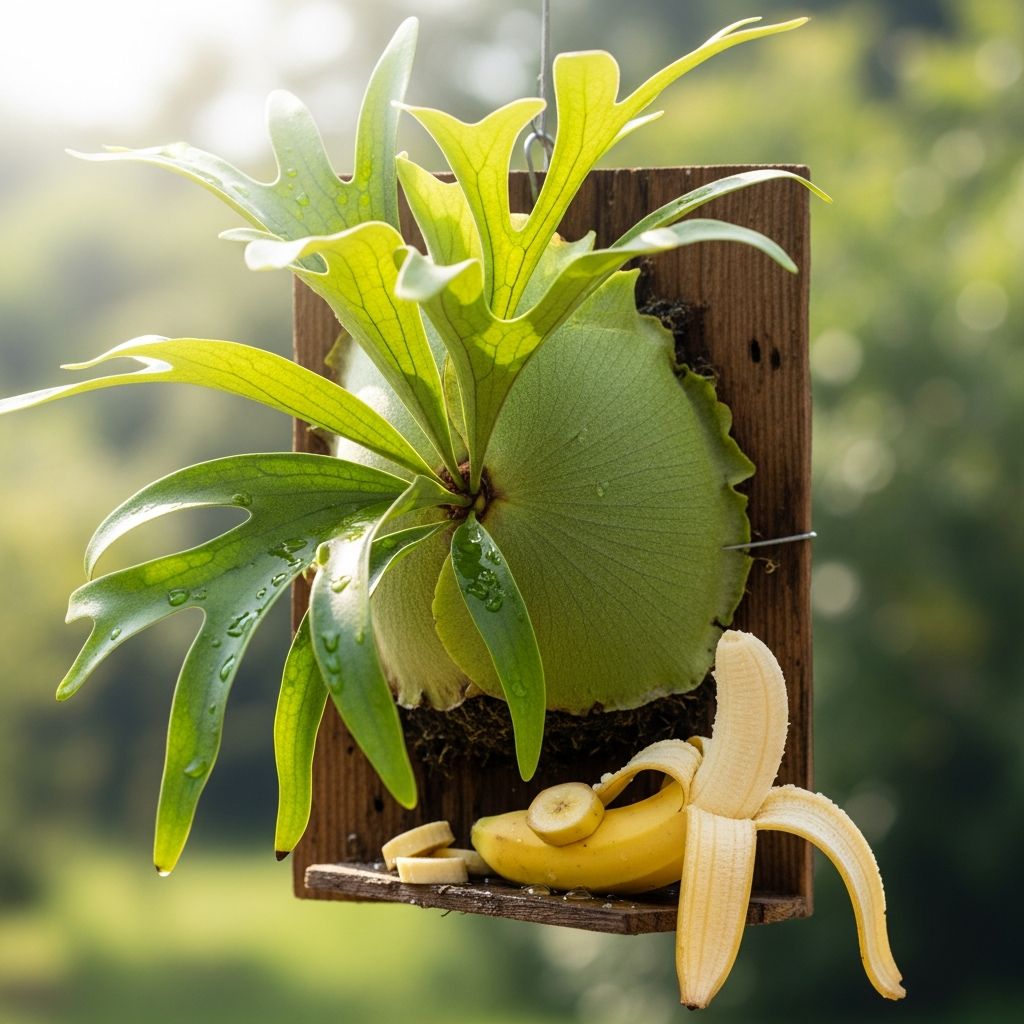
Staghorn ferns (Platycerium spp.), renowned for their antler-like fronds, thrive when provided with the right nutrients, and banana peels offer an accessible, organic source of potassium essential for their development. This guide explores how to incorporate bananas into your care routine safely and effectively, drawing from epiphyte biology to ensure optimal results.
Understanding Staghorn Fern Nutritional Needs
These epiphytic plants, native to tropical rainforests, derive nutrients from air, moisture, and host surfaces rather than soil. Potassium supports frond vigor, water regulation, and disease resistance, making it crucial during active growth phases in spring and summer.
Unlike terrestrial plants, staghorns absorb fertilizers through fronds and minimal roots, requiring diluted, balanced applications to prevent burn. A 1:1:1 NPK ratio suits them best, with reduced feeding in fall and winter.
Why Bananas Excel as Fern Food
Banana peels are rich in potassium (about 42% of their mineral content), alongside phosphorus and calcium, mimicking the nutrient profile staghorns crave. This natural alternative avoids chemical fertilizers’ risks, promoting sustainable indoor gardening.
- Potassium Power: Fuels photosynthesis and sturdy fronds.
- Organic Benefits: Slow-release nutrients reduce overdose chances.
- Accessibility: Uses kitchen waste, cutting costs.
Research from university extensions confirms epiphytes like staghorns respond well to high-potassium organics, enhancing resilience in controlled environments.
Preparing Banana Fertilizer Safely
Raw peels can attract pests indoors, so preparation is key. Chop peels into small pieces, freeze for 48 hours to kill fruit fly eggs, then thaw and blend with water for a liquid feed.
| Method | Steps | Frequency | Pros |
|---|---|---|---|
| Liquid Soak | 1. Chop 2-3 peels. 2. Soak in 1 quart water for 3 days. 3. Strain, dilute 1:1. 4. Apply monthly. | Spring-Summer | Easy absorption, low residue. |
| Banana Tea | 1. Boil peels in water 10 mins. 2. Cool, strain. 3. Use full-strength on roots. | Every 2 weeks | Quick prep, concentrated K. |
| Dried Powder | 1. Dry peels in oven at 200°F. 2. Grind to powder. 3. Sprinkle lightly under shield fronds. | Bi-monthly | Long storage, precise dosing. |
Avoid direct peel placement under fronds indoors to prevent infestations; opt for processed forms.
Step-by-Step Application Guide
Integrate banana fertilizer into your routine post-watering for best uptake.
- Assess Plant Health: Ensure fronds are hydrated; dry plants stress easily.
- Soak Roots: Submerge mount or pot in diluted banana tea for 5-10 minutes until saturated.
- Mist Fronds: Spray a weak solution on antler and shield fronds, focusing undersides.
- Drip Dry: Hang in well-ventilated area; avoid direct sun.
- Monitor: Watch for yellowing (overfeed) or browning tips (underfeed).
Apply during growth periods only, halving frequency in dormancy.
Integrating with Full Care Routine
Light and Placement
Bright, indirect light mimics canopy dappled sun; east-facing windows ideal. Too much direct sun scorches fronds.
Humidity and Temperature
Maintain 50-70% humidity via daily misting; temperatures 55-90°F. Bathrooms suit well.
Watering Balance
Weekly soaks in summer, bi-weekly in winter; let root ball dry fully to avert rot.
Combine with banana feeds: Water first, fertilize second for synergy.
Troubleshooting Common Issues
Problems often stem from nutrient or water imbalances.
- Brown Frond Tips: Increase potassium via bananas; check watering.
- Blackened Bases: Overwatering—reduce soaks, improve airflow.
- Yellowing Shield Fronds: Excess fertilizer; flush with plain water.
- Pest Attraction: If flies appear, switch to boiled or dried methods.
Mature plants need less; pups benefit most from boosts.
Advanced Techniques for Thriving Ferns
For enthusiasts, experiment with mounts using sphagnum moss for retention. Propagate via division in spring, feeding new pups banana tea to establish roots.
Outdoor mounting in humid climates works if protected from frost; supplement with peels seasonally.
Benefits Beyond Nutrition
Banana feeding yields lush, forked fronds and robust pups, turning staghorns into statement pieces. Environmentally, it repurposes waste, aligning with eco-gardening.
Frequently Asked Questions
Can I use whole bananas for staghorn ferns?
No, peels only—flesh rots quickly, inviting mold and pests. Process peels to extract nutrients safely.
How often should I fertilize with bananas?
Monthly in growing season for young plants; bi-annually for matures. Overdoing harms.
Will banana peels replace commercial fertilizer?
They complement well, providing potassium; pair with balanced liquids for full spectrum.
What if my fern shows no improvement?
Check light/humidity first; nutrient issues secondary. Adjust basics before intensifying feeds.
Are banana feeds safe for all epiphytes?
Best for potassium-lovers like staghorns; test on others, diluting heavily.
Seasonal Care Calendar
| Season | Watering | Banana Feed | Misting |
|---|---|---|---|
| Spring/Summer | Weekly | Monthly | Daily |
| Fall | Every 10 days | Every 6 weeks | Every other day |
| Winter | Bi-weekly | Bi-annual | 2-3x/week |
This schedule adapts to your environment; tweak based on plant cues.
References
- Staghorn Fern Care Guide — Pistils Nursery. 2023. https://pistilsnursery.com/blogs/journal/staghorn-fern-care
- How to Care for a Staghorn Fern — The Little Botanical. 2024. https://thelittlebotanical.com/how-to-care-for-a-staghorn-fern/
- Care Guide for the Staghorn Fern — The Green Mad House. 2023. https://thegreenmadhouse.com/plants/beginners-care-guide-staghorn-fern
- Staghorn Fern, Platycerium bifurcatum — University of Wisconsin Extension (hort.extension.wisc.edu). Accessed 2026. https://hort.extension.wisc.edu/articles/staghorn-fern-platycerium-bifurcatum/
- Staghorn Fern — University of Florida IFAS Extension. 2024-01-15. https://gardeningsolutions.ifas.ufl.edu/plants/ornamentals/staghorn-fern/
Similar Articles








Read full bio of medha deb