Off-Grid Power: A Complete Guide to Adding Solar to Your Backyard Shed
Turn your shed into a self-powered workspace with a simple, reliable solar setup.
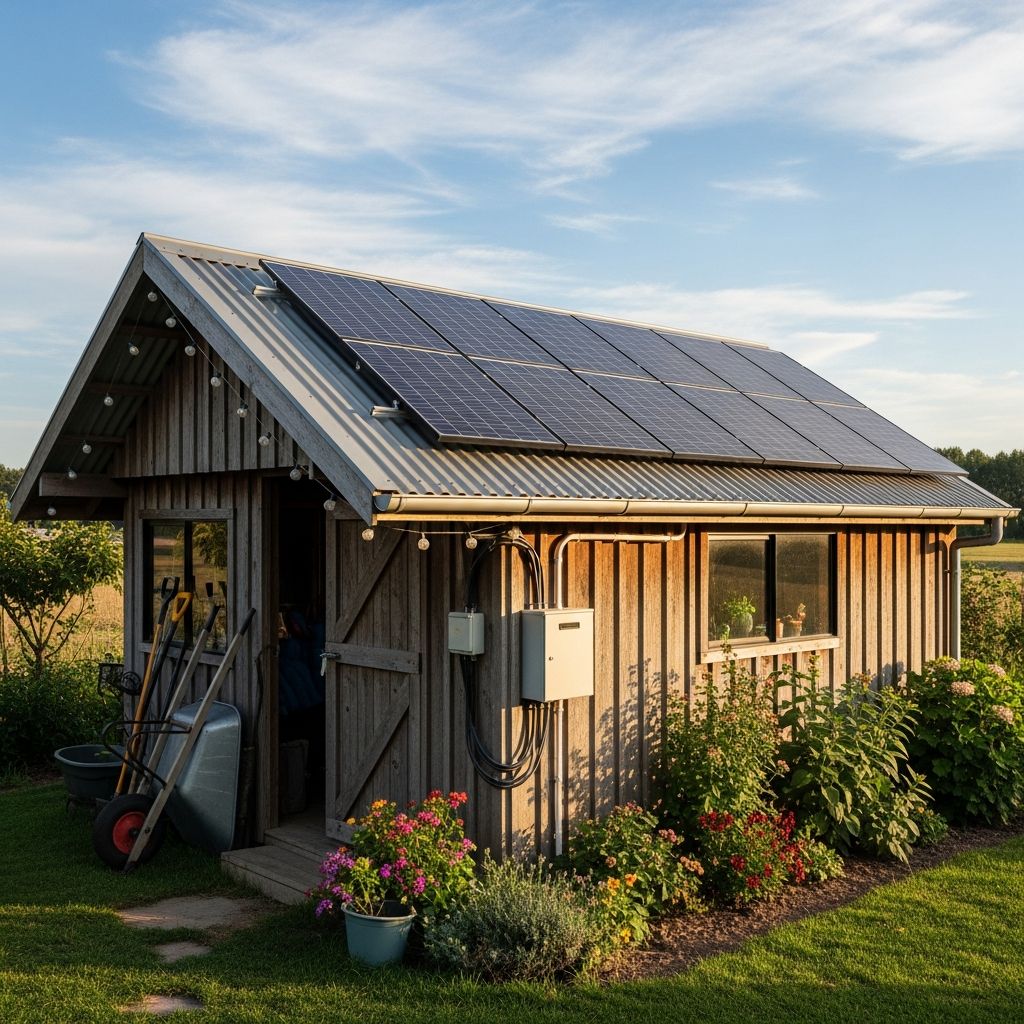
How to Power Your Shed with Solar Energy: A Practical DIY Guide
Adding solar power to a backyard shed is one of the most practical DIY projects for homeowners who want convenient electricity without trenching cables from the house or increasing utility bills. This guide walks through how to plan, size, and install a small off-grid solar system tailored to your shed’s needs, using straightforward explanations and homeowner-friendly techniques.
Why Put Solar on a Shed?
Before looking at tools and wiring diagrams, it helps to define what a solar-powered shed can actually do for you. For many people, the shed becomes a hybrid space: part storage, part workshop, and sometimes a quiet retreat away from the main house.
- Provide reliable lighting for evening projects or quick trips after dark.
- Run small tools, chargers, and yard equipment without extension cords crisscrossing the yard.
- Create an off-grid backup zone that still works during power outages.
- Reduce demand on your home’s electrical panel and avoid the cost of trenching and conduit to the shed.
Step 1: Clarify How You Will Use the Shed
The solar system you design should start with your actual usage, not a random panel size. Think about how the space will be used on a busy day, then translate that into electrical needs.
Common Shed Use Scenarios
- Storage shed: Mainly needs LED lighting and the occasional battery charger.
- Garden shed: May need lighting, a small pump, and outlets for trimmers or electric mowers.
- Workshop or hobby room: Requires more outlets, possibly a small heater, fan, or higher-draw tools.
Write down the devices you plan to use, their watt ratings (from the nameplate), and an estimate of how many hours per day you will run each. This list will drive the sizing of your solar array, battery capacity, and inverter.
Step 2: Estimate Energy Needs
Solar design does not need to be complicated, but it does need a rough energy budget. The key number to estimate is your total watt-hours (Wh) per day.
Quick Energy Budget Method
For each device, calculate:
Daily energy (Wh) = Device power (W) × Hours used per day
Then add all devices together.
| Device | Power (W) | Hours/day | Daily energy (Wh) |
|---|---|---|---|
| LED shop light | 20 | 3 | 60 |
| Small fan | 40 | 2 | 80 |
| Battery charger | 50 | 1 | 50 |
| Phone and tool chargers | 30 | 2 | 60 |
| Total | 250 Wh/day |
Once you know the approximate daily energy requirement, you can size the solar array so it can reliably replace this energy on a typical sunny day in your region.
Step 3: Choose the Overall System Type
Most shed systems fall into one of two categories: fully off-grid or grid-tied via the house panel. For a backyard shed, an off-grid system is usually simpler and easier to install without permits or hired labor.
- Off-grid shed system: Solar panels charge a battery, the battery feeds an inverter, and you plug tools and lights into standard outlets powered by the inverter.
- Extension from the house: Traditional wiring from the main panel; usually requires deeper trenching, permits, and electrical inspection, but does not need solar or batteries.
This article focuses on an off-grid, stand-alone solar system, which keeps the shed independent of the main house wiring.
Step 4: Understand the Main Solar Components
Even a simple system uses several pieces of equipment that work together. Knowing what each part does makes the installation safer and easier to troubleshoot later.
Core Components
- Solar panels: Capture sunlight and convert it into DC electricity.
- Charge controller: Regulates the charging of the battery to prevent overcharging or deep discharge.
- Battery bank: Stores energy so the shed has power at night or during cloudy weather.
- Inverter: Converts DC battery power into standard 120-volt AC for typical household tools and appliances.
- Wiring and protection: Cables, fuses, breakers, disconnects, and grounding hardware to keep the system safe.
Step 5: Size the Panels and Battery
With your daily energy estimate and an understanding of the components, you can choose practical sizes for the solar array and battery bank that fit both your budget and your roof.
Panel Sizing Rules of Thumb
- Divide your daily watt-hours by the average number of full sun hours per day in your location (often 4–6) to get a minimum panel wattage.
- Add 20–30% extra capacity to account for losses in wiring, inverter efficiency, and cloudy days.
- Check your shed roof area to ensure the planned number of panels can physically fit with safe clearances from edges and obstacles.
Battery Sizing Basics
- Multiply your daily energy requirement by the number of days of backup you want (often 1–2 days).
- For traditional lead-acid batteries, plan to use only about half their rated capacity to preserve lifespan.
- For lithium batteries, a higher usable percentage is possible, so you may need fewer amp-hours for the same usable energy.
Step 6: Plan Panel Placement and Mounting
The performance of your solar system depends heavily on where the panels sit and how they angle toward the sun. A shed roof is often ideal because it is higher than fences and many nearby obstacles.
Key Placement Considerations
- Choose the roof face with the most sun exposure, typically south-facing in the northern hemisphere.
- Keep panels away from chimneys, nearby trees, or taller buildings that cast shade during the middle of the day.
- Leave adequate space around panels for airflow and to safely access mounting hardware.
Mounting options include low-profile roof mounts, tilt racks that angle the panels, or ground-mounted frames if the roof is too shaded or fragile.
Step 7: Lay Out the Electrical Path
Before drilling any holes, sketch the electrical path from the panels to the outlets. A simple block diagram will help ensure that every part has a logical place inside the shed.
Typical Power Flow
- Solar panels on the roof collect DC power.
- DC wiring passes through a weather-tight roof penetration into a junction box.
- Power flows through a DC disconnect and fuse to the charge controller.
- The charge controller connects to the battery bank with appropriately sized cables and fuses.
- The battery connects to a DC disconnect and then to the inverter.
- The inverter feeds a small subpanel or directly supplies a few outlets and lighting circuits.
Label each component location in the shed so that future upgrades or troubleshooting are straightforward.
Step 8: Mount the Hardware Inside the Shed
With the layout chosen, mount the indoor components to a clear section of wall or a dedicated backboard. Keep everything elevated above floor level to avoid moisture and to protect equipment from stored items.
- Install the charge controller, DC disconnects, and fuse blocks near each other for clean, short cable runs.
- Mount the inverter where airflow is good and the status display is easy to see.
- Place the battery bank in a ventilated location away from direct sunlight and flammable materials.
Use cable clamps and conduit to keep wiring organized, protected from damage, and separate from sharp edges or moving items.
Step 9: Run and Protect Wiring
Safe wiring is just as important as the quality of the panels or the size of the battery bank. Even a small shed system carries enough energy to damage equipment or cause a fire if wired improperly.
Basic Wiring Principles
- Use appropriately sized cables for the expected current and cable length to minimize voltage drop.
- Route exterior cables in UV-resistant conduit and seal all roof and wall penetrations against water entry.
- Provide overcurrent protection (fuses or breakers) on each conductor that can see battery or array current.
- Ground the system according to local best practices, including panel frames and metal enclosures where required.
If you are not comfortable with electrical work, consider hiring a licensed electrician for at least the final connections to outlets and any permanent AC wiring.
Step 10: Add Lighting and Outlets
Once the core system is assembled, you can design interior circuits to match your shed’s layout and use patterns. A good plan often includes separate lighting and outlet circuits so one issue does not shut down the entire space.
- Install bright, efficient LED fixtures centered over work areas and storage shelves.
- Place outlets at workbench height and in corners where tools and chargers will live.
- Use weather-resistant covers for any outlets near doors or where dust and moisture are common.
Label each circuit at the inverter or subpanel so you know which breaker or fuse controls which part of the shed.
Step 11: Test and Commission the System
Before relying on the solar system for daily tasks, perform a careful startup process. This helps spot loose connections, incorrect polarities, or configuration errors before they cause damage.
- Verify all wiring against your diagram with the system off and batteries disconnected.
- Connect the battery to the charge controller following the manufacturer’s sequence.
- Connect the panel array and confirm that the controller recognizes charging current.
- Power up the inverter, then test each outlet and light circuit individually with small loads.
Watch the system over a few days of normal use. Check that batteries are not over-discharging and that the panels can recharge the system fully during typical sun conditions.
Maintenance and Long-Term Care
Solar shed systems are relatively low maintenance compared with engines or fuel-powered equipment, but they still benefit from regular checks and cleaning.
- Inspect and clean panel surfaces periodically to remove leaves, dust, or snow that reduce output.
- Check all visible wiring and conduit for signs of abrasion, UV damage, or animal interference.
- Review charge controller logs or indicator lights to confirm that charging cycles appear normal.
Follow manufacturer recommendations for battery maintenance, especially for lead-acid batteries that may require periodic checks of electrolyte levels or equalization charges.
Cost and Value Considerations
The total cost of a shed solar system varies widely based on panel capacity, battery type, and whether you already own some components. Even a modest system can provide significant convenience and independence from utility power.
| System level | Typical use | Panel capacity | Battery type |
|---|---|---|---|
| Basic | Lighting and small chargers | 100–200 W | Small sealed battery |
| Standard | Lighting, fan, tool charging | 200–400 W | Medium-size lead-acid or lithium |
| Workshop | Power tools and frequent use | 400 W and up | Larger lithium bank |
As you evaluate options, balance up-front cost against the value of convenience, safety, and resilience the system adds to your property.
Safety, Codes, and When to Get Help
Even though a small shed system seems simple, it still involves live electrical circuits and stored energy. Local codes and best practices exist to make these systems safer for long-term use.
- Check local regulations before starting, especially if adding a permanent subpanel or planning to connect in any way to house wiring.
- Use components that are appropriately rated for outdoor or damp environments where needed.
- Consider professional help for AC-side wiring and any grid-connected work, even if you handle panel mounting and low-voltage DC wiring yourself.
Frequently Asked Questions
Can a small solar system run power-hungry tools?
High-draw tools like air compressors or large saws can exceed the output of small inverters and quickly drain batteries. For occasional use, a larger inverter and expanded battery bank may handle these loads, but it is often more practical to reserve the solar system for lighting, charging, and lighter tools while running the biggest equipment from a dedicated circuit or portable power source.
Do I need permits for a shed solar system?
Permit rules vary by location and often depend on system size and whether the shed connects to the main electrical service. Many small, stand-alone systems that never tie into the house grid fall under simplified rules, but it is wise to verify requirements with local authorities before building.
Are portable solar generators a good alternative?
Portable solar generators combine battery, charge controller, and inverter into one unit, simplifying the design. For small sheds and flexible use, they can be an excellent option: you mount panels to the shed or keep them portable, then plug the generator into your interior circuits or use its built-in outlets directly.
How long will the batteries last?
Battery life depends on chemistry, depth of discharge, temperature, and maintenance. Many lead-acid batteries provide several years of service if not deeply discharged on a regular basis, while quality lithium batteries often deliver more cycles and longer overall life for a higher initial cost.
What happens on cloudy days or in winter?
Panel output drops when sunlight is weak or days are shorter, so your system may not fully recharge if energy use remains high. Options include adding more panel capacity, increasing battery storage, reducing loads on low-sun days, or having a backup like a portable generator or grid-connected outlet when available.
With careful planning and a clear understanding of your needs, a shed-scale solar system can transform a dark, disconnected outbuilding into a productive, comfortable space powered entirely by the sun.
Similar Articles






Read full bio of medha deb