Outside AC Unit Not Turning On: Troubleshooting Guide
Discover why your outdoor AC unit won't turn on and learn practical solutions to get it running again.
Outside AC Unit Not Turning On: Complete Troubleshooting Guide
When your outside air conditioning unit refuses to turn on, it can be frustrating and uncomfortable, especially during hot summer months. Before you panic or call an expensive HVAC technician, there are several troubleshooting steps you can take to identify and potentially fix the problem yourself. Understanding the common reasons why your outdoor AC unit stops working will help you determine whether you need professional assistance or if a simple adjustment will restore your cooling system to full operation.
Understanding Your AC System
Your air conditioning system consists of two main components: the indoor unit (evaporator) and the outdoor unit (condenser). The outdoor unit houses the compressor, condenser coil, and fan, which work together to release the heat absorbed from your home’s interior. When your outdoor AC unit doesn’t turn on, the entire system fails to operate because the condenser is responsible for the crucial refrigeration cycle. The thermostat communicates with both units to control temperature and operation, making it a critical component in your system’s functionality.
Electrical Issues and Circuit Problems
Tripped Circuit Breaker or Blown Fuse
One of the most common reasons your outside AC unit won’t turn on is a tripped circuit breaker or blown fuse. If your home experienced a power surge or if your air conditioner drew too much electricity, the circuit breaker serving your AC system may have automatically shut off to protect your electrical system from damage. To check this, locate your main electrical panel and look for the breaker labeled for your air conditioning system. If it’s in the middle position or clearly switched to the “off” side, flip it back to the “on” position.
If the breaker immediately trips again after you reset it, this indicates a serious electrical problem such as a short circuit or overloaded circuit. In this case, you should not attempt further repairs and should contact a licensed electrician or HVAC professional immediately. Continuing to reset a repeatedly tripping breaker can create a fire hazard or cause further damage to your system. Older homes may have fuses instead of circuit breakers; if you find a blown fuse (which appears dark or has a broken wire inside), replace it with one of the same amperage rating.
Some AC units also have a secondary disconnect box or safety shutoff switch located near the outdoor unit itself. Check that this box is in the “on” position, as it’s often accidentally left in the “off” position after maintenance or repairs.
Emergency Shut-Off Switch
Most outdoor air conditioning units have an emergency or safety shut-off switch mounted on or near the exterior unit or on the side of your house. This switch looks like a standard light switch housed in a metal box. It’s designed to cut power to the system quickly in case of emergency. If someone recently performed maintenance on your AC system, they may have accidentally left this switch in the “off” position. Simply flip the switch back to the “on” position, and your system should regain power.
Thermostat Troubleshooting
Basic Thermostat Settings
Before investigating more complex issues, start with the simplest solution: check your thermostat settings. Surprisingly, many “broken” AC systems are simply set incorrectly. Verify that your thermostat is switched to the “COOL” mode rather than “OFF,” “HEAT,” or “AUTO.” Even if it appears to be in the correct mode, double-check by looking at the actual display or indicator lights on your thermostat.
Next, ensure that your temperature setting is at least 3-5 degrees below your current indoor temperature. If you’ve set the thermostat to 78 degrees but your home is currently 75 degrees, the system won’t activate because it’s already at or below your desired temperature. Lower the setting by several degrees and wait a few minutes to see if you hear the outdoor unit kick on.
Dead Batteries and Power Issues
Many modern thermostats are battery-powered and will display nothing or show a low battery indicator when batteries are depleted. If your thermostat screen is blank or dim, replace the batteries immediately. This simple fix resolves the problem in many cases where homeowners think their entire AC system has failed. Keep spare batteries on hand during the cooling season to address this issue quickly.
Thermostat Wiring Problems
If your thermostat appears to be functioning but your outdoor unit still won’t turn on, there may be an issue with the low-voltage wiring connecting your indoor and outdoor units. This wiring can become damaged or disconnected in several ways: landscapers may accidentally cut the wire with a weed whacker, rodents may chew through the insulation, or corrosion may develop where wires connect. If the wires are exposed to the elements, moisture can cause connections to rust and deteriorate, preventing proper voltage from reaching your outdoor unit. If you suspect a wiring problem, it’s best to have a professional HVAC technician diagnose and repair it, as working with electrical connections can be dangerous.
Refrigerant and Pressure-Related Issues
Frozen Evaporator Coils
When your air conditioner freezes up, ice typically forms on the indoor evaporator coil, which can prevent your system from operating. While the outdoor condenser unit rarely freezes under normal circumstances (it only freezes during heat pump defrost cycles), the indoor coil can freeze due to several causes. Common reasons include restricted airflow from a dirty air filter, low refrigerant levels, or a blocked condensate drain line.
If you suspect frozen coils, turn off your AC system immediately and allow the ice to thaw completely before restarting. Running your system while the coils are frozen can damage the compressor. To prevent this issue in the future, replace your air filter every three months or more frequently if you have pets or allergies. A clogged filter severely restricts airflow, which causes indoor coils to become too cold and freeze over.
Low Refrigerant and Pressure Switches
Your air conditioning system relies on refrigerant (often called Freon) to absorb and release heat. If your system is low on refrigerant due to a leak or other issues, a safety device called a pressure switch will trip, preventing your outdoor unit from running. This is a safety feature designed to prevent compressor damage. If you suspect low refrigerant levels, you’ll need to contact an HVAC professional who can use specialized equipment to measure refrigerant levels, identify any leaks, and recharge or repair your system as needed.
Condensate Drain Line Problems
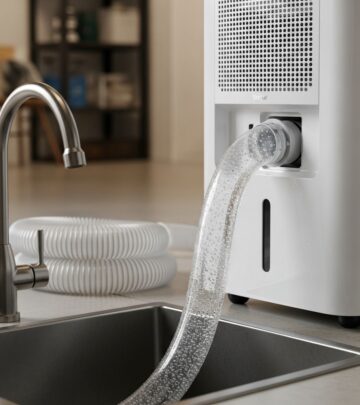
As your air conditioner operates, it removes moisture from the air, which collects as condensation in the drain pan beneath your indoor unit. This water is then expelled through a condensate drain line that typically runs outside your home. When humidity levels are high, this drain line can become clogged with algae, mold, or debris.
A clogged condensate line triggers a float switch (an overflow safety device) that automatically shuts down your entire air conditioning system to prevent water damage to your home’s interior. You can attempt to clear a clogged drain line yourself using a wet/dry vacuum to suck out the blockage from the drain line exit point outside your home. However, some homes have a condensate drain pump rather than a gravity-fed line; if the pump fails, it will also trip the safety switch. In this case, you’ll need professional service to replace the pump.
Indoor Unit Power and Control Switches
Your furnace or indoor AC unit typically has a power switch located in your attic, basement, closet, or utility room, often near the furnace itself. This switch looks like a standard light switch and controls power to your indoor blower and cooling coils. If this switch has been accidentally turned to the “off” position, your entire AC system will fail to operate, even if your outdoor unit has power. Check this switch and ensure it’s in the “on” position. This is a particularly common issue in homes where children might have access to the utility room or where someone was recently working on the HVAC system.
Component Failures Requiring Professional Service
Bad Capacitors
The capacitor in your outdoor unit acts like a battery, providing the initial electrical jolt needed to start the compressor and fan motor. Over time, capacitors can fail, preventing your outdoor components from starting even when they receive full power. If you have 240 volts at your contactor but neither the compressor nor the fan will start, a failed capacitor is often the culprit. This component is relatively inexpensive to replace, but it requires professional service.
Faulty Contactor
The contactor is essentially an electrical switch in your outdoor unit that turns the compressor and fan on and off. When a contactor fails, it prevents power from reaching these critical components. A bad contactor may be caused by electrical damage, water intrusion, or simply wear and tear over years of operation. While contactors are relatively affordable and straightforward to replace, you should hire a professional to handle this repair safely.
Preventative Maintenance to Avoid Future Problems
The best approach to keeping your outside AC unit running reliably is implementing a regular maintenance routine. Schedule a professional HVAC tune-up at least once per year, ideally before the cooling season begins in spring. During this service, a technician will inspect critical components like the compressor, refrigerant levels, electrical connections, and safety devices.
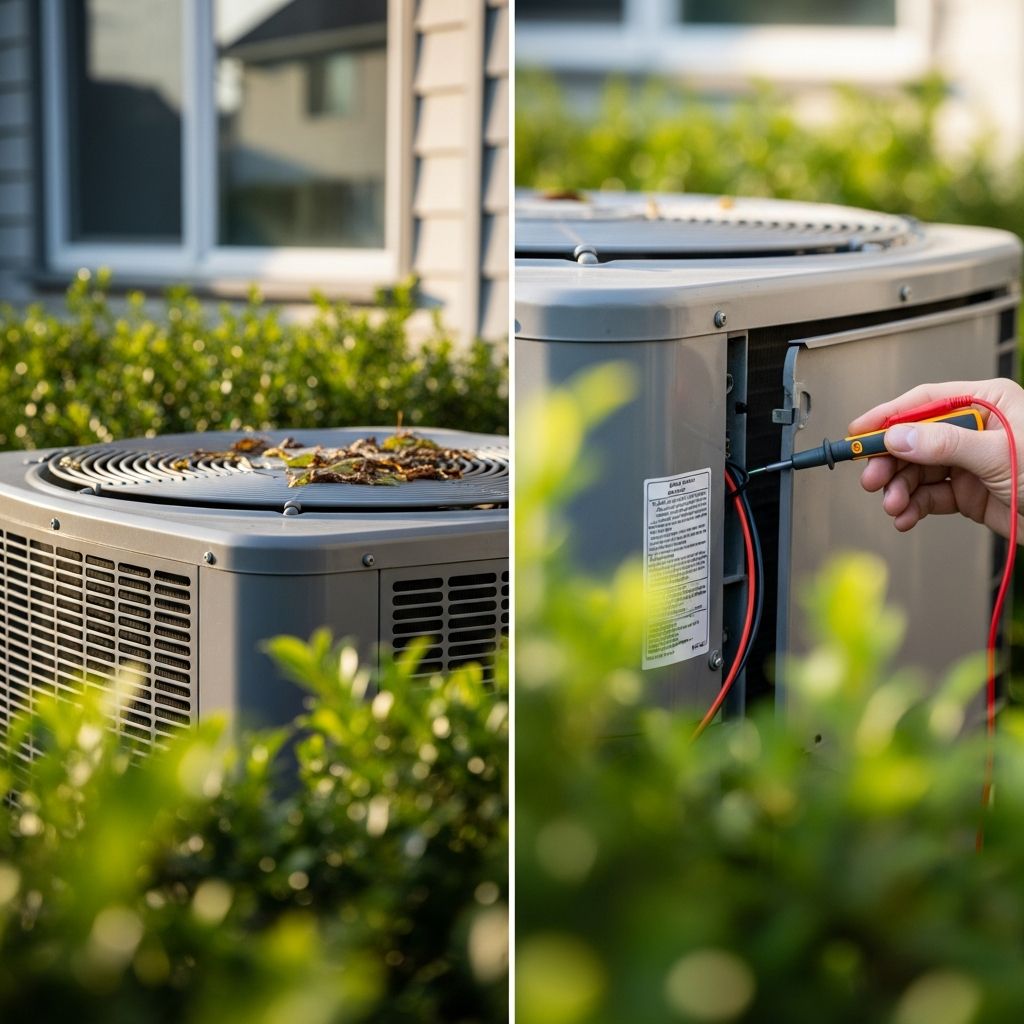
Between professional visits, you can perform simple maintenance tasks yourself. Replace your air filter every three months during cooling season (more often if you have pets). Keep the area around your outdoor unit clear of leaves, grass clippings, and debris that can restrict airflow and reduce efficiency. Gently rinse the outdoor condenser coils with a garden hose to remove accumulated dirt and dust. Inspect visible wiring for damage and check that your thermostat is functioning properly.
Frequently Asked Questions
Q: My AC unit was working, but suddenly stopped. What should I check first?
A: Start with the simplest fixes: check your thermostat settings (make sure it’s on “COOL” and set below room temperature), verify the outdoor disconnect switch is in the “on” position, and check your electrical panel for a tripped circuit breaker. These three issues account for the majority of AC failures.
Q: How long should I wait after resetting the breaker before calling a technician?
A: If the breaker resets and your AC runs normally, monitor it for a few days. However, if the breaker trips immediately again or within a short time, call a professional right away. A repeatedly tripping breaker indicates an electrical hazard that shouldn’t be ignored.
Q: Can I replace my thermostat batteries myself?
A: Yes, absolutely. Most thermostats use standard AA or AAA batteries that you can easily replace. Simply open the thermostat cover (it usually snaps off or screws open), remove the old batteries, and insert fresh ones of the same type. This often solves the problem instantly.
Q: What should I do if I find my air filter is extremely dirty?
A: Replace it immediately with a new filter of the same size and MERV rating. A clogged filter is one of the most common causes of AC problems, including frozen coils. Make a note to replace it more frequently going forward. If you have pets or family members with allergies, monthly replacement may be necessary instead of quarterly.
Q: Is it safe to have my AC unit turned off for a few days while I wait for repairs?
A: It’s safe to leave your AC off temporarily while waiting for professional service, especially if you’re in the troubleshooting phase. However, during extremely hot weather, prolonged AC shutdown can become uncomfortable and potentially dangerous for elderly family members or those with health conditions. If repairs will take more than a day or two during peak summer heat, consider whether temporary cooling solutions like fans or a hotel stay might be necessary.
Q: How can I tell if my condensate drain line is clogged?
A: If your AC won’t turn on and you’ve ruled out other issues, look for water pooling near your indoor unit or evidence of water damage. You might also notice a musty smell. If your system has a float switch (which triggers shutdown when the drain pan overflows), a clogged line is likely the culprit. Attempt to clear it with a wet/dry vacuum before calling a technician.
References
- Outside AC Unit Not Working? — Lennox. 2024. https://www.lennox.com/residential/lennox-life/consumer/outside-ac-unit-not-turning-on
- Outdoor AC Unit Not Running, Not Turning On! Top 10 Problems! — HVAC Training Channel. 2024. https://www.youtube.com/watch?v=_6eRHebRBlg
- Outside AC Unit Won’t Turn On? What to Do Before Calling for Repairs — Pippin Brothers. 2024. https://www.pippinbrothers.com/blog/article/outside-ac-unit-wont-turn-on-what-to-do-before-calling-for-repairs
- Why Your Outdoor AC Unit Won’t Work — PV Heating, Cooling. 2024. https://www.pvhvac.com/blog/this-is-why-your-outdoor-ac-unit-stopped-working/
- Air Conditioner Troubleshooting: 5 Common Issues — Trane. 2024. https://www.trane.com/residential/en/resources/troubleshooting/air-conditioners/
- U.S. Environmental Protection Agency: Refrigerant Certification — EPA. 2024. https://www.epa.gov/ozone-layer-protection/refrigerant-management
- Department of Energy: Home Cooling Tips — U.S. Department of Energy. 2024. https://www.energy.gov/energysaver/air-conditioning
Similar Articles








Read full bio of Sneha Tete