Painting Suspended Ceiling Grids: Complete DIY Guide
Transform your drop ceiling with expert techniques for painting grids and tiles to achieve a professional, long-lasting finish.
Painting Suspended Ceiling Grids: A Complete DIY Guide
Suspended ceilings, also known as drop or acoustic ceilings, feature interlocking metal grids that support lightweight tiles. Over time, these grids can accumulate dust, grease, or discoloration, making the entire ceiling look dated. Painting the grid offers a cost-effective refresh, blending it seamlessly with tiles or walls for a modern appearance. This guide provides detailed instructions, material recommendations, and best practices drawn from professional techniques.
Why Refresh Your Suspended Ceiling Grid?
Exposed metal grids in suspended ceilings are prone to visible wear due to their location above high-traffic areas like kitchens, offices, or basements. A fresh coat of paint hides imperfections, improves light reflection, and matches room decor. Unlike tile replacement, grid painting requires minimal disruption and preserves acoustic properties if done correctly.
- Visual upgrade: Eliminates yellowing or rust spots for a uniform look.
- Cost savings: Far cheaper than full ceiling replacement.
- Customization: Tint paints to complement walls or create contrast.
Essential Tools and Materials for the Job
Gather these items before starting to ensure smooth progress. Focus on quality products suited for metal surfaces and overhead work.
| Category | Item | Purpose |
|---|---|---|
| Preparation | Cleaning roller (4-inch), mild detergent, drop cloths, painter’s tape | Remove dust and grease without scratching metal |
| Priming | Metal primer (e.g., latex or acrylic-based), bonding sticks or spray primer | Ensure paint adhesion on galvanized surfaces |
| Painting | Flat or matte ceiling paint, 4-inch roller, extension pole, small brush | Apply even coats with minimal glare |
| Safety | Ladders or scaffolding, respirator mask, goggles | Protect against fumes and falls |
Opt for water-based paints that dry quickly and resist peeling. Ultra-flat finishes reduce glare, ideal for low-light rooms.
Preparation: Cleaning and Surface Prep
Success hinges on thorough cleaning. Metal grids repel paint if oily or dusty.
- Clear the area: Remove tiles if possible to access grids fully. Lay drop cloths below to catch drips.
- Dust removal: Use a 4-inch roller or soft brush to wipe grids. Vacuum crevices gently.
- Degrease: Mix mild soap with water; apply with a damp sponge. Rinse and dry completely to avoid rust.
- Mask off: Tape walls and fixtures adjacent to the grid.
Avoid scuff-sanding unless rust is present, as it creates excess work. Clean surfaces bond well with primers. Test cleanliness by wiping with a white cloth—no residue should remain.
Priming the Metal Grid for Optimal Adhesion
Galvanized metal requires primer to prevent peeling. Skip this, and topcoats fail quickly.
Choose the right primer: Acrylic primers suit metal, offering rust inhibition. Latex works for previously painted grids. For quick jobs, use bonding sticks or spray primers that dry in minutes.
- Apply thinly with a small roller or brush in grid openings.
- Work in sections to avoid drips.
- Allow 1-2 hours drying time, per product label.
Prime tiles separately if painting them black or dark hues, as expansion/contraction reveals unpainted edges.
Painting Techniques for Flawless Grid Coverage
Use matte ceiling paint for a non-reflective finish. Tint to match walls for seamless transitions.
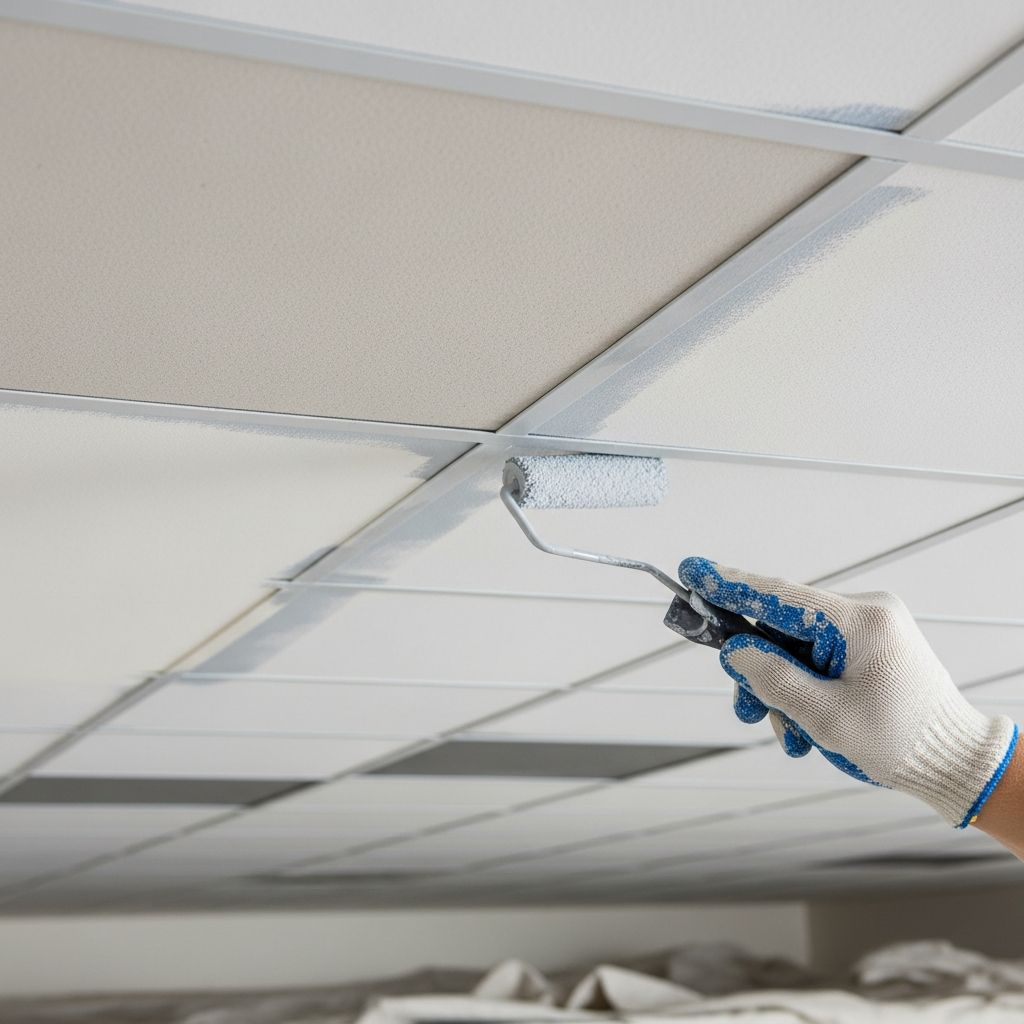
- First coat: Roll paint into grid channels using a 4-inch foam roller. Start from corners, working in a W-pattern.
- Edges and details: Feather with a small brush for crisp lines.
- Drying: Wait 2-4 hours between coats.
- Second coat: Apply lightly to build depth without drips.
Spray painting suits small grids: Hold 8-10 inches away, sweep evenly. Avoid over-application on absorbent tiles.
Handling Ceiling Tiles During the Process
Decide whether to paint tiles in place or remove them. Removal yields better results but requires care.
- In-place painting: Ideal for whites; use extension roller. Tiles absorb paint like sponges, needing multiple thin coats.
- Removal method: Paint flat on sawhorses for even coverage. Reinstall only when fully dry to prevent sagging.
- Tile-specific tips: Acoustic tiles demand flat paints to retain sound absorption. Test primer/paint combos first.
Don’t paint tile backsides, as it compromises fire ratings.
Advanced Tips for Professional Results
Elevate your project with these pro strategies:
- Color matching: Paint grids and walls the same shade to blur boundaries.
- Dark colors: Prime thoroughly; use multiple coats to avoid bleed-through.
- Touch-ups: Keep trim paint for grid spots. Armstrong-style white touch-up paint blends factory finishes.
- Acoustic preservation: Limit paint layers on tiles; consider paintable alternatives like TECTUM panels.
Common Mistakes to Avoid
Steer clear of pitfalls that lead to rework:
| Mistake | Consequence | Solution |
|---|---|---|
| Skipping primer | Peeling paint | Always prime metal |
| Thick coats | Drips and unevenness | Thin layers only |
| Painting wet surfaces | Poor adhesion | Ensure full dryness |
| Inadequate ventilation | Fume buildup | Use fans and masks |
Safety Considerations for Overhead Work
Ceiling projects involve heights and chemicals. Secure ladders on stable bases. Wear respirators for primer/paint vapors, especially in enclosed spaces. Work in well-ventilated areas and take breaks to avoid fatigue.
Maintenance After Painting
A painted grid stays fresh longer with simple care. Dust monthly with a microfiber duster. Spot-clean grease with a chem sponge—no water needed. Reapply touch-up paint annually in high-use areas.
FAQs
What type of paint is best for metal ceiling grids?
Matte or flat water-based ceiling paint over a metal primer provides durability and low glare.
Can I paint the tiles without removing them?
Yes, but removal prevents grid masking and ensures full coverage.
How long does it take to paint a standard room grid?
Prep and two coats take 1-2 days, including drying time.
Will painting affect acoustic performance?
Minimal impact with thin coats; avoid heavy layering on tiles.
Is spray paint suitable for grids?
Yes, for even application on intricate metalwork.
References
- #277 Segment 4: Painting a Drop Ceiling — YouTube (Trusted House Painter). 2023. https://www.youtube.com/watch?v=EkSwjX4HnXM
- How to Paint Ceiling Tiles in a Drop Ceiling — YouTube. 2020. https://www.youtube.com/watch?v=E85UFTN7Dkg
- How to Paint Ceiling Tiles for a Fresh New Look — Lowe’s. 2024-02-05. https://www.lowes.com/n/how-to/how-to-paint-ceiling-tiles
- Painting Ceiling Tiles 101 — Kanopi by Armstrong. 2023. https://kanopibyarmstrong.com/blogs/kanopi/painting-ceiling-tiles
- Turning Standard Drop Ceiling Tiles Black — The Grumble Forums. 2022. https://www.thegrumble.com/threads/turning-standard-drop-ceiling-tiles-black.77888/
Similar Articles








Read full bio of medha deb