Together at the Workbench: Creative DIY Projects for Parents and Kids
Simple hands-on projects that bring families closer, build skills, and create lasting memories.
Parent–Child DIY Projects That Turn Time Together Into Treasured Memories
DIY projects offer parents and children a powerful way to connect, learn, and play together. With a few basic materials and a bit of planning, families can transform ordinary afternoons into hands-on adventures that build confidence and creativity.
Why DIY Time Matters for Families
Working side by side on a project gives children a rare chance to see how adults think through problems, make decisions, and recover from mistakes. At the same time, parents get to experience their child’s curiosity up close, beyond homework and daily routines.
- DIY projects encourage kids to practice patience, persistence, and problem-solving.
- Parents can use the time to listen, talk, and bond without screens distracting everyone.
- Finished projects provide tangible reminders of the time spent together, long after the glue dries.
Planning Your DIY Time Together
Before diving into specific project ideas, it helps to think through what will make your DIY time enjoyable and low-stress. A little preparation sets the tone for cooperation instead of frustration.
- Keep it short and focused: For younger children, aim for 20–40 minute projects; older kids may enjoy longer builds.
- Let kids choose: Offer two or three options and let your child pick the final project to boost ownership and enthusiasm.
- Prepare a workspace: Lay down a sheet, old tablecloth, or cardboard and keep a trash bag or bin nearby for quick clean-up.
Starter Toolkit for Family DIY
You do not need a fully stocked workshop to enjoy DIY as a family. A small box of basic supplies can support dozens of different projects across ages.
| Category | Helpful Items | Useful For |
|---|---|---|
| Basic Tools | Child-safe scissors, measuring tape, small hammer, screwdrivers, masking tape | Simple builds, cardboard constructions, safe tool practice |
| Craft Materials | Glue sticks, white glue, washable paints, markers, colored paper, string, yarn | Decorations, signs, art projects, lightweight models |
| Recyclables | Cardboard boxes, paper towel tubes, jars, plastic containers (washed) | Upcycling toys, organizers, science-themed builds |
| Fasteners | Clothespins, binder clips, brads, rubber bands | Movable parts, temporary connections, kid-friendly assemblies |
| Safety Gear | Child-sized goggles, aprons or old shirts, disposable gloves (optional) | Painting, sanding, supervised simple woodworking |
Hands-On Projects for Younger Kids (Ages 4–7)
Young children thrive on sensory experiences and visible progress. Projects for this age should be simple, colorful, and forgiving, with steps that can be completed in minutes rather than hours.
1. Story Stones for Imaginative Play
Story stones are smooth rocks decorated with simple images that children can use to invent stories. They combine art, language, and play in one easy project.
- What you need: Smooth stones, acrylic or washable paint, paint pens, clear sealant (optional).
- How to involve kids: Ask your child which images they want—stars, houses, animals, or simple shapes—and let them paint freely.
- How to use them: Once dry, take turns pulling stones from a bowl and adding a sentence to a shared story.
2. Kitchen Helper Stool Decorations
If you already own a sturdy step stool, turn it into your child’s personalized “kitchen helper” platform. This project makes cooking together feel special and gives kids a safe place to stand.
- Cover the stool with painter’s tape to mark off stripes or shapes.
- Let your child paint each taped section in different colors.
- After it dries, remove tape to reveal clean patterns and, if desired, add their name with a paint pen.
3. Nature Treasure Board
A nature treasure board turns outdoor finds into a rotating display. This is ideal for children who love collecting leaves, stones, and flowers.
- Glue clothespins or binder clips onto a piece of cardboard or scrap wood in rows.
- After a walk, invite your child to clip their favorite leaves, feathers, or photos onto the board.
- Refresh the display each season to talk about changing weather and plants.
Engaging Projects for Growing Makers (Ages 8–11)
Children in this age range often crave more independence, but they still appreciate working with a guiding adult. Projects can introduce measuring, basic building, and planning while still feeling playful.
4. Custom Desk Organizer From Recyclables
This project helps kids tidy their workspace while exploring design. Using everyday containers, you can co-create a practical organizer tailored to your child’s needs.
- Gather cardboard boxes, jars, and small tins, then arrange them on a stiff base.
- Encourage your child to decide which compartment will hold pencils, notes, or art supplies.
- Wrap pieces with colored paper or paint them, then glue everything in place once the layout is final.
5. Simple Wooden Keepsake Box (With Help)
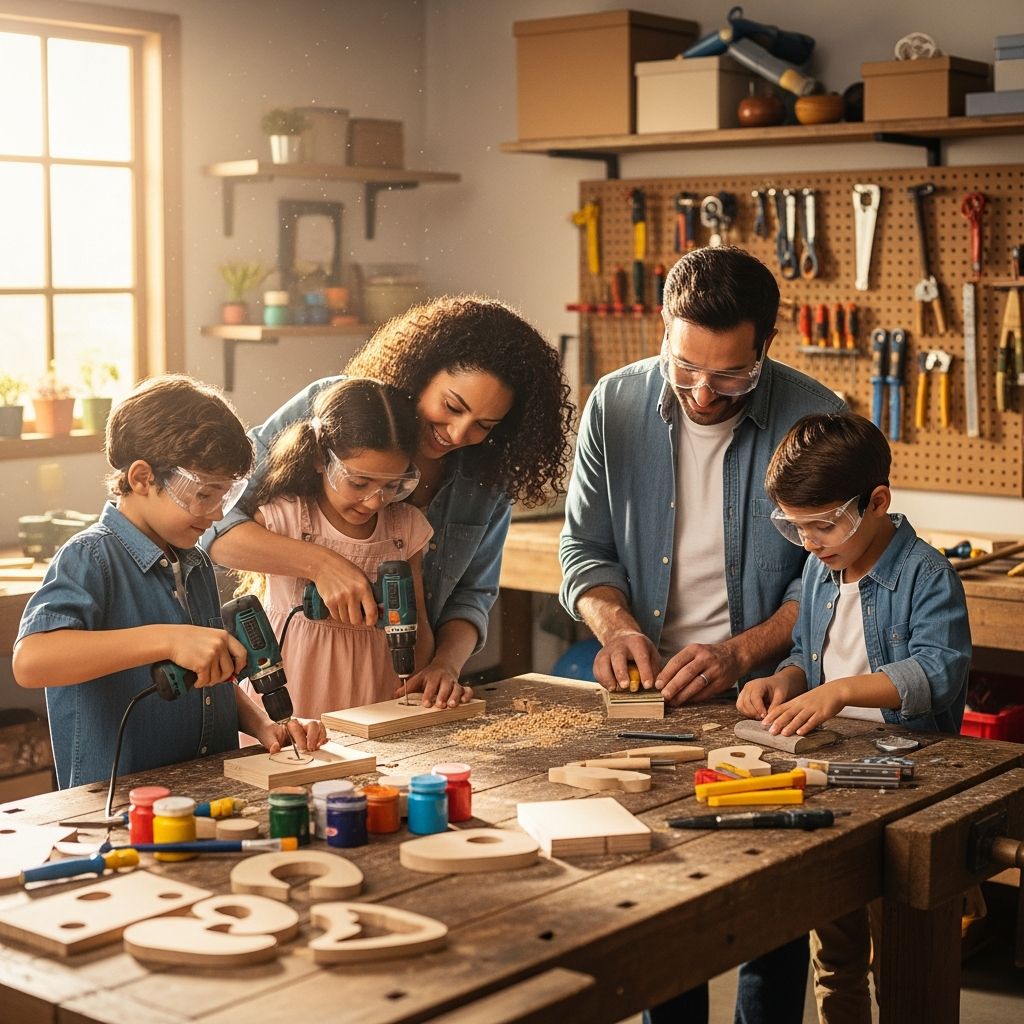
Using pre-cut wood pieces from a hardware store or hobby shop, parents and children can assemble a basic keepsake box. Adults should handle sawing and most drilling, while kids help with measuring, sanding, and decorating.
- Involve your child in measuring the sides and marking where nails or screws will go.
- Let them sand edges smooth with fine sandpaper under supervision.
- When the box is assembled, paint it together and add a simple latch or ribbon closure.
6. Family Chore and Reward Board
A chore and reward board turns everyday responsibilities into a shared family system you build together. Kids who help design the board are more likely to use it.
- Divide a poster board or wooden board into sections for each family member using tape or marker lines.
- Create cards or clothespins labeled with tasks, then let your child suggest fair rewards or privileges.
- Decorate each person’s column together with drawings, stickers, or photos.
Projects for Teens and Parents (Ages 12+)
Older kids and teens are ready for more complex tasks, including power tools and planning, when properly supervised. This is a great stage to introduce real-world skills through projects that genuinely improve your home.
7. Mini Entryway Makeover
An entryway update is satisfying because the results are visible every time someone walks in the door. Work with your teen as a design partner, not just a helper.
- Brainstorm what is needed: a shoe rack, hooks for bags, a small shelf, or a message board.
- Measure the space together, sketch layout options, and compare affordable materials online or in-store.
- Assign roles: your teen might paint, assemble flat-pack furniture, or install peel-and-stick wall decals while you handle drilling into walls.
8. Simple Garden Bed or Container Oasis
Building a small garden bed or container arrangement introduces basic carpentry, plant care, and long-term responsibility. Teens often enjoy seeing their efforts grow and change over time.
- Choose a sunny spot, then plan either a raised wooden bed or a cluster of large containers.
- Let your teen decide between herbs, flowers, or vegetables, and research plant spacing together.
- Install the bed or arrange the containers, fill with soil, and plant while discussing watering and maintenance schedules.
9. DIY Photo Wall With Personal Stories
A curated photo wall gives teens creative control over how the family’s story is displayed. This project blends design, memory-keeping, and light measuring skills.
- Print a mix of old and new family photos, ticket stubs, and small mementos.
- Lay everything out on the floor first to decide the arrangement, then lightly mark the wall with painter’s tape.
- Mount frames or clip-boards together, then invite your teen to write short captions or dates on small labels.
Safety Considerations When Kids Build and Craft
Safety does not have to dampen the fun; it can be part of the learning. Children feel more capable when they are trusted with clear rules and the right protective gear.
- Store sharp tools, hot glue guns, and solvents out of reach and only bring them out when you are present.
- Model safe behavior by wearing eye protection, tying back long hair, and using clamps rather than hands to hold small pieces.
- Explain why certain tools are “grown-up only” for now and offer kid-friendly substitutes like tape, glue dots, or pre-drilled holes.
Turning Everyday Moments Into Mini Projects
Not every DIY experience needs to be a big, planned production. Many families find that small, everyday projects weave creativity into ordinary routines.
- Turn a cardboard shipping box into a puppet theater or spaceship before recycling it.
- Use washi tape or painter’s tape to lay down roads or obstacle courses on the floor for toy cars or stuffed animals.
- Decorate simple labels for kitchen jars or storage bins and let kids take charge of organizing one shelf or drawer.
Tips to Keep DIY Time Stress-Free
Parents sometimes avoid DIY projects because they worry about mess, time, or lack of skill. With a few small habits, you can protect your energy while still saying “yes” to making things together.
- Set expectations: Let kids know how long you have and what will happen when the timer goes off.
- Embrace imperfection: Crooked lines and drips are not flaws; they are records of your child’s learning.
- Clean as a team: Make tidying up part of the project, with a short music playlist that signals it is time to wrap up.
Frequently Asked Questions
How often should we plan DIY projects?
There is no perfect schedule. Many families aim for one intentional project each weekend and sprinkle in smaller, spontaneous activities during the week. The goal is consistency rather than perfection; even a monthly project can build meaningful memories over time.
What if my child loses interest halfway through?
Short attention spans are normal, especially for younger kids. Choose projects that have natural stopping points so you can pause and continue later. If your child drifts away, resist the urge to pressure them; instead, calmly keep working for a few minutes so they see that persistence is possible, then invite them back at another time.
Do we need expensive tools or materials?
Most families can do a wide range of projects using recyclables, simple craft supplies, and a few basic tools. Start small, and only invest in specialized items once your family discovers a genuine interest, such as woodworking, sewing, or gardening. Often, the creativity comes from how you use what you already have.
How can I involve more than one child without arguments?
Shared projects can be smoother when each child has a clear role. Assign age-appropriate tasks such as drawing plans, measuring, painting, or sorting materials. Rotate these roles in future projects so everyone gets a turn to try different skills while practicing cooperation.
What if I am not “crafty” or handy?
DIY time is not a test of your talent. Children benefit most from seeing adults attempt new things, make mistakes, and talk through how to fix them. Focus on curiosity and teamwork rather than perfect results; your willingness to learn alongside your child is what they will remember.
Making DIY a Family Tradition
When families treat DIY projects as a shared adventure rather than a rigid checklist, kids begin to see themselves as capable makers. Over time, simple craft sessions and small home improvements can grow into cherished traditions that define how your family spends time together.
Whether you are painting story stones, assembling a garden bed, or transforming a cardboard box into a spaceship, you are doing more than making an object. You are building trust, confidence, and a sense of “we made this together” that children carry with them for years.
Similar Articles






Read full bio of medha deb