Mastering Pipe Joint Compounds: A Complete DIY Guide to Leak-Free Threaded Connections
How to choose, apply, and troubleshoot pipe joint compounds for reliable, leak-free plumbing connections.
Pipe Joint Compounds for DIYers: The Ultimate Practical Guide
Threaded plumbing connections are only as good as the seal between their threads, and that seal depends heavily on the right use of a thread sealant, often called pipe joint compound or “pipe dope.” Used correctly, it helps prevent drips, wasted water, low pressure, and potentially dangerous gas leaks in residential and light commercial systems. This guide explains what pipe joint compound is, when to choose it, how to apply it correctly, and how to avoid the small mistakes that often cause big problems later on.
What Exactly Is Pipe Joint Compound?
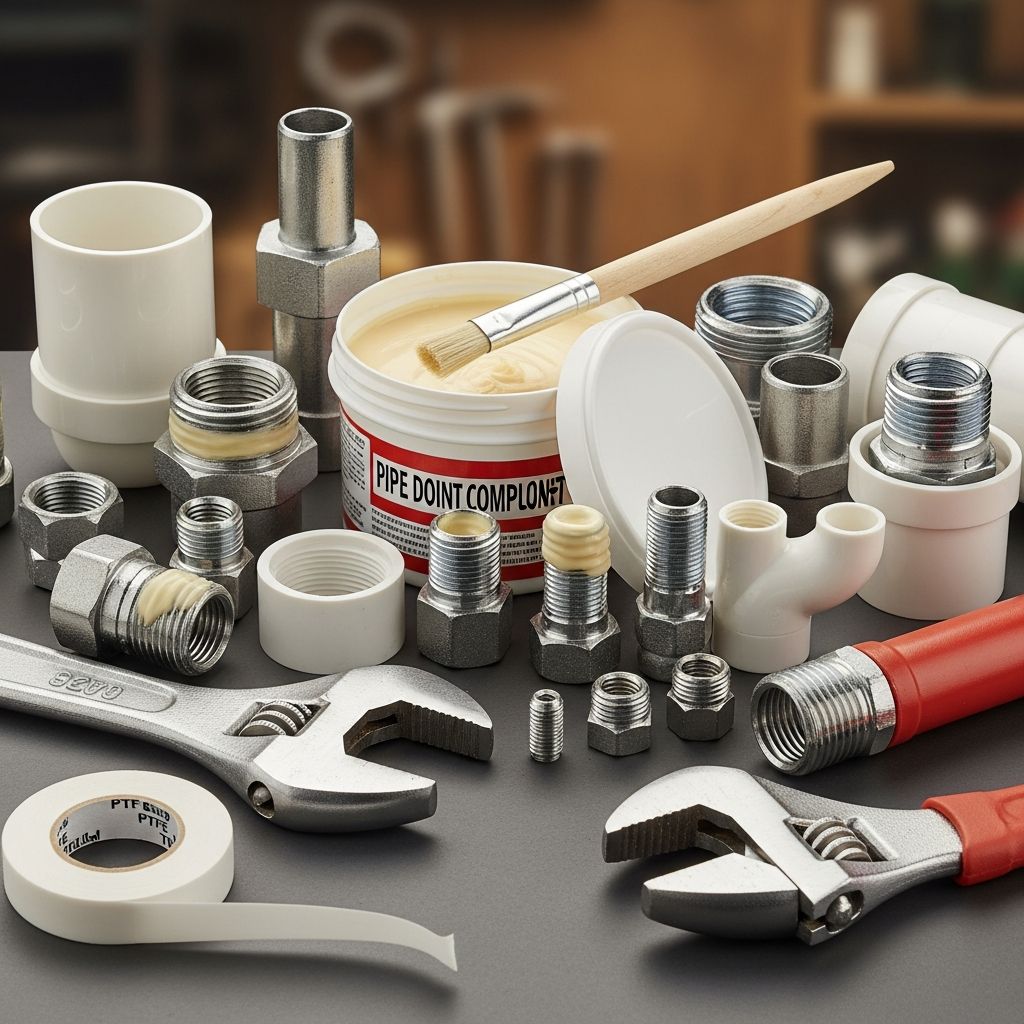
Pipe joint compound is a thick paste designed to seal and lubricate threaded pipe connections. It is brushed onto the male threads before assembly so that it fills tiny gaps that would otherwise let fluid or gas escape under pressure.
- It works with threaded metal fittings, and some formulas are made for specific plastics.
- It is a sealant and lubricant, not a glue; it does not permanently bond the parts together.
Because it also lubricates the threads, fittings are easier to tighten and later loosen for maintenance, which is a major advantage over relying on bare metal-to-metal contact.
Where Pipe Joint Compound Works Best
Pipe joint compound shines in applications where threads carry pressure, temperature swings, or critical fluids and gases. Choosing it wisely prevents leaks without over-tightening, which can crack fittings or distort threads.
Typical residential and light commercial uses
- Hot and cold water supply lines feeding fixtures and appliances.
- Hydronic heating systems, including boiler piping and radiator risers.
- Natural gas or propane lines where the product is rated for gas service.
- Compressed air systems and certain low-pressure steam lines when permitted by local code.
While many compounds are multipurpose, always ensure the label matches the job: potable water, gas, high temperature, or specific chemical exposure if relevant.
Pipe Dope vs. Thread Tape vs. Going Bare
DIYers often wonder whether to use paste, tape, or nothing at all. The right choice depends on thread type, pressure, and how critical disassembly will be later.
| Method | Best For | Main Advantages | Main Limitations |
|---|---|---|---|
| Pipe joint compound (paste) | Metal threaded joints, high-pressure or larger sizes | Excellent sealing, lubrication, easy disassembly | Can be messy; must match material and application |
| PTFE thread tape | Smaller threaded fittings and quick DIY work | Clean, fast, inexpensive, no drying time | Easy to misapply; less ideal for large or rough threads |
| No sealant | Precision flare fittings and union faces designed to seal metal-to-metal | No contamination of seating surfaces | Threads may gall; slight imperfections can cause leaks |
Some installers use pipe joint compound together with PTFE tape on stubborn or worn threads, applying tape first and then a light coat of compound over the tape to improve filling and lubrication. This hybrid approach is best reserved for problem situations and only where both materials are compatible with the system.
Understanding Labels and Formulations
Not all compounds are interchangeable. The can or tube label contains critical information that guides safe, reliable use in specific piping systems.
- Material compatibility: Some products are for metal threads only; others are safe on certain plastics like PVC or CPVC.
- Service type: Look for clear wording such as “potable water,” “natural gas,” “LP gas,” “steam,” or “hydronic heating.”
- Temperature and pressure ratings: Ensure the listed ranges exceed the maximum conditions of your system.
- Curing behavior: Many modern compounds are “soft-set” and can be pressurized immediately; others need a curing period before use.
By matching these factors to your project, you avoid chemical incompatibility, softened plastics, or degraded seals that may fail months after installation.
Step-by-Step: How to Apply Pipe Joint Compound
Correct application is at least as important as product selection. Rushing or skipping steps is a leading cause of annoying leaks that appear only after walls are closed or systems are insulated.
1. Prepare the threads
- Inspect male and female threads for damage, flattening, or cross-threading.
- Remove old tape, dried compound, rust, and debris with a brush or rag.
- Ensure surfaces are dry and free from oil or heavy grease that could block adhesion.
2. Mix the compound (if required)
Some products separate during storage, with solids settling to the bottom and liquid rising to the top. If the instructions indicate mixing, stir thoroughly until the paste is uniform in color and texture.
3. Apply to male threads only
- Use the brush provided or a small natural-bristle brush for best control.
- Start on the second thread from the end so excess is less likely to squeeze into the piping interior.
- Work the compound into the threads all the way around, creating an even, continuous layer without globs.
Covering every valley of the thread is more important than applying a thick coat. Thin and complete is better than thick and patchy.
4. Assemble and tighten
- Thread the fitting together by hand first to avoid cross-threading.
- Finish tightening with a wrench, following manufacturer torque recommendations when available.
- Avoid overtightening, especially on plastic or thin-walled fittings where it is easy to crack the part.
The lubricating effect of compound means fittings may turn more easily than you expect, so use feel and judgment rather than forcing an extra turn “just in case.”
Common Mistakes to Avoid
Most problems with pipe joint compound trace back to a small list of avoidable errors. Recognizing these mistakes in advance saves time and rework.
- Using the wrong product for the job: A compound not rated for gas, high temperature, or plastic piping can fail prematurely.
- Applying compound to the wrong surfaces: It belongs on male tapered threads, not on sealing faces of union connections or flare seats.
- Over-applying: Excess paste can squeeze inside the pipe, potentially clogging small passages such as burner orifices or fixture inlets.
- Skipping surface prep: Sealing over dirt, old tape, or corrosion often causes slow weeping leaks.
- Ignoring cure times: Systems that need curing can leak if pressurized too soon.
Building a deliberate, repeatable routine—inspect, clean, apply, assemble, test—reduces the chance of missing a key step when working under time pressure.
Leak Testing and Troubleshooting
Even careful work should be verified with a proper leak test, especially where gas or high-pressure water is involved. Testing soon after assembly makes corrections easier and avoids damage to finishes and building materials.
Basic leak testing approaches
- Water systems: Pressurize the line and inspect connections visually and by touch for moisture over several minutes.
- Gas lines: Use an approved leak-detection solution or soapy water, watching for steady bubble formation at joints.
- Air systems: Listen for hissing and apply a bubble solution to suspect areas.
If a connection leaks, depressurize the system fully before attempting to tighten or rework it. In many cases, disassembling, cleaning, and reapplying compound is more reliable than simply tightening further.
Special Considerations for Plastic and Specialty Piping
Plastic threads are more easily damaged than metal ones, and not every pipe joint compound is safe to use on them. The wrong solvent base can soften or swell the plastic, leading to cracks later.
- Use only compounds clearly marked as compatible with the plastic involved, such as specific CPVC-rated products.
- Apply a thinner coat than you would on metal and tighten more gently, since the lubricating effect makes it easy to over-stress the joint.
For some plastic systems, manufacturer instructions may favor thread tape or proprietary sealants, so always defer to the piping manufacturer’s guidelines if they differ from general practices.
Safety, Code, and Best-Practice Tips
Beyond basic leak prevention, good sealing practices take into account safety, local regulations, and future serviceability. Even DIY projects should respect code requirements and manufacturer instructions.
- Check local plumbing and fuel gas codes for any restrictions on thread sealant types in your jurisdiction.
- Ventilate work areas, especially when working in mechanical rooms, crawlspaces, or other confined locations.
- Wear gloves and avoid skin and eye contact with solvents or uncured products.
- Label shutoff valves and keep joints accessible when possible to simplify inspection and future repair.
When in doubt for gas piping or complex systems, consulting a licensed professional is the safest course, even if you complete other parts of a project yourself.
Practical Scenarios for Homeowners
Seeing how pipe joint compound fits into everyday repairs can make it easier to decide when to use it and how carefully to approach each task. Below are a few common home scenarios where good thread sealing makes a noticeable difference.
- Replacing a water heater: Threaded connections on the hot and cold nipples, temperature-pressure relief discharge line, and sometimes gas inlet all may call for an appropriate compound selected for both temperature and fuel type.
- Installing a boiler or radiant heating loop: Multiple threaded joints on pumps, air vents, and manifolds benefit from a high-temperature, hydronic-rated compound to reduce service calls for leaks.
- Running new gas to a range or grill: A gas-rated compound combined with thorough leak testing adds a layer of safety on top of proper pipe sizing and support.
Taking the time to select the correct product and apply it methodically is often the difference between a one-time installation and repeated return trips to tighten and re-seal connections.
Frequently Asked Questions
Can pipe joint compound be used on every threaded connection?
No. Some connections are designed to seal on a machined metal-to-metal face, such as certain unions and flare fittings. In those cases the threads merely pull the faces together, and compound should not be placed on the sealing surfaces. Compound may be used sparingly on the threads solely for lubrication when the manufacturer approves it.
Is more compound always better for preventing leaks?
More compound does not automatically produce a better seal. The goal is to fill the thread valleys with a thin, even layer. Excess paste tends to squeeze inside the pipe, where it can break loose and interfere with valves, burners, or small orifices. A careful, consistent application is more important than thickness.
How long should I wait before pressurizing a joint?
Many modern products are “soft-set” and can be placed into service as soon as the joint is assembled, while others require a specific curing time before being exposed to full pressure, especially with gas. Always follow the instructions printed on the label, as curing behavior varies between brands and formulations.
Can I switch between different brands of compound on the same system?
Different brands of compound can coexist on the same piping system, but each joint should be cleaned and re-sealed with a single product rather than layering multiple types on top of each other. Consistency at the joint level simplifies troubleshooting and ensures that product performance matches what is described on a single label.
What should I do if a joint still leaks after using pipe joint compound?
If tightening modestly does not stop a leak, the most reliable fix is to depressurize the system, disassemble the joint, clean both sets of threads thoroughly, and reseal with fresh compound or another appropriate method. Persistent leaks can indicate damaged threads, mismatched components, or an unsuitable product, all of which should be corrected before putting the system back into regular service.
Similar Articles







Read full bio of Sneha Tete