Polyvinyl Alcohol (PVA): A Practical Guide to a Surprisingly Versatile Material
Understanding the clear film behind pods, crafts, coatings and more.
Polyvinyl Alcohol (PVA): What It Is and Why It Matters in Everyday Life
Polyvinyl alcohol, often shortened to PVA, is a synthetic polymer that quietly shows up in everything from laundry pods and craft glues to paper coatings and cosmetic products. It is valued for being film-forming, water-soluble, generally low in toxicity and highly versatile in both industrial and household settings.
Understanding the basics of PVA helps you make better choices about cleaning products, DIY projects, packaging and even personal care items. This guide explains what PVA is, how it behaves, where you will encounter it and how to handle it responsibly at home.
What Exactly Is Polyvinyl Alcohol?
Polyvinyl alcohol is a man-made polymer created through the chemical modification of another substance called polyvinyl acetate. In its pure form, PVA usually appears as a white powder or small granules that can be dissolved in water to create clear, viscous solutions.
Manufacturers can tailor PVA’s properties, such as how fast it dissolves or how strong its films become, by adjusting the production process. That tunability is one reason it appears in so many different product categories, from paper coatings to medical devices.
- Appearance: Typically a white or off-white powder or bead.
- Solubility: Dissolves in water; solubility depends on grade and temperature.
- Odor: Generally odorless or very low odor.
Key Properties That Make PVA Useful
PVA’s popularity comes from a combination of properties that are not commonly found together in a single material. Several of these directly explain why it is used in films, adhesives and specialty products.
Water Solubility and Film Formation
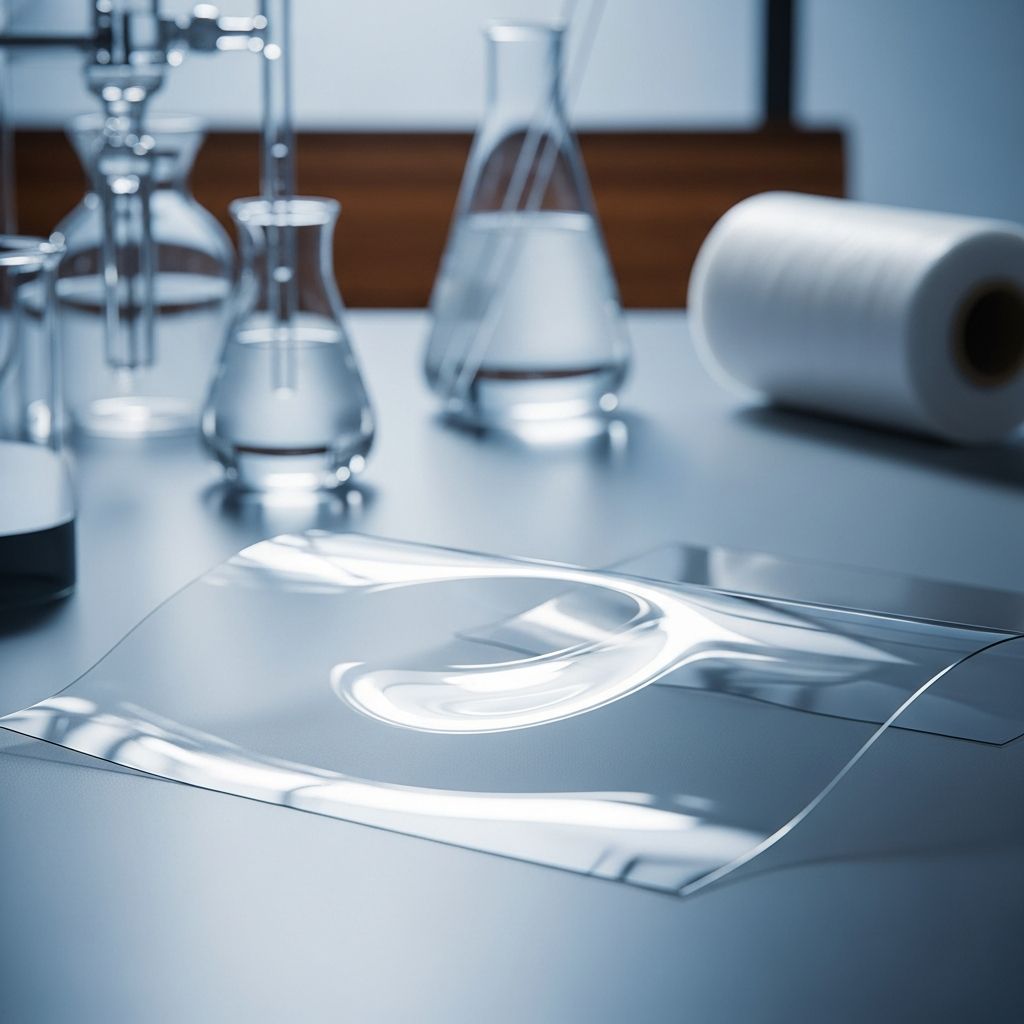
PVA dissolves in water and can dry into strong, transparent films. This unusual pairing means a product can remain solid and protective in dry conditions, then quickly break down when exposed to water.
- In laundry and dish pods, the outer film holds detergent until the wash cycle dissolves it.
- In craft and packaging applications, PVA films can protect items but later wash away cleanly.
Adhesive and Binding Ability
PVA chains contain many hydroxyl groups (chemical units that like to form hydrogen bonds), which help the polymer stick to surfaces like paper, fabric and some plastics. This makes PVA an effective binder and adhesive base.
- Paper and cardboard can be sized or coated with PVA for greater strength and better printing.
- Textile fibers benefit from PVA sizing that protects them during weaving and is later washed out.
Flexibility, Strength and Clarity
Properly formulated PVA films are typically clear, smooth and reasonably strong, making them useful wherever an unobtrusive yet functional film is needed. In some applications, plasticizers are added to improve flexibility, while crosslinking agents can boost strength and water resistance.
| Aspect | Advantages | Limitations |
|---|---|---|
| Water behavior | Dissolves or disperses in water; easy cleanup | Not ideal for applications needing long-term water resistance |
| Adhesion | Bonds well to paper, fabrics and certain surfaces | Limited adhesion to very low-energy plastics or oily substrates |
| Appearance | Forms clear, smooth films | Can become hazy or brittle if mis-formulated or over-dried |
| Safety profile | Generally regarded as low toxicity in intended uses | Dust inhalation and eye contact should still be avoided |
Where You Encounter PVA Around the Home
Many people first hear about PVA when shopping for laundry pods or eco-oriented cleaning products. In reality, the same family of materials also appears in paper goods, cosmetics and even some construction products.
Laundry Pods and Water-Soluble Packaging
The thin, transparent shell on many laundry and dishwasher pods is often made from PVA-based film. The film holds concentrated detergent securely, then dissolves quickly when it meets the hot, agitated water of a wash cycle.
- Reduces direct contact with concentrated detergents when handled properly.
- Provides precise dosing and helps reduce messy spills or leaks.
Beyond pods, PVA films may be used for single-use bags, agricultural packaging and other applications where a bag or wrapper should disappear in water after use.
Paper, Crafts and DIY Projects
PVA’s role as a film former and binder shows up clearly in paper and craft products. Many specialty papers and some glues rely on PVA chemistry behind the scenes.
- Paper coatings can use PVA to enhance print clarity and ink holdout.
- Craft glues and school glues may include PVA for flexibility and easy cleanup.
- Casting molds, model making and papier-mâché sometimes employ PVA solutions as release agents or binders.
Cosmetics and Personal Care
PVA’s ability to form thin, peelable films makes it a handy ingredient in some cosmetic products. It helps create flexible layers that cling to skin or hair, then wash or peel away without leaving much residue.
- Peel-off face masks frequently rely on PVA for the film that lifts away.
- Hair styling products may use PVA for hold, shine and a smooth feel.
Construction and Home Repair Uses
In construction and repair products, PVA often appears in modified cement, tile adhesives and primers. At low levels, it can improve adhesion, flexibility and surface cohesion without dramatically changing how a product is applied.
- Improved bonding between old and new concrete or mortar layers.
- Enhanced workability of some patching compounds and tile adhesives.
Environmental and Health Considerations
Because PVA is often marketed as an eco-conscious choice, it is worth understanding what that means in practice. PVA is water-soluble and can be broken down by microorganisms under suitable conditions, but the rate and completeness of that breakdown depend heavily on the environment and formulation.
Biodegradability and Wastewater
In many municipal treatment systems, PVA can be degraded by specific bacteria, converting it into simpler compounds over time. However, this process is not instantaneous, and performance varies by treatment plant design and local conditions.
- Discharging PVA solutions down the drain in normal household amounts is typically expected by product designers.
- Pouring large volumes of concentrated solutions into septic systems without dilution is not advisable.
Human Exposure and Safety Profile
Most consumers encounter PVA in low concentrations within finished products. At these levels and in intended uses, PVA is generally regarded as having low acute toxicity. Still, like any fine powder or concentrated chemical, it should be handled with basic precautions when used in raw form.
- Avoid breathing dust when working with dry PVA powder.
- Prevent contact with eyes and minimize prolonged skin exposure to concentrated solutions.
- Keep PVA-containing laundry pods and cleaning products securely out of reach of children and pets.
Working With PVA in DIY Projects
PVA can be purchased as dry powder, concentrated solutions or pre-made films. For most home users, small quantities of liquid PVA or PVA-based glue are easiest to manage. Clear instructions and consistent mixing will help you get reliable results.
Mixing a Basic PVA Solution (Conceptual Overview)
If you choose to work with dry PVA, the general idea is to slowly add the powder to hot water while stirring, then continue stirring until the mixture becomes clear and uniform. Allowing the solution to cool and settle helps remove bubbles and ensures an even consistency before use.
Exact ratios and temperatures depend on the particular PVA grade, so always follow the supplier’s directions rather than guessing. Using too much powder can create a gel that is difficult to apply, while too little may lead to weak films.
Common Home Uses for PVA Solutions
- Sealing porous surfaces: Thin PVA solutions can help consolidate chalky plaster or drywall before painting.
- Craft sealing and finishing: Light coats can add a clear, protective skin to paper models or mixed-media art.
- Mold release in casting: Certain casting processes use PVA as a sacrificial release layer that rinses away with water.
Simple Safety Checklist for Home Users
Most off-the-shelf products containing PVA come with their own safety guidance. When working with bulk material or concentrated solutions, a few basic practices go a long way toward safe use.
- Read the product label and follow any mixing or disposal directions.
- Work in a ventilated area, especially when handling powders or heating solutions.
- Wear safety glasses if splashes are possible.
- Use gloves when handling concentrated or hot solutions.
- Label any containers clearly and store them away from food items.
- Keep all PVA materials out of the reach of children and pets.
Myths and Misconceptions About PVA
Because PVA is associated with environmentally conscious packaging and pods, several misunderstandings have grown around it. Knowing what is accurate helps you evaluate marketing claims more clearly.
- “It disappears, so it has no impact.” PVA dissolves in water, but that does not mean it ceases to exist instantly. Dissolved polymers still require treatment and breakdown before they are fully mineralized.
- “All PVA is identical.” Different grades of PVA can behave very differently in terms of solubility, strength, and interaction with other ingredients.
- “PVA is the same as PVA glue.” Many white glues use PVA chemistry, but the final product contains additional components that modify drying time, flexibility and adhesion.
Quick Reference: Common Uses of PVA
| Category | Typical Role of PVA | What You Notice as a User |
|---|---|---|
| Laundry and cleaning | Water-soluble film for pods; ingredient in some detergents | Pods that hold their shape dry, then dissolve in the wash |
| Paper and printing | Coating, binder and surface treatment | Sharper printing, stronger paper, smoother finish |
| Crafts and hobbies | Binder in glues, sealers and mold release agents | Easy-to-use glues that wash up with water |
| Cosmetics | Film-forming agent in masks and styling products | Peel-off masks, flexible hair gels or coatings |
| Construction | Modifier in adhesives, cement and primers | Improved adhesion and surface bonding in some repair products |
FAQs About Polyvinyl Alcohol
Is polyvinyl alcohol the same as polyvinyl acetate (PVA glue)?
No. Polyvinyl alcohol and polyvinyl acetate are related but distinct substances. Many white glues are based on polyvinyl acetate, which can be partially converted into polyvinyl alcohol during manufacture or use, but the final glue formula contains additives that make it behave differently from pure PVA.
Is PVA safe on skin?
PVA is used in several cosmetic products that are designed for short-term skin contact, such as masks and peels. For routine home use, stick to products specifically formulated for cosmetic or medical purposes, and discontinue use if irritation occurs.
Can PVA go down the drain?
Household products that contain PVA, such as laundry pods, are formulated with the expectation that their PVA content will enter wastewater systems in small doses. As with any chemical, avoid pouring large amounts of concentrated solution down the drain, and always follow local guidance for disposal.
Does PVA biodegrade in nature?
Under the right conditions and in the presence of appropriate microorganisms, PVA can be broken down over time. However, the speed and completeness of this process depend on temperature, microbial populations, oxygen levels and the specific PVA formulation.
Can I use PVA for food-related projects?
There are food-contact-approved grades of PVA used industrially in coatings and capsules, but not all PVA products meet those standards. For home projects involving food or utensils, only use materials clearly labeled as food safe.
Using PVA Responsibly at Home
PVA is not a mysterious substance; it is a carefully engineered polymer that, when used correctly, can make daily tasks more convenient and efficient. By understanding its strengths, limits and basic safety considerations, you can decide when PVA-based products make sense—and how to handle them thoughtfully.
Whether you are choosing laundry pods, experimenting with mold-making, improving paper crafts or selecting repair materials, a bit of background on polyvinyl alcohol gives you an informed starting point for safer and more effective home projects.
Similar Articles





Read full bio of medha deb