Pool Fence Ideas: Stylish & Safe Backyard Designs
Explore creative pool fence ideas that combine safety, style, and functionality for your backyard.
Pool Fence Ideas: Creating Safe and Stylish Backyard Oases
A pool fence serves a dual purpose in any backyard: it provides essential safety barriers while also contributing significantly to your outdoor aesthetic. Whether you’re installing a new pool or upgrading an existing fence, understanding the various pool fence options available can help you make an informed decision that complements your home’s architecture and meets local safety codes.
Pool fences are not just about compliance with regulations; they’re an opportunity to elevate your outdoor living space. From modern minimalist designs to classic wooden enclosures, the right fence can transform your pool area into a stunning entertainment destination while keeping children and pets safe.
Understanding Pool Fence Safety Requirements
Before selecting a pool fence style, it’s crucial to understand the safety standards and regulations that govern pool enclosures. Most jurisdictions require a fence at least four feet high surrounding the pool area, with spacing requirements that prevent children from squeezing through or climbing over.
- Height Requirements: Most areas mandate a minimum fence height of 4 feet (48 inches) measured from ground level
- Gate Requirements: Self-closing and self-latching gates are typically required, with the latch positioned above a child’s reach
- Spacing Standards: Vertical slats and horizontal bars should be spaced no more than 4 inches apart
- Climbing Prevention: Ornamental objects and landscaping should not provide climbing opportunities
- Local Codes: Always check your local building codes, as requirements vary by municipality
Understanding these requirements before you begin shopping for fencing materials ensures your investment will be compliant and safe.
Wooden Pool Fence Designs
Wooden fences remain one of the most popular choices for pool enclosures, offering warmth, natural beauty, and versatility in design. Wood fences complement traditional and contemporary homes alike and can be customized to match your home’s architectural style.
- Privacy Fencing: Solid wooden panels provide complete privacy and create a secluded pool environment
- Semi-Privacy Designs: Alternating board patterns or lattice-top combinations offer partial views while maintaining privacy
- Picket Fencing: Classic picket styles work well for homes with traditional or cottage aesthetics
- Horizontal Board Styles: Modern horizontal slat designs create clean lines and contemporary appeal
Wooden fences require regular maintenance, including staining or sealing every 2-3 years to protect against weathering, rot, and insect damage. However, many homeowners appreciate the natural aesthetic and the ability to easily customize or modify wooden fences over time.
Metal and Aluminum Pool Fencing
Metal fencing options, particularly aluminum, have gained popularity in recent years due to their durability, minimal maintenance requirements, and sleek appearance. Aluminum fences offer the security of a permanent structure without the ongoing maintenance demands of wood.
- Ornamental Aluminum: Features decorative spears, scrollwork, and elaborate designs that add elegance
- Modern Aluminum: Clean lines and minimalist designs suitable for contemporary homes
- Steel Fencing: Provides ultimate durability and strength, though it may require occasional touch-ups to prevent rust
- Powder-Coated Finishes: Available in numerous colors to match your home’s exterior
One significant advantage of metal fencing is its visibility—unlike solid wooden fences, metal fences allow sightlines into the pool area, which can be beneficial for supervision and safety. Additionally, aluminum is rust-resistant and requires minimal maintenance beyond occasional cleaning.
Glass and Frameless Fencing Solutions
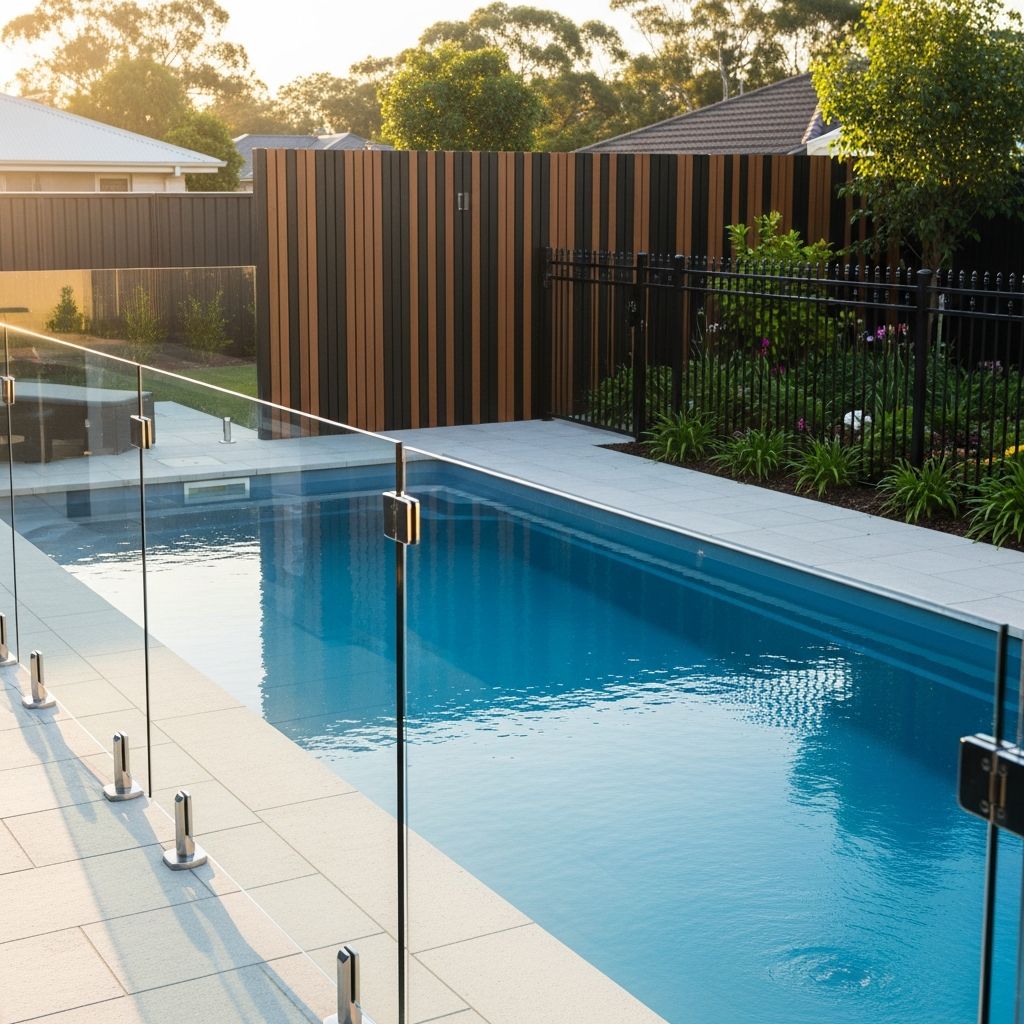
For homeowners seeking a contemporary, unobstructed view of their pool area, glass and frameless fencing represents the pinnacle of modern pool fence design. These transparent barriers provide safety compliance without compromising aesthetics or sightlines.
- Frameless Glass Panels: Minimal metal framing creates an invisible barrier effect
- Semi-Frameless Options: Slightly more framing than fully frameless while reducing costs
- Tempered Safety Glass: Meets safety requirements and shatters into small, relatively harmless pieces if broken
- Tinted Glass: Offers privacy while maintaining visibility and can reduce glare
While glass fencing is more expensive than traditional materials, many homeowners view it as an investment that preserves their home’s visual appeal and property views. Glass fencing is particularly popular in areas with scenic backyard landscapes or premium residential communities.
Vinyl and Composite Fencing
Vinyl and composite materials have revolutionized pool fencing by offering the aesthetic appeal of wood without the maintenance requirements. These synthetic materials resist rot, insects, weathering, and fading, making them an attractive long-term investment.
- Vinyl Privacy Fencing: Solid panels provide complete privacy and security
- Vinyl Semi-Privacy: Lattice and open designs allow some visibility
- Composite Materials: Blends of wood fibers and plastic create durable, maintenance-free options
- Color Variety: Available in whites, grays, browns, and even custom colors
The primary advantage of vinyl and composite fencing is durability combined with minimal maintenance. Unlike wood, these materials don’t require staining, sealing, or regular painting, making them ideal for homeowners who want a beautiful pool fence without the ongoing upkeep.
Removable and Retractable Pool Fencing
For property owners seeking flexibility or those living in regions with seasonal pool usage, removable and retractable pool fencing options provide innovative solutions that maintain safety while offering convenience.
- Removable Mesh Fencing: Lightweight barriers that can be installed and removed as needed
- Retractable Fences: Motorized systems that retract when not in use
- Seasonal Solutions: Perfect for climates where pools are only used during warmer months
- Cost-Effective: Generally more affordable than permanent installations
While removable and retractable systems offer convenience, they require consistent installation and maintenance to ensure they function properly. They’re best suited for responsible adults who will consistently use them rather than as primary safety measures for homes with young children.
Gate Design and Installation Considerations
The gate is arguably the most critical component of any pool fence. A properly installed, functioning gate with appropriate latching mechanisms is essential for maintaining pool safety and ensuring compliance with regulations.
Key gate considerations include:
- Self-Closing Hinges: Springs or hydraulic systems that automatically close gates
- Self-Latching Mechanisms: Latches that automatically engage without manual intervention
- Latch Height: Positioned at least 54 inches from the ground, above typical child reach
- Inward Opening: Gates should typically open away from the pool area
- Double Gates: Necessary for larger pool areas or for equipment access
- Regular Testing: Ensure gates function properly and latches work correctly
Gate maintenance is crucial for ongoing safety. Regular inspection and testing ensure that latching mechanisms remain functional and springs maintain proper tension.
Landscaping and Pool Fence Integration
A well-designed pool fence works in harmony with surrounding landscaping to create a cohesive outdoor space. Strategic plantings, decorative elements, and landscape features can enhance both the aesthetic and functional qualities of your pool area.
- Climbing Vines: Can soften fence lines when properly trained (but avoid those that create climbing opportunities)
- Shrub Screening: Dense plantings provide privacy without requiring a solid fence
- Landscaping Layers: Multiple plantings create depth and visual interest around fence perimeters
- Lighting Integration: Landscape lighting highlights fence features and improves nighttime safety
- Planter Boxes: Can be incorporated into fence designs for added visual appeal
Color and Finish Options
Selecting the appropriate color and finish for your pool fence significantly impacts your pool area’s overall aesthetic. Modern materials offer extensive customization options to complement any home design.
| Material Type | Color Options | Maintenance |
|---|---|---|
| Wood | Natural stains, painted colors | Regular sealing required |
| Aluminum | Powder-coated colors, metallic finishes | Minimal maintenance |
| Vinyl | White, gray, brown, custom colors | Cleaning only |
| Glass | Clear, tinted, frosted options | Regular glass cleaning |
Budget Considerations for Pool Fencing
Pool fence costs vary dramatically based on materials, design complexity, and installation requirements. Understanding the investment associated with different options helps you make financially sound decisions aligned with your budget and long-term goals.
- Budget-Friendly Options: Chain-link and removable mesh fencing offer affordable safety solutions
- Mid-Range Choices: Vinyl, composite, and aluminum provide good value with minimal maintenance
- Premium Selections: Custom wood, glass, and ornamental metal fencing represent higher investments
- Installation Costs: Professional installation typically adds 30-50% to material costs
- Long-Term Value: Consider maintenance expenses when evaluating true cost of ownership
Professional Installation vs. DIY Installation
While some homeowners attempt DIY fence installation, professional installation offers several advantages, particularly for pool fences where safety and code compliance are paramount.
- Code Compliance: Professionals ensure installations meet all local regulations
- Proper Gate Function: Professional installation guarantees gate mechanisms work correctly
- Structural Integrity: Professional work ensures fences are properly anchored and stable
- Warranty Protection: Many professional installations include warranties on workmanship
- Time Efficiency: Professional crews complete installations quickly and efficiently
For complex installations, particularly those involving glass panels or sophisticated gate mechanisms, professional installation is highly recommended to ensure safety and functionality.
Frequently Asked Questions About Pool Fencing
Q: What is the standard height requirement for pool fences?
A: Most jurisdictions require a minimum fence height of 4 feet (48 inches) measured from ground level to the top of the fence.
Q: How often should I maintain my wooden pool fence?
A: Wooden pool fences should be stained or sealed every 2-3 years to protect against weathering, rot, and insect damage. Additionally, inspect it annually for damage or wear.
Q: Are glass pool fences safe?
A: Yes, glass pool fences use tempered safety glass that meets safety requirements. If broken, tempered glass shatters into small, relatively harmless pieces rather than dangerous shards.
Q: What makes a pool gate compliant with safety regulations?
A: Compliant gates must be self-closing and self-latching, with the latch positioned at least 54 inches above ground level. Gates should not have climbing handholds and should open away from the pool area.
Q: Can I install a pool fence myself?
A: While some homeowners undertake DIY installation, professional installation is recommended to ensure code compliance, proper functionality, and safety, particularly for gates and complex materials.
Q: What’s the most low-maintenance pool fence option?
A: Aluminum, vinyl, and composite materials require minimal maintenance compared to wood. They resist weathering, rot, and insects, requiring only occasional cleaning.
Q: Are chain-link fences acceptable for pool enclosures?
A: Yes, chain-link fences meet safety requirements and are an affordable option, though they offer less privacy and aesthetic appeal than other materials.
References
- 2021 International Building Code (IBC) – Chapter 3109: Swimming Pools — International Code Council. 2020. https://www.iccsafe.org/
- ASTM F1908-20: Standard Consumer Safety Specification for Residential Above-Ground Swimming Pools — ASTM International. 2020. https://www.astm.org/f1908-20.html
- Pool Barrier Guidelines and Regulations — U.S. Consumer Product Safety Commission (CPSC). 2023. https://www.cpsc.gov/
- Residential Pool and Spa Safety Requirements — National Association of Home Builders (NAHB). 2022. https://www.nahb.org/
- Guide to Pool Enclosure Materials and Installation — Association of Pool & Spa Professionals (APSP). 2023. https://www.apsp.org/
Similar Articles






Read full bio of Sneha Tete