Powering LED Lights With 12V Batteries: Complete Guide
Master the essentials of connecting LED lights to 12V batteries for reliable off-grid illumination in vehicles, boats, and homes.
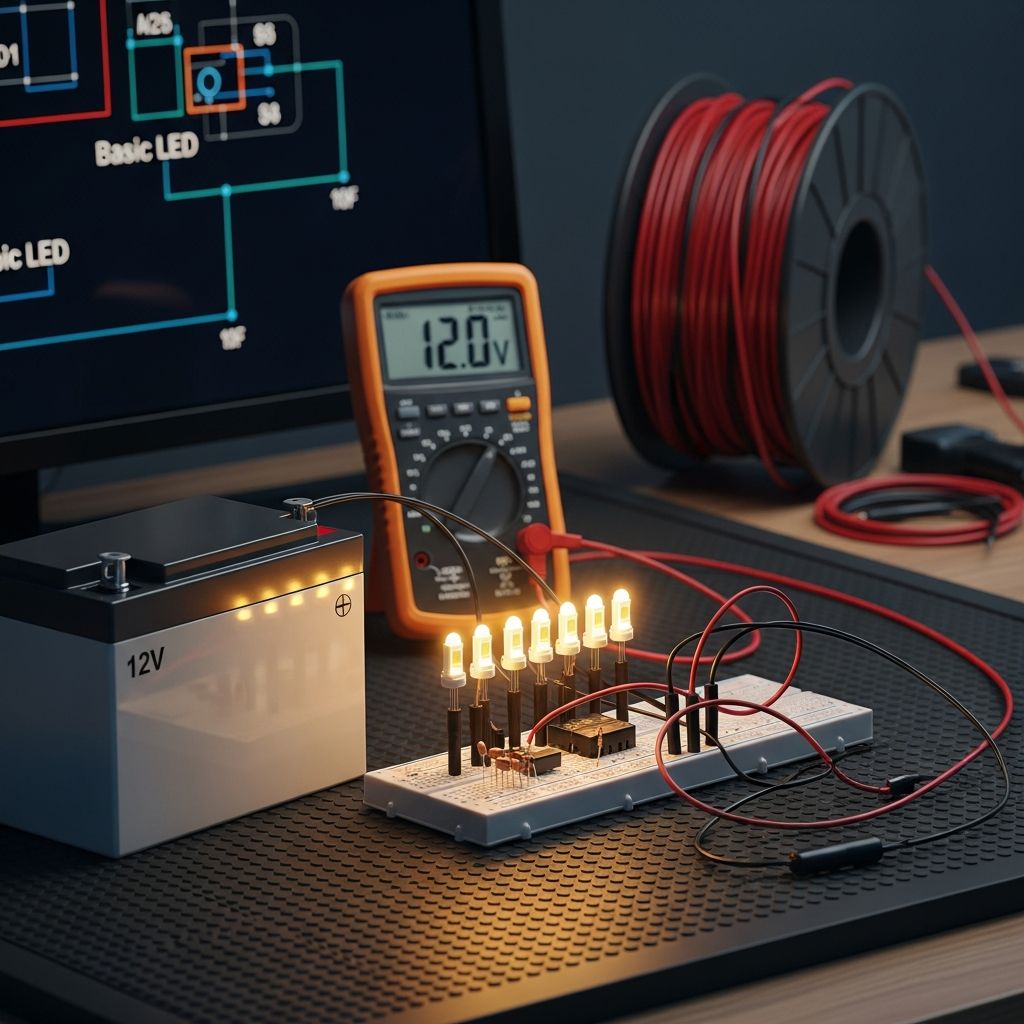
Powering LED Lights with 12V Batteries
LED lights offer energy-efficient illumination perfect for portable and off-grid applications. Connecting them to a 12V battery provides a straightforward DC power source, ideal for RVs, boats, camping, or emergency setups. This guide details everything from component selection to installation and maintenance, ensuring safe and effective operation.
Understanding LED and Battery Compatibility
LED strips and fixtures typically operate on low DC voltages like 12V, matching common batteries such as car, deep-cycle, or lithium types. Voltage compatibility is crucial: a 12V LED matches a 12V battery directly, avoiding the need for transformers used in AC setups.
- Voltage Matching: Confirm your LED’s rating—12V strips work seamlessly with 12V sources.
- Power Draw: Calculate total watts (volts x amps) to prevent battery overload.
- Polarity: LEDs require correct + and – connections; reversal can damage them.
Batteries output stable DC power, making them superior for mobile use compared to wall adapters.
Essential Components for a Successful Setup
Gather these items before starting to ensure a professional-grade installation.
| Component | Purpose | Recommended Specs |
|---|---|---|
| LED Lights/Strips | Illumination source | 12V DC, waterproof for outdoor use |
| 12V Battery | Power supply | Deep-cycle lead-acid or lithium, 20Ah+ capacity |
| Wires | Connections | 14-18 AWG, red for positive, black for negative |
| Connectors | Secure joins | Butt splices, ring terminals, crimp tools |
| In-Line Fuse | Protection | 5-10A rating, ATO/ATC type |
| Switch | Control | SPST toggle, rated for LED current |
| Electrical Tape/Heat Shrink | Insulation | UV-resistant for durability |
These components form the backbone of any 12V LED system, prioritizing safety and reliability.
Step-by-Step Wiring Instructions
Follow these precise steps for a secure connection. Work in a well-lit area with the battery disconnected.
- Prepare LED Wires: Strip 1/4 inch insulation from LED leads. Crimp butt connectors to each, attaching red wire to positive (often marked + or longer leg) and black to negative.
- Route Wiring: Position the LED and run wires to the battery, avoiding sharp edges or heat sources. Use 14-18 AWG for runs under 15 feet to minimize voltage drop.
- Install Fuse on Positive Line: Cut the in-line fuse holder wire in half. Crimp ring terminal to one end for battery connection and butt splice to the other for LED wire. Insert 5-7.5A fuse.
- Add Switch (Optional):strong> Splice a switch into the positive wire for easy on/off control. Ensure it’s rated above the LED’s amp draw.
- Connect to Battery: Crimp ring terminals to wire ends. Attach black to negative (-) post, red (with fuse) to positive (+). Tighten securely.
- Insulate All Joins: Wrap connections with electrical tape or heat shrink tubing to prevent shorts.
- Test the Circuit: Reconnect battery and verify operation. LEDs should illuminate brightly without flickering.
This method supports single fixtures or multiple strips in parallel, scaling for larger projects.
Safety Protocols and Best Practices
Electrical work demands caution to avoid fires, shocks, or equipment failure.
- Fuse Every Positive Line: Protects against shorts; size to 125% of LED amps (e.g., 7.5A for 6A draw).
- Prevent Over-Discharge: Lead-acid batteries shouldn’t drop below 50% capacity; use a low-voltage cutoff.
- Secure Wiring: Use zip ties and looms to prevent chafing in vehicles or boats.
- Match Wire Gauge: Undersized wires cause heat buildup; consult voltage drop charts for long runs.
- Outdoor Protection: Opt for IP65+ rated LEDs and sealed batteries.
Always disconnect power before modifications. For high-power setups, add a fuse block to organize connections.
Selecting the Right Battery for LED Applications
Not all 12V batteries suit continuous LED use. Deep-cycle types excel for sustained loads over starting batteries designed for cranking.
- Lead-Acid: Affordable, but heavier and less efficient; avoid full discharge.
- AGM/Gel: Maintenance-free, vibration-resistant for RVs/boats.
- Lithium (LiFePO4): Lightweight, 2000+ cycles, deeper discharge—ideal for portability.
Estimate runtime: Runtime (hours) = Battery Ah x Usable Depth / LED Amps. Example: 50Ah lithium at 80% depth powers 4A LEDs for ~10 hours.
Advanced Setups: Dimmers, Controllers, and Multi-LED Arrays
Enhance functionality with PWM dimmers or smart controllers compatible with 12V. For RGB strips, use dedicated drivers.
Parallel wiring multiple LEDs: Connect positives together and negatives together, but recalculate total amps for fuses. Series connections increase voltage—avoid for 12V systems unless designed for it.
Troubleshooting Common Issues
Problems arise from polarity errors or poor connections. Diagnose systematically.
| Issue | Possible Cause | Solution |
|---|---|---|
| No Light | Wrong polarity or loose wire | Check +/−, reseat connections |
| Flickering | Voltage drop or dying battery | Use thicker wire, recharge battery |
| Dim Output | Undersized battery/wires | Upgrade gauge, check Ah rating |
| Overheating | No fuse or short | Install fuse, inspect insulation |
Test with a multimeter: Verify 12V at LED ends.
Practical Applications and Real-World Examples
12V LED-battery systems shine in mobile scenarios.
- RV/Van Life: Interior lighting with fuse blocks for clutter-free battery setups.
- Marine Use: Waterproof strips for cabins, fused against corrosion.
- Camping: Portable packs with lithium for tent lighting.
- Emergency: Backup illumination during outages.
Integrate solar chargers for indefinite runtime in off-grid living.
Cost Analysis and Long-Term Savings
Initial setup: $20-50 for basic kit. LEDs consume 80% less power than incandescents, extending battery life dramatically. A 10W LED runs 5x longer than a 50W halogen on the same charge.
Frequently Asked Questions (FAQs)
Can I connect multiple LED strips to one battery?
Yes, wire in parallel and sum amps for fuse sizing. Ensure battery capacity matches total load.
Do I need a resistor for 12V LEDs?
No, 12V LEDs are pre-resistored. Resistors are for lower-voltage LEDs on higher supplies.
How long will a 100Ah battery power 20W LEDs?
About 40-50 hours at 50% discharge for lead-acid; double for lithium.
Is it safe for vehicle towing while charging?
Yes, with proper isolators to prevent alternator overload. Consult diagrams for specifics.
What if my LED has black/white wires?
Black is typically positive, white negative per NEC for 12V—confirm with multimeter.
References
- Basic 12 Volt Wiring: How to Install a LED Light Fixture — Cheap RV Living. 2023-01-15. https://cheaprvliving.com/kb/basic-12-volt-wiring-how-to-install-a-led-light-fixture/
- Can I connect an LED strip directly to a 12V battery? — BLT Direct. 2024-05-20. https://www.bltdirect.com/ghost-blog/can-i-connect-an-led-strip-directly-to-a-12v-battery/
- 7 Things to Know Before Buying and Installing 12V LED Strip Lights — LED Supply. 2023-11-10. https://www.ledsupply.com/blog/7-tips-before-installing-led-strip-lights/
Similar Articles






Read full bio of Sneha Tete