From Chaos to Command Center: A Practical Guide to Reclaiming Your Garage
Turn your cluttered garage into a safe, efficient storage and workspace without losing your mind—or your weekend.
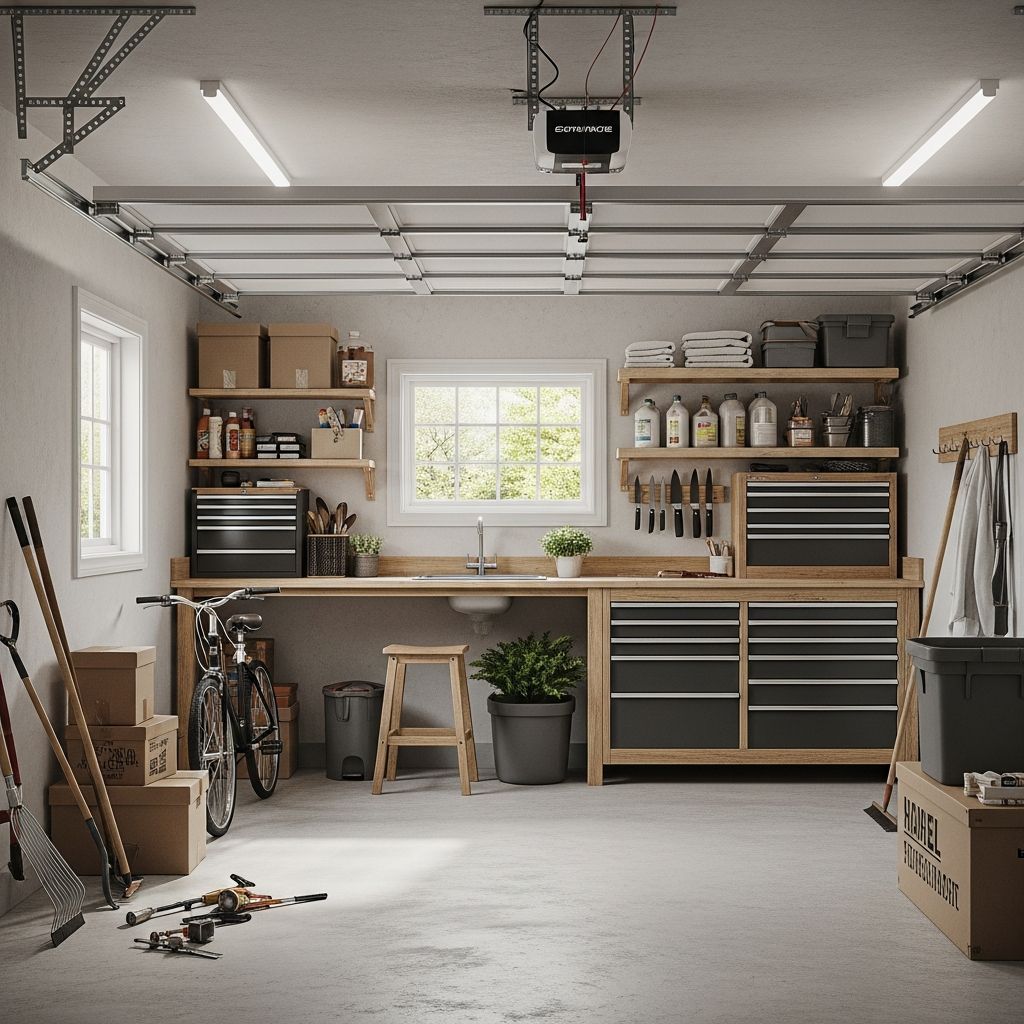
For many households, the garage quietly becomes a catch-all: tools, holiday decor, sports gear, paint cans, and random boxes all competing with the car for space. A few intentional decisions and simple systems can turn that cluttered zone into a safe, efficient command center for your home. This guide walks through a practical, step-by-step approach to planning, organizing, and maintaining a garage that actually works for the way you live.
Why Your Garage Feels Overwhelming
The garage is one of the few spaces that serves multiple purposes at once: parking, storage, hobbies, and home projects. Without a plan, everything ends up on the floor or stacked in unstable piles. Items that belong elsewhere migrate there “temporarily” and never leave. The result is visual chaos, wasted time searching for things, and even safety hazards from tripping, leaks, and chemicals stored incorrectly.
Understanding these root causes makes organizing less about being perfect and more about giving everything a clear purpose and a logical home. When each category of item has a designated spot, the garage becomes easier to use, easier to clean, and far less stressful.
Step 1: Define the True Role of Your Garage
Before touching a box, decide what your garage is and is not going to be. This gives you a filter for what stays and what goes.
- Decide primary functions: Will the garage be mainly for parking, a workshop, sports storage, bulk pantry overflow, or a mix?
- Choose secondary roles: Maybe it also supports hobbies like woodworking, gardening, or fitness, but those should not crowd out essentials like safe access and parking.
- Set boundaries: Agree that certain categories (like paperwork, memorabilia, or off-season clothing) will live elsewhere so the garage doesn’t become a general dumping ground.
Write these decisions down or post them on the wall. Clear intent helps prevent backsliding when you’re tempted to stash one more random box in the corner.
Step 2: Empty, Sort, and Declutter in Manageable Stages
Pulling every single item out at once can be overwhelming, especially for a large or very cluttered space. Instead, work in zones and time blocks.
- Work in sections: Tackle one wall or corner at a time so you can see real progress and avoid creating a yard full of stuff you can’t finish sorting.
- Create simple sorting categories: Keep, Donate/Sell, Recycle, Trash, and Relocate (items that belong elsewhere in the house).
- Group “keep” items by purpose: For example, tools, automotive supplies, sports gear, camping gear, lawn and garden, paint and chemicals, seasonal decor, and home maintenance.
As you sort, be honest about what you actually use. Broken tools, duplicate gadgets, and forgotten sports equipment quietly eat up space you could use for things that truly matter.
Step 3: Design Smart Activity Zones
Once you know what you’re keeping, organize the space around “zones” that reflect how you actually use your garage. This is the backbone of a system that stays organized.
- Entry zone: Near the door into the house; ideal for recycling, everyday shoes or boots, pet supplies, and items you frequently carry in and out.
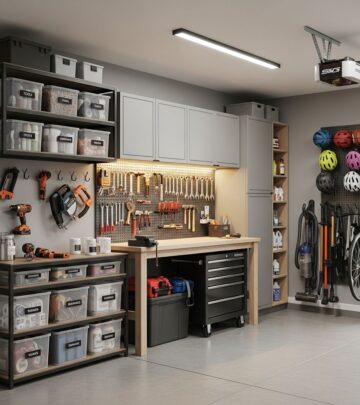
- Tool and project zone: Near an outlet and good lighting; includes your workbench, power tools, hand tools, and small hardware.
- Sports and outdoor zone: Close to the garage door for quick access to bikes, balls, helmets, and seasonal outdoor gear.
- Garden and yard zone: Near the exterior door or where you exit with lawn equipment; holds rakes, shovels, fertilizer, hoses, and lawn tools.
- Long-term storage zone: Harder-to-reach shelves or overhead racks for rarely used items like holiday decor and camping gear.
Place the most frequently used items in the easiest-to-reach zones at eye level or just below. Less-used items can go higher, lower, or deeper into the space.
Step 4: Use Vertical and Overhead Space Wisely
Most garages have more usable space on the walls and ceiling than on the floor. The key is to get as much as possible off the ground while still keeping it accessible and safe.
- Wall-mounted shelves: Ideal for bins, paint, automotive supplies, and household overflow. Choose sturdy brackets and anchor into studs.
- Hooks and racks: Use heavy-duty hooks for ladders, hoses, extension cords, and long-handled tools. Horizontal racks can hold lumber, skis, or pipes.
- Track or rail systems: These allow you to reposition hooks and baskets as your storage needs change without drilling new holes each time.
- Overhead racks: Use ceiling storage for lightweight, infrequently used items in durable containers. Keep clear of garage door tracks and openers.
By moving storage to the perimeter and overhead, you open up valuable floor space for safe walking paths, parking, and a dedicated work area.
Step 5: Choose Containers and Cabinets That Fit Your Stuff
The best storage containers are those that match the size, weight, and frequency of use of the items they hold. More bins does not automatically mean more organization.
- Clear, lidded bins: Great for seasonal items, decor, and lightweight gear. Clear sides make it easy to see contents without opening every box.
- Heavy-duty totes: Ideal for camping gear, tools, and anything stored overhead. Choose bins with reinforced lids that can be safely stacked.
- Lockable cabinets: Use for chemicals, paints, sharp tools, and anything you want to keep away from children or pets.
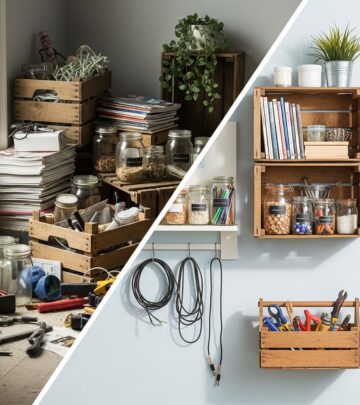
- Small parts organizers: Drawer units or divided boxes keep screws, nails, anchors, and fittings from turning into a tangled mess in random jars.
Resist the urge to buy containers first. Measure your shelves, consider what you’re storing, then choose a small set of container types and sizes you can repeat for a cleaner, more uniform look.
Step 6: Plan a Safe and Efficient Layout
A well-organized garage is not just tidy; it’s safe and comfortable to use. Think about how people and cars will move through the space before you finalize your layout.
| Design Element | What to Consider | Practical Example |
|---|---|---|
| Car clearance | Allow door swing and walking space on both sides. | Park the car, then tape out a safe buffer before adding shelves. |
| Walkways | Keep clear paths from doors to key zones. | Leave at least one continuous, unobstructed route from house to exterior door. |
| Power access | Locate outlets for tools, chargers, and a shop vac. | Place a workbench near multiple outlets for tools and task lighting. |
| Lighting | Ensure bright, even light in work and storage zones. | Add LED strips above work surfaces and near frequently used shelves. |
| Doorways | Keep doors and garage door tracks fully unobstructed. | Avoid tall shelves that interfere with the garage door mechanism. |
Place heavy or bulky items low and close to where they will be used to reduce lifting hazards. Reserve eye-level storage for items you grab often so you aren’t constantly bending or reaching overhead.
Step 7: Give Every Item a “Home Label”
Labeling turns your system into something the whole household can follow—not just the person who set it up. Think of labels as simple instructions for where things go back.
- Label by category, not item: “Camping Gear,” “Painting Supplies,” “Car Care,” and “Holiday Lights” are easier to maintain than hyper-specific labels.
- Use large, readable text: Printed label tape, adhesive labels, or even painter’s tape and a permanent marker work as long as the writing is clear.
- Label shelves and bins: Put labels both on the bin and the shelf edge so items get returned to the exact right spot.
A simple rule like “don’t put anything down without knowing its home” keeps new clutter from forming and makes it easier to spot items that no longer fit your system.
Step 8: Create Simple Habits to Keep It Tidy
Even the best system will break down without a few easy habits. The goal is not a showroom-perfect space but a garage where clutter never gets out of control.
- 5-minute reset: At the end of each weekend project or outdoor activity, spend five minutes returning items to their zones.
- Quarterly sweep: Once a season, quickly scan for items you no longer use or that have drifted out of place, and adjust your storage if needed.
- One-in, one-out rule: When you bring in new gear (like a tool or sports item), look for something similar you can donate or dispose of.
- Floor check: Make it a house rule that the floor remains mostly clear except for cars and large equipment.
Consistent, small resets are far easier than waiting until the garage is packed and starting from scratch again.
Practical Storage Ideas by Category
Once the structure of zones and storage is in place, it helps to have a few targeted strategies for common garage categories.
Tools and Hardware
- Mount a pegboard or rail system above the workbench for frequently used hand tools.
- Use drawer liners and small dividers to keep pliers, wrenches, and screwdrivers from sliding around.
- Store power tools in labeled bins or on open shelves near an outlet for easy charging.
Sports and Recreational Gear
- Install horizontal wall racks for bikes and vertical racks or bins for sticks, bats, and rackets.
- Use breathable bags or mesh bins for balls and helmets so they can air out between uses.
- Group items by activity (cycling, soccer, skiing) so each outing requires only one or two quick grabs.
Lawn, Garden, and Outdoor Equipment
- Hang long-handled tools on a wall rack or track to prevent tangles and tip-overs.
- Keep soil, fertilizer, and ice melt in sealed containers to prevent spills and moisture damage.
- Store lawn mower and snow blower in a dedicated corner with enough space to maneuver them safely.
Household Overflow and Seasonal Items
- Place holiday decor in color-coded or clearly labeled bins on upper shelves or overhead racks.
- Keep bulk paper products and pantry overflow off the floor and away from potential moisture.
- Group rarely used items together, and review them annually to see if they still earn their space.
Safety First: Chemicals, Flammables, and Kids
A garage often stores items that need extra care. Safety planning is just as important as organization when it comes to this space.
- Secure chemicals: Store paints, solvents, pesticides, and automotive fluids in a lockable cabinet, away from direct heat and children’s reach.
- Check containers: Regularly inspect for leaks, corrosion, or bulging cans, and follow local guidelines for disposal of hazardous materials.
- Elevate ignition sources: Keep fuel cans away from water heaters, furnaces, and open flames, and never store gasoline inside the home.
- Install basic safety gear: A fire extinguisher rated for garage use and a carbon monoxide detector (if attached to the house) add another layer of protection.
Childproof latches, locked cabinets, and clear safety rules ensure your organized garage is not only efficient but also a secure part of your home.
Budget-Friendly vs. Premium Solutions
You do not need custom cabinetry or a designer system to have a highly functional garage. Mixing budget solutions with a few strategic upgrades can deliver a big impact.
| Option Type | Pros | Cons | Best For |
|---|---|---|---|
| DIY shelves and hooks | Low cost; fully customizable; easy to expand over time. | Requires tools and basic building skills; look may be less polished. | Budget-conscious homeowners who enjoy projects. |
| Freestanding racks and cabinets | Quick to install; movable; no wall drilling required. | Can tip if overloaded; may waste vertical wall space. | Renters or those who want flexibility without permanent changes. |
| Wall track or rail systems | Highly flexible; clean look; great for changing needs. | Higher upfront cost; compatible accessories can add up. | Families with evolving storage needs and varied gear. |
| Custom built-in systems | Maximizes every inch; very durable; visually seamless. | Most expensive; usually requires professional installation. | Long-term homes where resale value and aesthetics are priorities. |
Start with the basics you can afford now, then upgrade specific areas over time, such as adding overhead storage or a dedicated cabinet for hazardous materials.
FAQs About Garage Organization
How long does a full garage reorganization usually take?
For an average two-car garage, a focused weekend is often enough to declutter and create basic zones, especially if you have a plan and help for heavy lifting. Very full or long-neglected spaces may be easier to tackle over multiple shorter sessions spread across several weeks.
What should never be stored in the garage?
Avoid storing important documents, photographs, textiles, or electronics in the garage because temperature swings and humidity can damage them over time. Many food items, pet food, and anything prone to attracting pests are also better kept inside the home in tightly sealed containers.
How can I keep my car and storage in the same small garage?
Use your walls and ceiling aggressively, keeping shelves shallow enough so car doors can open safely. Prioritize only high-value and frequently used categories for garage storage, and move low-priority items to other areas, such as a closet or attic, to free up parking space.
Do I need to label everything if I live alone?
Even if you are the only person using the garage, labels act as a visual reminder and help you maintain consistency over time. Months from now, labeled zones make it easier to remember where you intended specific items to live and reduce the temptation to create new random piles.
How often should I reorganize my garage?
Instead of waiting for a full overhaul, revisit your setup lightly every season. Adjust zones for seasonal gear, donate unused items, and tweak storage as your hobbies and household needs change so your structure always reflects how you actually live.
Bringing It All Together
An organized garage is less about perfection and more about clarity: clear paths, clear zones, and clear homes for the things you use. By defining the space’s purpose, decluttering thoughtfully, using vertical and overhead storage, labeling generously, and adopting a few simple habits, you can keep the garage ready for both everyday life and big projects. The reward is not just a cleaner space, but a calmer start and finish to every day you leave and return home.
Similar Articles





Read full bio of Sneha Tete