Cutting Slate Tiles: 4 Precision Methods For Small Tiles
Unlock expert techniques for clean, safe slate tile cuts using everyday tools and pro-grade equipment for flawless flooring and wall projects.
Precision Guide to Cutting Slate Tiles
Slate tiles offer timeless beauty and durability for flooring, walls, and outdoor spaces, but achieving precise cuts requires the right approach. This guide explores multiple techniques tailored to small slate tiles, emphasizing safety, tool selection, and finishing touches for professional outcomes.
Understanding Slate Tile Properties
Slate, a metamorphic rock formed from shale under heat and pressure, features a layered structure that influences cutting. Its natural riven texture demands careful handling to preserve aesthetics while avoiding chipping. Thickness typically ranges from 1/4 to 1/2 inch for small tiles, making them suitable for various methods. Key challenges include dust generation, heat buildup, and edge fragility, which tools like diamond blades address effectively.
Before starting, assess tile size, quantity, and project scale. Small batches suit manual or handheld tools; larger jobs benefit from powered saws to save time and ensure consistency.
Essential Safety Measures for Slate Cutting
Protect yourself with these non-negotiable precautions:
- Wear safety goggles, dust masks or respirators, gloves, and ear protection to shield against flying debris, silica dust, and noise.
- Work in well-ventilated areas or outdoors for dry cutting to avoid inhaling harmful particles.
- Secure tiles firmly to prevent slipping; use clamps or stable surfaces.
- Inspect tools and blades for damage; never force cuts or bypass guards.
- Keep a first-aid kit nearby and stay hydrated during extended sessions.
For wet cutting, ensure electrical safety by using grounded outlets and avoiding water near power sources.
Tool Selection: Matching Methods to Your Project
| Method | Best For | Pros | Cons |
|---|---|---|---|
| Wet Saw | Large batches, precision cuts | Clean edges, minimal dust, fast | Requires water setup, rental cost |
| Angle Grinder | Thick tiles, curves | Portable, versatile | Dusty, noisy, skill-intensive |
| Circular Saw | Small jobs, straight lines | Common tool, dry cut capable | Less precise, blade wear |
| Manual Cutters | Thin tiles, quick trims | No power needed, inexpensive | Limited to small pieces |
Invest in diamond blades rated for natural stone; continuous-rim types yield smoother finishes on slate.
Mastering Wet Saw Techniques
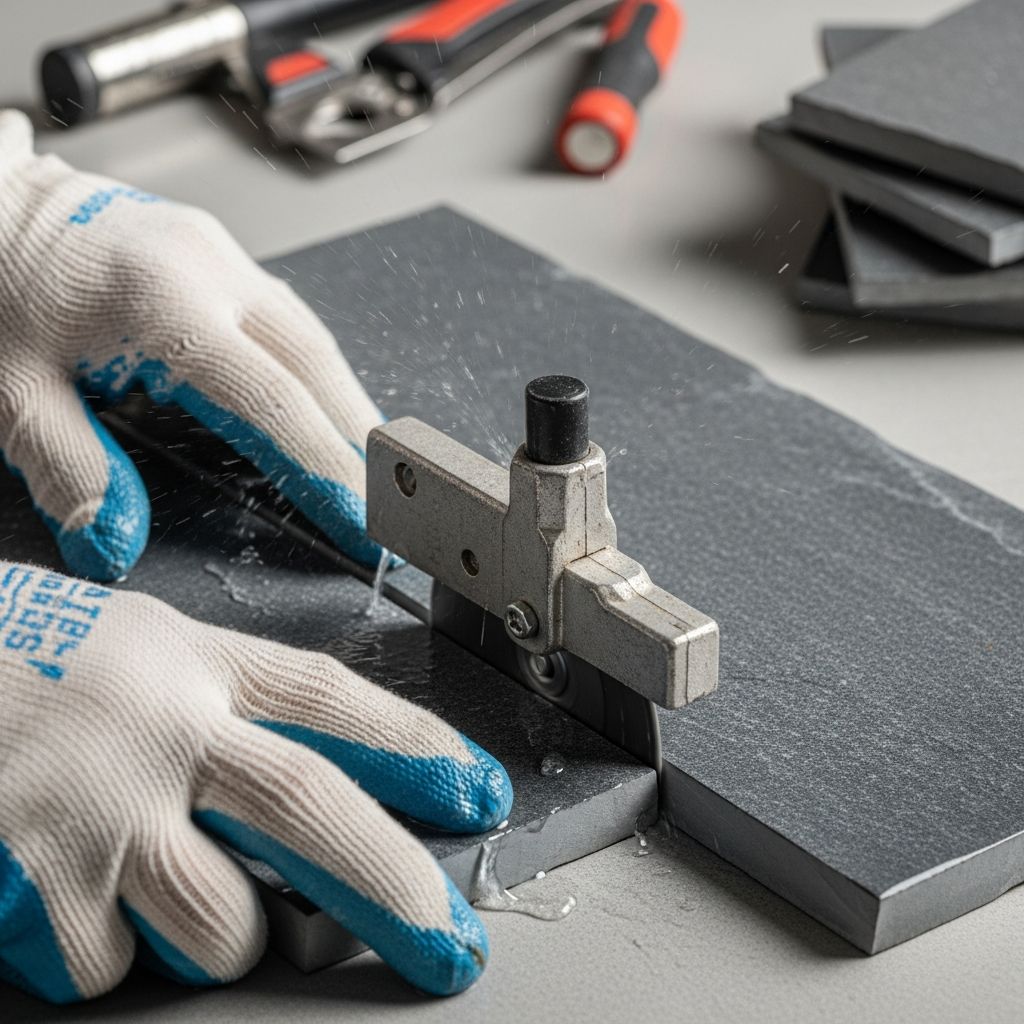
Wet saws excel for small slate tiles due to water cooling, which reduces dust and prevents cracking. Rent a 7-10 inch model for most home projects.
- Fill the reservoir to submerge the pump; this circulates water over the blade.
- Mark cut lines with a grease pencil on the tile’s face, following the grain for natural appearance.
- Adjust the rip fence for straight cuts; position tile so the blade aligns precisely.
- Start the saw, apply steady forward pressure without forcing; let the diamond blade grind through.
- Pause for multiple passes on thicker tiles; rinse pieces immediately to remove slurry.
Expect chip-free results on tiles up to 1/2 inch thick. For bevels, tilt the blade or tile slightly.
Cutting with an Angle Grinder
Angle grinders with 4-5 inch diamond blades handle thick or irregular slate effectively, ideal for fieldwork.
Steps for success:
- Select a grinder with variable speed (3,000-11,000 RPM) to control heat.
- Score the line first with shallow passes, then deepen gradually from the thickest edge.
- Work along the grain to minimize spalling; use light pressure and frequent pauses.
- For riven preservation, remove 1/16 inch per pass on the top layer.
- Smooth edges with a rubbing stone post-cut.
This method suits DIYers without saw access but demands practice for straight lines.
Circular Saw Strategies for Dry Cuts
For occasional cuts, a circular saw with a dry-use diamond blade offers portability. Limit to tiles under 3/8 inch thick.
Procedure:
- Mark and clamp a straightedge guide for accuracy.
- Make multiple shallow passes (1/8 inch deep), cooling the blade with air breaks.
- Avoid water; rely on the blade’s design for dust suppression.
- Support the tile over a sawhorse drop to prevent binding.
While effective for small projects, wet saws outperform for volume due to superior precision.
Manual Cutting for Thin Slate Tiles
Handheld slate cutters or chisel-hammer combos suit thin (under 1/4 inch) pieces, preserving texture.
How-to:
- Score along the line with a carbide scorer or tin snips.
- Place over a bench edge or iron peg; strike firmly with a slater’s hammer.
- For curves, nibble away material incrementally.
- Tap sharp edges to round them softly.
This traditional approach shines for roofing slates but works for tile trims.
Troubleshooting Common Issues
Encounter chipping? Cut with the grain and use finer blades. Overheating? Reduce speed and add pauses. Jagged edges? Hone with a diamond file. Dust overload? Employ a shop vac with HEPA filter.
For uneven thickness, shim tiles or make relief cuts. Test on scraps first to dial in technique.
Finishing and Installation Prep
Post-cut, clean tiles with a mild detergent to remove residue. Dry-fit pieces to verify measurements. Seal edges if exposed to moisture. Use thin-set mortar compatible with natural stone for laying.
Pro tip: Arrange cuts to hide seams in high-traffic areas, maximizing visual flow.
Cost and Rental Considerations
Tool costs: Diamond blades ($20-50), wet saw rental ($50/day). Buy blades for frequent use; rent for one-offs. Factor in time savings—wet saws halve labor on 50+ tiles.
FAQs
Can beginners cut slate tiles?
Yes, with proper tools and safety gear. Start with a wet saw for forgiving results.
What’s the best blade for slate?
Diamond blades for soft stone or masonry; continuous rim for smooth edges.
How do I cut slate without a wet saw?
Use an angle grinder or circular saw with diamond blade, prioritizing ventilation.
Does slate need sealing before cutting?
No, but post-installation sealing enhances durability against stains.
Can I cut slate outdoors?
Ideal for dry methods to manage dust; wet saws work anywhere with drainage.
References
- Cutting slate tile with a circular saw or wet saw? — SIMA UK. Accessed 2026. https://www.simasa.co.uk/blog/tile-saws-2/cutting-slate-tile-with-a-circular-saw-or-wet-saw/
- Mastering the Art of Cutting Slate: A Step-by-Step Guide — Oreate AI. Accessed 2026. https://www.oreateai.com/blog/mastering-the-art-of-cutting-slate-a-stepbystep-guide/b3e9946290ac772d20a41c6aa55e4643
- How to cut slates Thick or Thin DIY or Trade — YouTube (Trade Slate). Accessed 2026. https://www.youtube.com/watch?v=hjFyiq0Eiwo
- How to Cut Slate with an Angle Grinder — YouTube. Accessed 2026. https://www.youtube.com/watch?v=E_4AyGx-Oyo
- How to Use a Wet Saw to Cut Slate Tile — YouTube (See Jane Drill). Accessed 2026. https://www.youtube.com/watch?v=9yiwULzpG5s
- OT: ever cut slate with an angle grinder? — Practical Machinist Forum. Accessed 2026. https://www.practicalmachinist.com/forum/threads/ot-ever-cut-slate-with-an-angle-grinder.299174/
Similar Articles








Read full bio of Sneha Tete