Maintaining Pressure Washer Pump Oil Levels
Essential guide to checking and maintaining optimal pump oil in pressure washers
The pump is the heart of any pressure washer system, and like any vital organ, it requires consistent attention and proper care. One of the most critical maintenance tasks that equipment owners can perform is regularly checking and maintaining the pump oil levels. Neglecting this fundamental responsibility can result in premature pump failure, reduced cleaning performance, and expensive replacement costs that could have been easily prevented with routine inspection.
Understanding the Role of Pump Oil in Pressure Washers
Pump oil serves several essential functions within a pressure washer’s operating system. First and foremost, it acts as a lubricant that reduces friction between the rapidly moving internal components of the pump. The constant motion and pressure generated during operation create significant heat, and this oil helps dissipate that thermal energy away from sensitive pump parts. Additionally, the oil provides a protective barrier against corrosion and water damage, which are particularly problematic given that pressure washers operate in wet environments where water and contaminants can infiltrate the pump casing.
Without adequate oil levels and proper oil quality, the pump’s internal mechanisms will experience accelerated wear. The pistons, cylinders, and rotating components rely entirely on this lubrication layer to function efficiently. When oil levels drop or become contaminated, these parts begin to grind against each other, creating friction and heat that can cause seals to fail and metal components to warp or crack.
Determining When to Check Oil Levels
Regular inspection of pump oil should be part of your standard pre-operation routine. Before each use, particularly for commercial or frequent users, take a moment to assess the oil level through the sight glass or dipstick if your model includes one. This quick check takes only seconds but can reveal emerging problems before they become catastrophic.
Beyond routine visual inspections, certain conditions should trigger an immediate oil level check:
- After the initial 50 hours of operation for a new pump, which is when the most critical maintenance occurs
- At the end of each working season, regardless of actual usage hours
- Following any period where the pressure washer was exposed to excessive moisture or dust
- If you notice the pump is running hotter than normal or making unusual sounds
- Whenever the oil appears dark, cloudy, or contains visible debris
Establishing an Oil Change Schedule
Most manufacturers recommend changing pump oil every 50 hours of use initially, then every 500 hours thereafter if using manufacturer-recommended oil. However, if you use substitute oil that doesn’t meet exact specifications, the intervals become more frequent—typically every 300 hours. For those using their equipment regularly, a practical approach is to change oil every 3 to 5 months to ensure water and contaminants are removed.
Commercial operators and contractors who use pressure washers intensively should establish a more aggressive maintenance schedule. Many professionals perform oil changes every 200 to 250 operating hours to prevent pump degradation. The investment in frequent oil changes is minimal compared to replacing a failed pump, which can cost hundreds or thousands of dollars.
Selecting the Correct Oil Type
Choosing the right oil is as important as performing the oil change itself. Most pressure washer pumps require 30W non-detergent hydraulic oil. The non-detergent specification is particularly important because pressure washer pumps typically use splash lubrication systems where rotating “dippers” throw oil onto pistons and cylinders. Detergent oils will foam when agitated by these dippers, reducing their effectiveness and potentially causing pump damage.
For specific pump models, such as Cat pumps, the specifications are even more precise: ISO-68, 30W, non-detergent hydraulic pump oil. Some climates may require adjusted viscosity grades; for instance, 15W40 or 15W30 oils perform better in cold or winter conditions. Always consult your equipment manual before selecting oil, as using the wrong type can void your warranty and cause damage that reduces efficiency.
Step-by-Step Oil Level Checking Procedure
Properly checking oil levels requires a systematic approach and adherence to safety protocols. Begin by ensuring the pressure washer has been turned off and allowed to cool completely. Never attempt to check or drain oil from a hot pump, as this risks burns and inaccurate readings.
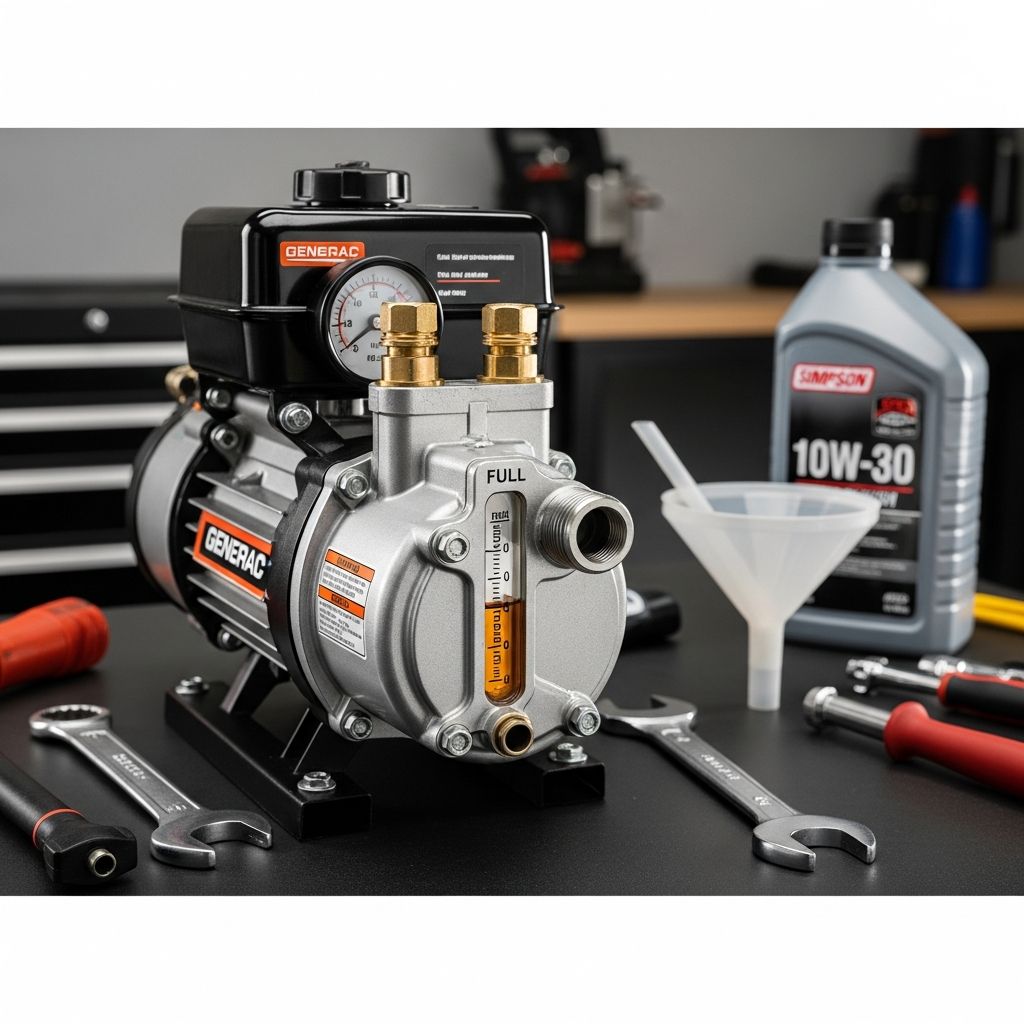
For most models, the oil level is visible through a sight glass or dipstick located on the pump housing. Position the pressure washer on level ground to ensure an accurate reading. The oil should reach approximately the three-quarters full mark on the sight glass. If the level is below this point, prepare to add fresh oil using the filler cap located at the top of the pump.
If your model doesn’t have a sight glass, use the dipstick method. Remove the dipstick, wipe it clean with a lint-free cloth, reinsert it fully, and then remove it again to check the level. The oil should coat the stick up to the marked line.
Executing an Oil Change
When it’s time to change the oil completely, the process involves several careful steps. First, run the pressure washer for a few minutes to warm the oil, allowing it to flow freely and carry away accumulated dirt and water. Warm oil flows more quickly and traps contaminants better than cold oil, making drainage more efficient.
Turn off the machine and allow it to cool slightly before proceeding. Locate the oil drain plug at the bottom of the pump and, using an appropriate wrench or Allen wrench, carefully unscrew it. Position a suitable container beneath the drain opening to catch the used oil. Depending on your model’s orientation, you may need to tilt the pressure washer to ensure complete drainage. Never force the tilt if resistance is encountered; work gradually to avoid damaging seals or internal components.
Once the oil has completely drained, inspect the collected oil for signs of contamination such as water droplets, metallic particles, or excessive debris. These signs indicate potential seal problems or internal wear that may require professional attention. Replace the drain plug and tighten it securely without over-tightening, which could damage the threads.
Now fill the pump with fresh oil of the correct type and viscosity grade. Most pumps require approximately 3/4 of a gallon, but consult your manual for the precise amount. Use a clean funnel to prevent debris from entering the pump. After filling, reinstall the oil cap securely and wipe away any spillage with a clean cloth.
Post-Maintenance Procedures
After completing an oil change, run the pump briefly so the new oil circulates through the system and reaches all components. This circulation helps purge any remaining old oil and ensures the new oil settles properly. After running for a minute or two, turn off the machine and recheck the oil level. It often drops slightly during this initial circulation, so topping up may be necessary.
Clean up any spilled oil immediately using absorbent materials, and dispose of used oil and contaminated rags in accordance with local environmental regulations. Never pour used oil down drains or onto soil, as it poses serious environmental hazards. Many auto parts stores and service centers accept used oil for proper recycling at no charge.
Identifying Oil Contamination Problems
Sometimes pump oil can become milky or cloudy, indicating water contamination—a serious issue that must be addressed promptly. This problem typically occurs when water seeps past worn packing seals, mixing with the oil and reducing its protective properties. Climate factors play a significant role; cold temperatures can increase condensation within the pump, creating the conditions for milky oil.
When milky oil is detected, the solution involves more than simply changing the oil. You must repair or replace the packing seals that allow water intrusion. This process requires opening the pump casing, inspecting the seals, and either re-sealing or completely replacing the packing kit. After repairs are completed, refill the pump with appropriate oil while the pump is in an upright position.
Common Mistakes to Avoid
Many equipment owners inadvertently damage their pumps through careless maintenance practices. Using the wrong oil type, whether detergent oil in a splash-lubricated system or an incorrect viscosity grade, can reduce efficiency and cause warranty-voiding damage. Skipping oil changes or extending intervals beyond manufacturer recommendations leads to inevitable pump degradation and eventual failure.
Another frequent error is neglecting to allow the machine to cool before draining oil, which results in burns and inaccurate level readings. Some operators attempt to “stretch” oil changes by simply topping up old, contaminated oil rather than performing complete changes—a false economy that accelerates wear. Finally, mixing different oil brands or types in the same pump can cause chemical reactions that harm internal components.
Frequency Reference Table
| Usage Type | Oil Change Interval | Recommended Schedule |
|---|---|---|
| Initial Use (New Pump) | 50 hours | Mandatory first change |
| Standard Manufacturer Oil | 500 hours | Every 3-5 months |
| Substitute Oil | 300 hours | More frequent monitoring |
| Commercial/Heavy Use | 200-250 hours | Every season minimum |
| Seasonal Storage | Once per season | Before long-term storage |
Frequently Asked Questions
How can I tell if my pump oil needs changing?
Visual inspection is the primary indicator. If the oil appears dark or cloudy rather than clear amber, or if it contains visible debris, an oil change is overdue. Additionally, if the pump runs hotter than normal or makes grinding noises, contaminated or insufficient oil may be the cause.
What happens if I use detergent oil in my pressure washer pump?
Detergent oils will foam when agitated by the splash lubrication system’s rotating dippers. This foaming reduces the oil’s ability to lubricate and cool the pump, leading to increased wear, higher temperatures, and potential component failure. Always use non-detergent oil as specified in your manual.
Can I extend the time between oil changes?
While it may seem economical to skip an oil change or extend intervals, this approach inevitably results in serious pump damage and costly repairs. The relatively small cost of oil changes is negligible compared to replacing a failed pump. Stick to manufacturer recommendations or adopt even more conservative schedules for heavy-use equipment.
Is it normal for pump oil to appear milky?
No—milky oil indicates water contamination, typically caused by failed packing seals. This requires prompt attention, including inspection and repair of the seals to prevent further damage. Simply changing the oil won’t solve the underlying problem.
Where can I dispose of used pressure washer pump oil?
Most recycling centers and auto parts retailers accept used oil for proper disposal or recycling at no charge. Never pour used oil down drains, into storm sewers, or onto soil, as it poses serious environmental risks. Check with your local waste management facility for approved disposal locations.
References
- Pump Oil for Pressure Washers: What to Use and When to Change — American Pressure Inc. https://americanpressureinc.com/blog/pump-oil
- Pressure Washer Water Pump Maintenance — Briggs & Stratton. https://www.briggsandstratton.com/na/en_us/support/maintenance-how-to/browse/water-pump-maintenance.html
- Replacing the Pump Oil of a High Pressure Washer — BISON Generator. https://www.bisongenerator.com/Blog/knowledge/replacing-the-pump-oil-of-a-high-pressure-washer.html
- Perform a Pump Oil Change in 4 Easy Steps — Ultimate Washer. https://www.ultimatewasher.com/articles/pump-oil-change
- Pressure Washer Pump Oil Change: Detailed Instructions — Clean Pro Exteriors. https://www.youtube.com/watch?v=oJubLbs_HVU
- What To Do If Your Pressure Washer Pump Oil Is Milky — Nortex Supply & Service. https://nortexss.com/blogs/pressure-washing/pressure-washer-pump-oil-milky
Similar Articles








Read full bio of Sneha Tete