Stop Ants from Invading Hummingbird Feeders
Discover proven, safe methods to protect your hummingbird feeders from ants while keeping nectar fresh for birds.
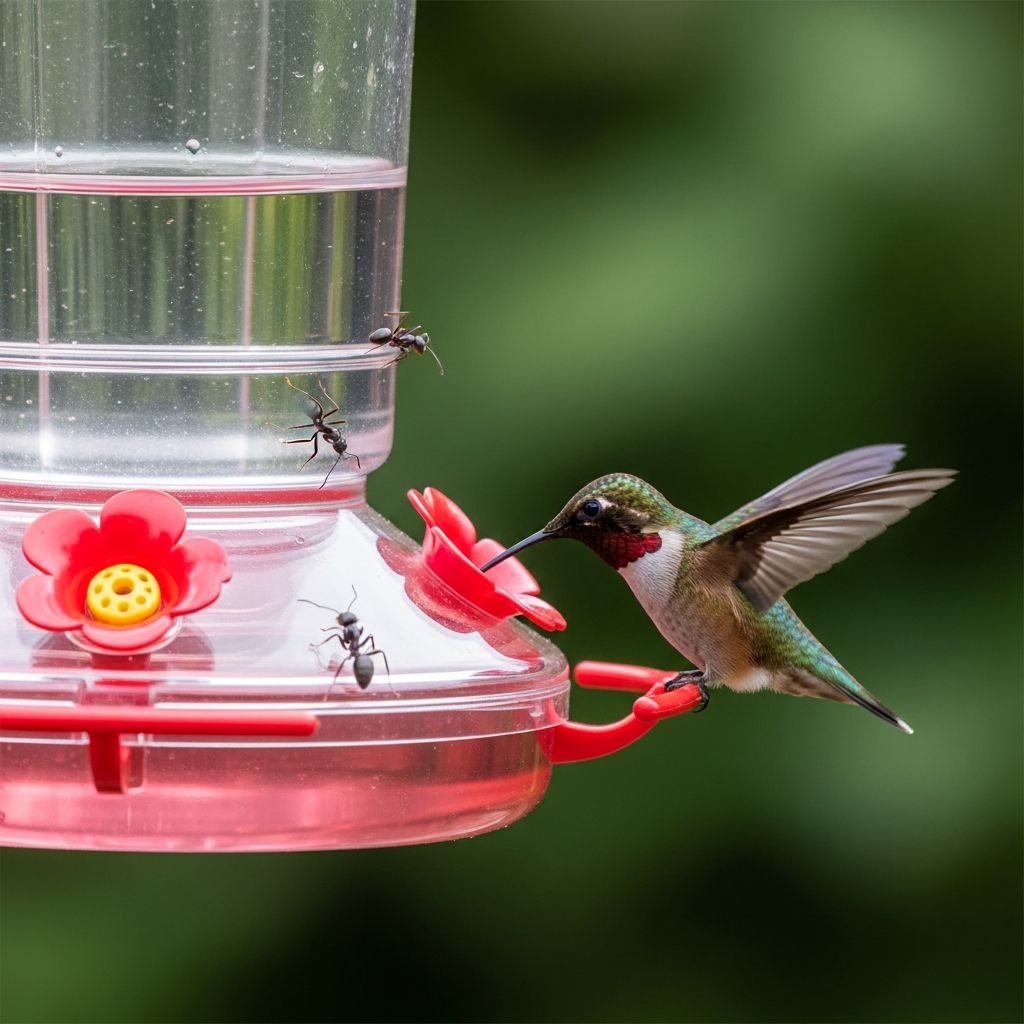
Hummingbirds bring vibrant energy to any garden, but ants quickly discover the sweet nectar in feeders, contaminating it and deterring the birds. Simple barriers like water moats create an impenetrable divide, allowing hummingbirds to feed undisturbed while ants are safely repelled.
Why Ants Target Hummingbird Feeders
The sugary nectar in hummingbird feeders mimics the sweetness ants crave during food shortages, prompting scout ants to explore and recruit colonies. This invasion spoils the nectar, making it bitter and unpalatable for hummingbirds, who rely on clean sucrose solutions for energy.
- Ants detect sweetness from afar, sending scouts that leave pheromone trails for mass invasion.
- Contaminated nectar ferments or turns bitter due to ant secretions, reducing bird visits.
- Peak ant activity occurs in dry seasons when natural food sources dwindle.
Understanding this behavior helps in selecting preventive measures that interrupt ant pathways without harming wildlife.
Mastering the Ant Moat Technique
An ant moat is a shallow water reservoir hung above the feeder, forcing ants to cross water they cannot traverse—smart ones retreat, others drown. This method stands out for its simplicity and safety, using only water to block access.
Commercial ant moats attach via hooks to branches or poles, with a lower hook for suspending feeders. Larger models in various colors reduce refill frequency, ideal for hot climates where evaporation quickens.
| Moat Type | Capacity | Refill Frequency | Best For |
|---|---|---|---|
| Small Built-in | Low | Daily | Single feeders |
| Large Commercial | High | 2-3 days | Multiple feeders |
| DIY Bottle | Custom | Variable | Budget setups |
DIY moats use inverted bottles or cups sealed to hold water, hung securely to prevent spills. Fill with plain water—avoid oils, vinegar, or chemicals, as hummingbirds may sip from it, risking harm.
Selecting Ant-Resistant Hummingbird Feeders
Feeders with integrated moats or smooth, ant-proof designs minimize issues. Opt for models with wide moats, easy-clean ports, and bee guards, ensuring nectar stays accessible only to birds.
- Top ports prevent dripping that attracts ants.
- 10-port capacity suits high-traffic areas without overflow.
- Bowl-style bases pair well with external moats.
Avoid cheap plastic feeders prone to leaks; durable glass or polycarbonate lasts seasons. Clean weekly with hot water and vinegar solutions to erase ant trails.
Optimal Feeder Placement Strategies
Position feeders 10-15 feet from branches, shrubs, or ground cover to eliminate ant highways. Suspend from smooth poles coated lightly with petroleum jelly (away from moats) or use shepherd’s hooks distant from vegetation.
Window feeders with clip-on moats work indoors, filled daily to block climbing ants. In multi-feeder setups, space them apart to dilute ant focus.
Preparing Perfect Nectar Recipes
Boil 1 cup white granulated sugar in 4 cups water until dissolved, cooling before filling. This 1:4 ratio provides pure sucrose hummingbirds metabolize efficiently—no red dye, honey, or substitutes needed.
- Refrigerate extras up to a week.
- Refresh every 2-3 days in heat to prevent fermentation.
- Use small batches for low-bird areas to avoid waste.
Ant-free nectar remains clear and sweet, drawing more hummingbirds during migration peaks.
Daily Maintenance Routines
Inspect moats morning and evening, refilling as evaporation occurs. Bring feeders indoors nightly in rainy weather to avoid dilution. If ants breach, relocate temporarily, rinse with hot soapy water, and dry thoroughly.
Wash entire setup weekly: disassemble, scrub with bottle brush, rinse multiple times. Hot water flushes residual ants down drains harmlessly.
Common Mistakes to Avoid
Overlooking evaporation leads to dry moats and ant access. Chemicals like Vaseline or pyrethrins risk contaminating nectar, potentially sickening birds. Neglecting cleaning allows mold and ant pheromones to persist.
| Mistake | Consequence | Solution |
|---|---|---|
| Dry moat | Ant invasion | Daily checks |
| Chemical barriers | Bird harm | Water only |
| Poor placement | Easy access | Isolate from plants |
Seasonal Considerations for Ant Control
In summer heat, evaporation demands vigilant refills; winter setups need freeze protection. Migration seasons see heightened ant scouting—deploy moats early. Monitor local ant populations, as wet weather reduces their feeder raids.
Advanced Tips for Heavy Ant Areas
Combine moats with Tanglefoot barriers on poles (applied low, away from birds). Introduce native plants like salvia to distract ants with natural nectar. Multiple feeders spread ant efforts thin.
Frequently Asked Questions
What fills an ant moat?
Plain water only; refill as needed. Avoid additives to protect hummingbirds.
Do built-in moats work?
They help but often evaporate quickly; pair with larger external ones for reliability.
How often clean feeders?
Every 2-3 days, or daily in extreme heat, using hot water and minimal soap.
Can ants harm hummingbirds?
Indirectly by spoiling nectar; clean setups prevent issues.
Best feeder for ants?
Smooth, moat-equipped models with multiple ports and leak-proof seals.
Benefits Beyond Ant Control
Moat systems promote healthier bird populations by ensuring pristine nectar, boosting garden biodiversity. Hummingbirds pollinate flowers, enhancing ecosystems without chemical interventions.
References
- NO Ants on Hummingbird Feeder if you DO This * Easy … — YouTube (Robbie and Gary Gardening Easy). 2023. https://www.youtube.com/watch?v=v8UhlNqz4lg
- The Easiest Way to Keep Ants Out of Hummingbird and Oriole Feeders — YouTube (Mark’s Backyard Birds). 2023-06-20. https://www.youtube.com/watch?v=y44n5qKoSJM
- How to Keep Ants Away from Hummingbird Feeders (Ant-Free Guide) — Birdfy Blog. Accessed 2026. https://www.birdfy.com/blogs/blogs/how-to-keep-ants-away-from-hummingbird-feeders
Similar Articles



Read full bio of medha deb