Prevent Rocking Chair Sliding On Carpet: 6 Effective Fixes
Discover effective methods to stabilize your rocking chair on carpet for safe, enjoyable use without constant repositioning.
Prevent Rocking Chair Sliding on Carpet
Rocking chairs offer timeless comfort and gentle motion for relaxation, but their dynamic movement often causes them to creep across carpeted floors. This common issue stems from the chair’s rocking base interacting with the carpet’s pile, reducing friction and allowing gradual displacement. Addressing this problem not only preserves your flooring but also prevents safety hazards like unexpected shifts during use. In this guide, we explore practical, reliable solutions tailored specifically for carpet environments, drawing from proven methods to restore stability.
Understanding Why Rocking Chairs Slide on Carpet
Unlike hard floors where smooth legs create obvious slips, carpet poses a subtler challenge. The rocking motion pushes the chair forward and backward rhythmically, compressing carpet fibers and enabling incremental movement. Factors exacerbating this include smooth wooden or metal rockers, lightweight chair designs, high-pile carpets, and even user weight distribution. Over time, this can lead to the chair migrating several inches—or feet—disrupting room layouts and risking trips.
Carpet’s textured surface provides some natural grip compared to hardwood, yet it’s insufficient for the repetitive forces of rocking. Studies on furniture dynamics highlight that friction coefficients between wood and synthetic carpet fibers are often below optimal levels for stability, necessitating enhancements. Recognizing these mechanics is key to selecting the right intervention.
Essential Tools and Materials for Stabilization
Before diving into methods, gather these basics: measuring tape for sizing, scissors or utility knife for custom cuts, rubbing alcohol for cleaning surfaces, and heavy-duty adhesive if needed. Prioritize materials like natural rubber, felt, or silicone, which excel on carpet without damaging fibers. Avoid cheap plastics that degrade or leave residues.
- Natural rubber pads: High friction, durable for daily use.
- Felt strips: Soft on carpet, easy to apply.
- Silicone grippers: Flexible, reusable option.
- Double-sided carpet tape: Industrial-grade for semi-permanent holds.
DIY Solutions for Immediate Grip
Adhesive Rubber Strips
One of the simplest fixes involves applying self-adhesive rubber strips along the rocker edges. Cut strips to match the rocker’s length, clean the wood thoroughly, and press firmly into place. Natural rubber outperforms PVC by maintaining grip without hardening over time. This method adds traction directly where motion occurs, effectively anchoring the chair without altering its appearance.
Users report success with 1-inch wide by 1/8-inch thick strips, covering both inner and outer curves. Reapplication every 6-12 months ensures longevity, especially in high-traffic homes.
Felt or Cork Padding
Attach felt pads or cork sheets to the rocker undersides. These materials compress into the carpet, creating a larger contact area for superior hold. Felt is particularly gentle, preventing fiber wear, while cork offers eco-friendly durability. Secure with carpet-safe adhesive, allowing 24 hours to cure before testing.
For best results, layer thin sheets (1/16-inch) to avoid bulkiness that could impede rocking smoothness.
Custom Rocker Caps
Fabricate protective caps from rubber shelf liner or old yoga mats. Trace the rocker profile, cut precisely, and affix with strong adhesive. This DIY approach is cost-effective—under $10—and customizable for antique chairs with irregular shapes. It mimics commercial grippers but allows personalization.
Commercial Products That Deliver Results
Specialized Furniture Grippers
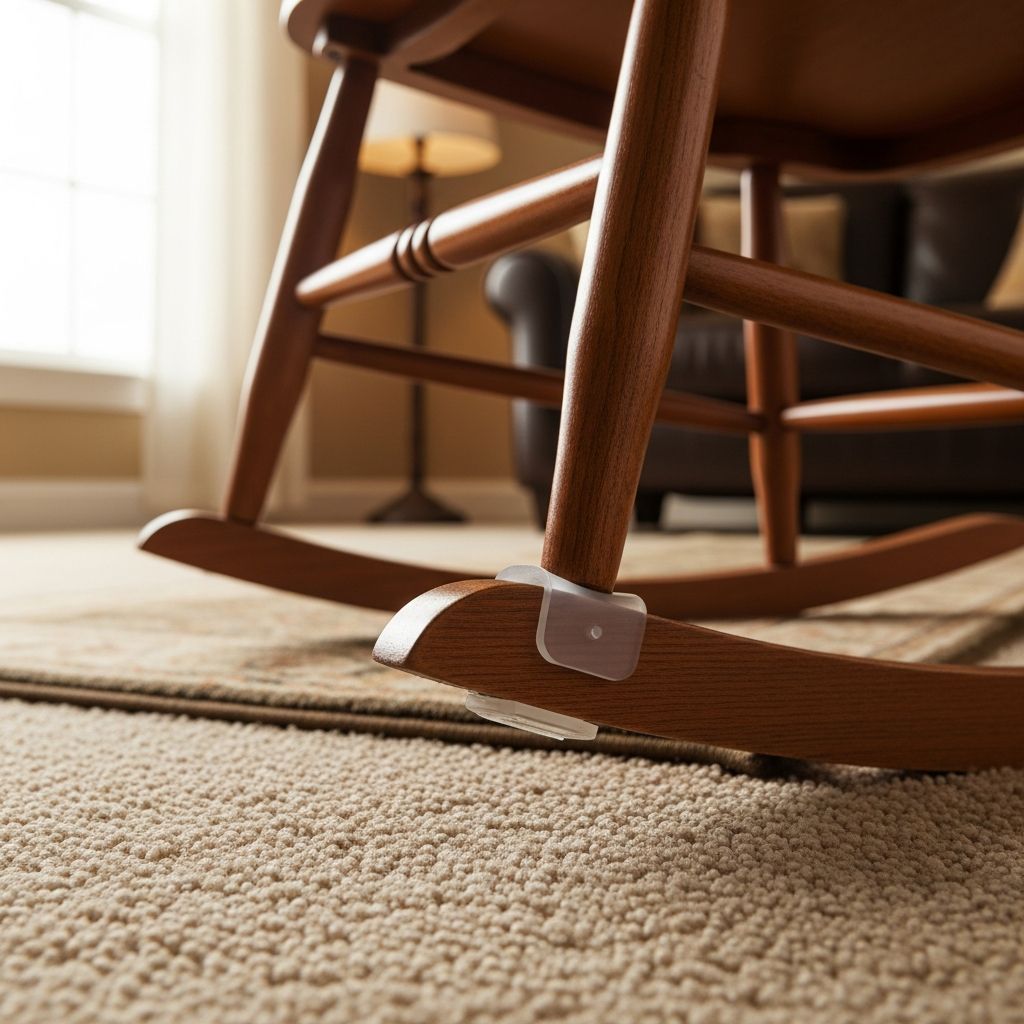
Products like clip-on grippers or X-shaped stabilizers attach securely to rockers, designed explicitly for motion furniture. Opt for models with natural rubber components for carpet compatibility. These outperform generic pads by distributing weight evenly, preventing point-specific wear.
Installation takes minutes: slide or clip onto rockers, adjust for fit, and test motion. Many are removable for cleaning or relocation.
Non-Slip Underlay Pads
Large rug grippers or furniture stoppers placed under the entire base provide broad stability. Cut-to-size mats from silicone or latex grip carpet pile tenaciously. Ideal for heavy rockers, these conceal easily beneath the chair.
Stopper Blocks and Wedges
Position wooden or rubber wedges behind rockers to limit backward travel. These heavy-duty aids suit homes with active children or pets, acting as bumpers without impeding forward rock. Craft your own from scrap lumber for a tailored fit.
Advanced Techniques for Long-Term Stability
For persistent sliding, combine methods: rubber strips plus underlay pads yield synergistic grip. Angle the chair slightly against a wall or ottoman to leverage static resistance. Regularly vacuum under the chair to remove debris that reduces friction.
In high-humidity areas, silicone-based products resist moisture better, maintaining efficacy longer. Test stability by rocking vigorously for 5 minutes post-installation.
Safety Considerations and Best Practices
Stability directly impacts user safety, especially for elderly or children. Unstable chairs increase fall risks by 20-30% per furniture safety reports. Always secure products without obstructing rocker clearance, and inspect monthly for wear.
| Method | Pros | Cons | Best For |
|---|---|---|---|
| Rubber Strips | Easy install, affordable | May wear over time | Daily use |
| Felt Pads | Gentle on floors | Less durable | Lightweight chairs |
| Gripper Clips | Removable, strong hold | Visible on some designs | Heavy rockers |
| Underlay Mats | Concealed, broad grip | Bulkier setup | High-pile carpets |
Common Mistakes to Avoid
- Using slippery materials like cheap vinyl, which worsen sliding.
- Overlooking chair weight—lighter models need broader coverage.
- Ignoring carpet type; low-pile requires more aggressive grippers.
- Skipping surface prep, leading to premature detachment.
Frequently Asked Questions
Can I use these fixes on hardwood floors too?
Yes, many like rubber grippers transition seamlessly, but select felt for hardwood to prevent scratches. Test small areas first.
How long do non-slip solutions last?
Quality rubber products endure 6-18 months with moderate use; replace sooner if grip diminishes.
Are there pet-friendly options?
Opt for non-toxic natural rubber or silicone, avoiding adhesives with harsh chemicals for households with animals.
Will stabilizers affect rocking smoothness?
Properly installed ones enhance rather than hinder motion by providing consistent resistance.
What’s the cheapest effective method?
DIY rubber shelf liner strips cost under $5 and rival pricier products in performance.
Choosing the Right Solution for Your Space
Assess your chair’s material, carpet pile height, usage frequency, and aesthetics. For nurseries, prioritize soft, silent options like felt; living rooms suit visible grippers blending with decor. Budget options start free with household items, scaling to $20-50 for pro-grade kits.
Experiment iteratively: start simple, upgrade as needed. A stable rocking chair elevates daily comfort, safeguarding your investment and peace of mind.
References
- How to Stop Recliner from Sliding — Aosom. 2023. https://www.aosom.com/blog-how-to-keep-your-recliner-from-sliding.html
- Stop Your Chair Pads from Slipping with Gripper Sheets — Barnett Home Decor. 2022-10-15. https://barnetthomedecor.com/blogs/bulletin/stop-your-chair-pads-from-slipping-with-gripper-sheets
- How to Prevent a Recliner from Sliding or Moving — YouTube (Video Transcript). 2021. https://www.youtube.com/watch?v=AdeSdBmEPeM
- Couch Stoppers To Prevent Sliding On Hardwood Carpet Floors — Your PGH Lawyer. 2024. https://yourpghlawyer.com/Couch-Stoppers-To-Prevent-Sliding-On-HardWOOD-Carpet-Floors-1227544/
- Recliner Floor Gripper Pads – Furniture Stoppers — NuTech Ventures. 2023. https://www.nutechventures.org/Floor-Gripper-Pads-Furniture-Stoppers-To-Prevent-Sliding-For-892323
Similar Articles







Read full bio of medha deb