Stop Sheets Tangling in Dryer: Proven Fixes
Discover practical strategies to keep your sheets smooth and untangled during drying, saving time and reducing wrinkles effortlessly.
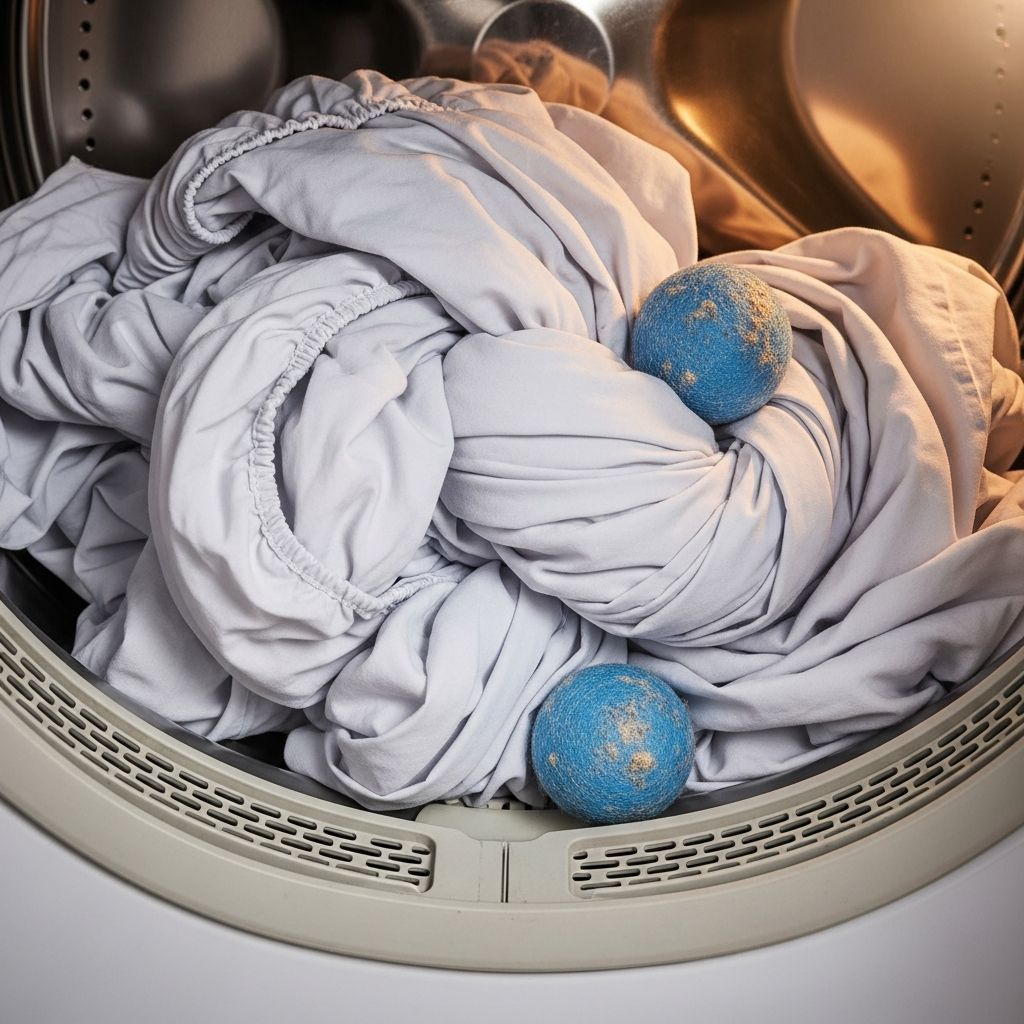
Keeping bed linens smooth and evenly dried can transform your laundry routine. Sheets often twist into clumps during tumbling, leading to damp spots, extra cycles, and frustrating wrinkles. This guide explores effective solutions drawn from reliable laundry practices, focusing on space management, tools like wool dryer balls, and alternative approaches to ensure your bedding emerges pristine.
Understanding Why Bedding Clumps in the Dryer
Large items such as flat and fitted sheets, along with blankets, naturally tangle due to the dryer’s rotating motion. When overloaded, these pieces lack room to flip freely, causing them to wrap around each other. Wet fabric adds weight, intensifying the issue and trapping moisture in folded areas. Over time, this not only prolongs drying but also promotes fabric wear from friction.
Heat levels play a role too—high temperatures can make fibers contract quickly, encouraging bunching. Synthetic blends may generate static, pulling items together further. Recognizing these factors allows for targeted fixes that promote better airflow and separation.
Essential Preparation Steps Before Drying
Start with proper handling right after the wash cycle. Gently shake each sheet vigorously outside the machine to release twists formed during spinning. This unravels folds and sets the fabric for freer movement in the dryer.
For fitted sheets, a pre-drying fold technique helps contain elastic edges: Match opposite corners, tuck one into the other, and repeat for the remaining pair, forming a compact rectangle. This method minimizes flapping and entrapment during tumbling.
- Shake flat sheets by holding two corners and snapping firmly.
- Bundle fitted sheets to secure gathers.
- Inspect for lingering damp spots and address with an extra spin if needed.
Optimizing Dryer Settings for Smooth Results
Select a low or medium heat option to dry gradually, giving sheets time to unfold without clumping. Extend cycle time if necessary, as slower evaporation prevents rapid hardening that leads to tangles.
Moisture-sensing modes are ideal; they stop when fabric reaches optimal dryness, avoiding over-drying that worsens static and bunching. Clean the sensor regularly for accuracy. Avoid maximum heat, especially with tennis balls or wool items, to prevent damage.
Maintaining Proper Load Size and Balance
Overfilling is a primary cause of tangling—aim for at least 50% empty space in the drum for items to circulate. For standard dryers, process one or two sheets per load, separating larger blankets.
| Load Type | Recommended Capacity | Max Items |
|---|---|---|
| Flat Sheets (Queen) | 50-60% full | 2-3 |
| Fitted Sheets | 40-50% full | 1-2 |
| Sheets + Pillowcases | 50% full | 1 set + 4 cases |
| Blankets/Comforters | 30-40% full | 1 large |
Drying smaller pieces like pillowcases separately prevents them from nesting inside sheets.
The Power of Wool Dryer Balls in Laundry
Wool dryer balls, made from natural felted fibers, revolutionize drying by bouncing between fabrics. They separate layers, boost airflow, and cut drying time by 25% on average through efficient moisture distribution. Unlike chemical sheets, they contain no toxins and last 1,000+ cycles.
Benefits include:
- Even drying without damp centers.
- Static reduction via moisture absorption and release.
- Softer fabric from gentle agitation.
- Fewer wrinkles by preventing prolonged contact.
Use 3-6 balls per load; add vinegar to them for extra static control on synthetics.
DIY Wool Dryer Balls: Simple Home Creation
Craft your own using 100% wool roving. Wind tightly into golf-ball-sized spheres, wrap in nylon stockings, and wash on hot then dry on high to felt. This process locks fibers together for durability.
- Gather 2-3 oz roving per ball.
- Wind evenly, avoiding loose ends.
- Secure in nylons, launder hot.
- Dry fully, then store in dryer.
These handmade versions perform identically to commercial ones while being cost-effective.
Alternative Separation Aids for Tangle-Free Drying
If wool balls aren’t available:
- Clean Towels: Add 2-3 dry towels to absorb excess moisture and physically divide sheets.
- Tennis Balls: 2-4 clean ones mimic bouncing action on low heat; check for wear post-use.
- Large Mesh Bags: Enclose sheets to contain but allow air—extend time 10-15 minutes.
For fitted sheets, clip corners with binder clips or anti-tangle gadgets before loading.
Caring for Your Wool Dryer Balls Long-Term
Refresh balls by laying flat in shade after occasional washing in hot water without detergent. Avoid direct sun or high heat to prevent shrinking. They maintain efficacy for years with minimal upkeep.
Separate natural and synthetic loads, as synthetics cling more. Underload for best ball performance.
Beyond the Dryer: Line Drying Advantages
For ultimate tangle prevention, hang sheets on a line or lay flat outdoors. This eliminates friction-induced pilling and infuses natural freshness. Indoor racks work similarly, reducing energy use.
Combine with gentle washing using enzyme detergents to smooth fibers pre-dry.
Addressing Common Bedding Challenges
Quilts and comforters follow similar rules: Shake midway through cycles for thick items. Dry pillows alone to avoid trapping.
To combat pilling from friction, opt for low-tumble settings and line dry delicates.
Frequently Asked Questions
How many wool dryer balls should I use for sheets?
Three to six balls effectively separate queen-sized sets, enhancing airflow without overcrowding.
Can tennis balls replace wool dryer balls?
Yes, on low heat, but inspect for breakdown; they’re a budget option but less durable and eco-friendly.
Why do my sheets still static even with balls?
Over-drying causes it—use moisture sensors and stop slightly damp, or add vinegar-dampened balls.
Do dryer balls work on all fabrics?
Best for cottons and wools; separate synthetics, which cling more, and avoid overfilling.
How do I refresh worn wool balls?
Wash hot, dry flat in shade; reshape if needed. They last years with proper care.
Expert Tips for Laundry Efficiency
Integrate these habits: Clean lint traps every load, upgrade to larger-capacity models for families, and test loads to fine-tune settings. Consistent application yields professional results at home.
References
- Quick Tips for How to Stop Sheets from Balling Up in the Dryer — Whirlpool. 2023-05-15. https://www.whirlpool.com/blog/washers-and-dryers/how-to-stop-sheets-from-balling-up-in-the-dryer.html
- How to reduce Static Cling using Friendsheep Wool Eco Dryer Balls — Friendsheep Wool. 2024-02-10. https://www.friendsheepwool.com/blogs/blog/reduce-static-cling-with-friendsheep-eco-dryer-balls
- DIY Dryer Balls | How to Reduce Static Naturally — Lemon Lavender & Laundry. 2023-08-20. https://www.lemonslavenderandlaundry.com/diy-dryer-balls/
- How to Prevent & Remove Fabric Pilling — Maytag. 2024-11-05. https://www.maytag.com/blog/washers-and-dryers/how-to-prevent-remove-fabric-pilling.html
- How To Refresh Wool Dryer Balls? — Seek Bamboo. 2024-03-12. https://seekbamboo.com/blogs/sustainable-lifestyle/how-to-refresh-wool-dryer-balls
Similar Articles


Read full bio of medha deb