Grow More Dieffenbachia: Complete Propagation Guide
Master the art of multiplying Dieffenbachia plants at home with easy stem cuttings, water rooting, and soil methods for lush indoor greenery.
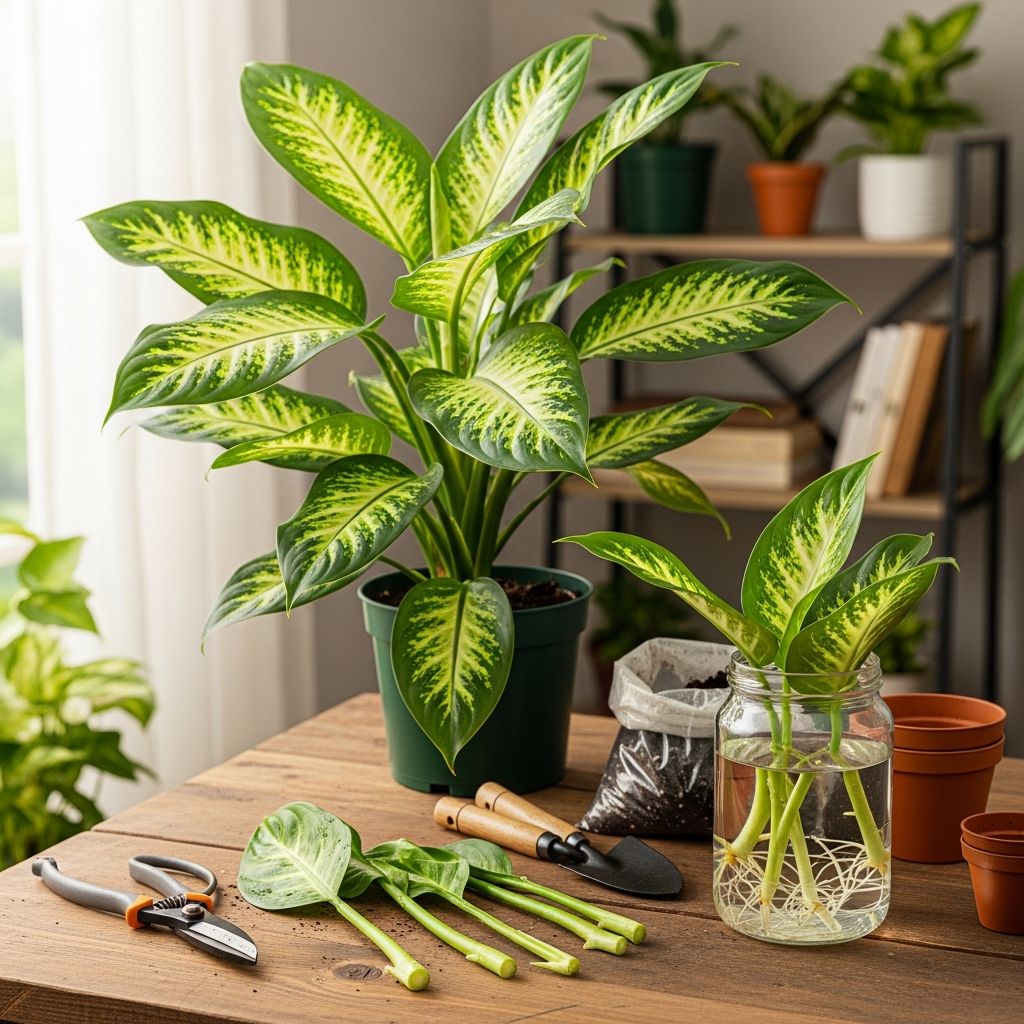
Dieffenbachia, commonly known as dumb cane, stands out as a favorite among houseplant lovers for its bold, variegated leaves and effortless growth indoors. Propagating this tropical beauty allows you to expand your collection without expense, turning one thriving specimen into many. This guide explores reliable methods like stem cuttings in water or soil, tip cuttings, and advanced techniques, drawing from horticultural best practices to ensure high success rates.
Understanding Dieffenbachia and Why Propagate It
Native to tropical Central and South America, Dieffenbachia thrives in indirect light and humid environments, mimicking its jungle origins. Its thick stems and large, patterned leaves make it ideal for home decor, but plants often become leggy over time, prompting propagation to rejuvenate them. Multiplying Dieffenbachia not only refreshes mature plants but also shares beauty with friends. Key benefits include cost savings, faster growth from cuttings compared to seeds, and the ability to select for desirable variegation patterns.
Before starting, note the plant’s sap contains calcium oxalate crystals, which can irritate skin and mucous membranes—always wear gloves and keep away from pets and children. Optimal propagation timing is spring or summer, aligning with active growth, though it succeeds year-round indoors.
Essential Tools and Materials for Success
Gather these items for smooth propagation:
- Sharp, sterilized pruning shears or knife (sterilize with alcohol to prevent disease).
- Clear glass jars or vases for water rooting.
- Well-draining potting mix, such as peat-based or tropical houseplant soil amended with perlite.
- Small pots with drainage holes (4-6 inch diameter).
- Rooting hormone powder or gel (optional but boosts success).
- Plastic bags or domes for humidity.
- Spray bottle for misting.
Choose healthy parent plants with firm stems and vibrant leaves, avoiding those with pests or yellowing foliage.
Method 1: Water Propagation for Tip Cuttings
Water rooting offers visibility into root development, making it beginner-friendly. Select a stem tip with 2-3 leaves and at least one node (growth point where roots emerge).
- Cut 4-6 inches below the node at a 45-degree angle for maximum surface area.
- Remove lower leaves to prevent rot.
- Optionally dip the cut end in rooting hormone.
- Place in a jar of room-temperature water, ensuring nodes submerge while leaves stay dry.
- Position in bright, indirect light; change water every 3-5 days to oxygenate.
Roots appear in 2-4 weeks. Once 2 inches long, transplant to soil. This method yields quick results, with many reporting 90% success in warm conditions.
Method 2: Soil Propagation Using Stem Sections
For bulk propagation, slice mature stems into 4-6 inch sections, each with 1-2 nodes. This horizontal laying technique encourages multiple shoots.
- Prepare moist, sterile soil mix (50% potting soil, 50% perlite or sand).
- Make clean cuts between nodes; let ends callus for 1-2 hours.
- Lay sections horizontally on soil surface or bury lightly, nodes down.
- Cover pot with plastic for a mini-greenhouse, maintaining 70-80°F and high humidity.
- Ventilate daily to avoid mold; mist as needed.
New growth sprouts from nodes in 4-8 weeks. Pot individually once rooted. Videos demonstrate chopping leggy stems into pieces, repotting the base, and rooting tops separately for full plant revival.
Advanced Technique: Air Layering for Larger Plants
Ideal for tall, woody Dieffenbachia, air layering roots cuttings while attached to the parent.
- Choose a node 12-18 inches from tip.
- Girdle the stem by removing a 1-inch ring of bark.
- Apply rooting hormone.
- Pack moist sphagnum moss around the area, wrap in plastic, and secure with ties.
- Seal and monitor; roots form in 4-6 weeks.
- Cut below the rooted section and pot.
This method preserves variegation and produces bigger plants faster than cuttings.
Optimal Conditions for Rooting Success
Replicate tropical vibes: 65-85°F temperatures, 60-80% humidity, and 12-14 hours of bright indirect light. Bottom heat from a mat speeds rooting. Avoid direct sun to prevent scorching. Fertilize lightly with diluted houseplant food after roots establish.
| Method | Time to Roots | Success Rate | Best For |
|---|---|---|---|
| Water Tip Cuttings | 2-4 weeks | High (90%+) | Beginners |
| Soil Stem Sections | 4-8 weeks | Medium-High | Bulk propagation |
| Air Layering | 4-6 weeks | Very High | Mature plants |
Data adapted from grower experiences and horticultural guides.
Troubleshooting Common Propagation Problems
Issues arise but are fixable:
- Rotting cuttings: Use sterile tools, change water frequently, ensure good drainage.
- No roots: Check temperature, add rooting hormone, verify nodes submerged.
- Leggy growth: Increase light post-rooting.
- Mold: Improve airflow in humidity domes.
- Slow rooting in winter: Use grow lights and heat mats.
Sap irritation? Rinse immediately with water. Pests like mealybugs? Treat with neem oil.
Post-Propagation Care for Thriving Plants
Acclimate new plants gradually. Use pots with drainage and humus-rich soil like tropical mixes. Water when top inch dries; fertilize monthly in growing season. Prune leggy stems to propagate anew, promoting bushiness. Expect maturity in 6-12 months.
Dieffenbachia Varieties Ideal for Propagation
Popular types include ‘Camille’ (white variegated), ‘Follow Stella’ (compact), and ‘Tropic Snow’ (heavy spotting). All propagate similarly, but variegated ones need bright light to retain patterns.
Frequently Asked Questions (FAQs)
Can I propagate Dieffenbachia from leaves alone?
No, leaves alone rarely root into full plants; always include stem nodes for success.
How long until propagated Dieffenbachia flowers?
Dieffenbachia rarely blooms indoors, focusing energy on foliage instead.
Is rooting hormone necessary?
Not essential but increases speed and rate by 20-50%.
Can I propagate in low light?
Possible but slower; supplement with LED grow lights.
What if my cutting wilts?
Mist leaves and increase humidity; wilting often resolves with proper moisture.
Expanding Your Collection Sustainably
Propagate responsibly by sharing with community groups or trading. Combine with repotting every 1-2 years to manage size. Over time, master these techniques to maintain a lush indoor jungle.
References
- Dieffenbachia: care, propagation & varieties of dumb cane — Plantura Garden. 2023. https://plantura.garden/uk/houseplants/dieffenbachia/dieffenbachia-overview
- Repotting & Managing Leggy Dieffenbachia — Douentza Garden (YouTube). 2023. https://www.youtube.com/watch?v=B-PtT7zvlj4
- Dumb Cane Propagation In Soil and Water By Stem Cuttings — Small Things With Moumita (YouTube). 2023. https://www.youtube.com/watch?v=zB_MsqDqvA4
- Multiply Dieffenbachia in the Nursery Method — Gardening is my passion (YouTube). 2020-07-31. https://www.youtube.com/watch?v=IrWrskzb5oU
Similar Articles








Read full bio of medha deb