Grow Roses with Potatoes: Simple Rooting Guide
Discover an easy, natural method to multiply your favorite roses using everyday potatoes for successful rooting at home.
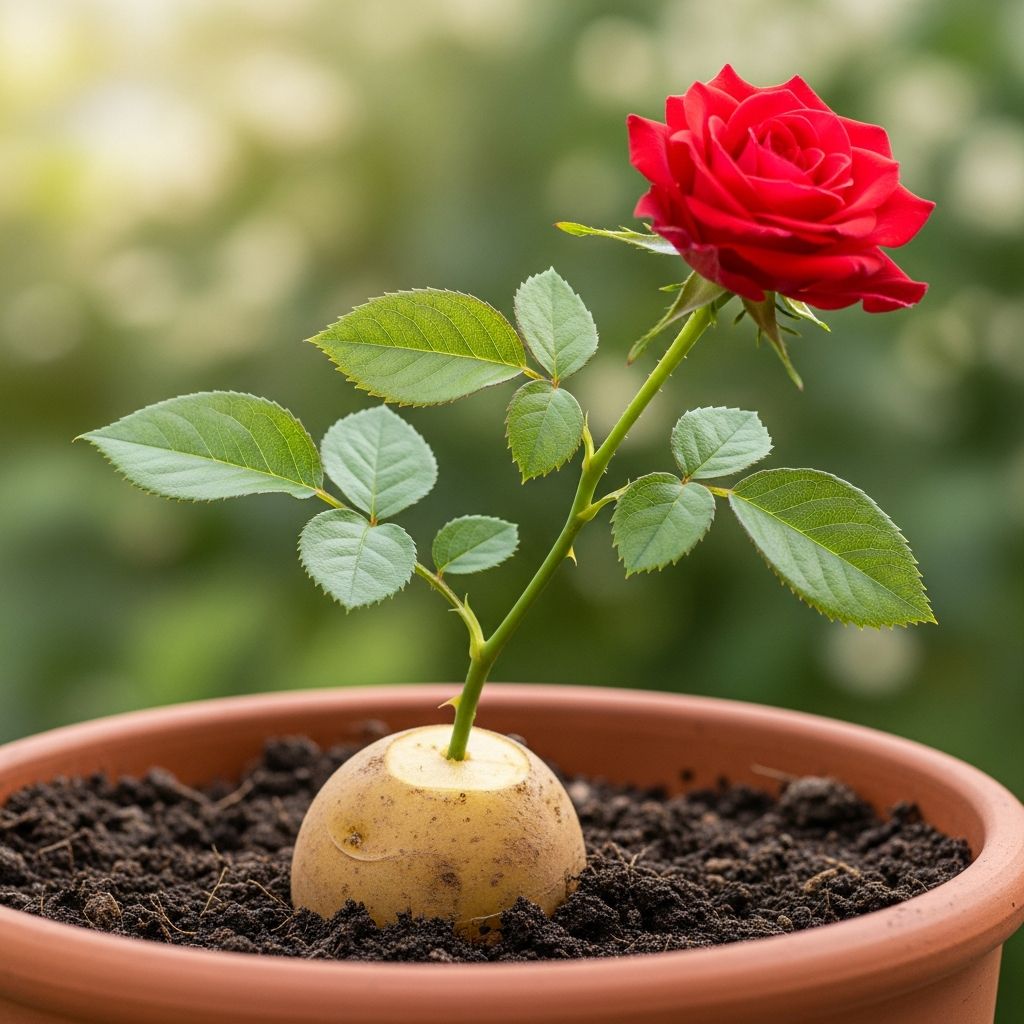
Propagating roses using potatoes offers a straightforward, cost-effective way to create new plants from existing bushes. This method leverages the potato’s natural moisture and nutrients to encourage root development in rose cuttings, making it accessible for novice gardeners.
Why Potatoes Excel in Rose Propagation
Potatoes contain starches and enzymes that retain moisture and provide mild nutrients, creating an ideal microenvironment for cuttings to form roots. Unlike sterile mediums, potatoes offer a gentle, organic boost similar to semi-hardwood cuttings recommended for home use. This technique avoids synthetic hormones while mimicking natural layering processes where stems accumulate rooting compounds.
Scientific backing from extension services highlights cuttings as the top method for roses, with potatoes acting as a natural alternative to perlite-soil mixes. Gardeners report success rates comparable to professional setups, especially during mid-summer when new growth is semi-mature.
Best Rose Varieties for Potato Propagation
Not all roses propagate equally well. Hardy types like species roses, climbers, and own-root shrubs respond best, as they root more readily than grafted hybrids. Floribundas and old garden roses (OGRs) thrive, while hybrid teas may need extra care due to their dependence on rootstocks.
- Climbers and Ramblers: Long, flexible stems ideal for bending and rooting.
- Shrub Roses: Vigorous growth leads to quick establishment.
- Miniatures: Compact cuttings fit easily into small potatoes.
- Avoid: Highly grafted modern teas unless using suckers.
Essential Tools and Materials
Gather these items for success:
| Item | Purpose | Tips |
|---|---|---|
| Healthy rose bush | Source of cuttings | Choose disease-free stems from current season. |
| Firm potatoes | Rooting medium | Medium-sized, eyes optional but avoid sprouting ones. |
| Sharp pruners | Clean cuts | Sterilize with alcohol to prevent infection. |
| Pots or jars | Planting containers | 4-inch pots with drainage holes. |
| Potting mix | Post-rooting soil | 50% perlite + soil for aeration. |
| Optional: Rooting hormone | Boost rooting | Natural alternative to powder like Hormex #8. |
Step-by-Step Potato Propagation Process
Selecting and Preparing Cuttings
Timing is crucial: mid to late summer (July-August) for semi-hardwood stems, which balance flexibility and maturity. Select 6-8 inch stems from healthy, new growth—pencil-thick with 3-4 leaf sets. Avoid flowering tips or woody bases.
- Snip just below a leaf node at a 45-degree angle for maximum cambium exposure.
- Remove lower leaves and thorns, leaving top 2-3 sets.
- Optionally dip basal end in rooting hormone for 30 seconds.
Preparing the Potato
Choose firm, unblemished potatoes. Wash and dry them.
- Cut a hole through the center lengthwise, matching your cutting’s diameter—use a knife or skewer.
- Insert the cutting firmly so 2-3 inches protrude from the bottom.
- The potato’s interior keeps the cut hydrated, preventing wilting.
Planting and Initial Care
Fill pots with moistened potting mix (50/50 soil-perlite). Bury the potato-cuttings assembly up to the leaves, ensuring drainage.
- Water thoroughly but avoid sogginess.
- Place in bright, indirect light—outdoors shaded or indoors near a window.
- Maintain 70-80°F; cover with plastic for humidity if needed.
Monitoring Root Development
Roots form in 4-8 weeks. Tug gently after 4 weeks; resistance indicates success. New growth signals readiness for transplanting.
Community potting (multiple cuttings per pot) saves space, as tested with varieties like floribundas.
Advanced Variations for Higher Success
Air Layering with Potato Twist
For climbers, combine potato with air layering: Girdle a stem, apply hormone, wrap in moist coir or moss, then encase in potato slices for nutrient infusion. Secure with black plastic to block light and retain moisture. Roots develop while attached to the parent, ideal for hard-to-root types.
Layering and Division Alternatives
Simple layering bends stems into soil; potatoes can anchor the bend. For suckering roses, divide in early spring (March-April) with a rooted shoot. These methods complement potato cuttings for diverse gardens.
Troubleshooting Common Issues
| Problem | Causes | Solutions |
|---|---|---|
| Rotting cuttings | Excess moisture | Improve drainage, use sterile tools. |
| No roots after 8 weeks | Wrong timing, weak stems | Try semi-hardwood in summer; add hormone. |
| Wilting | Dry potato | Mist daily; check potato firmness. |
| Fungal growth | Poor air flow | Space cuttings; ventilate enclosure. |
Post-Propagation: Transplanting New Roses
Once rooted, gently remove from potato (roots may cling; tease apart). Pot in free-draining compost like John Innes No.1. Harden off over 1-2 weeks before garden planting in full sun with rich, loamy soil.
- Fertilize lightly after 4 weeks.
- Winter protection for young plants in cold zones.
- Expect blooms in 1-2 seasons.
Benefits of Potato Method Over Traditional
This approach is free (using kitchen scraps), eco-friendly, and beginner-proof. It outperforms dry sand methods by providing sustained hydration. Experts note cuttings root faster in nutrient-rich mediums. Scale up for gifts or hedges.
Frequently Asked Questions (FAQs)
What types of potatoes work best?
Firm russets or whites; avoid soft or sprouted ones to prevent rot. Size matches cutting length.
Can I propagate in winter?
Best in summer; indoor winter attempts need warmth and light.
How many cuttings per potato?
One per potato for best results; multiple in large ones if spaced.
Success rate with this method?
70-90% for suitable varieties, akin to misted cuttings.
Organic alternative to hormone powder?
Potato’s natural auxins suffice; willow water or honey dips work too.
Seasonal Propagation Calendar
| Season | Method | Best For |
|---|---|---|
| Spring | Division, Softwood | Suckering shrubs |
| Summer | Potato Cuttings, Air Layer | Semi-hardwood |
| Fall | Hardwood Cuttings | Climbers |
| Winter | Indoor Rooting | Forcing with heat |
Expand your rose collection sustainably. This potato technique, inspired by proven horticultural practices, delivers robust plants with minimal investment.
References
- How to Propagate Roses — Iowa State University Yard and Garden Extension. Accessed 2026. https://yardandgarden.extension.iastate.edu/how-to/how-propagate-roses
- How to Air Layer Roses | Propagation Techniques — Plews Garden Design. Accessed 2026. https://plewsgardendesign.co.uk/how-to-air-layer-roses-propagation-techniques/
- How To CLONE ROSES | Top 10 Tips — IV Organics (YouTube). 2021-08-29. https://www.youtube.com/watch?v=b2bhUXQcldQ
- Improved Techniques for Propagating Roses from Cuttings — Santa Clarita Rose Society. Accessed 2026. http://www.santaclaritarose.org/CuttingsImproved.html
- 6 Methods for Rose Propagation — Fraser Valley Rose Farm (YouTube). 2021-09-06. https://www.youtube.com/watch?v=ef6OFAo4Bmw
Similar Articles







Read full bio of Sneha Tete