Propagating Knock Out Roses: A Complete Guide
Master the art of growing Knock Out roses from cuttings with proven techniques for beginners and experts alike.
Knock Out roses stand out as one of the most popular choices for home gardeners due to their relentless blooming, robust disease resistance, and minimal care requirements. These compact shrubs produce vibrant flowers from spring through fall, self-deadheading to maintain tidiness without much intervention. Propagating them from cuttings offers an affordable way to expand your garden, share plants with friends, or preserve favorite varieties. This guide explores effective methods to root Knock Out rose cuttings, drawing on time-tested practices that yield reliable results.
Why Choose Knock Out Roses for Propagation?
These roses thrive in a wide range of climates, tolerating heat, drought, and poor soil better than many hybrids. Their woodiness makes cuttings sturdy and quick to root under proper conditions. Gardeners appreciate their ability to produce new plants identical to the parent, ensuring consistent color and performance. Success rates can exceed 80% with basic techniques, making propagation accessible even for novices.
Key benefits include:
- Cost-effective multiplication of plants without purchasing new stock.
- Preservation of specific colors and traits from established bushes.
- Easy integration into landscapes for hedges, borders, or containers.
- Promotion of self-sufficiency in gardening endeavors.
Understanding the Biology of Rose Rooting
Rose cuttings root through adventitious root formation, where new roots emerge from stem tissues rather than existing root systems. This process relies on stored carbohydrates in the cutting, hormonal signals, and a moist environment to prevent desiccation. Knock Out varieties root efficiently due to their vigorous growth habits, often developing roots in 4-8 weeks.
Factors influencing success:
- Season: Late spring to early summer yields softwood cuttings that root fastest.
- Stem health: Select disease-free, vigorous growth for best outcomes.
- Environmental control: High humidity and indirect light mimic natural propagation conditions.
Selecting and Preparing Cuttings
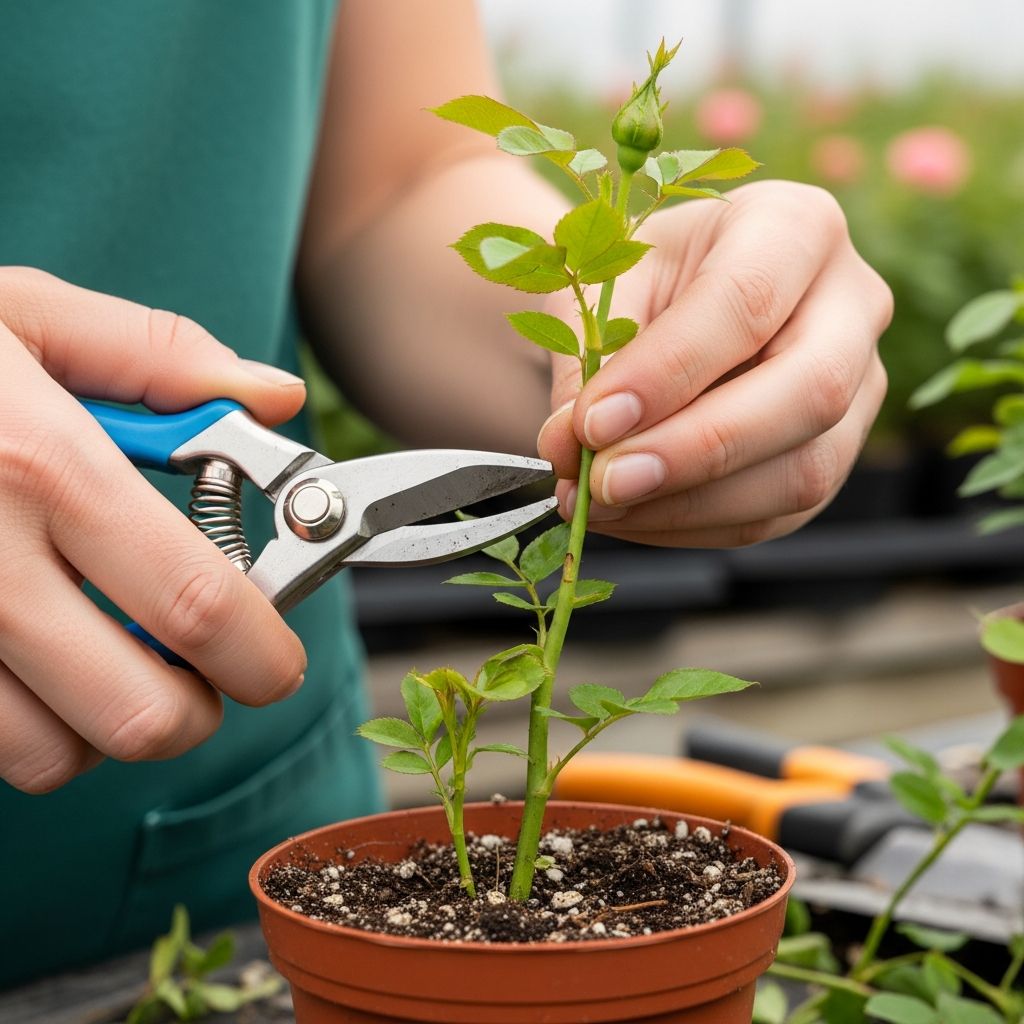
Timing is crucial—harvest cuttings in the morning when stems are hydrated. Choose pencil-thick stems from current-season growth, about 4-6 inches long, with 2-3 leaf sets. Avoid woody old growth or overly tender tips, as they root inconsistently.
Step-by-step preparation:
- Using sharp pruners, sever the stem at a 45-degree angle just below a leaf node. This maximizes surface area for root initiation.
- Remove flowers, buds, and lower leaves to reduce transpiration and focus energy on rooting.
- Trim to 4-5 inches, ensuring 2-3 upper leaves remain for photosynthesis.
| Cutting Type | Best Season | Rooting Time | Success Rate |
|---|---|---|---|
| Softwood | Spring/Summer | 3-6 weeks | High (70-90%) |
| Semi-hardwood | Late Summer | 6-10 weeks | Medium (50-70%) |
| Hardwood | Fall/Winter | 10-16 weeks | Low (30-50%) |
Rooting Hormone Options: Natural vs. Commercial
Rooting hormones stimulate cell division at the cut end, accelerating root development. While optional, they boost success by 20-50%.
Natural alternatives:
- Honey: Its natural sugars and antimicrobial properties nourish the cutting and prevent rot. Dip the base 1 inch deep.
- Willow water: Soak willow twigs overnight; the natural IBA (indole-3-butyric acid) extracts promote rooting.
- Cinnamon: Dust the cut end to fend off fungi.
Commercial products: Choose liquid or powder forms with IBA or NAA. Dilute liquids per instructions; powders adhere easily to moist cuts.
Choosing the Ideal Rooting Medium
A well-draining, sterile medium prevents rot while retaining moisture. Coarse sand excels for its aeration and pathogen resistance, used commercially for thousands of cuttings annually. Alternatives include perlite, vermiculite, or soilless potting mix.
Preparation tips:
- Sterilize medium by baking at 180°F for 30 minutes.
- Moisten thoroughly before inserting cuttings.
- Use 4-6 inch pots or trays for multiple cuttings, spaced 2 inches apart.
Step-by-Step Propagation Methods
Method 1: Water Rooting for Beginners
Ideal for observation, as roots are visible. Fill a clear jar with room-temperature water, add a pinch of honey, and submerge the lower 2 inches of the cutting. Change water weekly to oxygenate. Roots form in 2-4 weeks; transplant once 2 inches long.
Method 2: Direct Soil Planting
For faster garden integration:
- Dip prepared cutting in honey or hormone.
- Insert 2 inches into moist sand or mix in a pot.
- Water gently to settle medium; cover with plastic dome or inverted bottle for humidity.
- Place in bright, indirect light at 65-75°F.
Method 3: Potato Propagation Myth Busted
Inserting cuttings into potatoes provides minor moisture but risks rot due to poor drainage. Better results come from sand or dedicated media; potatoes succeed sporadically.
Optimal Environmental Conditions
Maintain 70-80% humidity via misting or enclosures. Bottom heat (70-75°F) via mats speeds rooting by 2 weeks. Avoid direct sun to prevent scorching; shade cloth works well. Monitor for wilting—indicates low humidity.
Caring for Rooted Cuttings
Once roots appear (tug test shows resistance), gradually acclimate by removing covers over 7 days. Water when top inch dries; use diluted fertilizer after 4 weeks. Harden off outdoors before permanent planting.
Transplanting to the Garden
Select sunny sites (6+ hours daily) with well-drained soil. Dig holes twice root ball width, amending with compost. Plant bud union 2-3 inches below soil line. Water deeply weekly until established.
Troubleshooting Propagation Failures
Common issues and solutions:
- Rot: Improve drainage; apply fungicide drench like Daconil.
- No roots: Check hormone application; increase humidity.
- Wilting: Ensure fresh cuts and immediate processing.
Success improves with multiples—take 10+ cuttings per desired plant.
Frequently Asked Questions (FAQs)
Can Knock Out roses be rooted in plain water?
Yes, they root readily in water, developing visible roots in weeks. Add honey for nutrition and infection prevention.
How long until a cutting becomes a blooming bush?
Expect first blooms in 6-12 months post-transplant, with full maturity in 2 years.
Is rooting hormone necessary?
Not essential, but it significantly raises success rates, especially for beginners. Natural options like honey work well.
Best time of year for Knock Out cuttings?
Spring and early summer for softwood; fall for hardwood in milder climates.
Do propagated Knock Out roses stay disease-resistant?
Yes, clones inherit the parent’s genetics, maintaining resistance traits.
Advanced Tips for Prolific Propagation
Experiment with LED grow lights for year-round rooting. Track batches in a journal noting hormone type and medium for optimization. Climbing Knock Outs root even easier, ideal for vertical gardens. Integrate into companion plantings with lavender or salvia for pest deterrence.
Scaling up: Use propagation benches with mist systems for dozens of cuttings. Community shares via cuttings foster local gardening networks.
References
- Rose Gardening: How to Root a Knock Out Rose — ehowgarden (YouTube). 2009-09-13. https://www.youtube.com/watch?v=G1sHzBbtIHs
- Bare Root Rose Planting — Knock Out Roses Official Site. Accessed 2026. https://www.knockoutroses.com/bare-root-rose-planting
- How to Grow Roses from Cuttings — Mike’s Backyard Nursery. 2013-10-27. https://mikesbackyardnursery.com/2013/10/how-to-grow-roses-from-cuttings-2/
- How to Grow Knock Out Roses From Clippings — ehowgarden (YouTube). 2009-09-13. https://www.youtube.com/watch?v=on9CWyKwNMQ
- Propagating Roses — University of Arkansas Cooperative Extension Service (.edu). Accessed 2026. https://www.uaex.uada.edu/yard-garden/in-the-garden/reference-desk/roses/propagating.aspx
Similar Articles






Read full bio of Sneha Tete